By Plumber in Fraser, MI, Fraser, MI · Published · Last updated
A backflow preventer is a one-way valve assembly that keeps water from your lawn sprinklers, boiler, fire sprinkler line or soda machine from flowing backward into the public water main. Michigan water systems are required to police these connections, and in Macomb County that shows up as a letter from your city or its contractor telling you to get your device tested by a date. This guide walks through what that letter means for a house with an irrigation system in Fraser, a storefront in downtown Mount Clemens, or anything in between.
What a backflow test proves and why your city cares
Water in the main is under pressure, and normally that pressure pushes water into your building. When a main breaks or a fire hydrant opens nearby, pressure in the street can drop below the pressure in your pipes. Water can then siphon backward out of a garden hose sitting in a bucket of weed killer, out of a sprinkler head sitting in puddled lawn water, or out of a commercial boiler loop.
The state's response is Part 14 of the administrative rules under the Michigan Safe Drinking Water Act. According to the Michigan Department of Environment, Great Lakes, and Energy (EGLE) cross-connection page, those rules prohibit cross connections and require every public water supply to run a prevention program with inspections, testing, recordkeeping and education.
A backflow test checks that the springs and seals inside the assembly still hold. These devices are mechanical. Rubber hardens, debris lodges under a check valve, and a Michigan winter can crack a body that wasn't drained. A test is the only way to know the device would actually stop reverse flow on the day the main drops.
Who has to test, and how often
Testing applies to testable assemblies, the kind with shutoff valves and small test cocks. A plain hose-end vacuum breaker isn't tested; it's just installed or replaced. The schedule comes from your water system. Fraser's ordinance (Sec. 31-36, amended November 13, 2025) says testable assemblies are tested when installed, relocated or repaired, and then every year. An older version of the city's cross-connection control program page, run with the contractor HydroCorp of Troy, listed a three-year cycle for basic home irrigation. The ordinance is newer, so plan on annual.
| Property or use | Typical device | What Fraser expects |
|---|---|---|
| Home with an underground lawn sprinkler system | Pressure vacuum breaker or double check | Test every year |
| Home sprinkler system that injects fertilizer or chemicals | RPZ, which the residential code requires for chemical injection | Test every year |
| Business, office, restaurant, shop or industrial building | Double check or RPZ on the service or on equipment | Test every year, plus DPW cross-connection inspections |
| Commercial fire sprinkler line | Double check or RPZ assembly | Test every year; the fire department also wants inspection and maintenance records filed electronically |
| Home with no testable assembly | Hose vacuum breakers, toilet fill valve air gap | No test, but a survey may still check these |
Other Macomb County systems set their own schedules inside the state rules, so treat the table as Fraser's version and read your own notice for the exact interval. If you own a building with a restaurant, a dental office or a car wash tenant, plan on an annual cycle and on more than one assembly. Our commercial plumbing services page covers the rest of what those buildings need.
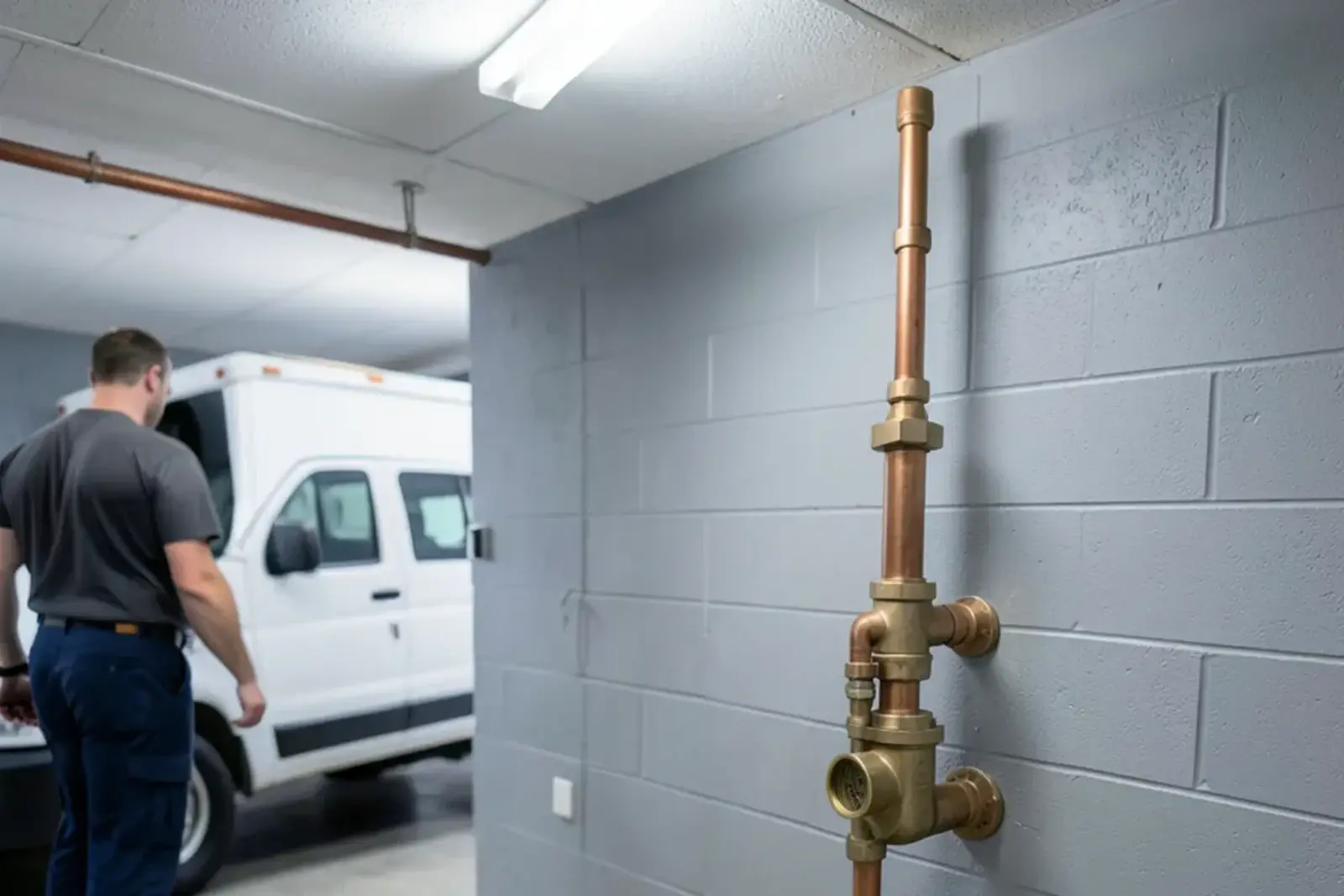
Fraser has also moved past commercial accounts. The program page explains that EGLE now expects residential connections to be surveyed too, so city-contracted inspectors visit homes zone by zone. The inspector looks at outdoor spigots, irrigation, pools and other water uses outside, and at wash tubs, hose connections and bathroom fixtures in the basement. The program page puts a typical visit at 10 to 20 minutes, and inspectors carry photo ID.
The tester credentials Michigan now expects
This is the part most homeowners don't know. For years, EGLE required a tester to hold ASSE 5110 certification, a national standard for backflow testers. In an August 7, 2023 bulletin, EGLE added a second requirement after a review by the Bureau of Construction Codes inside LARA. Testers now also have to be a master plumber, a journey plumber, or an apprentice working under the direct supervision of a journey or master plumber.
The bulletin also tells public water supplies to accept results only from testers who carry both credentials, and to verify those credentials on each test report form. So before anyone tests your device, ask two questions. Can I see your ASSE 5110 card? What is your Michigan plumbing license number? Then check that both appear on the report you sign. We'd expect you to ask us the same thing, and you can call (207) 419-2600 to confirm whether we can test your type of device.
What happens on test day
A routine test on a residential sprinkler assembly is short. Commercial RPZ assemblies take longer, and buildings with several devices take longer still.
1. Locate and expose the device
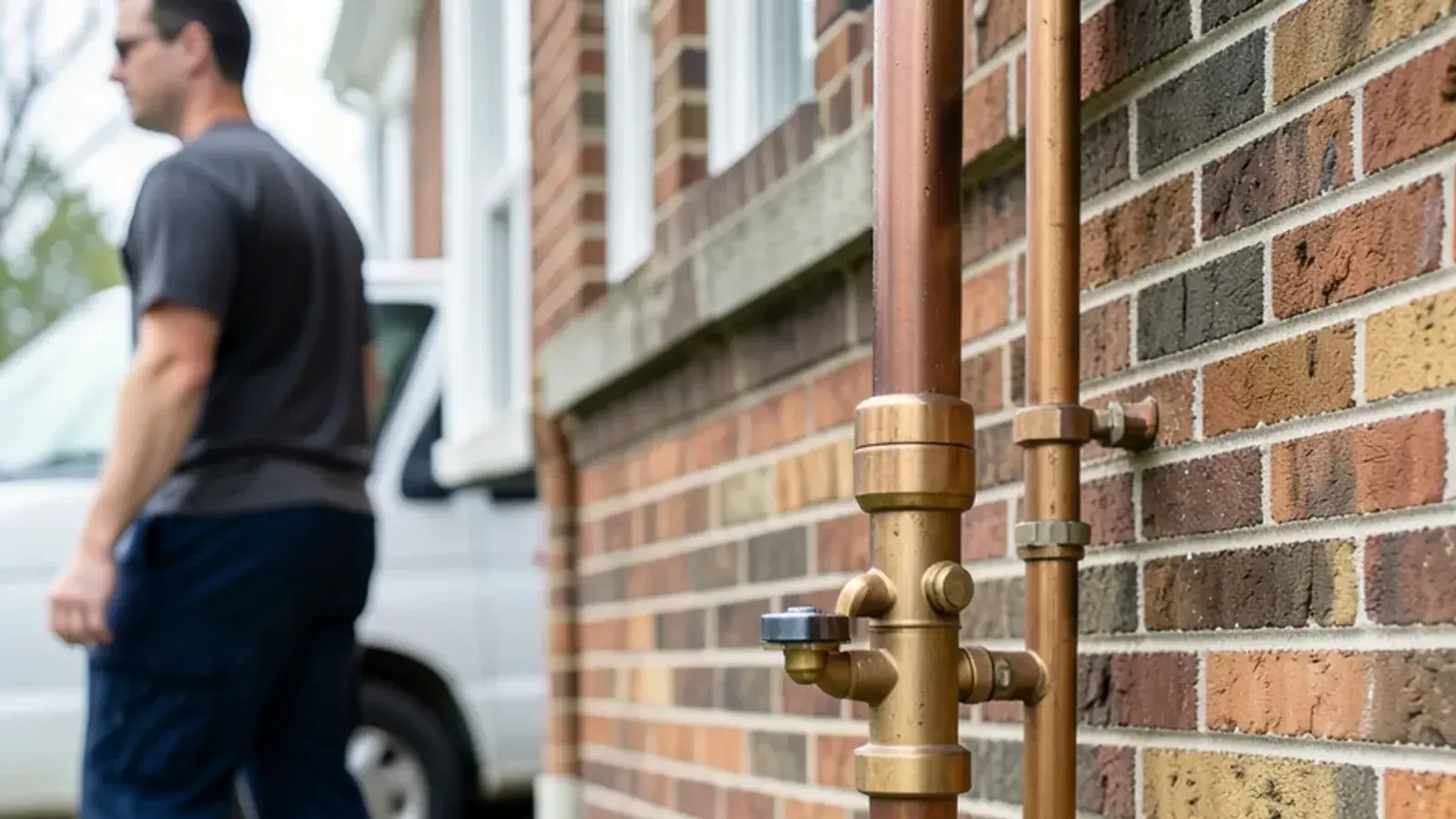
Sprinkler assemblies usually sit outside near the foundation, a foot or two above grade. Commercial assemblies are often in a utility room near the water service. Clear plants and stored boxes so the tester can reach the test cocks.
2. Shut the water briefly
The tester closes the downstream shutoff, so the sprinklers or the building side of the assembly lose water for a few minutes. For a business, schedule around opening hours, and warn tenants if the device protects the whole building.
3. Read each check valve
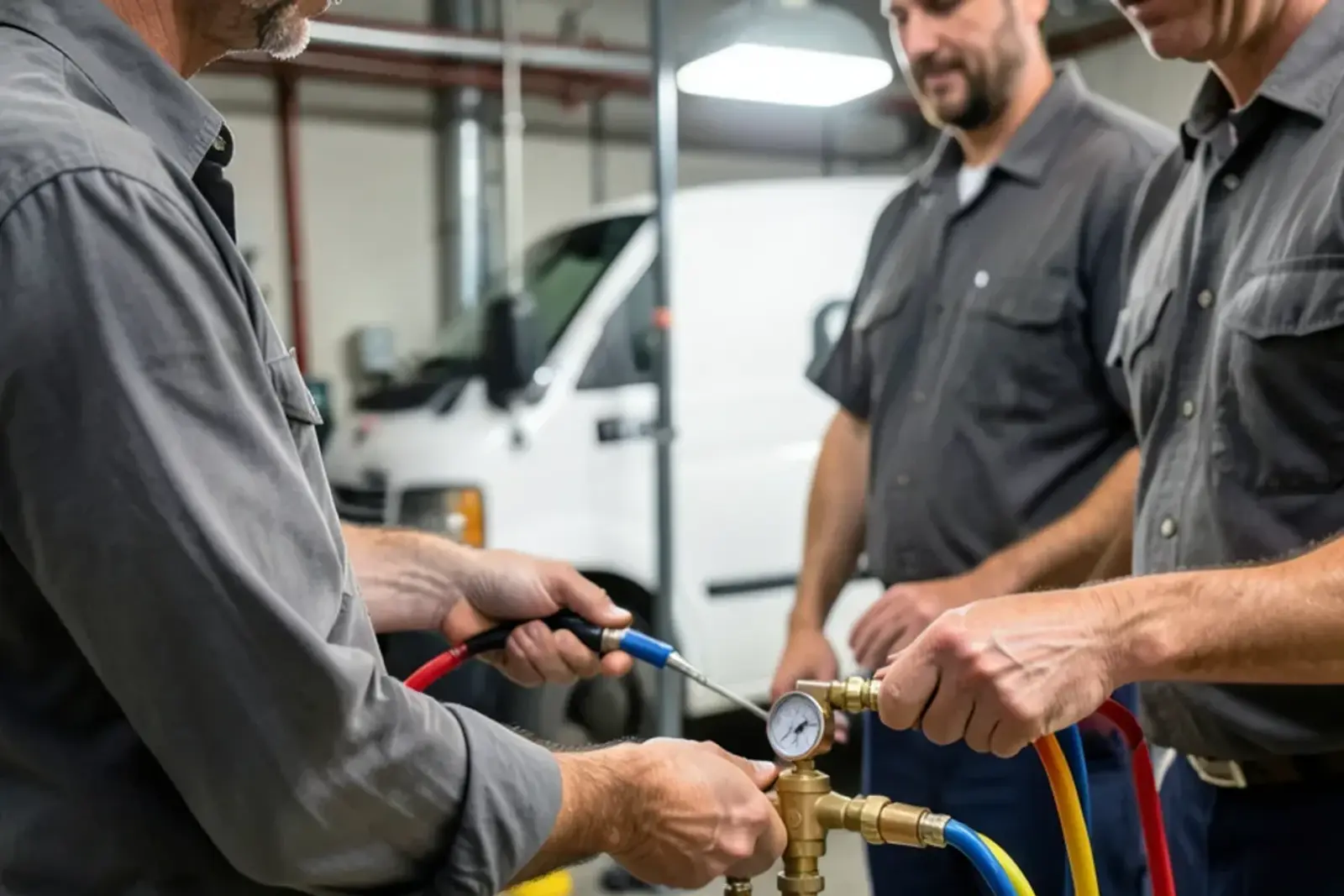
A differential pressure gauge goes on the test cocks. The tester confirms that each check valve holds a minimum pressure difference, and on an RPZ that the relief valve opens when it should. On a pressure vacuum breaker, the air inlet has to open as pressure falls.
4. Repair, retest and file
A failed device usually needs a rubber kit, a spring or a cleaned seat, then a retest. In some cases the whole assembly is replaced. The tester records the readings, and the report goes to the water system by the deadline. In Fraser that means HydroCorp's online portal: the city's cross-connection page says mailed, faxed or in-person reports aren't accepted, and testers have to register on the portal before they can file. Keep a copy with your house papers.
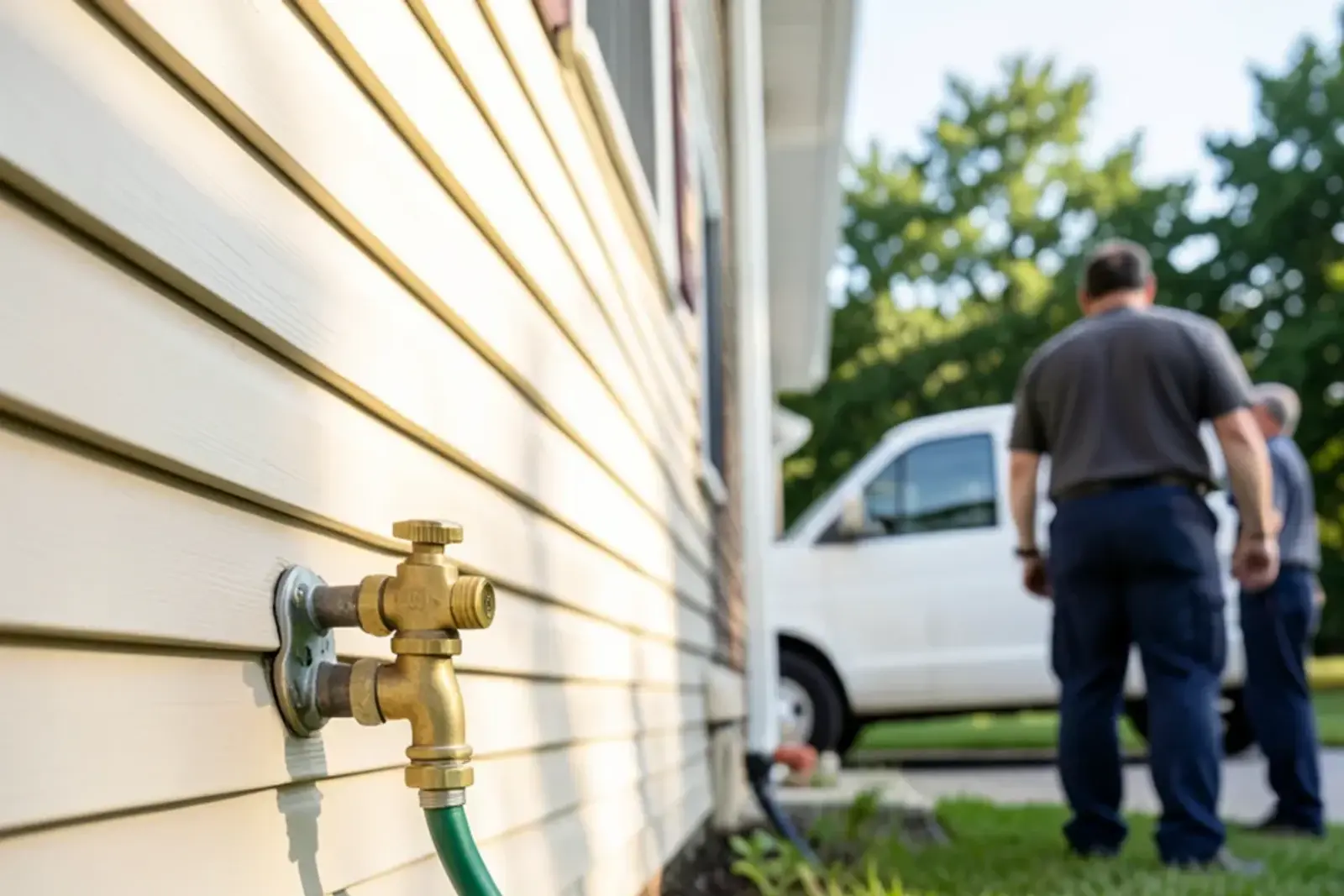
If you're adding a sprinkler system, a boiler or a commercial dishwasher, the right device and its location matter as much as the test. Our backflow testing and prevention page explains how assemblies are chosen and installed.
What we find around sprinkler backflow devices in Fraser yards
A failed test often traces back to how the device was set up years ago.
Freeze damage is first. The residential code says a backflow preventer can't sit where it can freeze unless it can be removed by unions or is protected by heat or insulation. A pressure vacuum breaker in an open bed survives only if it's drained every fall, and a cracked body means replacement.
The second is the wrong device. The code allows no valve downstream of an atmospheric vacuum breaker. When zone valves were added later, that device stopped doing its job. Feeding the lawn through the sprinklers is a similar trap: chemical injection calls for an RPZ, and its relief port dumps water, so it needs somewhere to drain.
The third is the house side. Inspectors check hose spigots for vacuum breakers, which the code requires, and the toilet fill valve air gap the city's program flags.
On repairs, the trade-off is age. A rubber kit on a sound assembly is the quick fix. On a body with seized test cocks or corroded shutoffs, a rebuild can pass this year and fail the next, and replacement is the better spend. If the sprinklers haven't run in years, ask your water system how it wants a removed and capped irrigation branch documented, since no testable device means no annual test.
Fraser and Mount Clemens owners, one notice at a time
In Fraser, the owner pays for the test and for any corrections the inspector lists. Renters should check the lease or forward the letter to the landlord. The program page also flags a detail people miss: the fill valve in each toilet tank needs a one-inch air gap above the overflow pipe, and a fill valve set too low is a cross connection.
Mount Clemens runs its own water treatment plant, so its cross-connection program and test notices come from the city, not from Fraser's contractor. The city's water and sewer page also describes an optional second meter for sprinkler and outdoor water, which keeps that water off the sewer charge. If you're adding one, ask the city what backflow protection it wants at the same time. For other plumbing in the county seat, see our page on plumbing service in Mount Clemens.
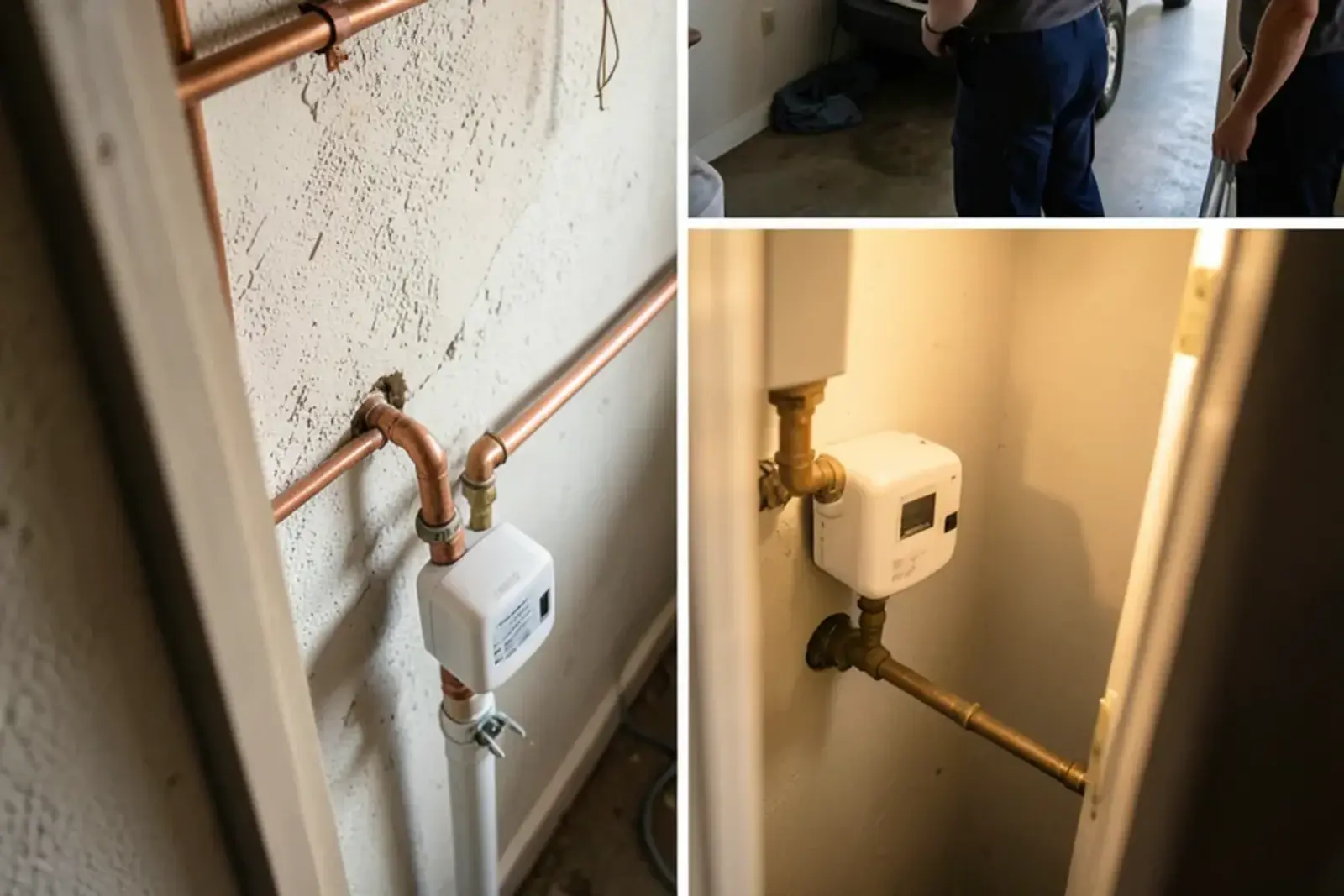
Before the first hard freeze, drain or blow out the irrigation line and open the test cocks so the assembly body can't split. A cracked bronze body in April turns a simple test into a replacement.
What to do when a test notice arrives
Note the device type from the notice or tag. Book a tester and confirm both credentials before the date. If the device fails, decide on rebuild or replacement using its age and condition, then make sure the passing report is filed, through HydroCorp's portal in Fraser or the way your own notice describes.
Questions about backflow testing requirements
My sprinkler backflow passed last year. Do I really need another test?
Yes, in Fraser. The city's water ordinance, amended November 13, 2025, calls for testing at installation and every year after that. An older version of the city's program page listed every three years for basic home irrigation, but the ordinance is the current rule. Other Macomb County water systems set their own intervals, so book the test before the date on your notice.
Can I test my own backflow preventer?
No. Michigan water systems only accept results from a tester who holds an ASSE 5110 certification and, under an EGLE notice from August 2023, a master, journey or supervised apprentice plumbing credential. A homeowner can look at the device, keep it from freezing and replace a hose vacuum breaker, but the reported test has to come from a credentialed tester.
What happens if I ignore a cross-connection notice?
Fraser's program page says penalties are set by the local water utility and can include a fine, shutting off water service, or both. The same page says older equipment is generally not grandfathered. Calling the number on the notice and asking for a new date is usually better than letting the deadline pass.
Does my lawn sprinkler system need a backflow preventer at all?
Yes. The Michigan Residential Code requires the drinking water supply to an irrigation system to be protected by an atmospheric vacuum breaker, a pressure vacuum breaker or a reduced pressure assembly. If the system injects fertilizer or other chemicals, only the reduced pressure type qualifies. Home systems usually have a pressure vacuum breaker, which is testable.
Do I need a permit to install or replace a backflow preventer in Fraser?
Yes, it goes on a plumbing permit. Fraser's 2026 to 2027 fee schedule lists a $15 line for a water pressure backflow preventer up to 4 inches and a $15 line for a sprinkler system vacuum breaker, on top of the $30 application fee. A new assembly is tested right after installation.