
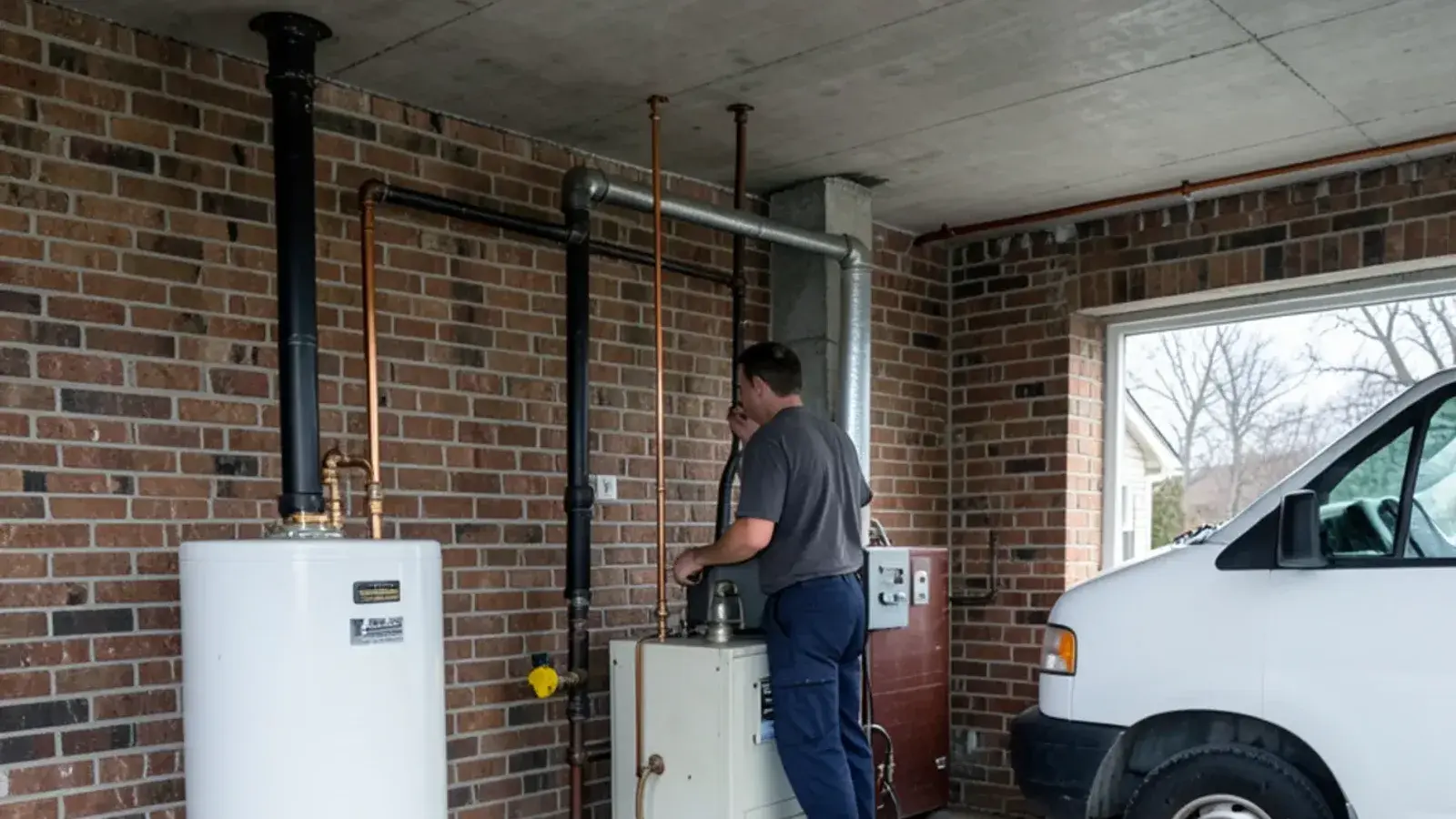
Most Fraser homes went up between the 1950s and the 1970s, and in those ranches, split-levels and condos the heater usually stands beside the furnace, shares its flue and sits a few steps from a floor drain. That spot shapes your options more than any brand does.
Replacing a water heater in a Fraser basement
A replacement covers more than the tank:
- Draining and hauling away the old heater
- New water connectors and an expansion tank where needed
- A relief valve pipe that meets the current rule
- On gas units, a new connector, sediment trap, leak check and draft test
A like-for-like gas tank is still the most common pick. It fits the same footprint, uses the existing vent and needs no outlet. When the chimney connection is in poor shape, or the furnace now vents through plastic pipe, a power-vent gas heater can make more sense. Its blower pushes exhaust out a side wall, so it needs a receptacle nearby.
Electric tanks skip venting but need a dedicated circuit. A heat pump water heater is the electric option that draws the least power. ENERGY STAR says it wants a space that holds 40°F to 90°F all year with about 1,000 cubic feet of air around it, and it cools and dries the room as it runs, which an unfinished Michigan basement rarely minds.
Big tanks carry a federal wrinkle. Since April 16, 2015, Department of Energy standards effectively require condensing gas or heat pump electric designs above 55 gallons, so replacing a 65- or 75-gallon tank may mean a new vent and a condensate drain. Some households drop the tank instead, which our tankless water heater installation page covers. Moving the heater or adding a gas appliance is gas line work with its own pressure test.
When is it time to replace the water heater?
Water pooling under the tank, with no loose fitting above it, means the tank itself has failed and can't be patched. Rusty hot water, rumbling as it heats and hot water running out sooner point the same way on an older unit. That rumble is usually sediment, since Fraser's water is moderately hard, about 6 grains per gallon. The rating plate shows the warranty years, a fair yardstick for age.
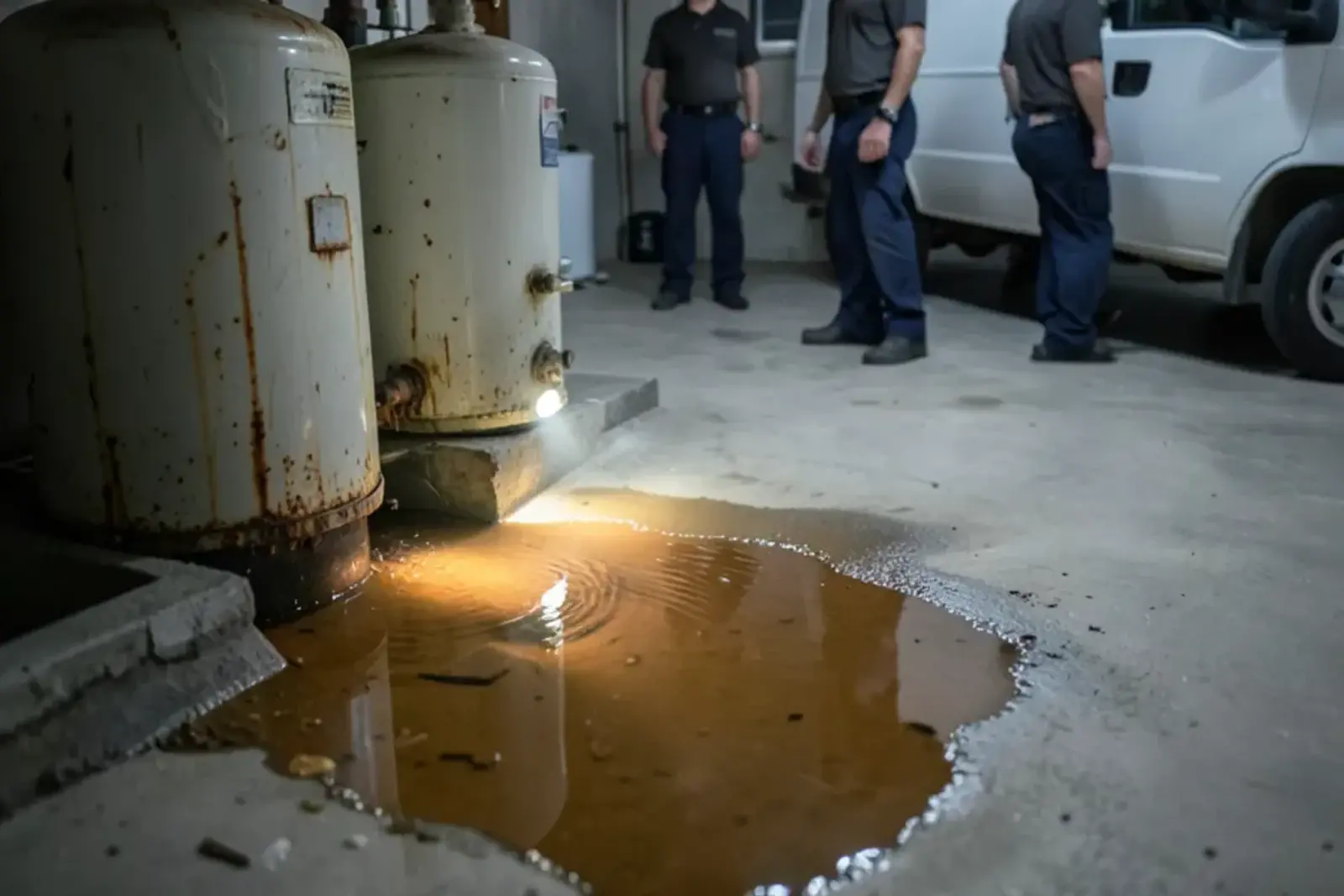
If the tank is dry and fairly new, a thermostat, element or gas control may be the fault, and water heater repair may be all it needs.
Should you go 40 or 50 gallons?
Size for your busiest hour, not your bedroom count. Picture a school-day morning with two showers in a row, a dishwasher cycle and a load of towels. ENERGY STAR's planning figures put a shower at about 2.5 gallons per minute and a clothes washer at about 3.3, so that hour adds up fast.
Compare models by first-hour rating, the hot water a heater can deliver in an hour starting full. Gas burners generally recover faster than electric elements, so a 40-gallon gas unit can match a 50-gallon electric one on that figure.
A soaking tub, a basement bathroom added later, teenagers, or laundry running during showers push the answer toward 50. A one- or two-person condo, a tight closet, or a stairway a wider tank won't clear point toward 40.
What does a new water heater permit cover in Fraser?
In Michigan a water heater replacement needs a permit, pulled by a licensed plumbing contractor or by a homeowner working on their own home. Fraser's FY 2026–27 fee schedule (amended September 11, 2026) lists a hot water heater line at 40 dollars on the plumbing side and another at 40 dollars on the mechanical side, each with a 30 dollar application fee. The building department at 33000 Garfield Rd can tell you which apply to your swap. Applications are online only, and the inspector comes out on Tuesday or Thursday mornings, booked by the permit holder.
Houses here fall under the 2015 Michigan Residential Code. On a new heater the inspector looks for:
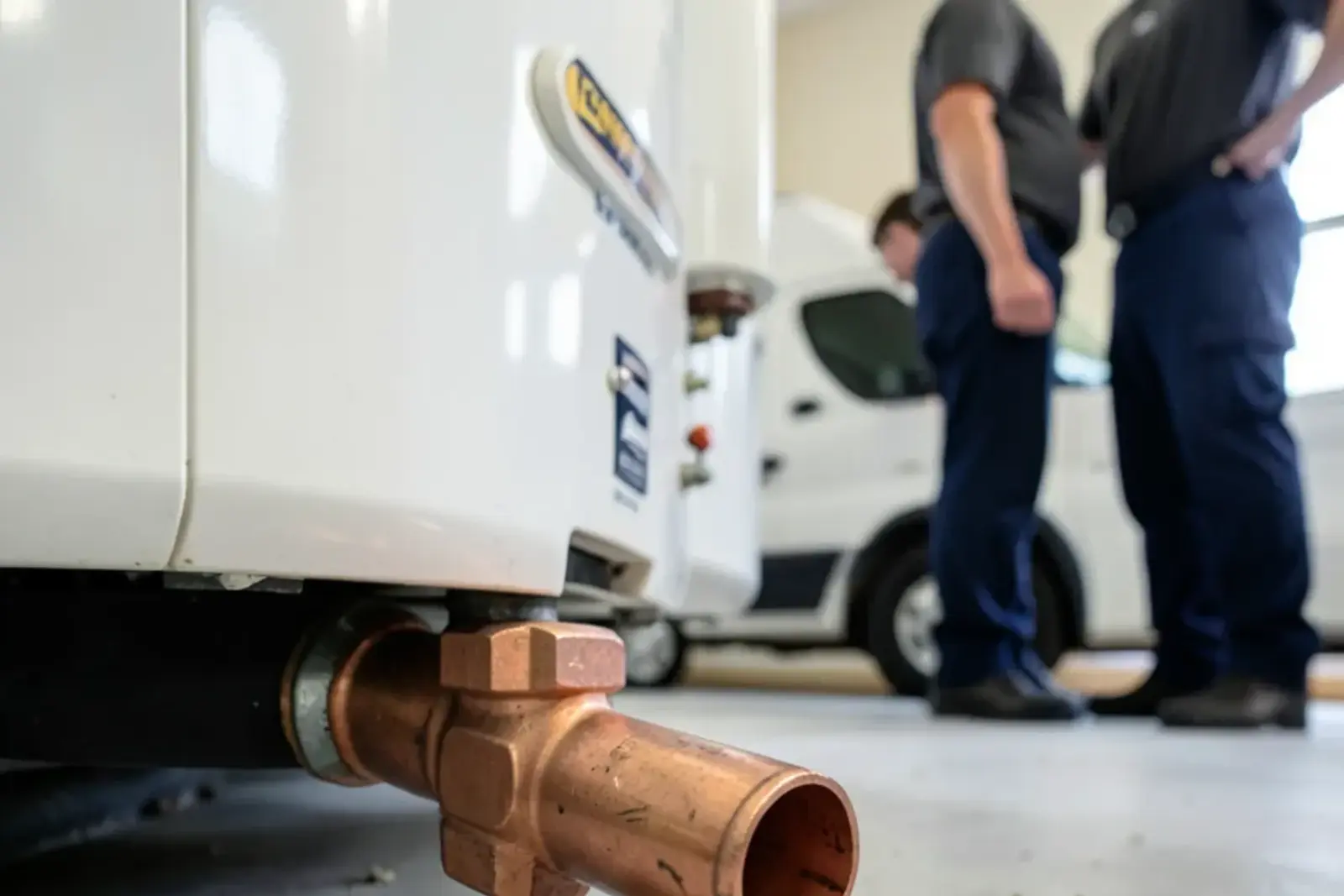
- A relief valve discharge pipe that is rigid, rated for at least 210°F, the same size as the valve outlet, free of valves, unthreaded at its end and no more than 4 inches above the floor, draining by gravity and never piped straight into a drain line.
- An expansion tank or other pressure control when the supply has a check valve, backflow preventer or pressure-reducing valve, and a pressure-reducing valve if static pressure tops 80 psi.
- A pan where a leak would cause damage, at least 1-1/2 inches deep with a 3/4-inch drain, and never plastic under a gas heater. A replacement doesn't have to add a pan drain where none existed.
- On gas units, a sediment trap at the inlet unless one is built in, enough combustion air and a vent that drafts. Gas heaters stay out of bedrooms, bathrooms and storage closets unless they're direct-vent.
- In a garage, an ignition source at least 18 inches off the floor unless the heater is listed as flammable-vapor-ignition-resistant.
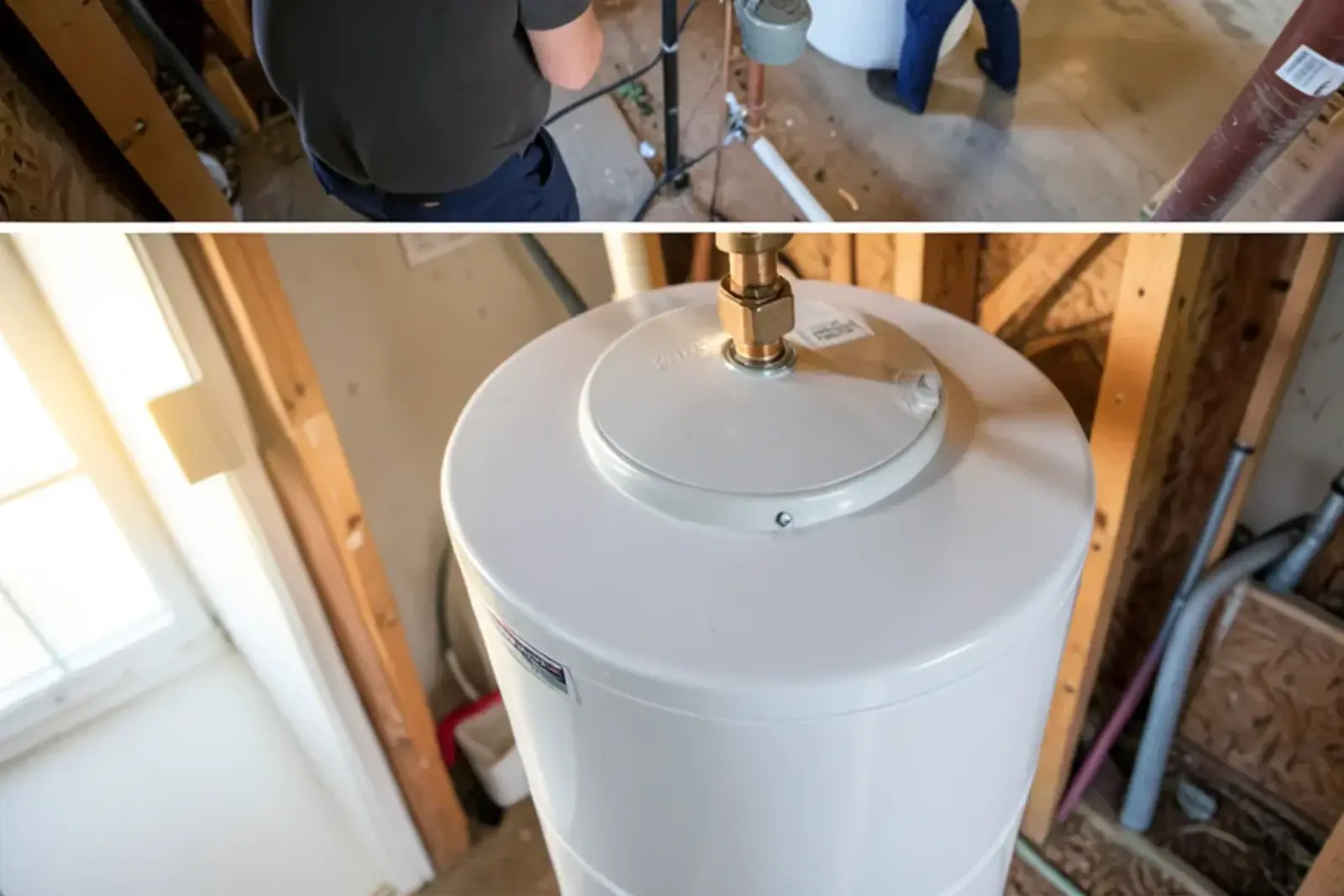
The statewide rules behind this are in do you need a permit to replace a water heater in Michigan.
How a water heater installation day runs
1. Shut down and drain the old tank
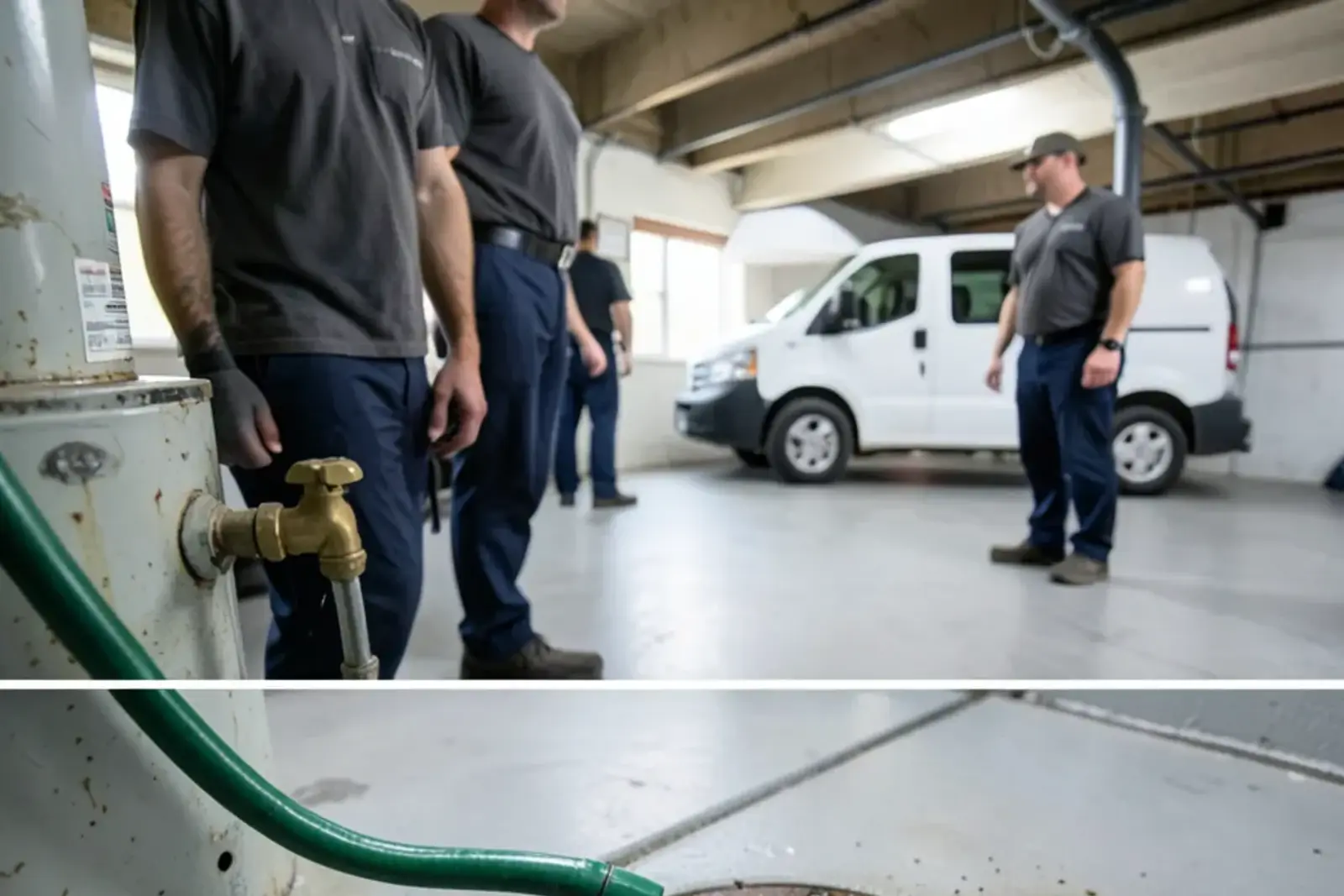
Gas goes off at the appliance valve, or power at the breaker. We close the cold inlet and drain to the floor drain. Fraser gets Lake Huron water in the moderately hard range, so an older tank often holds sediment that slows the drain.
2. Set the tank and connect the water lines
The heater goes on its pan if needed, with new connectors, an expansion tank where required and a fresh relief pipe.
3. Connect gas and vent, then test draft
A new sediment trap and connector go on, every joint is leak checked, and the vent pitches up to the chimney or out the wall. Once the burner fires, we confirm exhaust goes up the flue.
4. Fill it before firing it
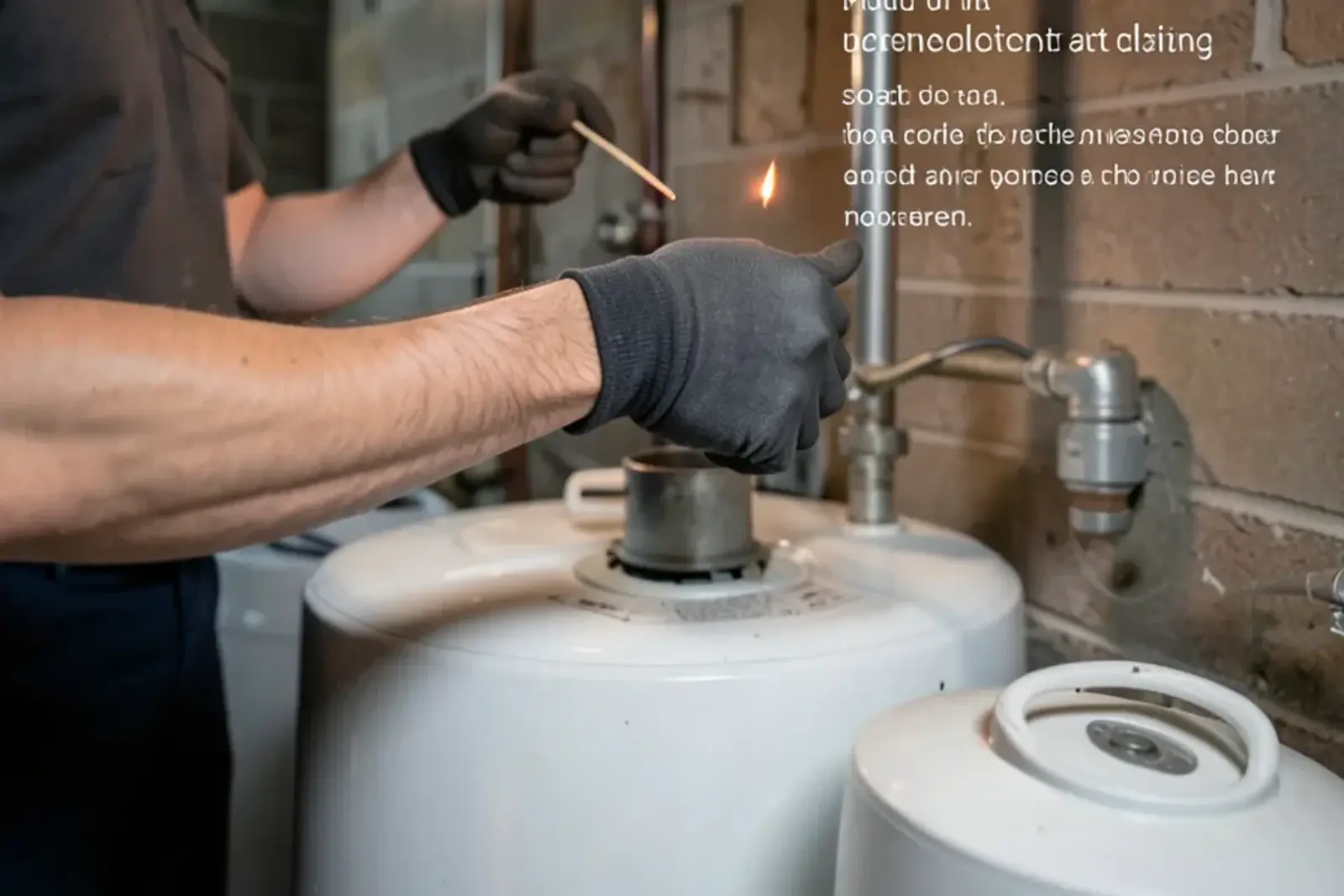
The tank fills with a hot faucet open upstairs to push air out. An electric tank gets no power until it's full, because dry elements burn out almost at once.
5. Haul away and inspection
The old tank leaves with us. The inspection goes on a Tuesday or Thursday morning that suits you, with someone home to let the inspector in. A straight swap is usually one visit; a fuel change or new vent route takes longer.
Cost factors and the warranty card
The same heater can be a quick swap in one house and a bigger job next door, depending on:
- Fuel and type, whether atmospheric gas, power vent, electric or heat pump
- Size and first-hour rating
- Venting changes, such as a new chimney connector or a power-vent run through the rim joist
- Code items the old install never had, like an expansion tank, a pan or a proper relief pipe
- Access down basement stairs or into a tight closet
- Electrical work for a power-vent or heat pump unit
- City permit fees
Our article on water heater replacement cost factors goes deeper.
The warranty comes from the manufacturer, not from us, and ENERGY STAR certified models carry at least six years. Register the unit if the maker asks. Whoever installs it, get these in writing: model and serial number, tank and parts warranty terms, who covers labor on a claim, and the permit number with the final inspection result. For care, follow the manual on flushing and anode checks.
Warren, Sterling Heights, Roseville and Clinton Township each run their own permits and fees.
Why call us for a Fraser water heater
We're on Janet Ave, just south of 14 Mile, and Fraser's 1950s through 1970s basements are the ones we work in most. A call to (207) 419-2600 starts with the rating plate: fuel, gallons, vent type and age. Then we ask how the house uses hot water on its busiest morning, so size is settled before anyone arrives. Before anything is disconnected, you hear which Fraser permit lines apply, how the Tuesday or Thursday inspection gets booked and what code items the old install lacks.
Before you replace a water heater in Fraser
Do I need a permit to replace a water heater in Fraser, MI?
Yes. Michigan requires a permit for a water heater swap, and Fraser's fee schedule lists a hot water heater item on both its plumbing and mechanical schedules, 40 dollars each, plus application fees. The building department confirms which your job needs.
Can I do a hot water heater replacement myself instead of hiring someone near me?
Yes. Michigan lets homeowners pull a permit for plumbing work on their own home, and the inspection still applies. The parts people get wrong are the gas connection, vent draft, relief valve pipe and expansion tank. If any of those feel unfamiliar, call (207) 419-2600 and we'll talk it through.
Does my new water heater need an expansion tank?
Yes, if your supply has a check valve, a backflow preventer or a pressure-reducing valve. Heated water expands, and in a closed system it has nowhere to go. The Michigan Residential Code calls for pressure control then, usually an expansion tank on the cold line. A relief valve that drips after long showers hints at the problem.
Can I put a bigger water heater where the old one was?
Yes, often. The tank has to clear the doorway, stairs and any closet. The gas line and vent have to handle a larger burner. And above 55 gallons, federal rules since April 2015 push gas tanks toward condensing designs and electric ones toward heat pumps.
More help alongside water heater installation
Water heater repair
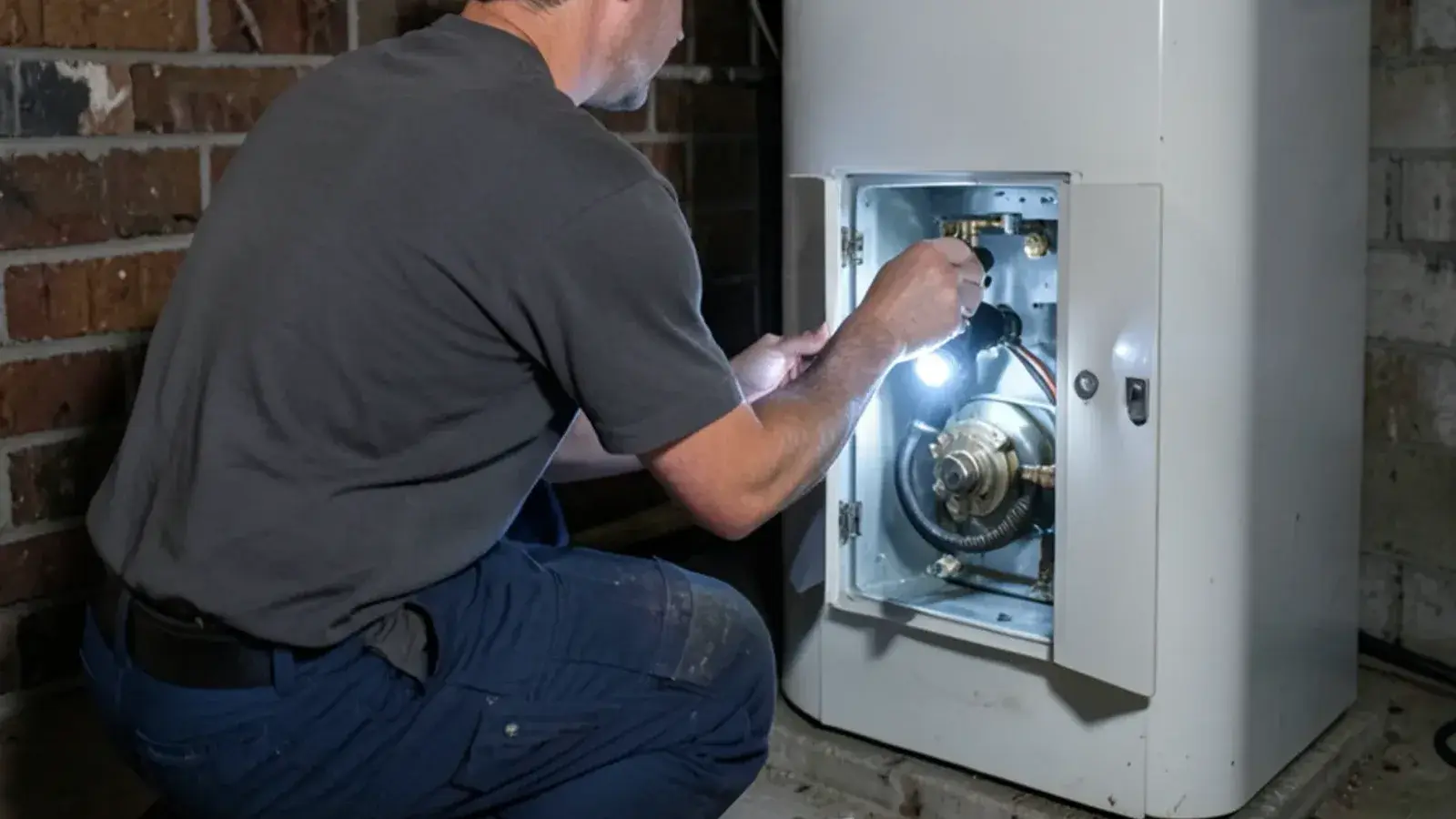
Finds the failed part on gas or electric tanks and tells you plainly if the tank is done
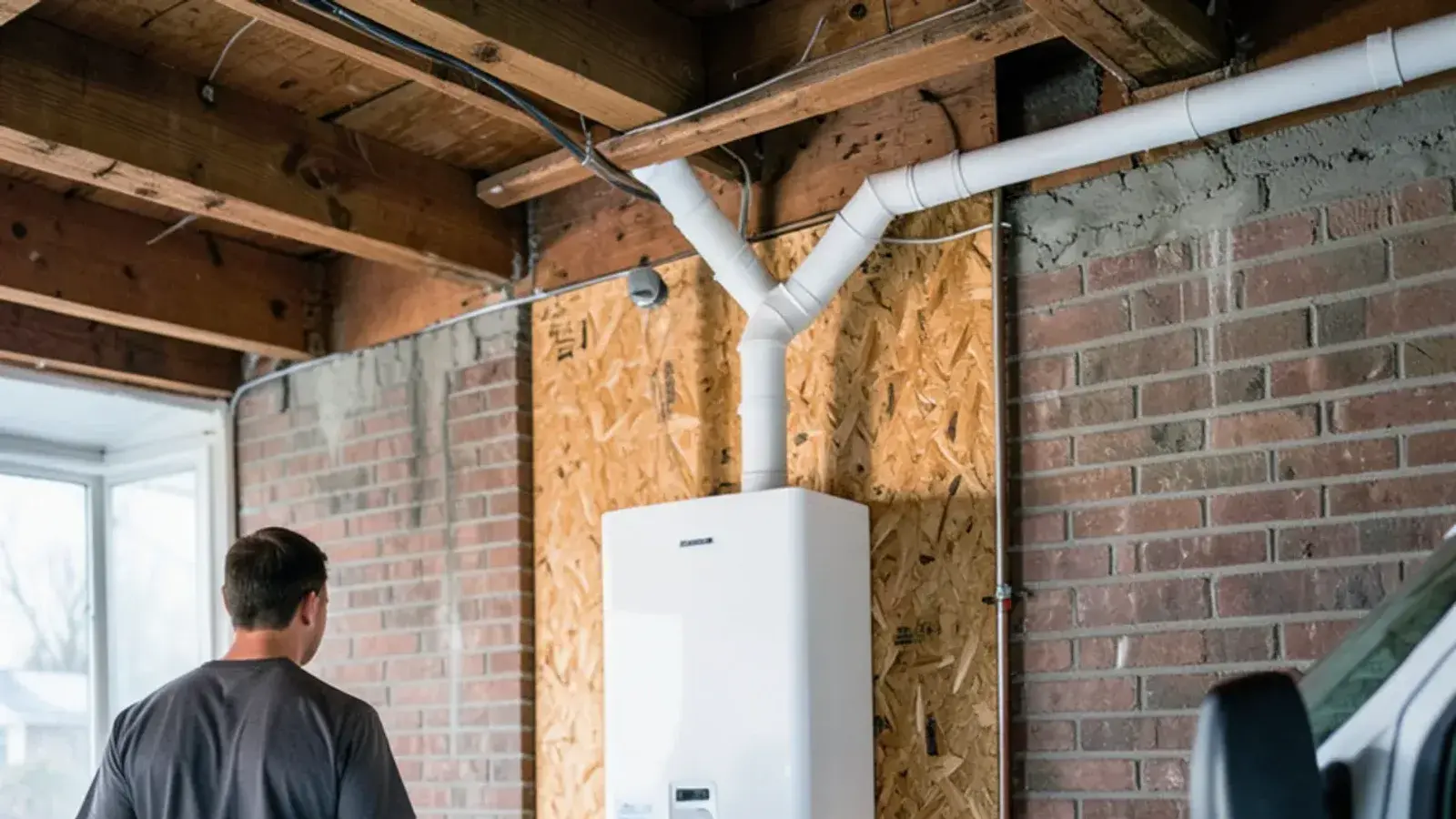
Tankless water heater installation
Gas line, vent and condensate planned up front so a tankless unit keeps up in winter
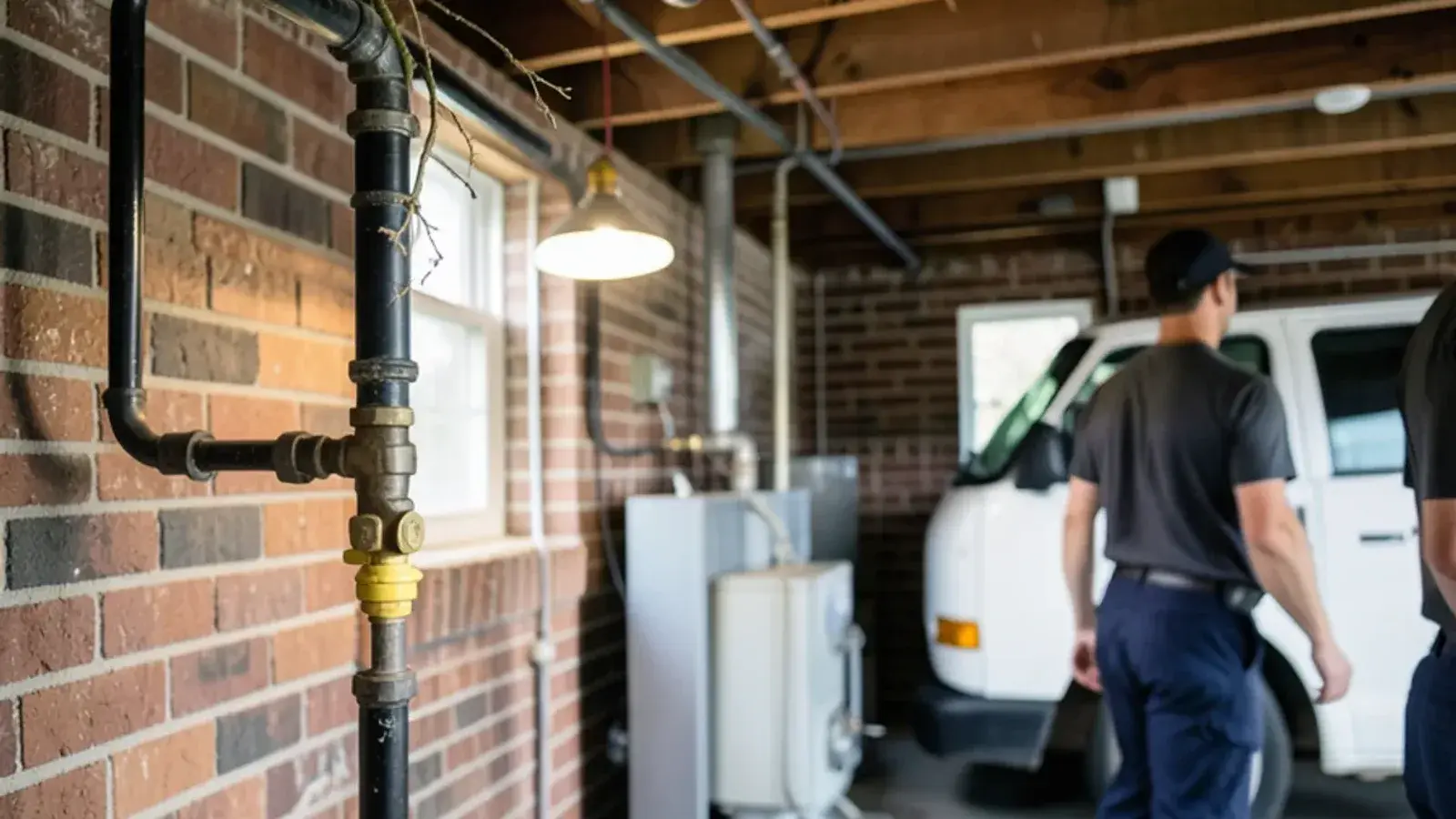
Gas line repair and installation
New gas runs and leak repairs, permitted as mechanical work and pressure tested before use
- What drives the cost of replacing a water heater
- Do you need a permit to replace a water heater in Michigan?
Where we handle water heater installation around Fraser