
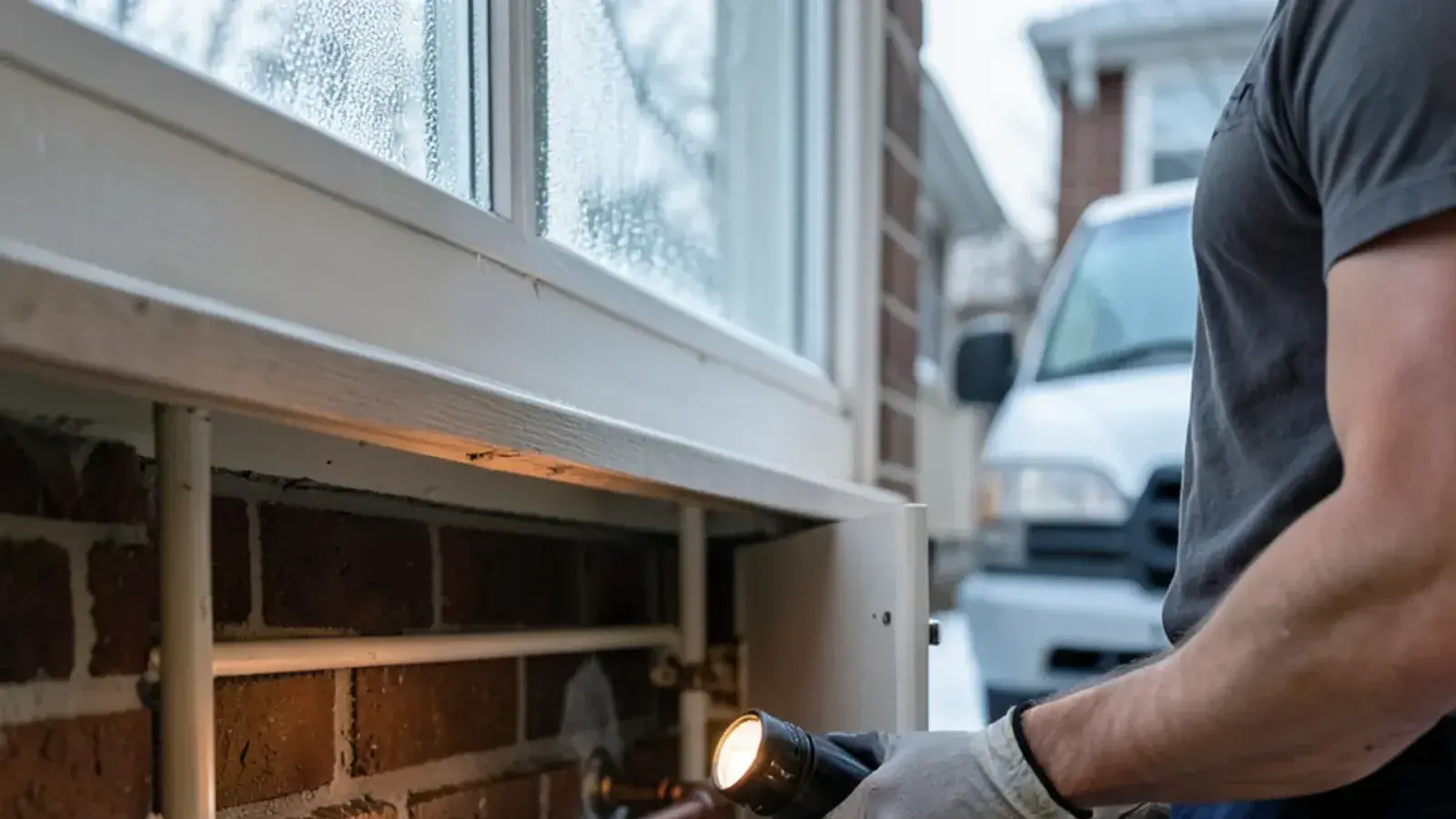
Burst pipe repair in Fraser is mostly winter work. The National Weather Service's 1991–2020 normals put Detroit's average January low at 19.2°F, and the coldest nights of any winter drop well under that average. Water expands as it freezes. Pressure builds between the ice plug and the closed faucet at the end of the line, and the pipe gives at its weakest point. Copper tends to split lengthwise. Older galvanized steel often cracks at a threaded joint. PEX tolerates a freeze better than either, though its fittings can still pull apart. A split can sit quietly overnight and start spraying once the sun warms the wall.
Water spraying from a pipe right now?
Shut the main valve beside the water meter. Open the lowest faucet to drain the lines. Turn the water heater to pilot or switch off its breaker. Stay out of water near outlets or the panel. Photograph the damage for your insurer. Then call.
The emergency plumbing page has the full shutoff walkthrough for gate and ball valves, and our post on the first 10 minutes after a pipe bursts covers the cleanup that comes next.
Where pipes freeze in a Fraser ranch or split-level
The American Red Cross lists the pipes most likely to freeze: hose bibs and sprinkler lines, supply lines in unheated spaces like garages, crawl spaces and kitchen cabinets, and pipes along exterior walls with little insulation. Fraser's housing lines up with that list closely. Most homes here went up between 1950 and 1979, and the median year built is 1972. In those houses the usual freeze points are:
- the kitchen sink on an outside wall, where the closed cabinet keeps furnace heat off the pipes
- laundry or utility sink lines in an attached garage
- the hose bib and the short pipe feeding it through the rim joist
- a crawl space under a later family room or addition
- the spot where the water service comes through the foundation
The 2015 Michigan Residential Code doesn't allow water pipes in exterior walls, attics or crawl spaces without insulation or heat, and it wants the buried water service a foot down at minimum and half a foot under the frost line. Plenty of older houses were plumbed before anyone thought hard about that, and remodels sometimes move a sink onto a cold wall.
How to thaw frozen pipes without an open flame
If one faucet gives a trickle or nothing while the others run, the freeze is on that branch. If nothing in the house runs, look first where the service enters the foundation. Before you thaw anything, know where the main shutoff is, because a pipe that split while frozen starts leaking the moment the ice lets go.
The Red Cross advice is simple. Keep the faucet open so melting water can move. Warm the pipe with an electric heating pad, a hair dryer, towels soaked in hot water, or a space heater kept well away from anything that can burn. Never use a blowtorch, a kerosene or propane heater, a charcoal stove or any open flame. Once water flows, check every other faucet for a second frozen spot. If you can't find the frozen section, or it's inside a wall you can't reach, that's the time to call.
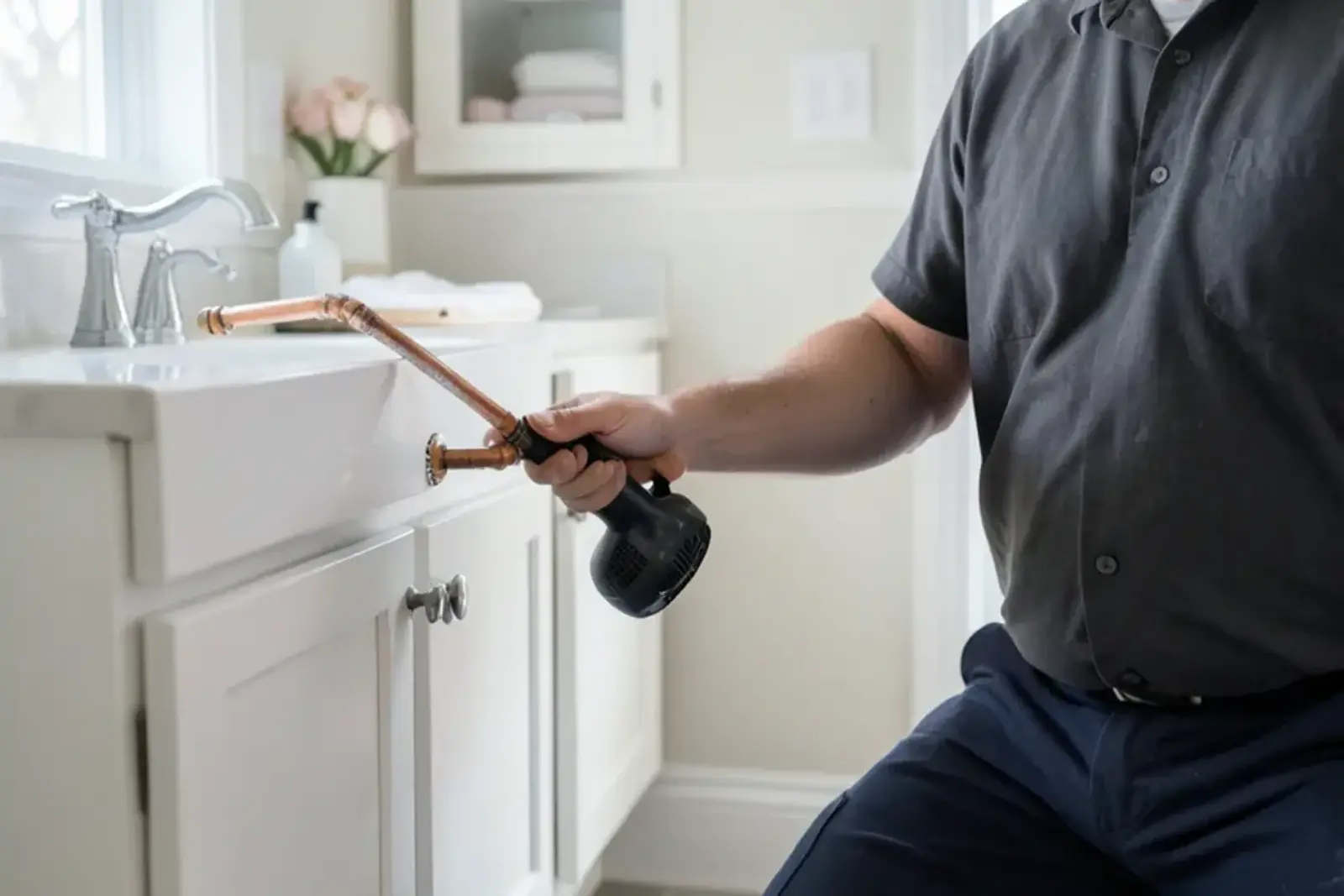
Finding a pipe burst in the wall or ceiling
A split inside a finished wall shows slowly: a spreading stain, bubbling paint, sagging drywall, or running water heard with every tap closed. On a burst pipe visit the order is:
- Confirm the main is holding and the water heater is on pilot or off.
- Close fixtures and read the meter to see whether water is still moving.
- Find the wettest point with a moisture meter and a thermal camera, then cut one small square of drywall there.
- Cut back past the stretched pipe and splice in the repair.
- Bring the line up to pressure, check every joint and look for a second split from the same freeze.
On an exterior wall the split is often a foot or two from the stain, because water runs down the pipe and along the sill plate before it shows.
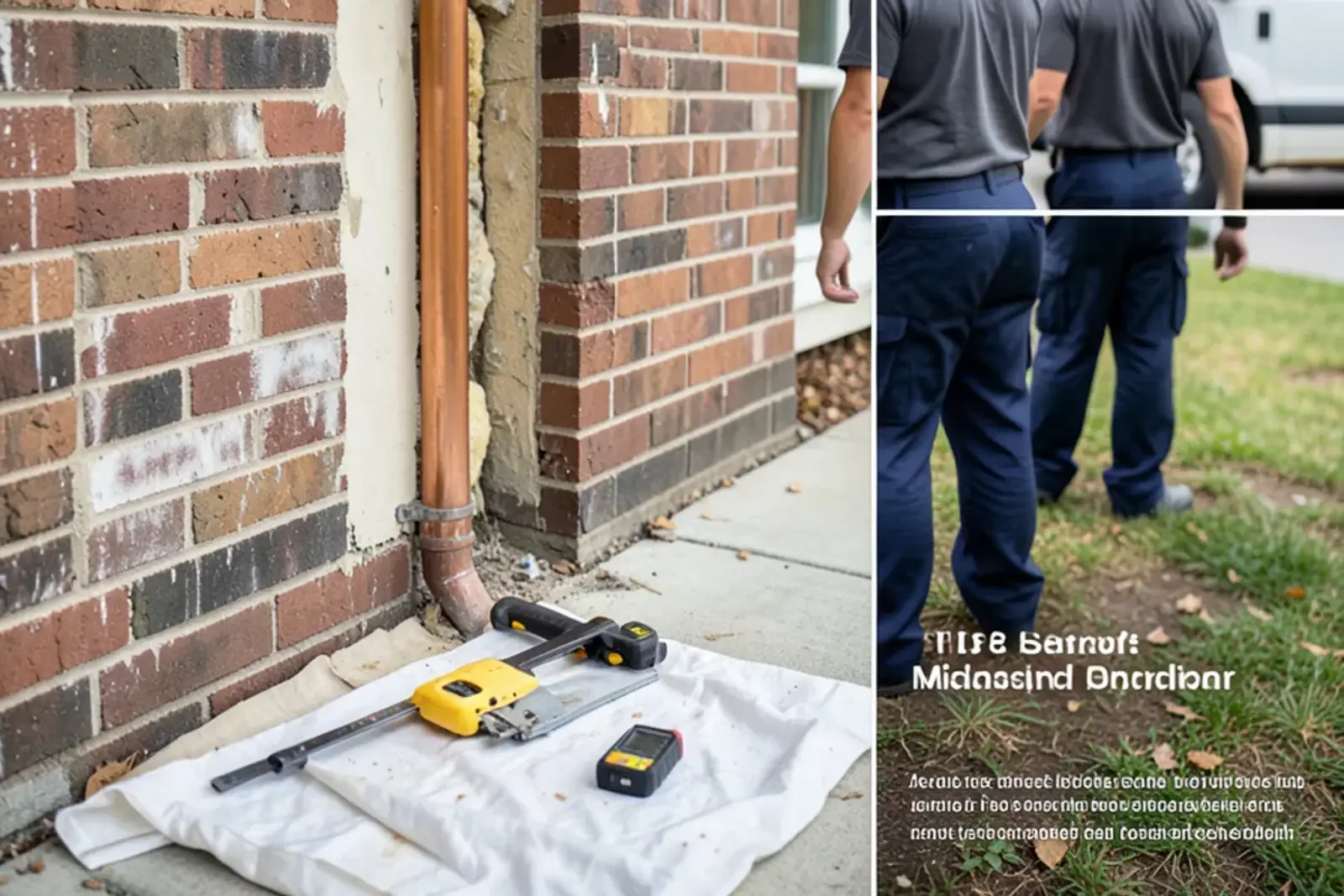
Burst pipe repair choices for copper, galvanized and PEX
Freeze damage work can include:
- Thawing a frozen line and testing it
- Finding a split inside a wall or ceiling
- Clamps, splices and reroutes
- Insulating exposed pipe in garages and crawl spaces
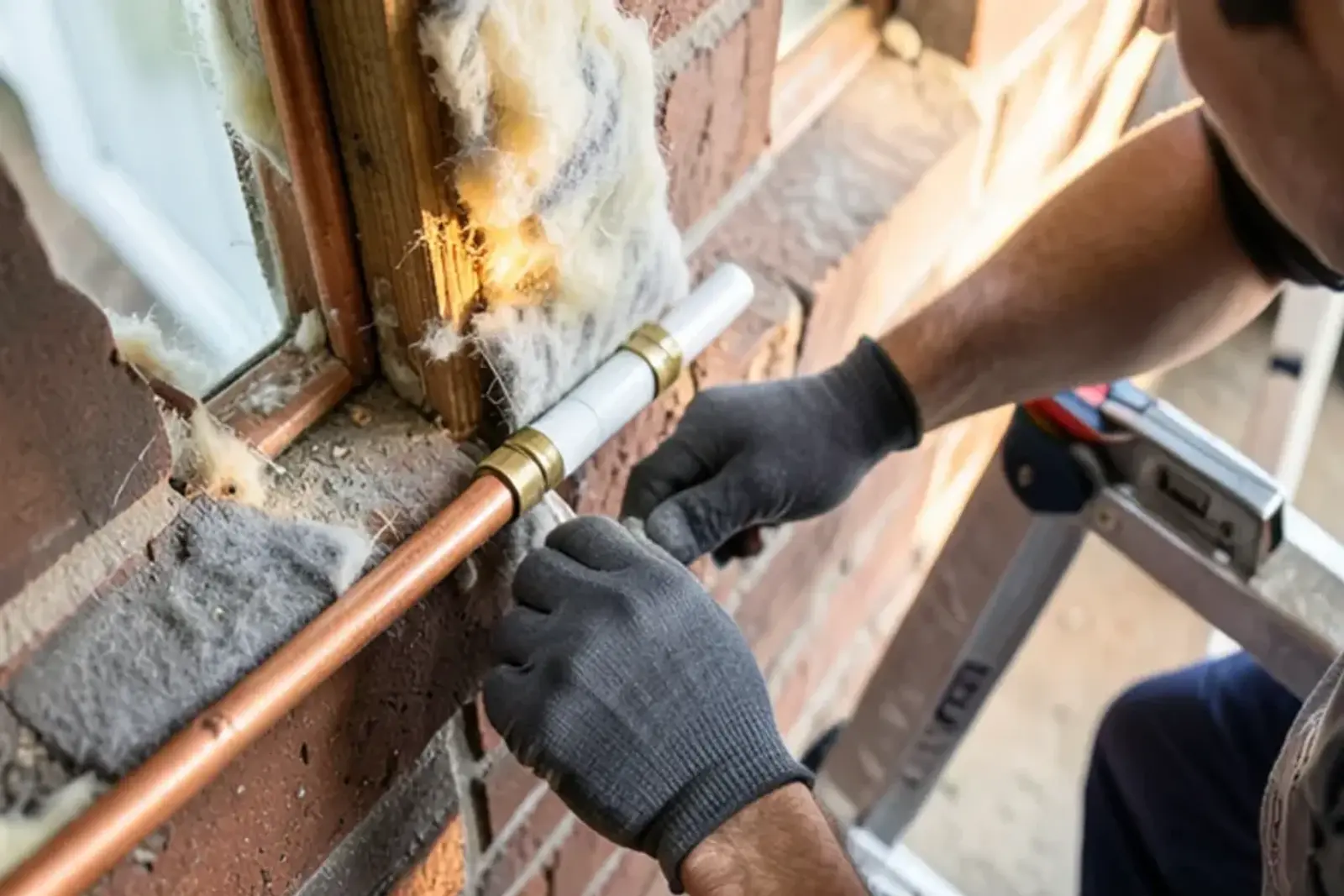
Clamp or push-fit coupling
A rubber-lined repair clamp or a push-fit coupling stops the water and gets the house running again. Treat it as a holding repair, especially inside a wall you plan to close.
Cut out and replace the split section
Most repairs end here. The pipe gets cut back past the damage, since a freeze often stretches it beyond the visible split, and new copper or PEX is spliced in. The line is then brought up to pressure and every joint is checked before anything gets covered.
Reroute the run off the cold wall
A pipe that froze once in an exterior wall can freeze again. Moving that branch into an interior wall or the basement ceiling costs more today and removes the cause.
Replace the line or the whole system
A split in corroded galvanized pipe usually means the rest of that pipe is in similar shape. A spot repair buys time there, and whole home repiping is the longer answer. If you're not sure the burst was the only problem, leak detection and repair checks the rest of the system starting at the meter.
Cutting in new pipe alters the piping, so Michigan requires a permit; the exemptions cover only the moving parts inside faucets and valves, plus clearing a stoppage. In Fraser the permit is applied for online, and the inspector comes on a Tuesday or Thursday morning. Only a licensed plumbing contractor or a homeowner working on their own house can pull it. Ask whoever does the final splice who files it.
What sets the cost of frozen pipe repair?
- Where the break is. An open basement ceiling is the easy case, while a wall behind kitchen cabinets or the ceiling over a condo below is not.
- How many splits a single freeze left behind, since one cold night can open a line in two or three places.
- The pipe material, and whether the old pipe takes a clean connection.
- Rerouting compared with repairing in place.
- Drywall, insulation and paint, which are separate from the plumbing.
- The city permit and inspection for the permanent repair.
- Timing, since evening and weekend work usually costs more across the trade.
The cheapest frozen pipe is one that never freezes, and the NAIC notes that policies often cover frozen-pipe water damage only when the owner took reasonable steps to prevent freezing. Following the Red Cross guidance, keep the thermostat at the same setting day and night, and no lower than 55°F if you leave town. Open cabinet doors under sinks on outside walls during a cold snap and let a cold faucet drip. Keep the garage door closed if supply lines run through it. Before the first hard frost, unhook hoses, close the inside valve to each outdoor faucet, leave the outside faucet open to drain and blow out the sprinkler lines. There's a fuller checklist in our guide to keeping pipes from freezing in a Michigan winter. We also fix freeze damage in Clinton Township, Sterling Heights and St. Clair Shores.
Why call us when a Fraser pipe bursts
We're on Janet Ave, just south of 14 Mile, among the 1950s through 1970s houses described above. Call (207) 419-2600 and the first minutes go to stopping the water: where your main is, whether it closed all the way, what the water heater is doing. Then we sort out whether the break needs someone now or can wait, shut off, for a scheduled repair, without an arrival time we can't keep. You also hear whether a clamp is only temporary or the run should move off the cold wall.
Frozen and burst pipe questions from Fraser winters
Where can I get burst pipe repair near me in Fraser?
Call (207) 419-2600 from Fraser or a neighboring city, after the main valve beside the meter is closed. We'll ask where the water is showing and what the pipe is made of, then talk through whether it needs a plumber right away or can sit with the water off until a scheduled repair.
How can I tell whether a pipe is frozen or already burst?
A frozen pipe gives little or no water at the faucets it feeds, and an exposed section may show frost. A burst pipe usually stays quiet until it thaws, then sprays or soaks the wall. If a faucet quit on a cold night, find the main shutoff before you warm the pipe.
Should the water stay off after a pipe bursts?
Yes, until the split section is repaired or capped. If the damage is on one branch that has its own valve, a plumber can often close that valve and turn the main back on so the rest of the house has water. Keep the water heater on pilot or off while the main is closed.
Does a pipe that froze but didn't leak need replacing?
Not always. Copper and galvanized pipe can stretch or crack without leaking right away, so the frozen section should be checked under normal pressure after it thaws. If it holds and the pipe sits in an exterior wall or a garage, the real question is how to keep it from freezing again, either by insulating it or by moving it to a warmer wall.
More help alongside burst and frozen pipe repair
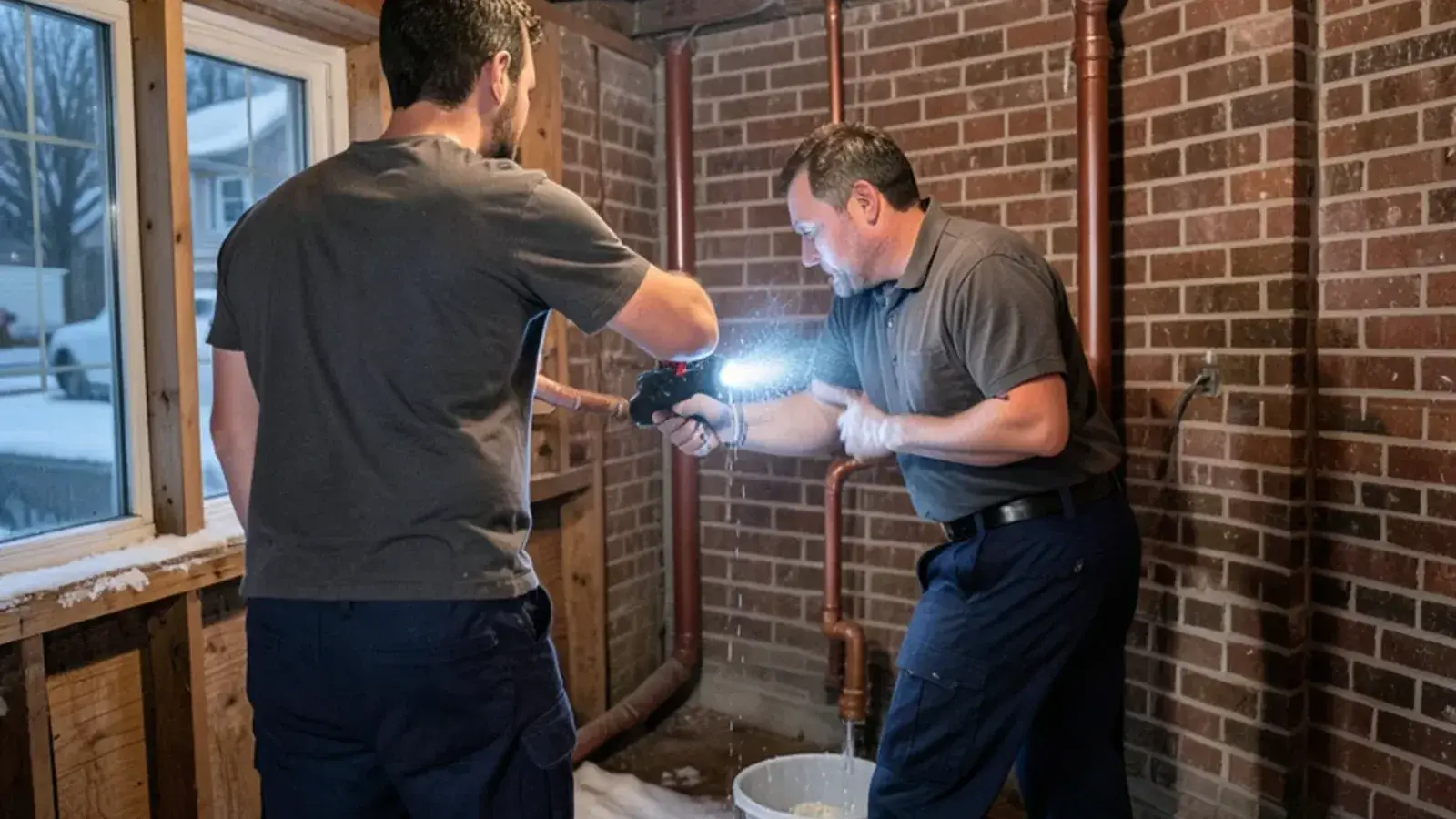
Emergency plumbing
Help finding your shutoff on the phone, then a repair that stops the water at its source
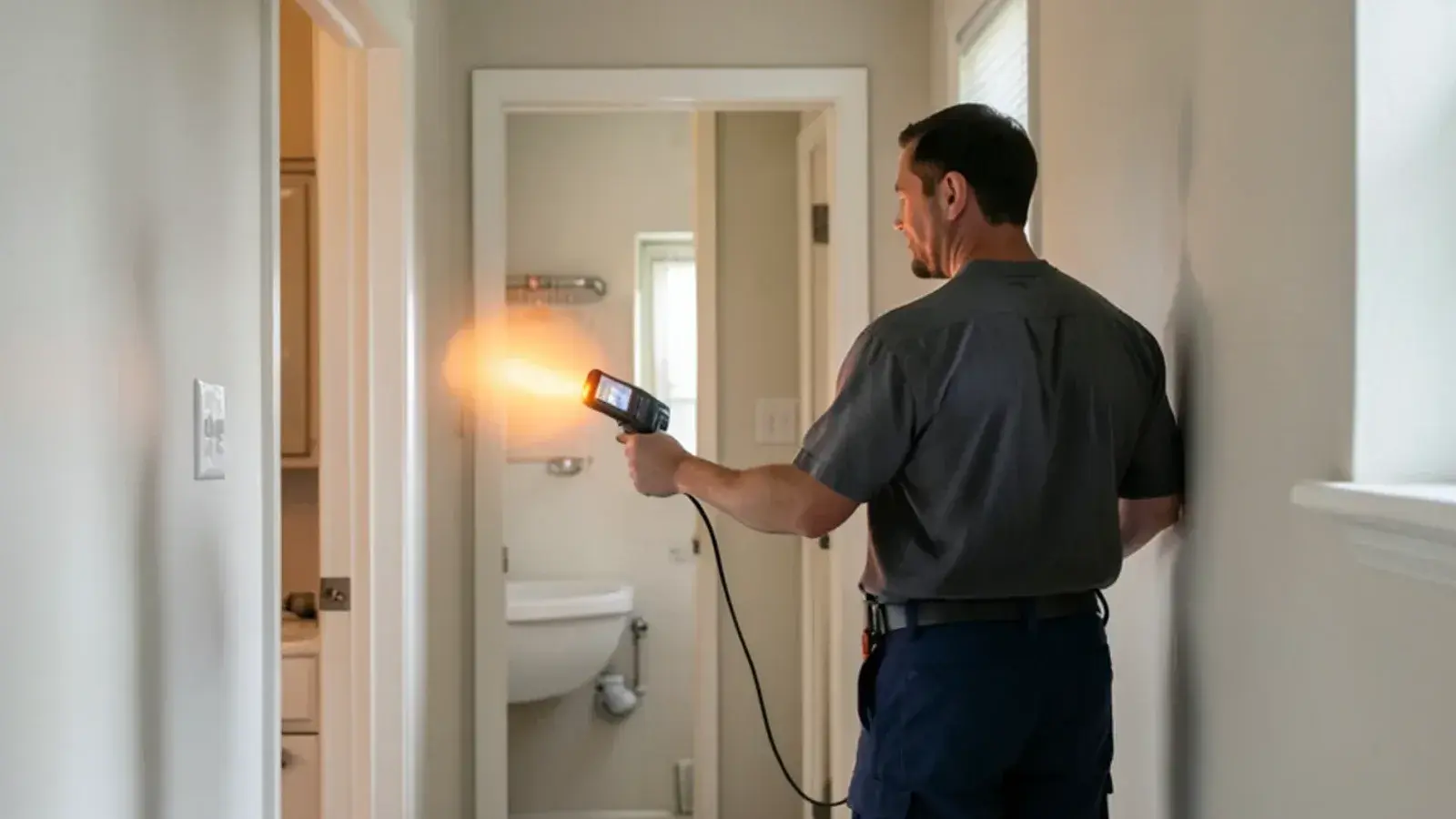
Leak detection and repair
Leaks traced at the meter and with moisture readings before any wall or ceiling gets opened
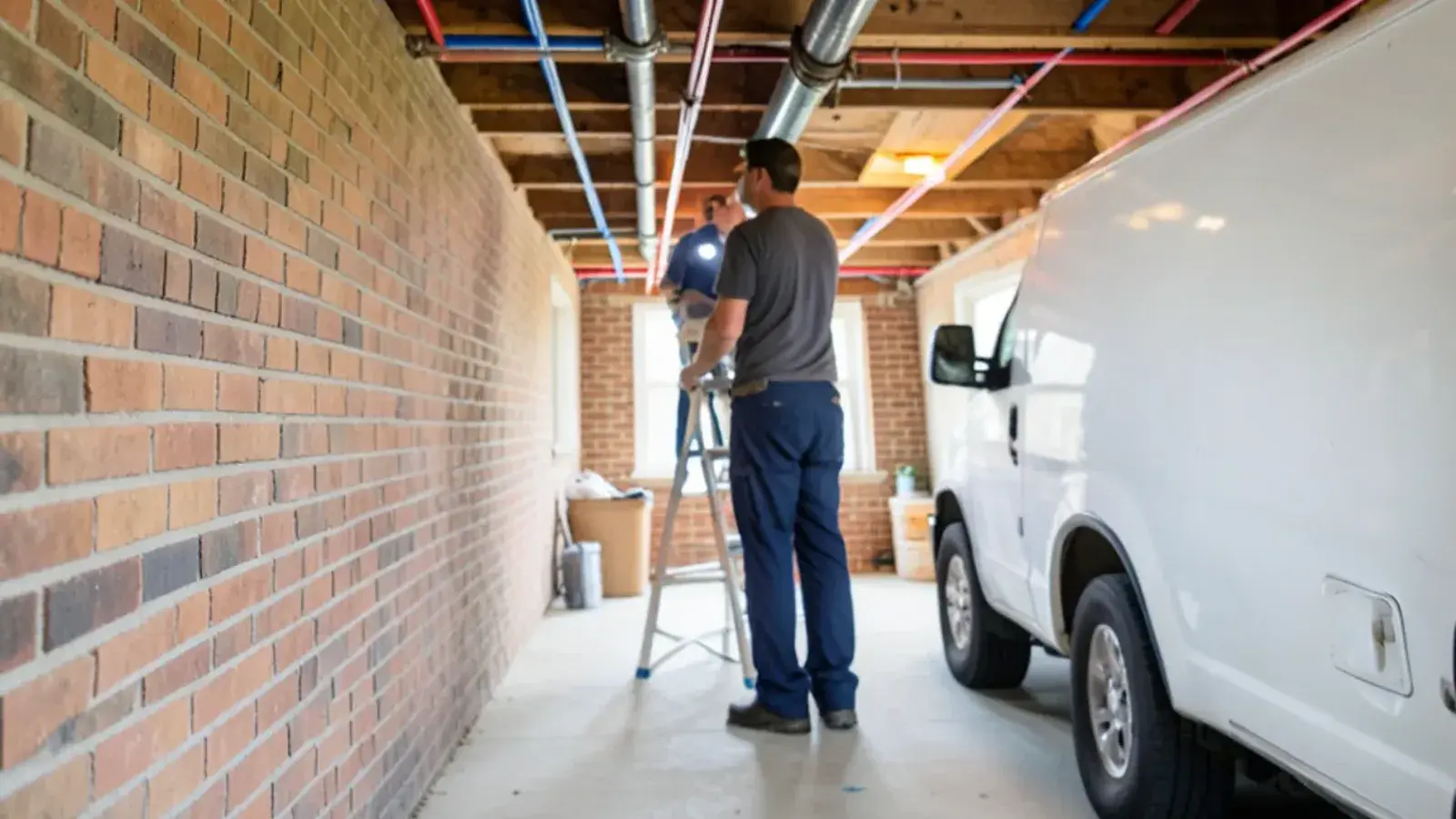
Whole home repiping
Every supply line replaced meter to faucet, with walls opened only where the new pipe runs
- What to do in the first 10 minutes after a pipe bursts
- How to keep pipes from freezing in a Michigan winter
Where we handle burst and frozen pipe repair around Fraser