
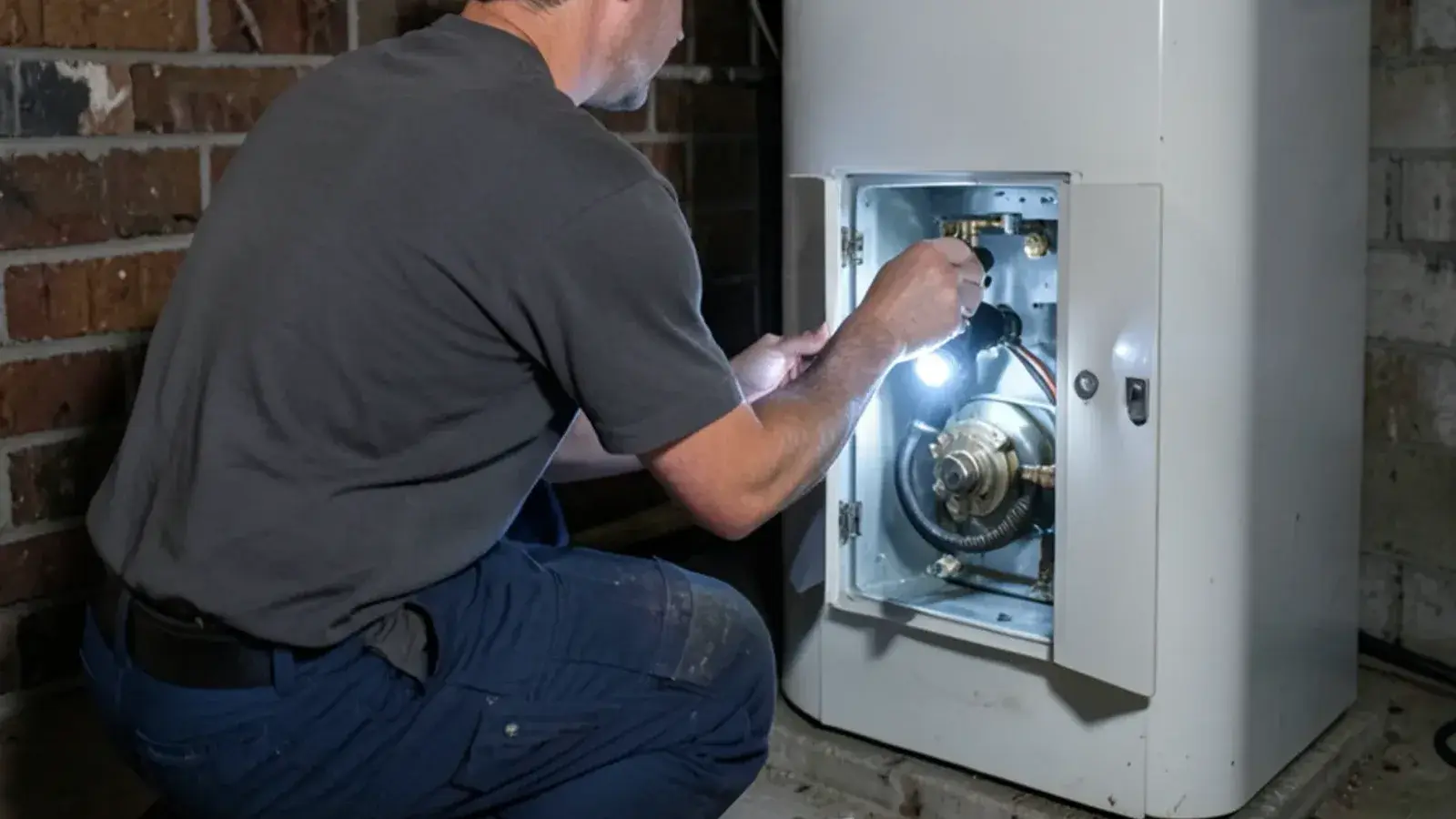
A water heater repair visit in Fraser covers the parts that fail outside the steel tank, plus the house conditions that wear them out:
- Pilot assemblies, thermocouples, flame sensors, igniters and gas control valves
- Electric elements, thermostats and the high-limit reset
- Relief valves, expansion tanks and house pressure
- Dip tubes and anode rods
- Leaks at fittings, unions and the drain valve
- Draft and venting on a chimney shared with the furnace
No hot water, a leaking tank or a noisy hot water heater?
What you notice first narrows the search a lot.
No hot water at all on a gas tank usually means the burner isn't lighting. The pilot light won't stay lit, the thermocouple or flame sensor is worn, or the gas control valve has failed. On an electric tank it's often a tripped high-limit reset or a burned-out upper element.
Hot water that runs out early points elsewhere: a broken dip tube, a dead lower element on an electric unit, or sediment taking up room at the bottom.
Water on the floor deserves a closer look. It could be a fitting on top, a weeping relief valve, condensation from a cold-start burner, or the tank shell. A tank leaking through its steel can't be fixed. If it isn't the heater at all, leak detection can find where the water is coming from.
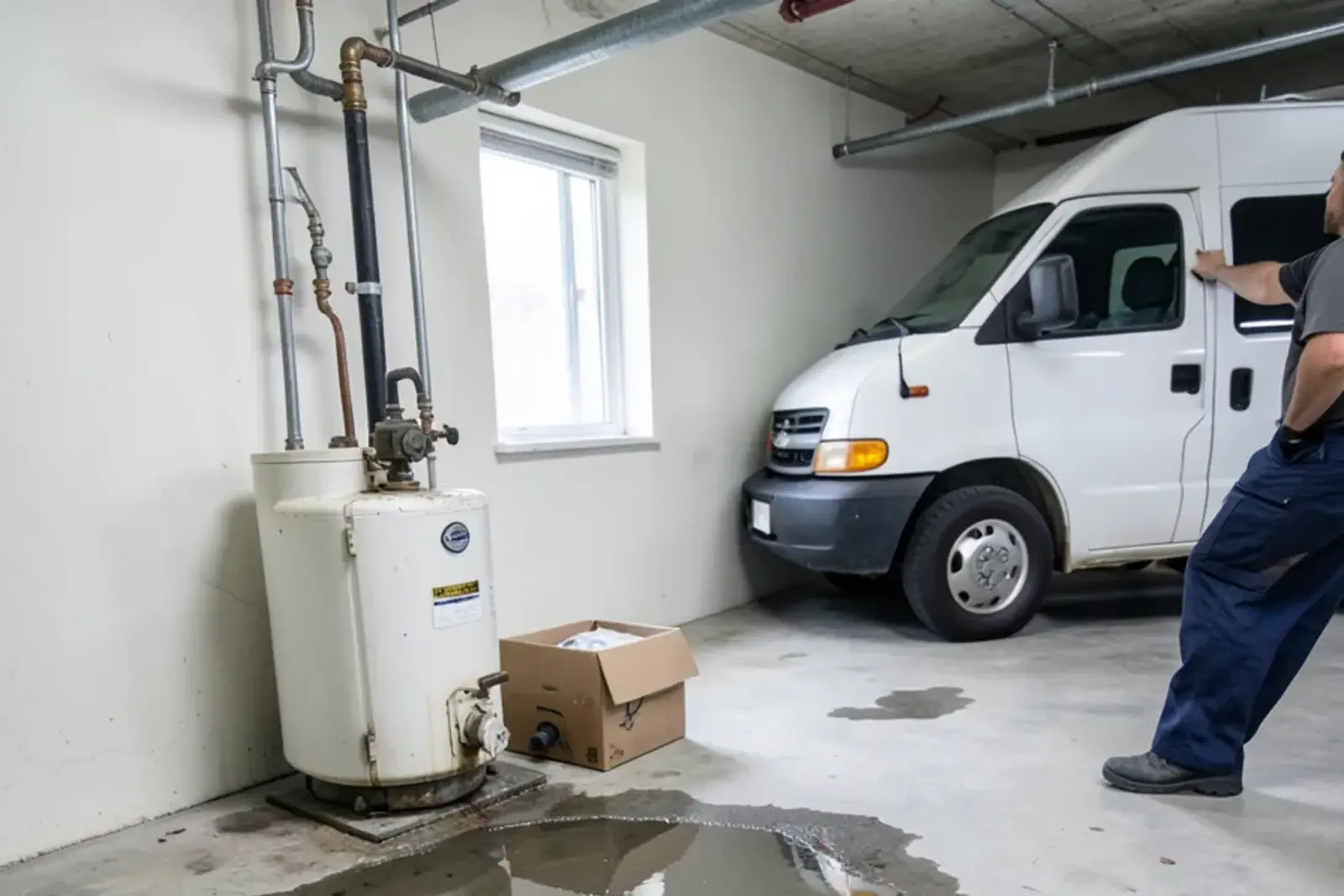
Popping and rumbling while the burner runs is almost always sediment. If a gas heater smells like gas, that isn't a repair call yet. Get out of the house and phone the gas company from outside.
Why water heaters in Fraser basements act up
Fraser buys Great Lakes Water Authority water drawn from Lake Huron, and it measures moderately hard at roughly 105 to 113 mg/L, or about 6 to 6.6 grains per gallon. That's not extreme. Still, each heating cycle drops a little calcium out, and over the years it settles on the tank floor or crusts onto electric elements. Rumbling and slow recovery follow.
Pressure is the second pattern. Lots of homes have picked up a check valve or pressure-reducing valve at the meter over the decades. Once the plumbing is a closed system, heated water expands with nowhere to go, pressure jumps and the relief valve starts to drip. A new relief valve won't cure that. An expansion tank or a pressure fix will, and the Michigan Residential Code expects that control and caps static pressure at 80 psi.
The houses matter too. In a 1950s through 1970s ranch the heater often shares a chimney with the furnace, and a furnace upgrade can leave that flue badly matched to the heater alone. Weak draft makes a pilot hard to keep lit and can spill exhaust at the draft hood.
How we pin down a water heater repair
We start with questions. When did it begin, is it every faucet or just one, and did anything else in the house change recently?
Then the checks. On gas units we look at the pilot flame, test the thermocouple or flame sensor, confirm gas is reaching the control valve, and watch the burner and the draft. On electric units we read voltage at the thermostats, test each element and look for a tripped reset. On any tank we thread a gauge onto a faucet to read house pressure, work the relief valve, and pull the covers to trace a leak to its source.
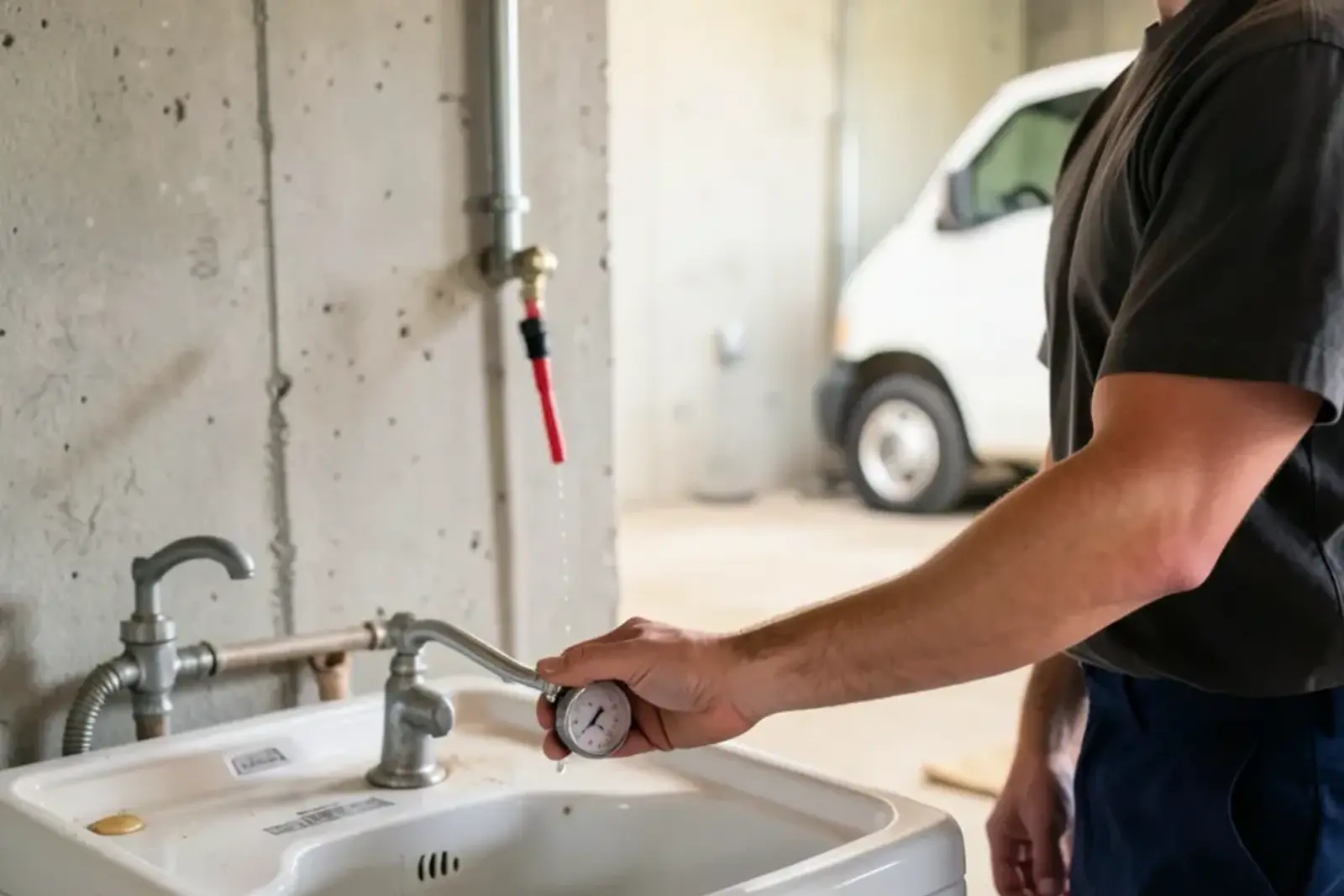
A drip that looks like a failed tank is sometimes a loose union above it, which is a small job. Makers' technical bulletins separate a slow relief-valve drip, which points to pressure, from a gush of very hot water, a sign the thermostat is letting the tank overheat. That same fault keeps tripping an electric unit's reset.
Why call a Janet Ave plumber about hot water
We're based at 32940 Janet Ave, among 1950s through 1970s ranches and split-levels where the heater often shares a flue with the furnace. Call (207) 419-2600 and tell us the fuel type and what changed. The failed part gets tested before anything is ordered, and if the tank is the problem, we say so. When a repair turns into a replacement, you hear about Fraser's permit and inspection before the old heater comes out.
Fix the part or replace the tank?
Repairs worth doing involve the parts listed at the top of this page. Swap the part and the heater goes back to work.
Signs that replacement is the smarter spend are a leaking tank, rust at the seams or base, a gas valve failure on a heater past its tank warranty, or a parts bill that lands close to a new unit. Check the rating label for warranty years and look up the date code in the serial number; the maker's website shows how to read it. If replacing makes more sense, our water heater replacement page covers sizing and the city permit, and tankless installation covers life without a tank.
Permits when a repair becomes a replacement
Swapping a part on a working heater generally counts as a minor repair under LARA's permit rules. Replacing the heater does not. Only a licensed plumbing contractor or a homeowner on their own house can pull the plumbing permit, and LARA treats gas piping as mechanical work. Fraser lists water heaters on both its plumbing and mechanical fee schedules, takes applications online through the Building Department at 33000 Garfield Rd, and inspects Tuesday and Thursday mornings. Michigan's relief valve rule ends the discharge pipe no more than 4 inches above the floor with no valve and no threads. Check any plumber on LARA's license search.
A repair visit from shutoff to hot shower
Make it safe
Gas goes off at the heater's control, or the breaker goes off on an electric unit. If there's a leak, the cold supply gets closed too.
Replace what failed
We put in the manufacturer's part or an approved equivalent, and fix anything related, such as a sooty pilot tube or a scorched wire.
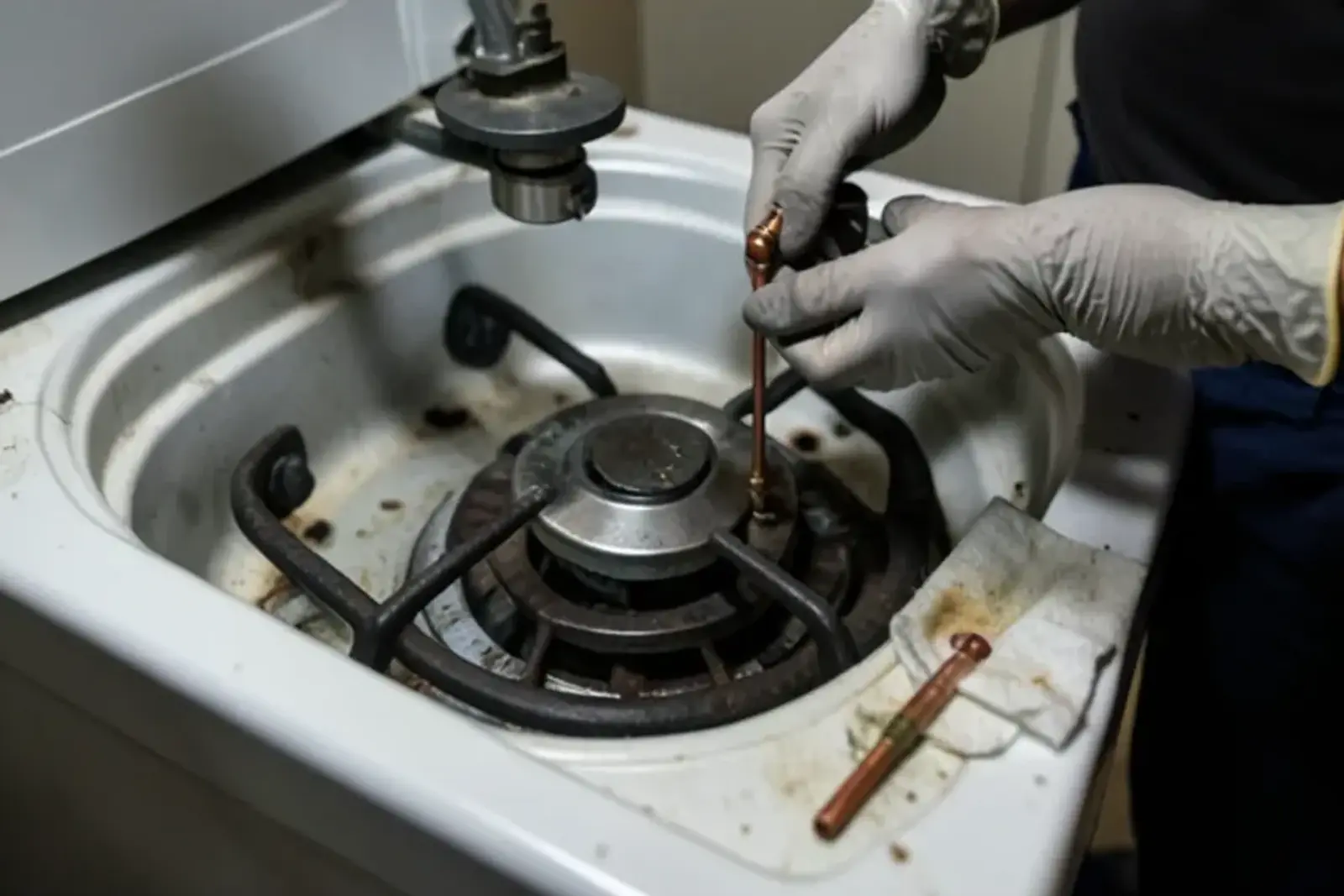
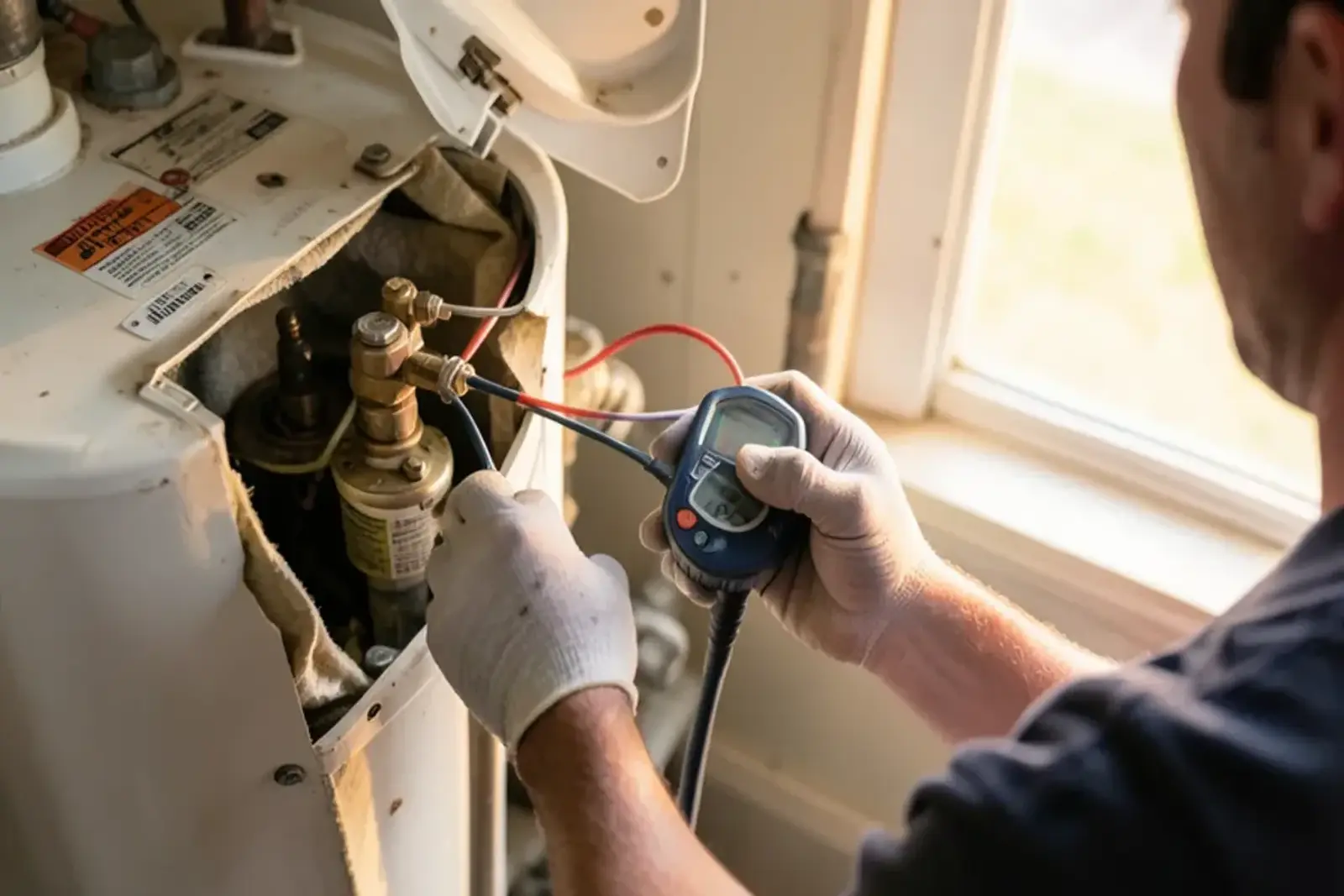
Run it under load
The heater gets relit or powered back up. We open hot water at a couple of fixtures and watch a full burner cycle.
Recheck draft, pressure and the relief line
A smoke test at the draft hood shows whether exhaust is going up the flue. We read house pressure again and make sure the relief discharge pipe is intact and ends where it should.
Tell you what we found
You'll hear what failed and what's worth watching, like sediment depth or a relief valve that's starting to seep. Single-part repairs usually wrap up in one visit; a part that has to be ordered for an older model can mean a second trip.
Cost factors and habits that head off the next repair
The part and the heater drive the bill more than anything. A thermocouple and a gas control valve are very different repairs. Fuel type matters, along with whether the part is stocked or ordered for an older model, how easy the heater is to reach in a closet or crawl space, and whether a second problem turns up, like high house pressure that needs an expansion tank or a flue that drafts poorly. Evenings and weekends usually cost more across the trade. If the answer is a new heater, Fraser's FY 2026–27 schedule lists a $40 plumbing line and a $40 mechanical line for it, plus a $30 application fee. You hear the options before work starts.
To push the next call further out, follow your manual on draining sediment and checking the anode, since the schedule varies by model, and keep boxes and paint cans away from a gas heater's burner opening. See signs your water heater is close to failing for the warnings, and what drives the cost of replacing a water heater if the tank is done.
We take hot water heater repair calls across Fraser and in nearby Clinton Township, Roseville and Eastpointe.
Hot water trouble, answered for Fraser households
Is it worth repairing a hot water heater that's 10+ years old?
It depends on the tank, not the birthday. If the steel tank is dry and the failed part is a thermocouple, element or thermostat, a repair is usually reasonable. If the tank leaks, shows rust at the base, or needs a gas valve after its warranty has run out, replacement tends to make more sense.
Why won't the pilot light stay lit on my water heater?
The usual cause is a worn thermocouple or flame sensor that no longer tells the gas valve the pilot is burning. A dirty pilot tube, a weak flame, poor draft in a shared chimney or a failing control valve can do it too. If you smell gas at any point, stop relighting, leave the house and call the gas utility from outside.
What should I do if my water heater is leaking?
Close the cold water valve above the heater, then turn the gas control to off or switch off the breaker. Put down towels or a pan and move anything stored nearby. Water coming through the tank shell means replacement; a leak at a fitting or the relief valve can often be repaired. Call (207) 419-2600 and we'll help you figure out which you have.
Why does my water heater make popping or rumbling noises?
That's usually sediment. Minerals settle on the tank bottom, and water trapped under the layer flashes to steam in small bursts while the burner runs. Fraser's water is moderately hard, so the layer builds slowly. Flushing as the manual describes helps when it's caught early. A thick, old layer may not flush out, and then the noise is a reason to keep an eye on the tank.
More help alongside water heater repair
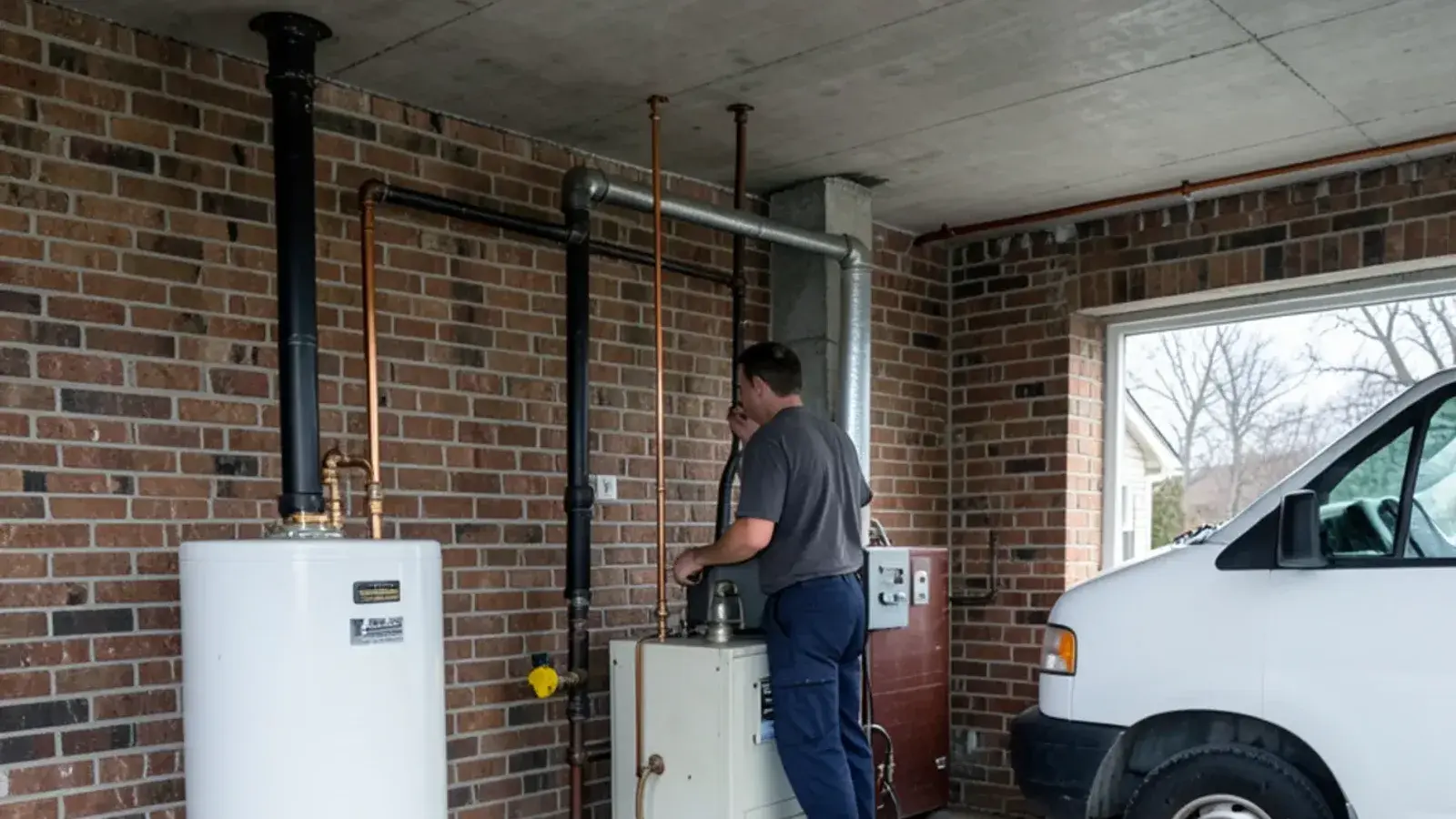
Water heater installation
New tank sized to your busiest hour, permitted with the city and set up for inspection
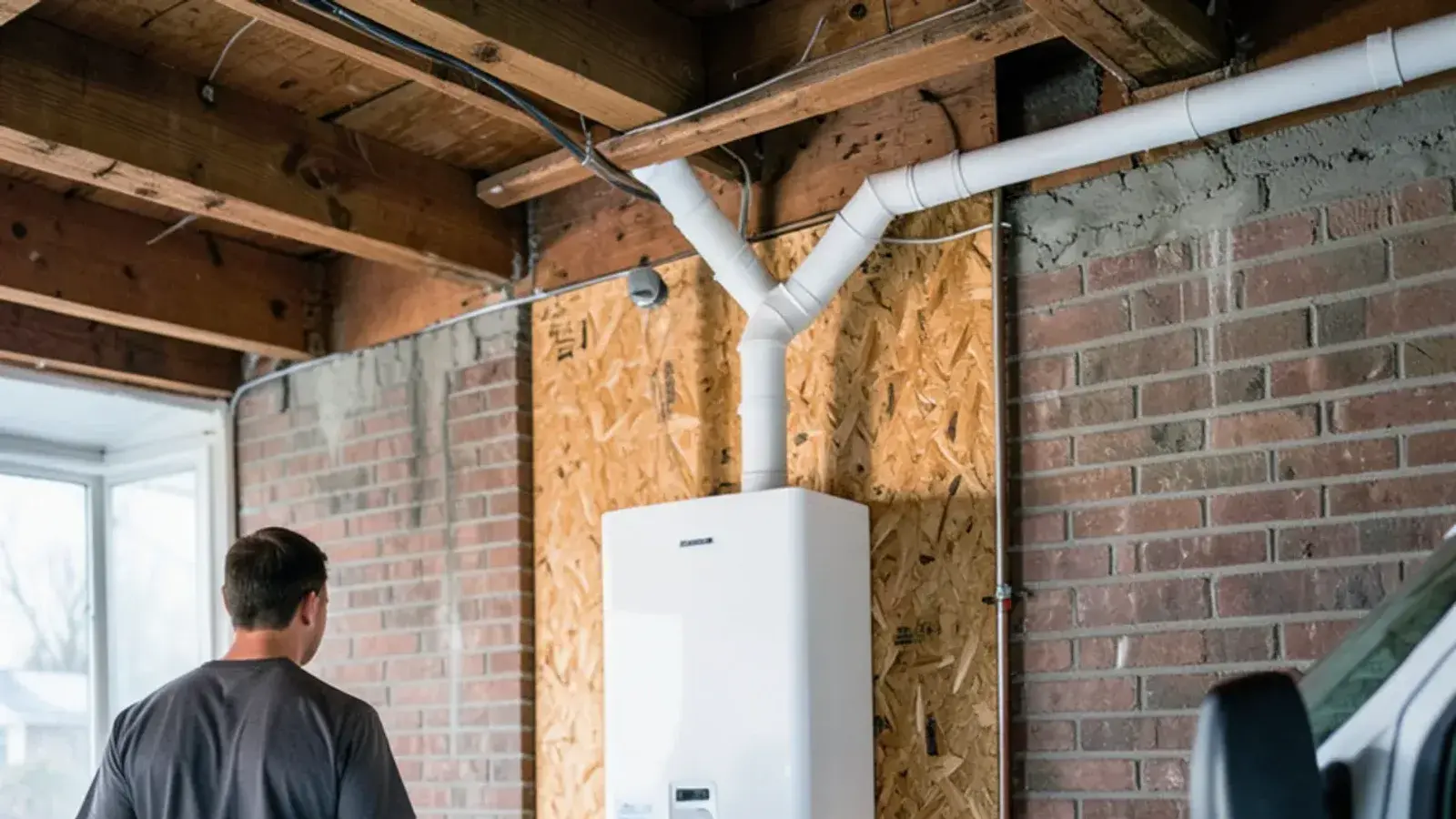
Tankless water heater installation
Gas line, vent and condensate planned up front so a tankless unit keeps up in winter
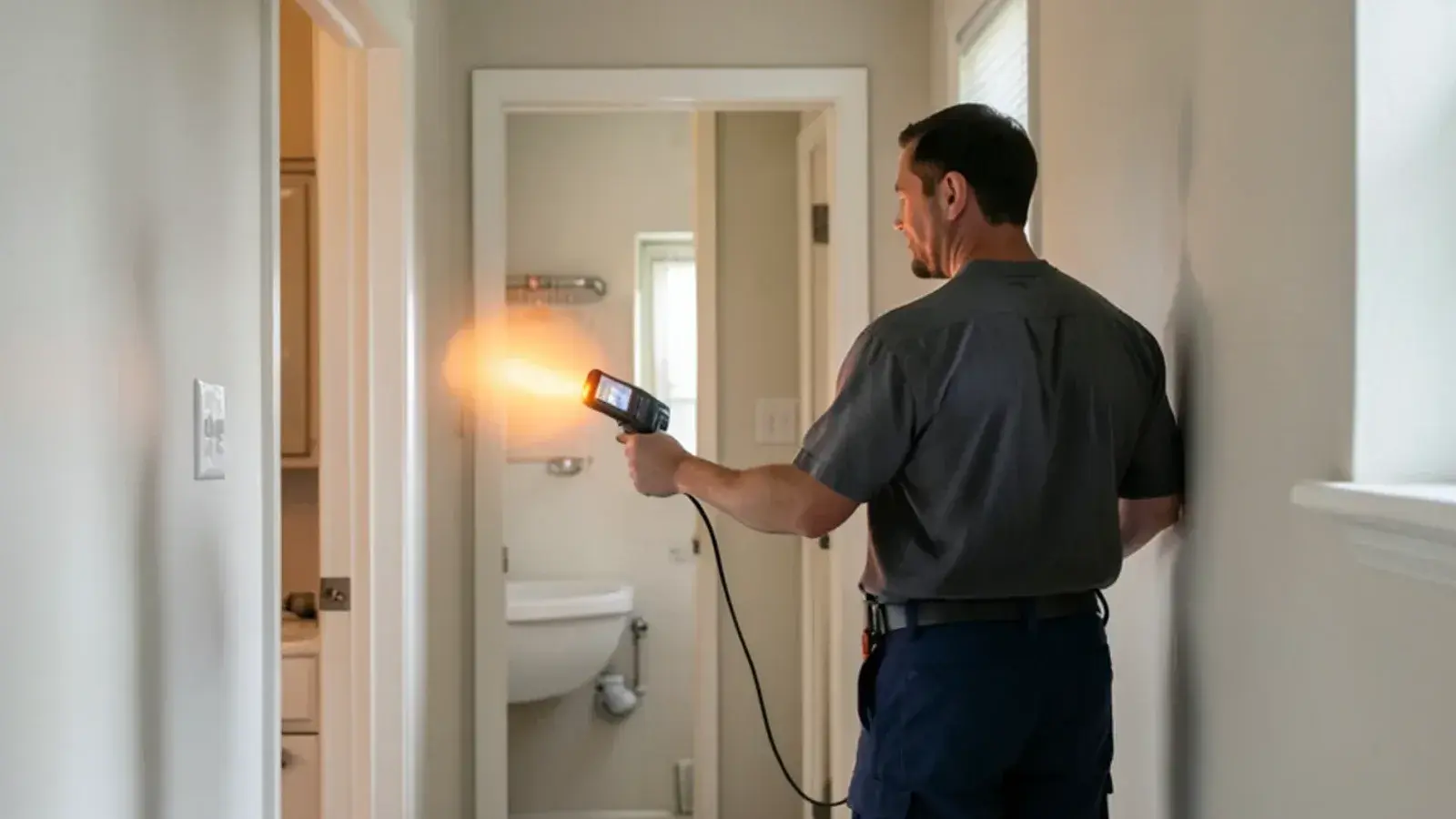
Leak detection and repair
Leaks traced at the meter and with moisture readings before any wall or ceiling gets opened
Where we handle water heater repair around Fraser