
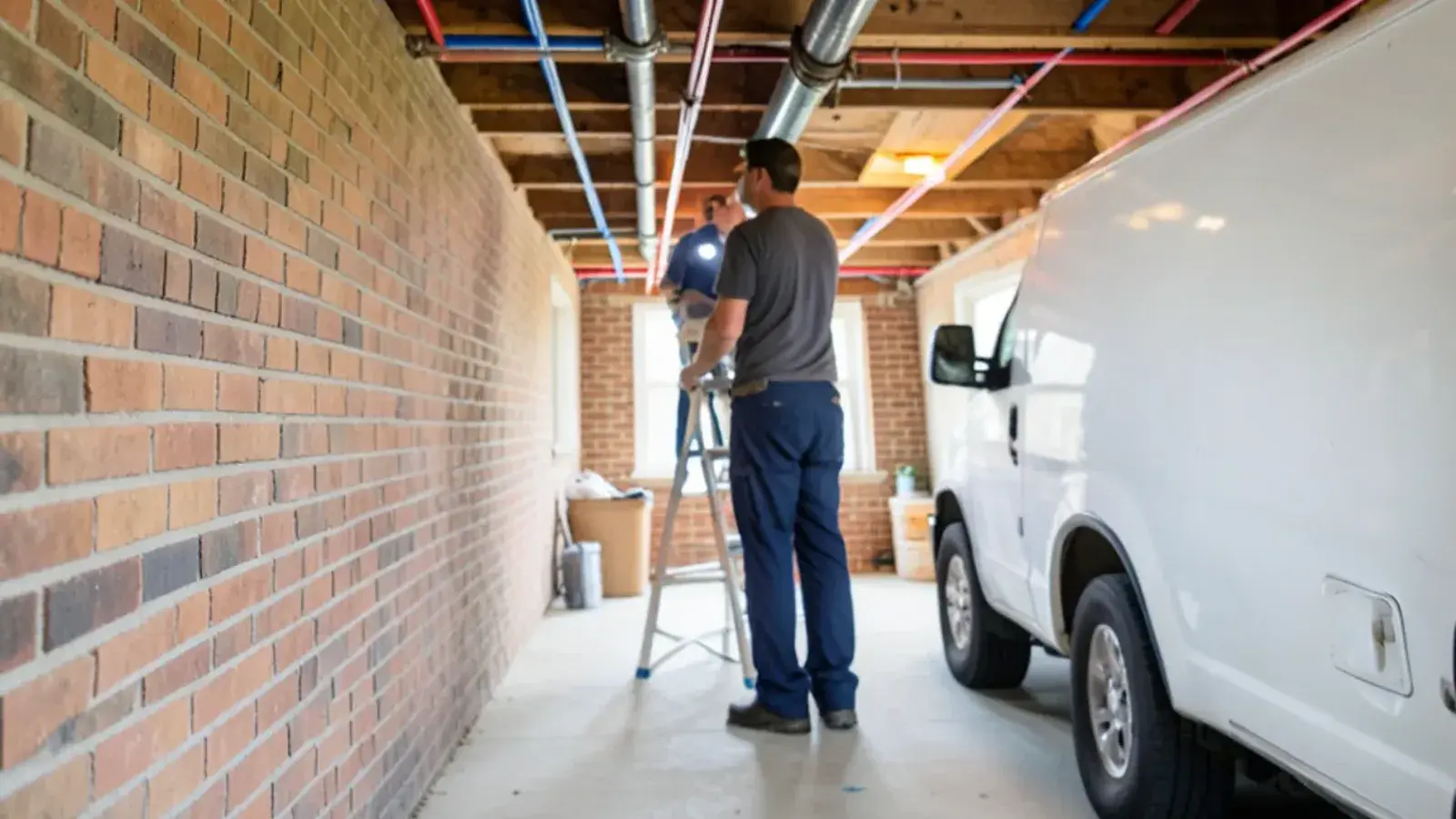
Most of Fraser's houses were built between 1950 and 1979, with 1972 as the median year, and many still carry their original supply pipe. In the older part of that range it's often galvanized steel, which rusts and narrows from the inside. In the later houses it's usually copper, which holds up better but can still pit through. Repiping fixes the pipe itself, when one fitting or fixture is no longer the problem.
Galvanized or copper behind the walls of a 1960s Fraser ranch?
Start where the pipe leaves the meter in the basement. Scratch it with a key and hold a magnet to it. Galvanized steel stays dull gray, has threads at every joint and grabs the magnet. Copper scratches to a penny color and the magnet falls off. Plenty of Fraser houses have both, with copper spliced into galvanized mains during a kitchen or bath remodel.
Inside galvanized pipe, rust and scale build until a 3/4-inch line carries the flow of a much smaller one. The warning signs:
- brown or orange water after the house sits overnight or after a trip
- pressure that sags when two fixtures run at once
- leaks at threaded nipples, especially at the water heater and under sinks
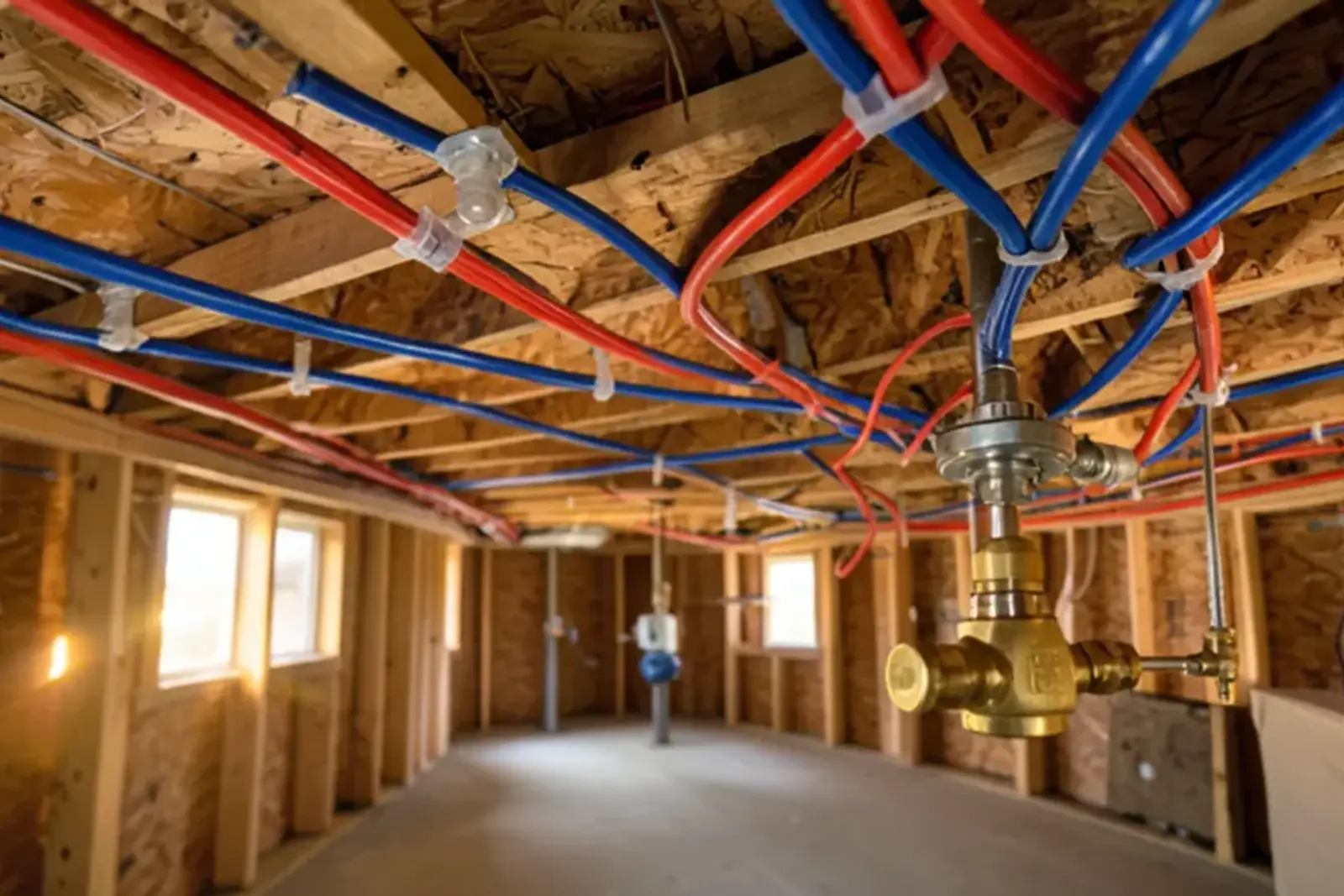
- a patchwork of clamps and copper splices along the basement ceiling
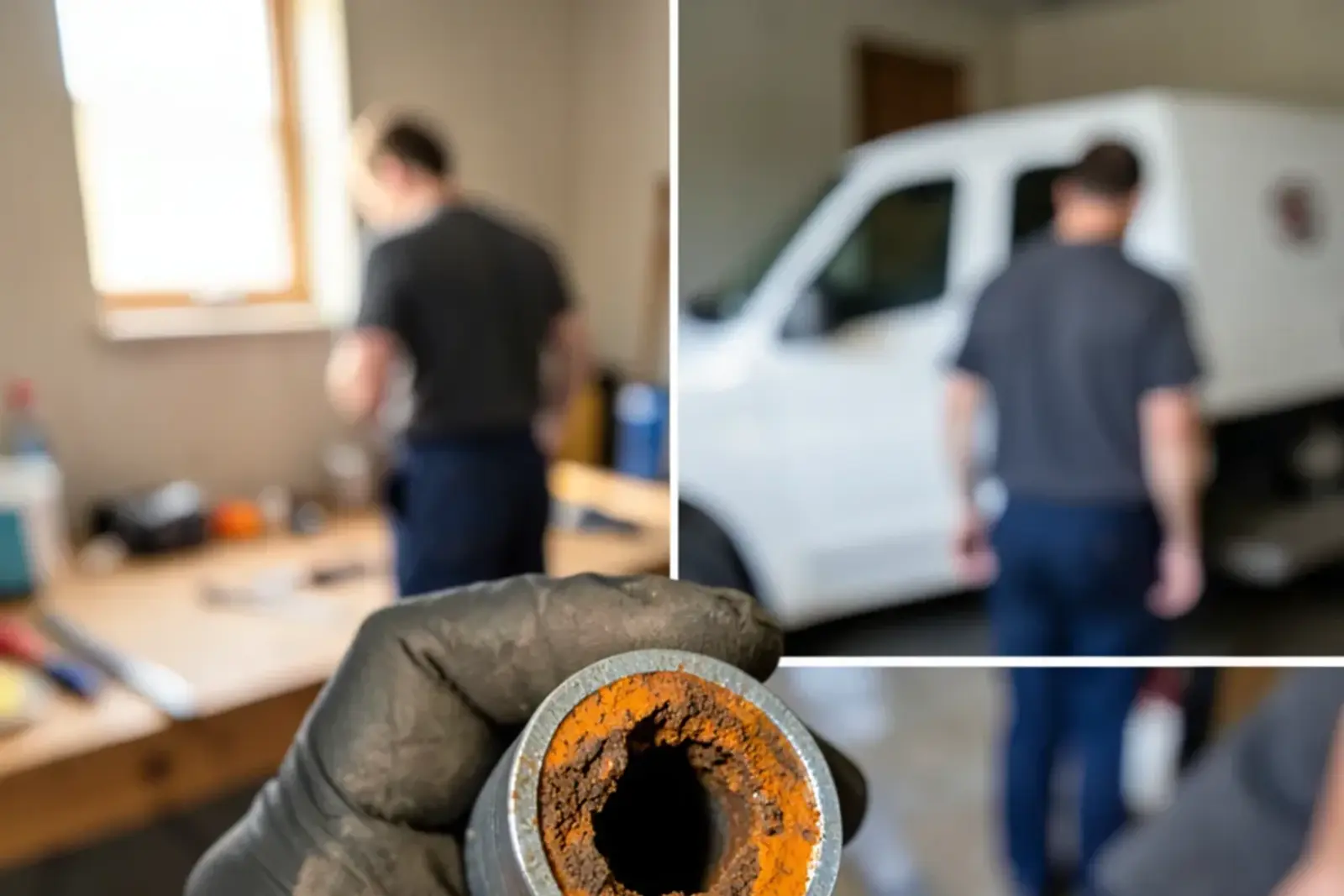
Copper fails differently, as scattered pinholes. One pinhole is a repair, and leak detection and repair can confirm it was the only one. A third or fourth in a few years says the pipe wall is thinning throughout. Our post on galvanized pipes in 1950s homes goes deeper.
What whole-home repiping services include
A whole house repipe replaces the water distribution pipe: the cold main from the meter, the hot main from the water heater, and every branch to sinks, tubs, toilets, appliances and outdoor faucets. Drains are a separate system. So is the buried service line from the street, though a galvanized one is worth replacing at the same time; see main water line repair and replacement.
The job also takes in:
- a new main shutoff on the house side of the meter (the meter itself stays, because it belongs to the city)
- an accessible shutoff valve at every fixture except tubs and showers, which the Michigan Residential Code requires
- outdoor faucets with vacuum breakers, another code item
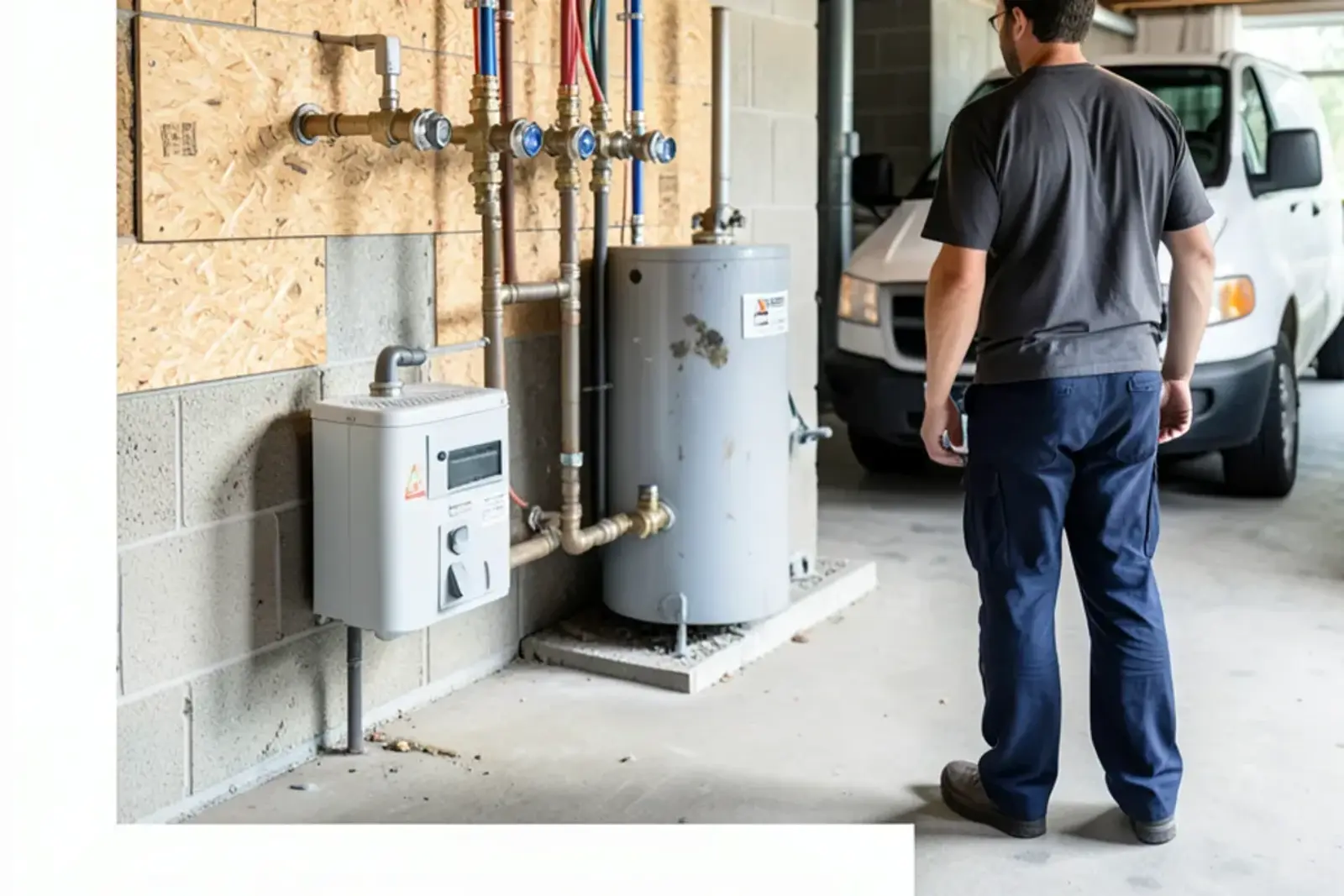
- new connections at the water heater, plus an expansion tank where a check valve or pressure-reducing valve traps thermal expansion
- a pressure-reducing valve if static pressure runs above 80 psi, the code ceiling
- a pressure test and the city's rough and final inspections
A repipe is also the cheapest moment to pull pipe out of exterior walls and attached garages; our guide on how to keep pipes from freezing explains why those runs matter. If the water heater is near the end of its life, pairing the job with water heater installation avoids redoing the same connections.
PEX vs copper for a whole house repipe
The code requires water distribution pipe to meet NSF 61 for drinking water and, on the hot side, to be rated for at least 100 psi at 180°F. PEX and copper both qualify; they differ in how the job goes.
| PEX | Copper | |
|---|---|---|
| How it's run | Long flexible lengths fished through joists and walls, with few fittings | Rigid lengths joined at each turn with soldered or pressed fittings |
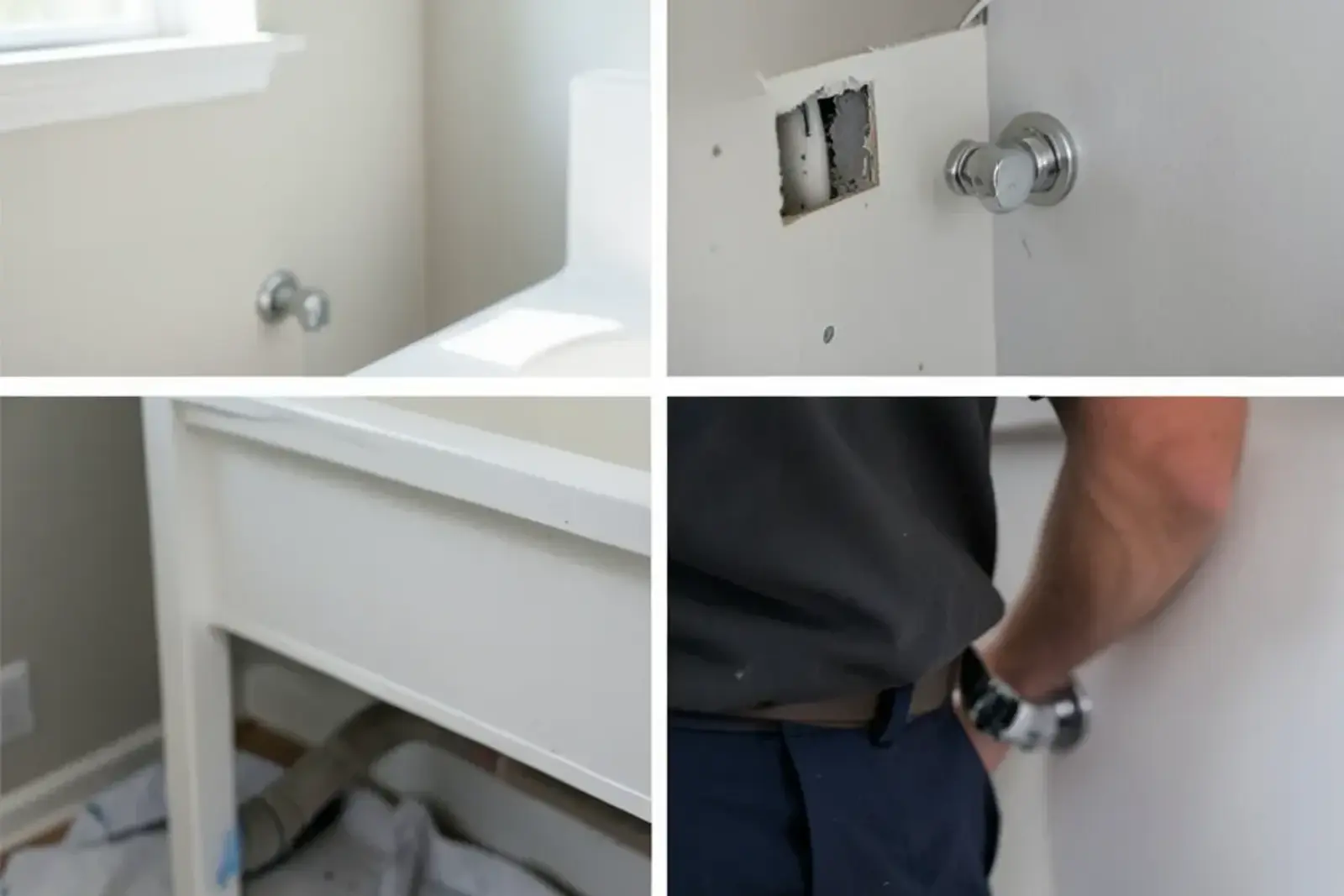
| Wall openings | Fewer, because the pipe bends around corners | More, at each change of direction |
| If water freezes in it | More forgiving, though fittings can still fail | Tends to split |
| What to watch | Keep it out of sunlight and away from heat sources, per the maker's instructions | Can pit over time in some water conditions |
In a finished ranch or split-level, PEX is usually practical because it fishes through closed walls and can run from a manifold. Copper still suits exposed runs, or an owner who prefers metal.
How a repipe moves through an occupied Fraser house
Map the runs and the openings
Every existing line gets traced, the new mains get routed, and each wall opening is marked before any cutting. In a ranch over an open basement, many branches rise straight into the wall cavity, so openings are small and few.
Run new pipe while the old pipe still works
New lines go in alongside the old ones, so the water stays on through most of the job.
Switch over
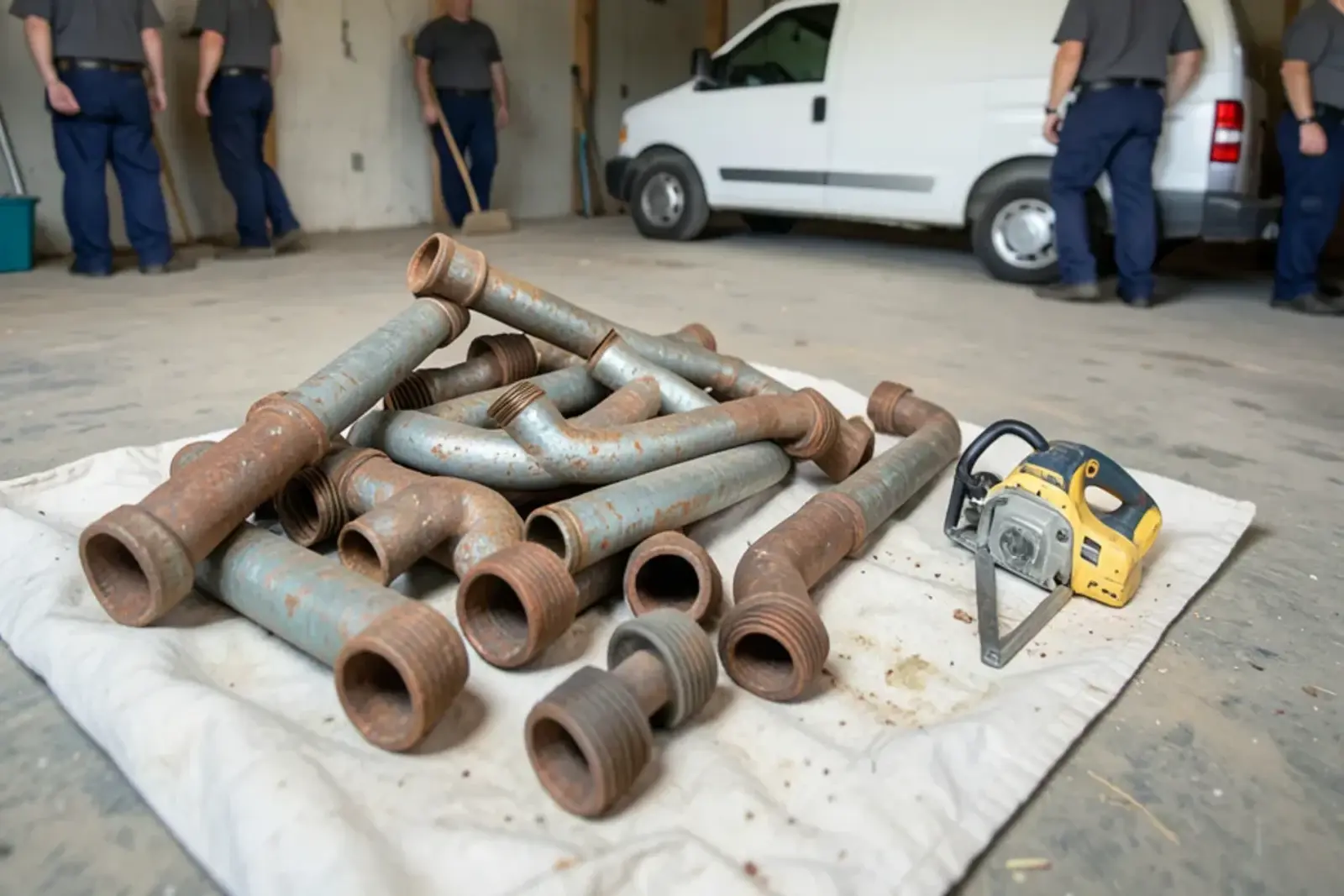
The main is closed, fixtures move to the new pipe one at a time, and the old pipe is cut out of the ceiling. This is when the house is without water. Many older houses ground their electrical panel to the metal water pipe. PEX breaks that path, so have an electrician confirm the grounding first.
Pressure test and rough inspection
The new piping is held under pressure, and the City of Fraser inspector checks it before any wall is closed.
Close up
Openings get patched after inspection. Agree in writing beforehand on who patches and to what finish.
Do you need a permit to repipe a house in Fraser?
Yes. Michigan requires a plumbing permit for everything except faucet and valve working parts and clearing stoppages. LARA's rules say the applicant has to be a licensed plumbing contractor or a homeowner doing their own plumbing. A contractor's application carries both the contractor's license number and the supervising master plumber's, and you can check either on LARA's license verification page.
Fraser takes permit applications online only. Plumbing inspections run Tuesday and Thursday from 9 a.m. to noon, scheduled by the permit holder, under the 2015 Michigan Residential Code.
Repipe cost factors and the warranty to get in writing
Most of a repipe's price comes from the house. The number of fixtures and bathrooms sets how much pipe and how many valves go in. A one-story ranch over an open basement is the simplest layout; a split-level, a second floor or a finished basement ceiling adds openings and patching. PEX on a manifold, PEX trunk-and-branch and copper each take different fittings and labor. A 1-inch main costs more than a 3/4-inch one, and moving lines out of exterior walls or the garage adds runs. Water heater connections, an expansion tank or a pressure-reducing valve add parts, wall patching and paint are their own line, and replacing the service line in the same job changes the scope. Fraser's FY 2026-27 fee schedule lists water distribution piping at $15 for a 3/4-inch meter or $20 for a 1-inch, on top of the $30 application fee.
Keep two kinds of warranty apart. The pipe and fittings carry the manufacturer's warranty, and PEX makers commonly tie theirs to using their own fittings and tools, so ask which system is going in. Workmanship terms come from the installer; get them in writing with a copy of the passed final inspection. Afterward, learn where the new main shutoff is and cycle each fixture valve once a year so it doesn't seize. Along with Fraser, we take on repipes in Roseville, Eastpointe, Warren and Center Line.
Why have a Fraser plumber plan your repipe?
We work out of 32940 Janet Ave, just south of 14 Mile, among 1950s through 1970s ranches, split-levels and condos with the same mix of galvanized mains and later copper splices. The first step is proving the pipe is the problem: pressure at the meter against the fixtures, the main valve, the service line and the leak history. Nobody should sell you a repipe when one scaled nipple or a choked valve is the real cause. Before any drywall is cut, you hear who pulls the Fraser permit and which morning the rough inspection lands on. It starts with a call to (207) 419-2600.
What Fraser owners ask before a repipe
How do I compare repiping services in Fraser?
Compare scope line by line. Does each proposal cover every fixture, new shutoff valves, the water heater connections, wall patching, the permit and both inspections? Ask which pipe brand and fittings are going in, then check the contractor's license on LARA's free lookup. To have your house walked and mapped, call (207) 419-2600.
Can we live in the house during a whole house repipe?
Usually, yes. The new pipe is run while the old system keeps working, so the water stays on for most of the job. The house is without water during the switchover, and some drywall stays open until patching is done. Plan to pull furniture away from the walls that will be opened.
How long does a whole house repipe take?
It depends on the house more than the pipe. Bathrooms, a second floor and finished basement ceilings set the pace, and since new lines go in while the old ones work, the real outage is the switchover. Fraser inspects plumbing Tuesday and Thursday mornings, so the rough inspection date decides when walls close. The schedule comes after the walk-through.
Will repiping fix low water pressure?
If the low pressure comes from scaled galvanized pipe inside the house, yes. If the buried service line is also galvanized, or the main valve is choked with scale, the new pipe will still be fed through a narrow inlet. Fraser's 2025 water report counts 3 galvanized service lines and 174 of unknown material citywide.
Should I worry about lead in Fraser's water pipes?
Fraser's 2025 water quality report lists 0 known lead service lines, and lead at the tap tested 0 parts per billion at the 90th percentile against a 12 ppb action level. Old fittings inside a house are a separate question. For extra protection, the report points to a filter certified to reduce lead by an ANSI-accredited certifier.
More help alongside whole home repiping
Main water line repair and replacement
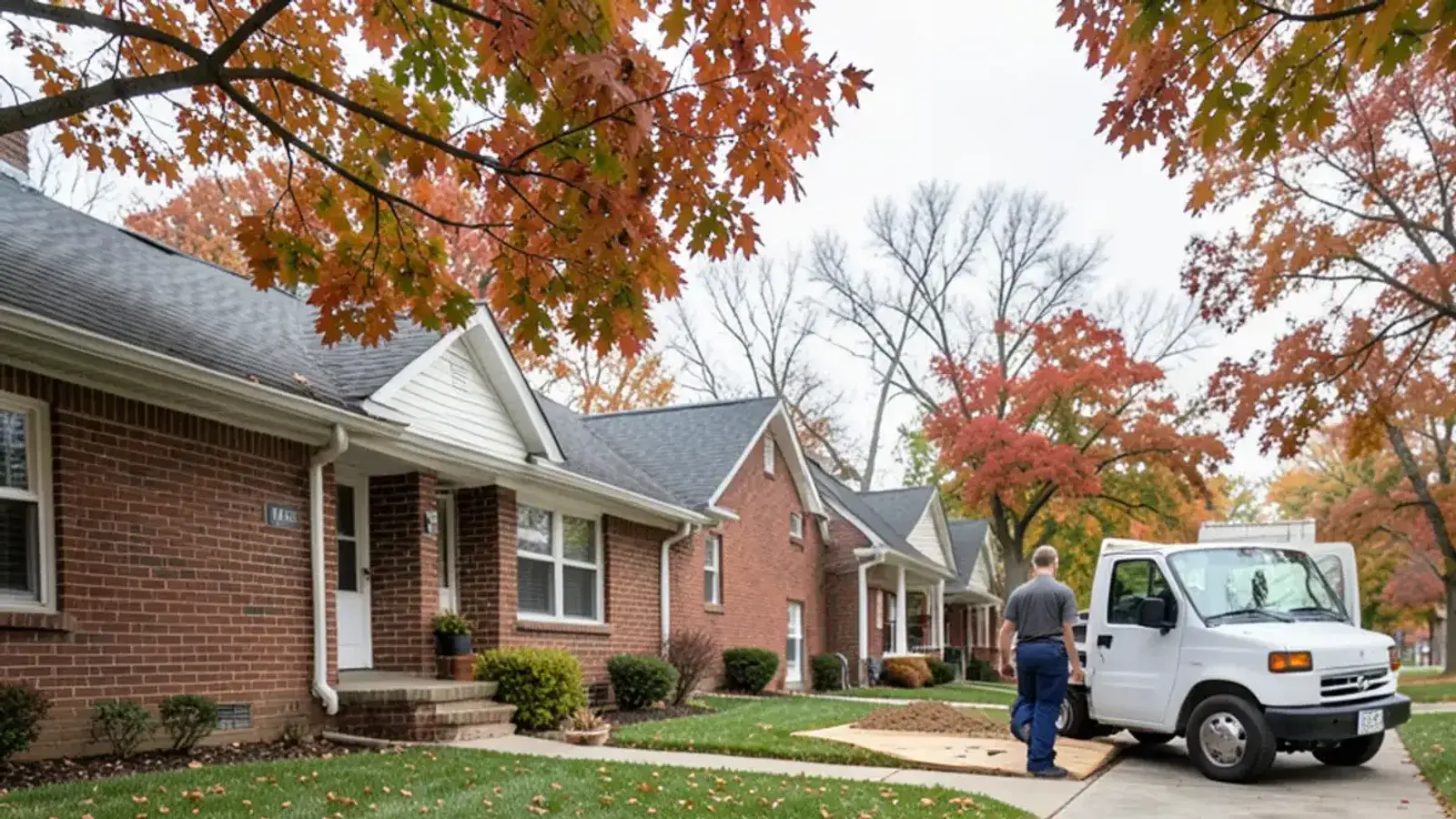
Buried service pipe repaired or replaced below frost depth, curb stop and main valve checked
Leak detection and repair
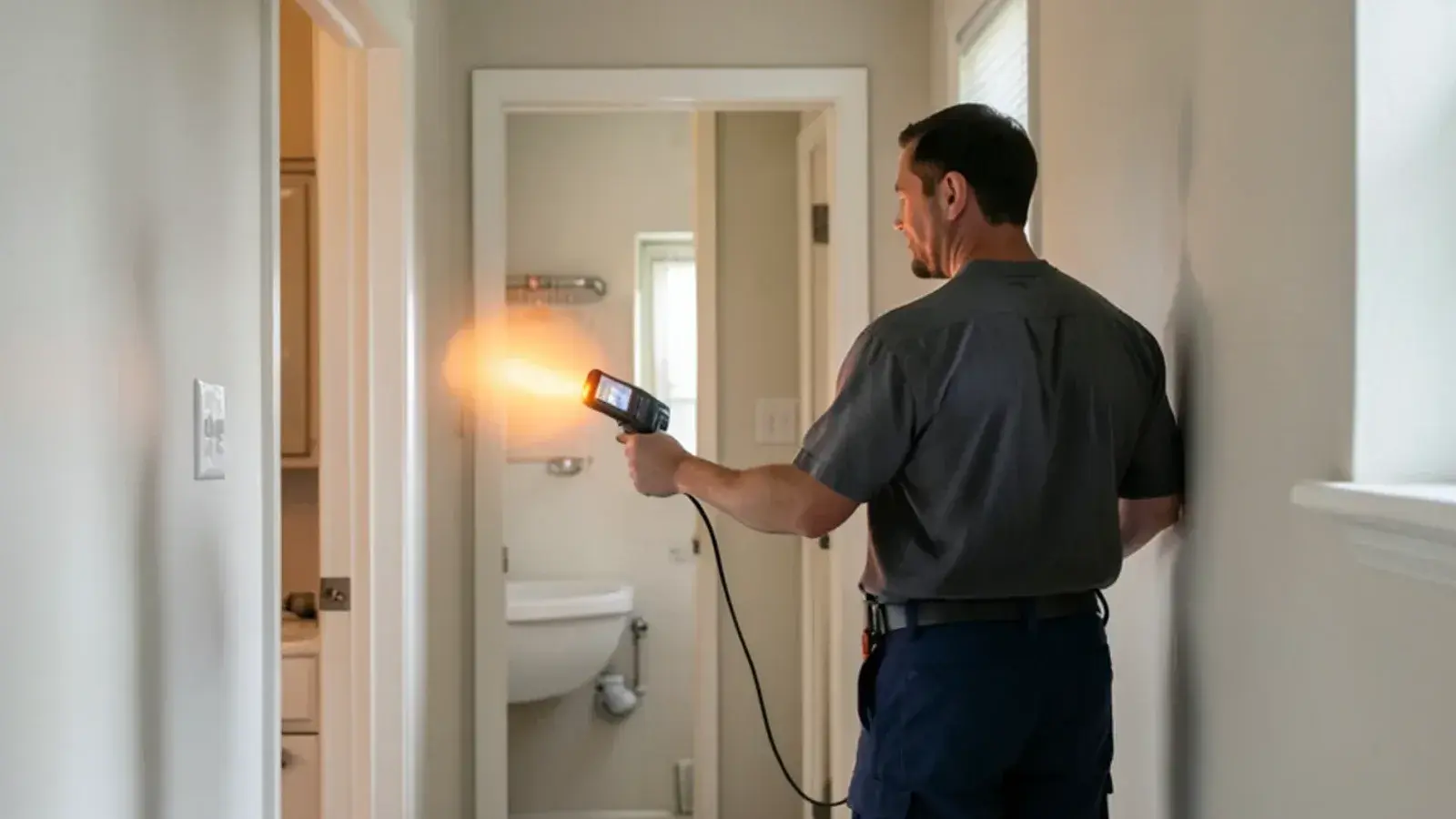
Leaks traced at the meter and with moisture readings before any wall or ceiling gets opened
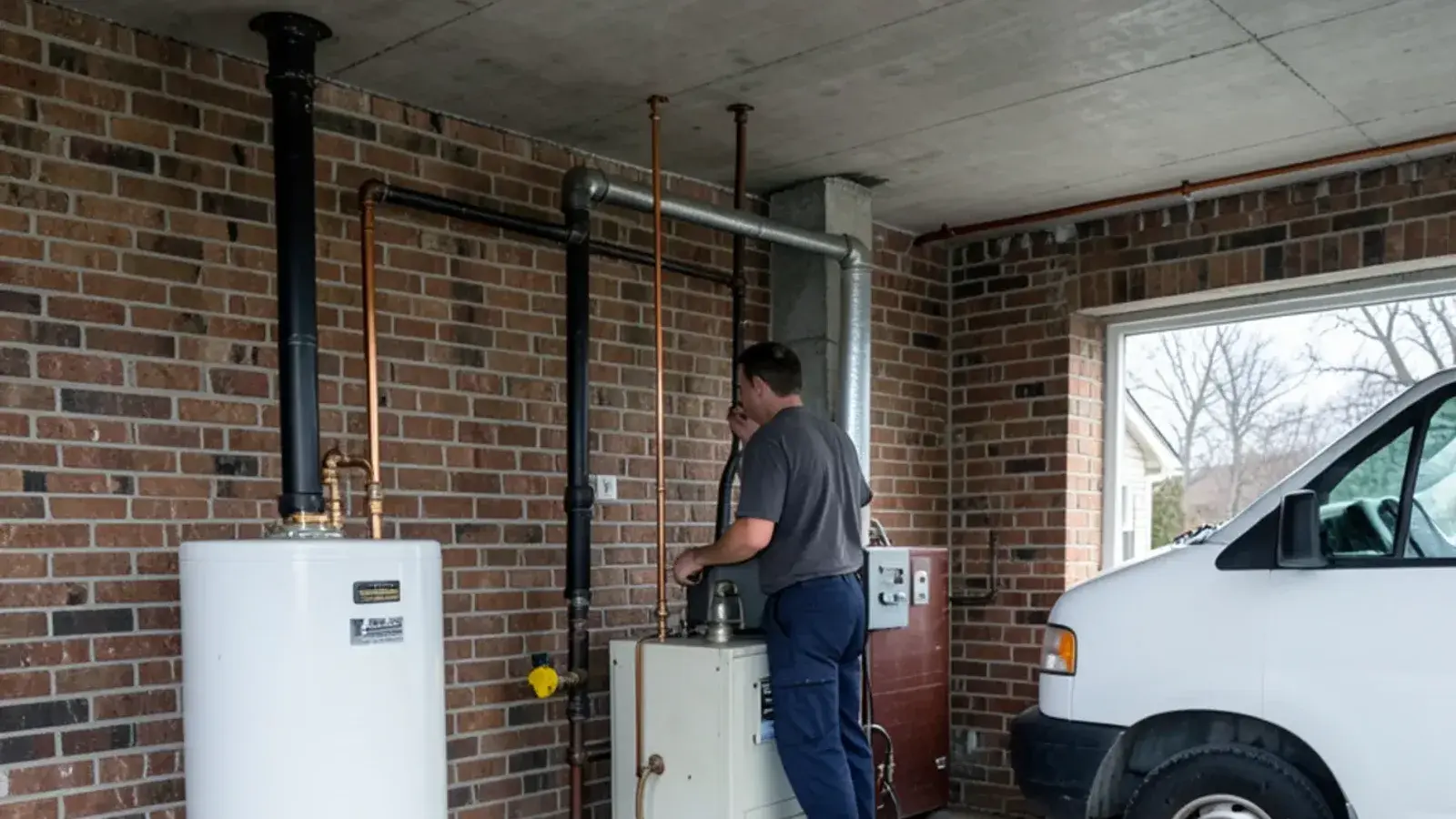
Water heater installation
New tank sized to your busiest hour, permitted with the city and set up for inspection
- Galvanized pipes in a 1950s house and when to repipe
- How to keep pipes from freezing in a Michigan winter
Where we handle whole home repiping around Fraser