
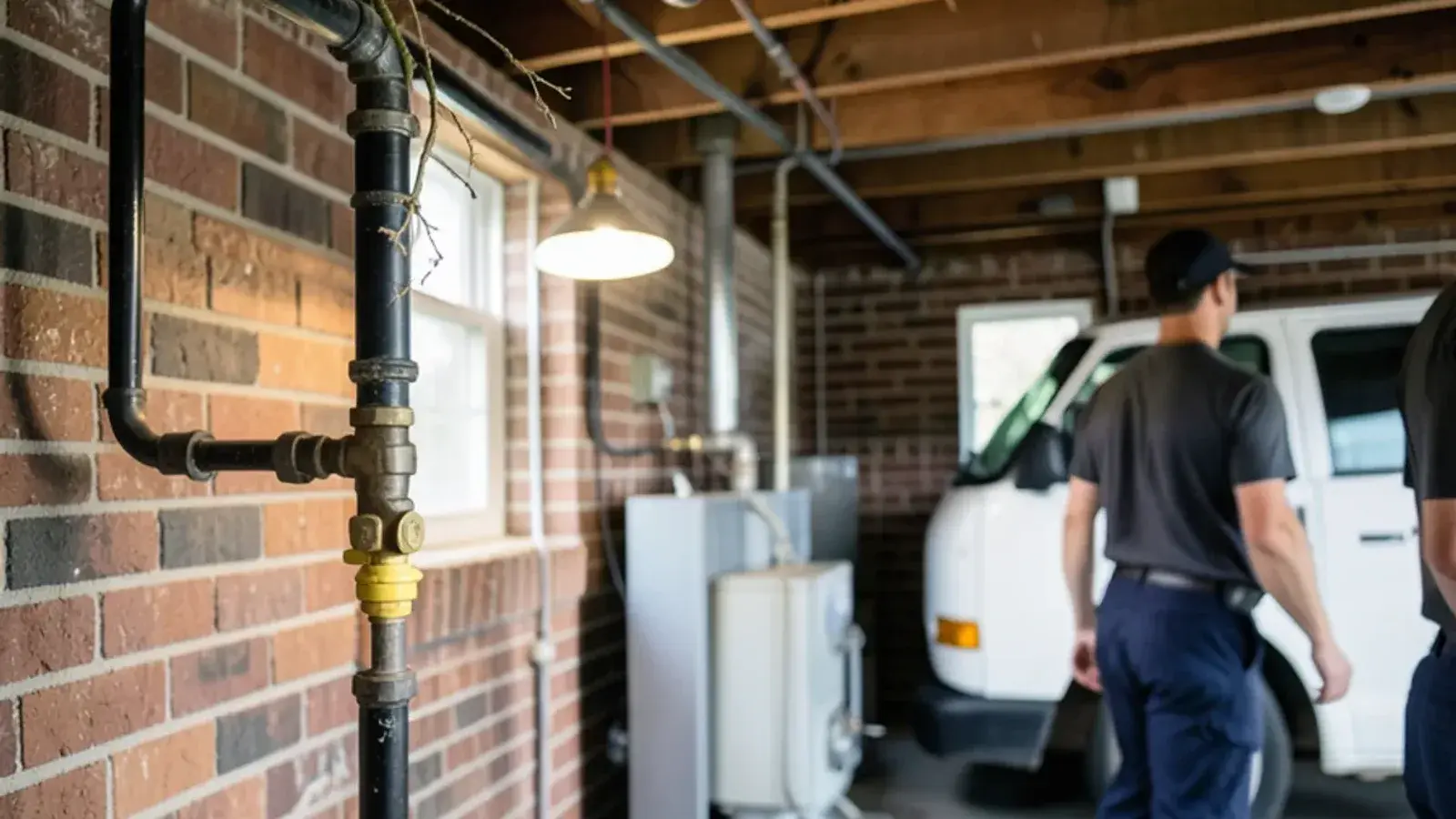
Gas line services for ranges, dryers and water heaters
Most calls involve one of these:
- A gas range hookup where the old kitchen was electric, or a range move during a remodel that ties into kitchen plumbing
- A gas dryer line to a basement laundry
- A water heater moved a few feet, or a larger line for a tankless water heater
- A standby generator connection
- Outdoor lines to grills, fire tables and a detached garage heater
- Repairs to leaking joints, connectors and rusted sections of existing pipe
Each appliance gets a shutoff valve and an approved connector. Furnaces and water heaters also get a sediment trap, a tee with a capped nipple placed downstream of the shutoff and as close to the inlet as practical. Ranges, dryers, gas fireplaces, outdoor grills and decorative appliances are exempt from that trap rule.
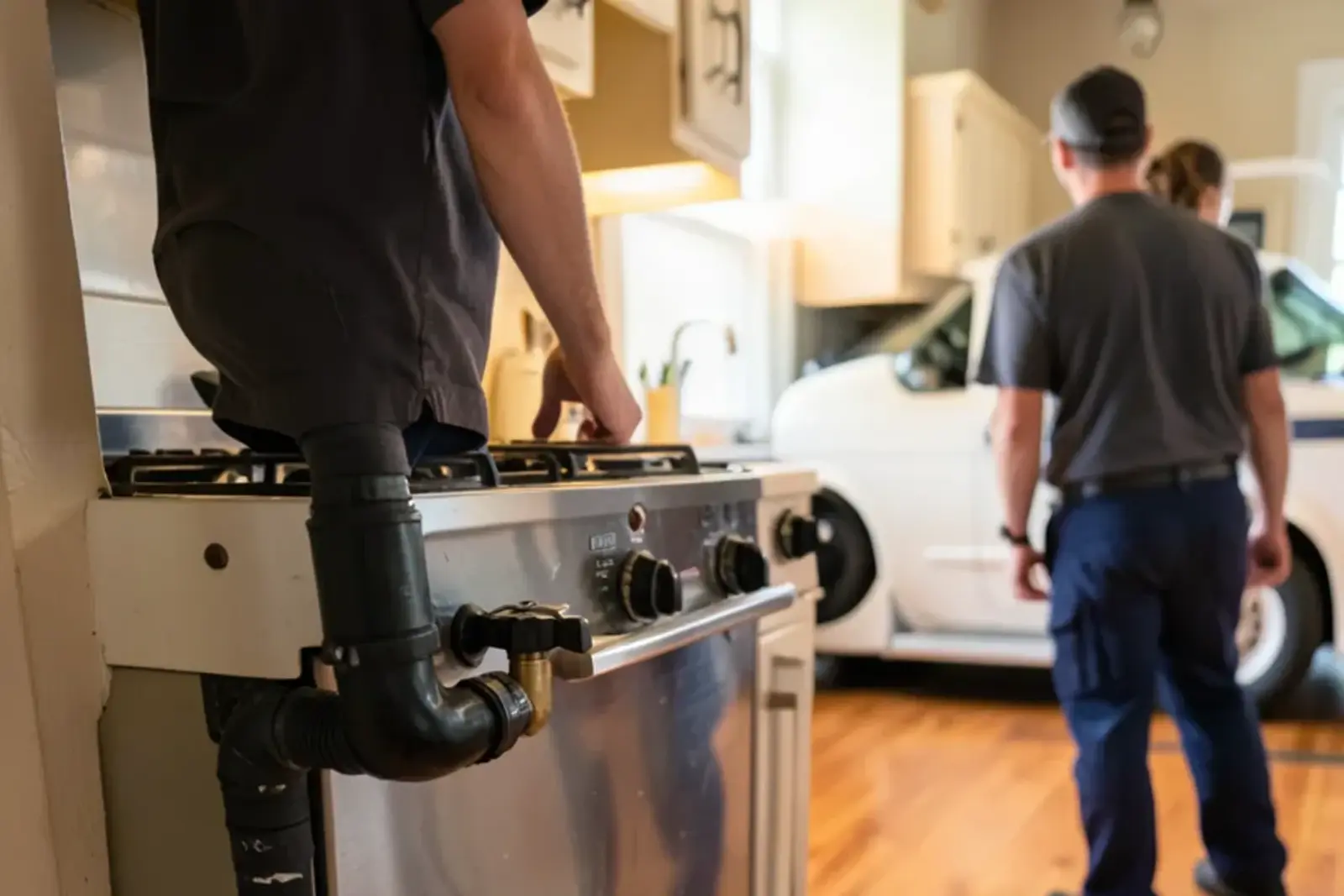
Black steel pipe with threaded joints is the standard in most Fraser basements. Corrugated stainless steel tubing (CSST) bends around obstacles with fewer joints, which helps in finished walls and ceilings. Buried gas pipe sits at least 12 inches below grade, or 8 inches for an individual line to an outdoor light or grill where approved. Before any digging, MISS DIG 811 wants three business days' notice, and its locators won't mark your private line to a garage or grill.
How is a new gas line sized and routed?
Pipe size comes from the total load, the BTU-per-hour figure on each appliance's rating plate, and the length of the longest run from the meter. A dryer added at the far end of a ranch basement can need bigger pipe than its own small burner suggests, because the furnace and water heater already draw on the same trunk. Adding a big load like a tankless heater or a generator usually means rechecking the whole system, not just the new branch. When the meter or service regulator could be the limit, Consumers Energy has to weigh in.
In the 1950s through 1970s houses that make up most of Fraser, pipe usually runs along the basement joists and drops where it's needed. CSST has an extra rule. The residential code requires it to be bonded to the electrical service grounding electrode system with a copper jumper no smaller than 6 AWG and no longer than 75 feet, clamped to a metal pipe or fitting rather than the tubing.
Who is allowed to work on gas piping in Michigan?
Gas piping in Michigan is mechanical work, not plumbing. LARA licenses mechanical contractors by classification, including specialty classes for fuel gas piping and for fuel gas piping and venting, and a contractor needs the right one. An owner who lives in a single-family home may do the work without a license, but still needs the permit. You can check any contractor's classification and expiration date on LARA's license lookup, and our guide on how to choose a plumber in Macomb County covers the other questions to ask.
Fraser bills gas work on its mechanical schedule. The FY 2026–27 schedule lists 40 dollars for gas piping up to five openings, 10 dollars per added opening, a 40 dollar pressure test per meter and a 30 dollar application fee. A generator is its own 80 dollar line that includes the gas pipe and the test. Applications are online, and mechanical inspections run Tuesday and Thursday mornings.
The gas line pressure test and the rest of the job
1. Permit and layout
We confirm the appliance loads, pick the route and pipe size, and settle who files the mechanical permit.
2. Shut off and cap
Gas goes off at the meter or the branch valve, pilots go out, and any line being cut into gets capped.
3. Run and support the pipe
New pipe is threaded, supported and capped at every open end. CSST gets its bonding jumper.
4. Pressure test
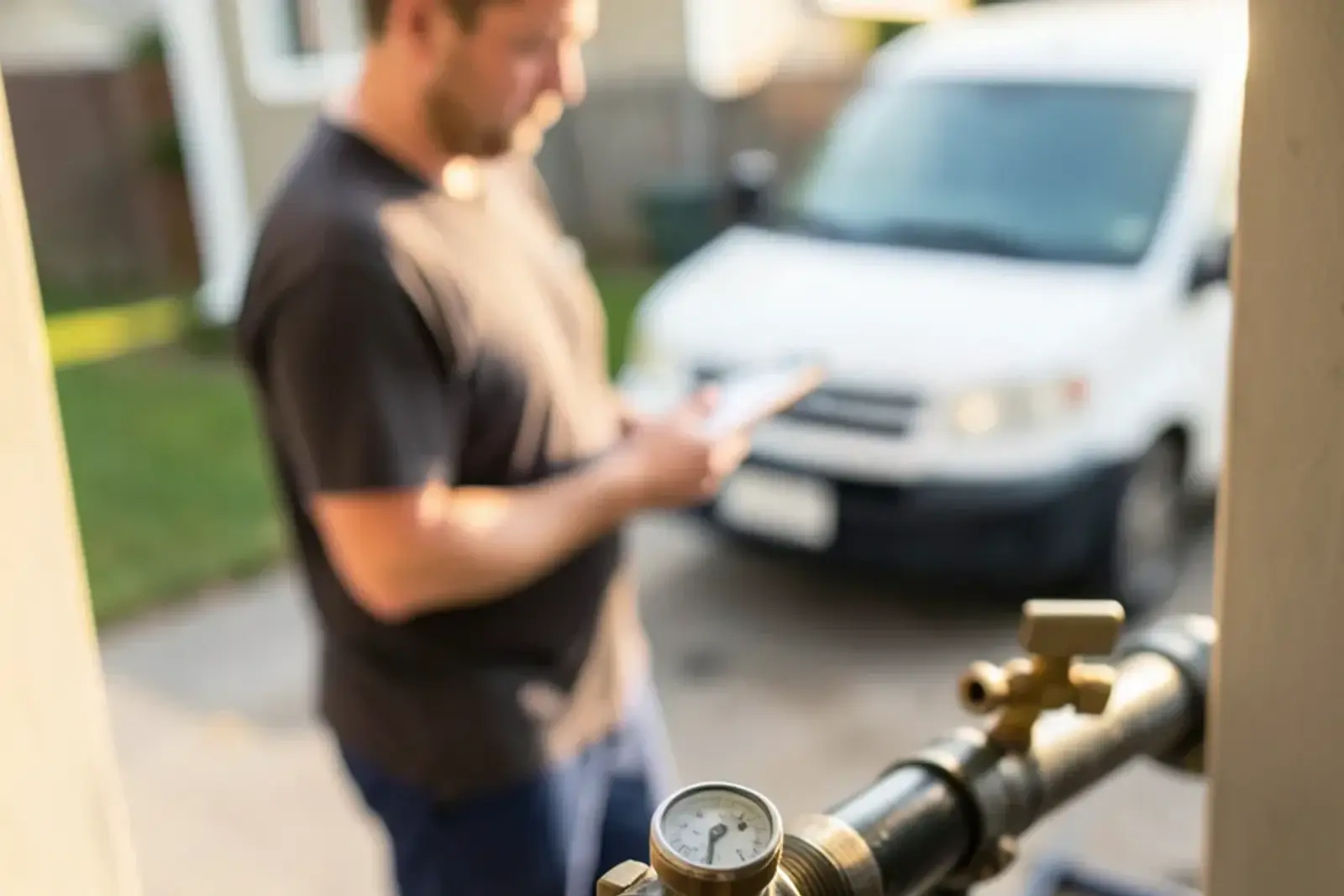
The new section is pressurized with air to at least 1-1/2 times working pressure, never less than 3 psig, and held at least 10 minutes on a gauge whose range is no more than five times the test pressure. Any drop is treated as a leak until explained. Leaks are found with an approved gas detector or a noncorrosive leak-detection fluid, never a flame.
5. Inspection, purge and relight
After the Fraser inspector signs off, the line is purged, appliances are connected and relit, and every joint is checked again with gas on. A single appliance hookup is often one visit plus the inspection; a whole-house reroute takes longer.
Gas line repair when a joint or pipe leaks
Consumers Energy lists the warning signs of a leak: a rotten-egg smell, a hissing or blowing sound, dead or discolored grass over a buried line, and bubbling in standing water.
Consumers Energy says its side runs from the main up to and including the meter; everything past the meter belongs to the property owner. In a Fraser house that's the steel along the joists, the dryer branch and any buried line to a garage, and the utility can leave service off until an unsafe condition is fixed.
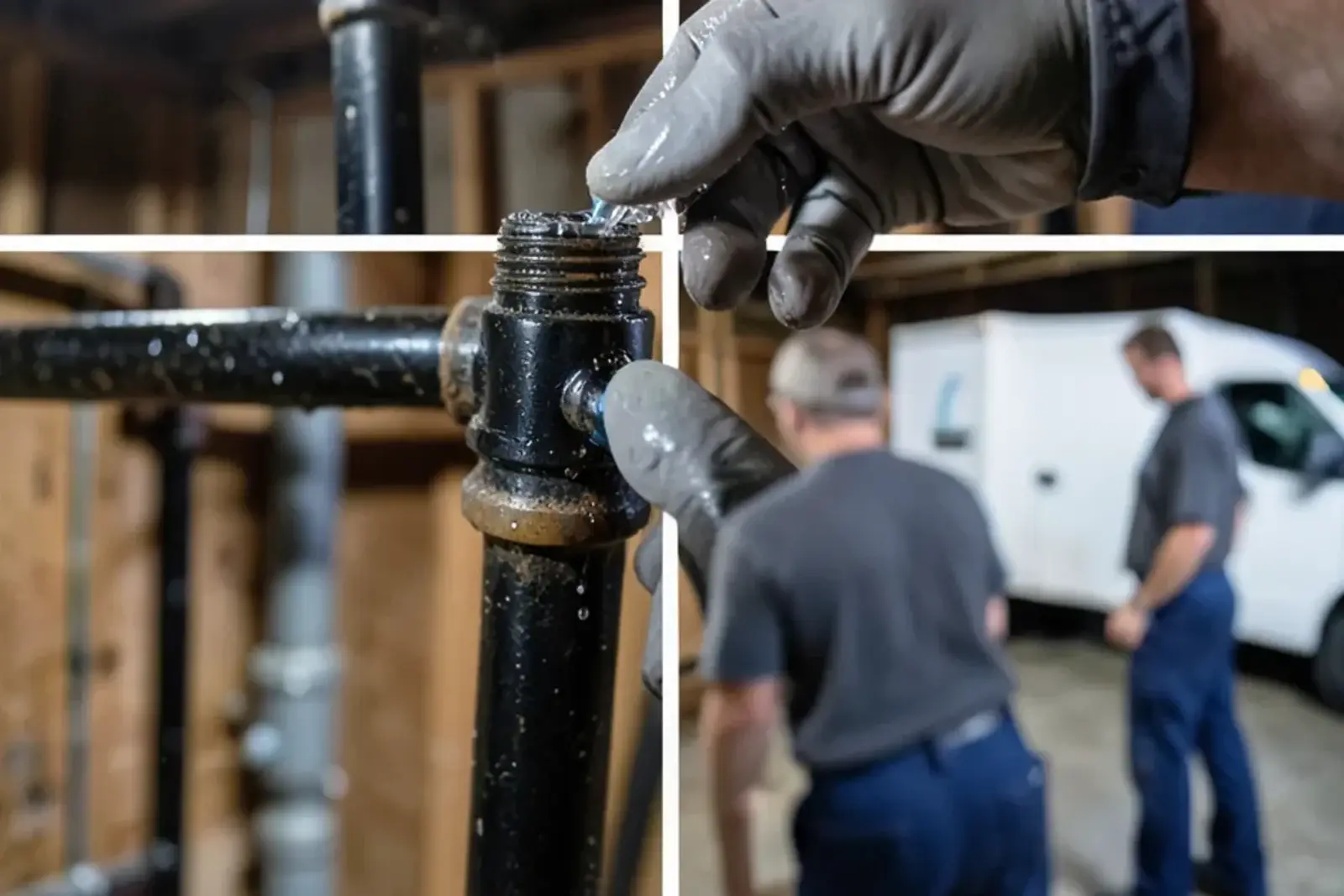
Leaks show up at threaded joints, old flexible connectors behind ranges and dryers, rusted pipe in damp corners of a basement, and buried lines to a garage or grill that got nicked by a shovel. After the utility has shut off or cleared the hazard, we locate the leak, replace the bad joint, connector or section instead of patching it, and test the repaired piping. A connector that has been bent and moved a few times is worth replacing whenever the appliance is. Repairs that replace piping are permitted and tested like new work, and Fraser's building department can say whether a connector swap needs one.
People searching for a gas plumber near me often mean a leak repair or a single hookup. We handle both around Fraser and in Eastpointe, Mount Clemens, Roseville and Harrison Township. If you're unsure whether that smell is gas, read smell gas at home and what to do first.
Cost factors and the paperwork worth keeping
The number of openings, the length of the run and the pipe size set most of the cost. So do the material (black steel or CSST), access through finished ceilings or a crawl space, trenching depth for an outdoor line, bonding work for CSST, any meter change the utility requires, and the city's permit and test fees.
Two things surprise people. If the old trunk can't carry the added load, part of it gets upsized too. And a generator or tankless heater that needs more than the meter delivers waits on Consumers Energy's review.
Warranties on CSST, valves, connectors and the appliance come from their manufacturers. Ask any contractor to put these in writing: the permit number, pipe size and material, the test pressure and how long it held, the inspection result, and which appliances were connected. Keep it with the appliance manuals.
Why call us about gas piping in Fraser
We're on Janet Ave, just south of 14 Mile, and most gas work here happens in the same 1950s through 1970s basements: a black steel trunk along the joists, furnace and water heater on the main run, a dryer added later. Call (207) 419-2600 and the first questions size the job (which appliances, their BTU ratings, where the meter sits) before anyone talks price. The mechanical permit, the test and the Tuesday or Thursday inspection are explained before work starts. If the smell might be a leak, you'll hear to call the utility first.
Gas piping questions we hear in Fraser
Who should I call for a gas line repair near me in Fraser?
If you smell gas, the first call goes to the gas utility, made from outside the house; in Fraser that's Consumers Energy. Once the utility has made things safe, the repair goes to a contractor who works on gas piping. In Michigan that's mechanical work, so look up the contractor's classification on LARA's site. Call (207) 419-2600 to talk through the repair.
Does a gas plumber need a permit to run a new gas line in Fraser?
Yes. New gas piping goes on Fraser's mechanical permit, which lists 40 dollars for up to five openings and 40 dollars per meter for the pressure test, plus an application fee. It is filed online, and the inspector visits on a Tuesday or Thursday morning.
How long does a gas line pressure test take?
At least 10 minutes. The fuel gas code sets that minimum, at no less than 1-1/2 times working pressure and never below 3 psig. Any drop counts as a leak until explained. The new piping stays capped until the test passes and the inspector has seen it, then appliances are connected and relit.
Will MISS DIG mark the gas line to my grill or garage?
No. MISS DIG 811 utility locators mark the utility's lines, not privately owned ones such as a buried gas line to a grill, shed, pool heater or detached garage. Private locators mark those for a fee. Call 811 at least three business days before any digging, and plan for the private line separately.
More help alongside gas line repair and installation
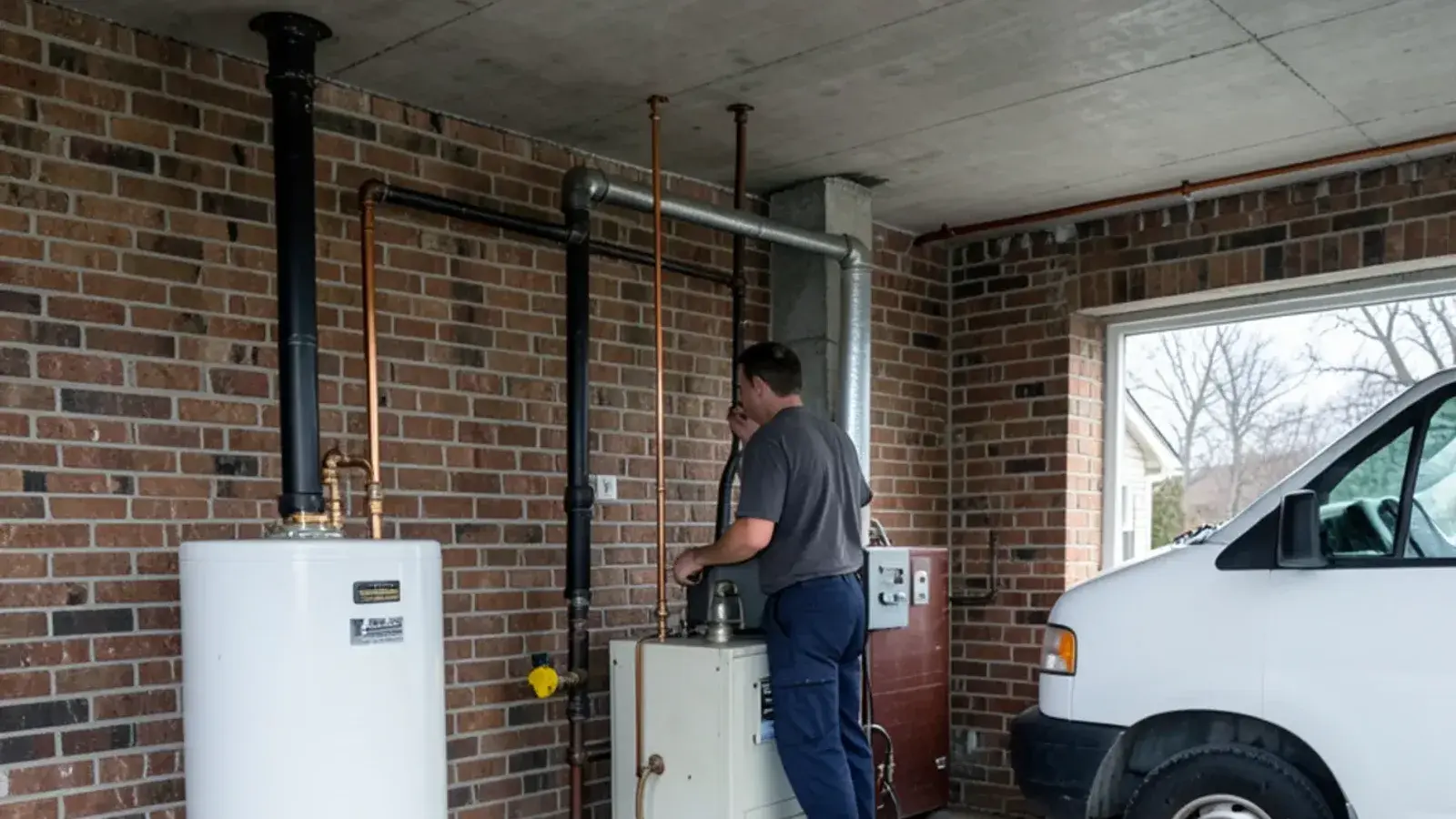
Water heater installation
New tank sized to your busiest hour, permitted with the city and set up for inspection
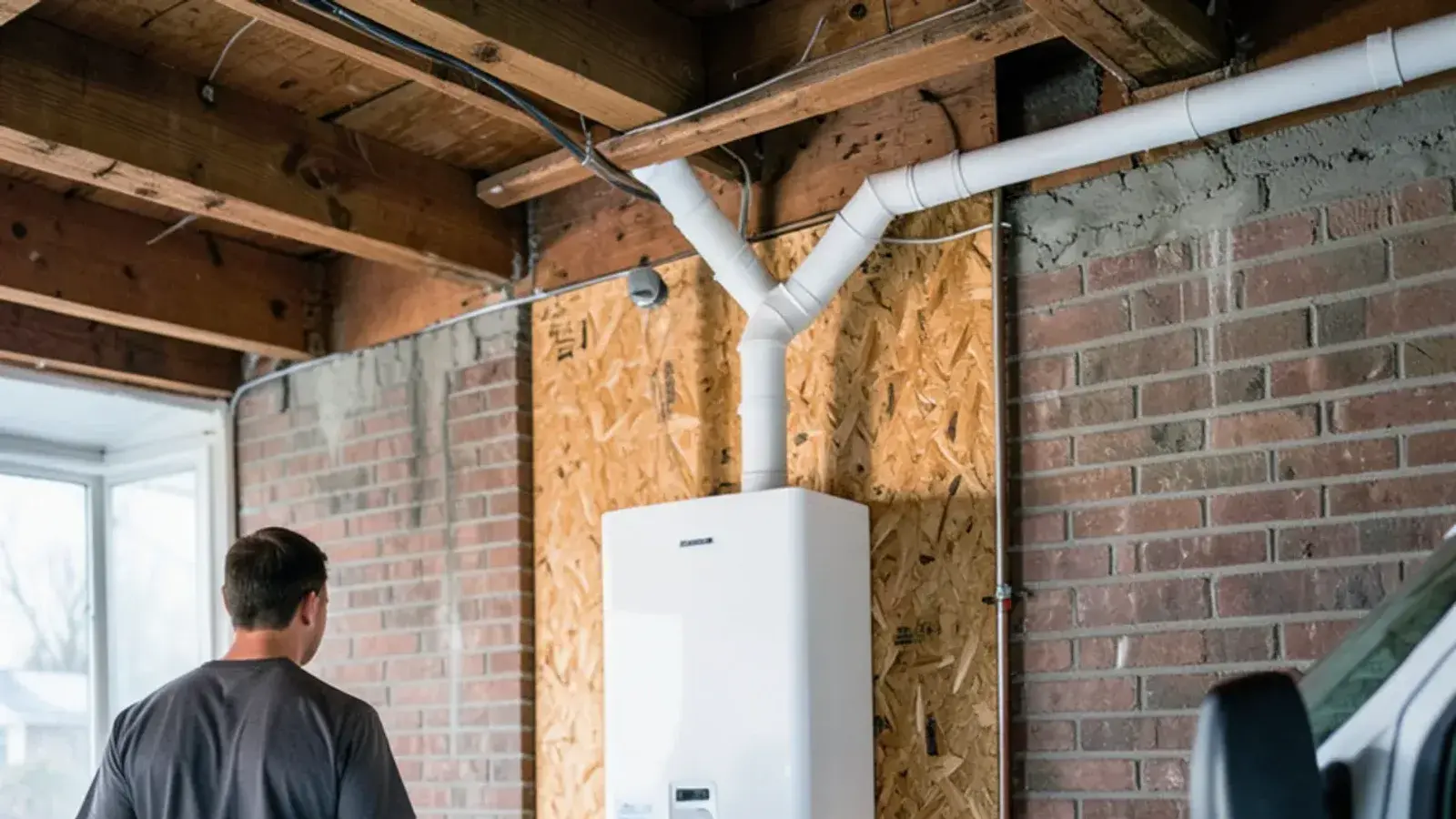
Tankless water heater installation
Gas line, vent and condensate planned up front so a tankless unit keeps up in winter
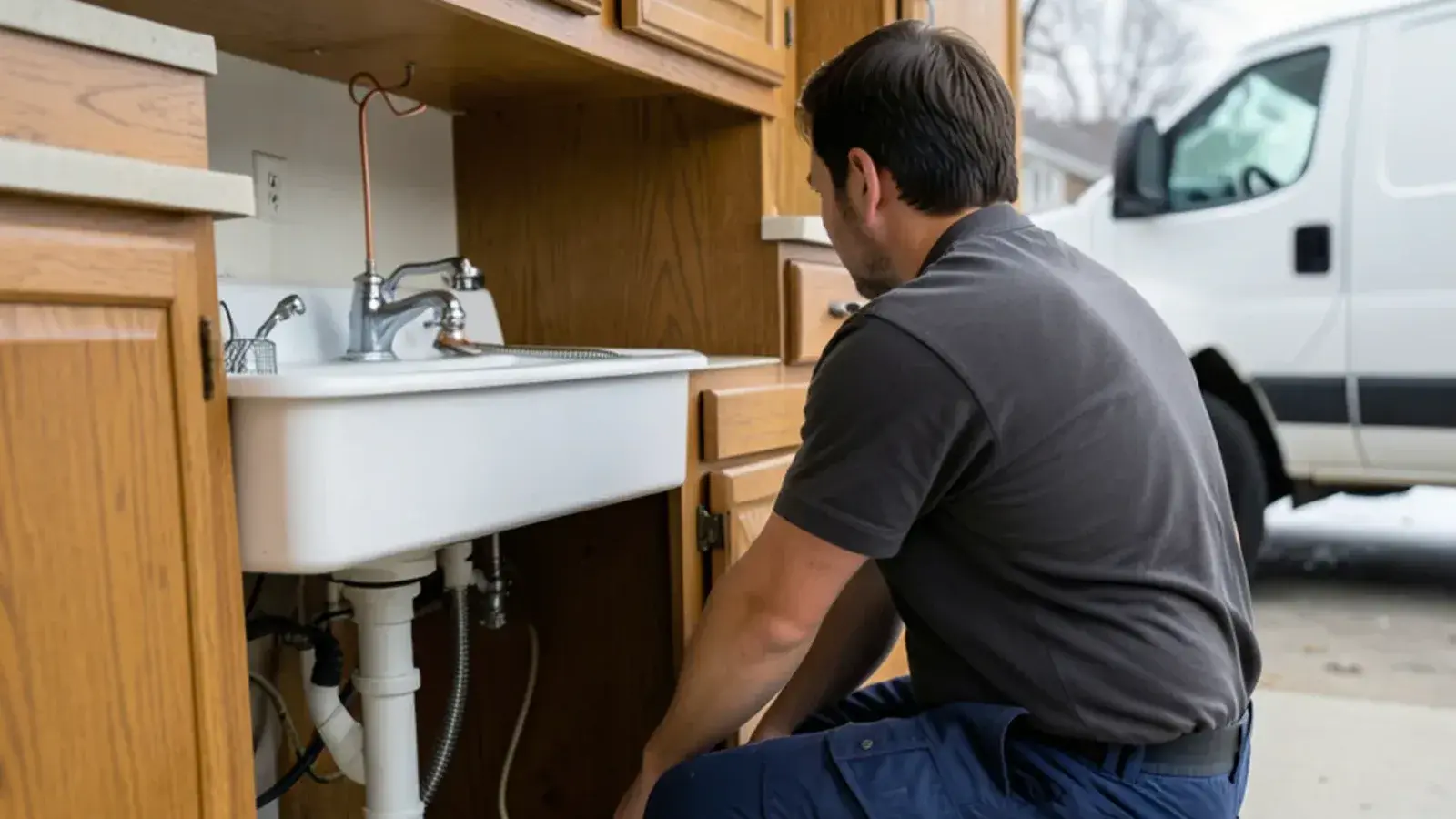
Kitchen plumbing
Sink drains, dishwasher and ice maker lines, and remodel rough-ins for Fraser kitchens
Where we handle gas line repair and installation around Fraser