
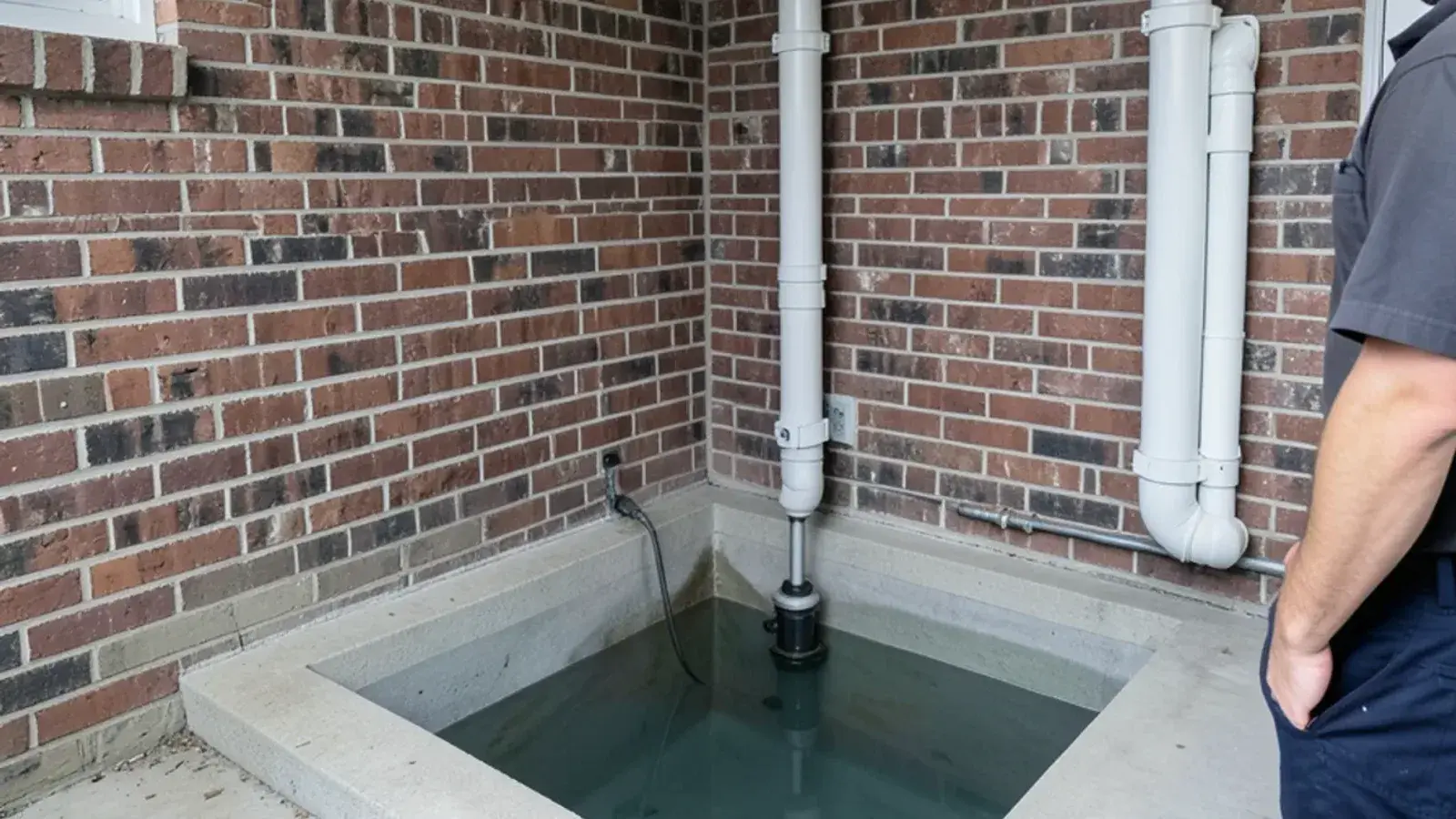
A basement sump pump in Fraser has a legal job as well as a practical one. City code doesn't allow footing drains or weep tile to empty into the sanitary sewer, so where that water can't reach the storm sewer by gravity, the ordinance calls for a sump well and a pump. When the pump quits in a storm like August 11, 2014, when up to six inches of rain fell and the Clinton River near Fraser hit a 67-year record flow, the basement floor becomes the overflow.
What a Fraser sump pump job covers
The pump is one link in a chain from the footing tile to the pit, through a check valve and out a buried line to the storm sewer. A sticking valve or frozen line floods a basement as surely as a dead pump, so the visit covers each link:
- Testing the pump, float and outlet with water in the pit
- Repairing or replacing the pump, switch or check valve
- Cutting a new pit and liner where the basement has none
- Rerouting discharge off the lawn or out of a floor drain
- Adding a battery backup pump and a high-water alarm
Why a plumber based on Janet Ave for your sump
We work out of 32940 Janet Ave, south of 14 Mile, among the 1950s through 1970s ranches, split-levels and condos where many pits have run for decades. Call (207) 419-2600 and describe what the pit is doing. Before anyone prices a pump, we find where the water came from, because groundwater the pump missed and sewage up a floor drain need different fixes. Any city sump inspection or electrical permit, and who files it, is settled first.
Signs your basement sump pump is failing
Most pumps give warnings before they quit:
- It runs constantly, or switches on and off every few seconds
- It hums but no water moves
- It doesn't start when water rises in the pit
- Water shows up around the pit or at the floor-wall joint after rain
- The discharge pipe rattles or bangs when the pump shuts off
- Rust, grinding or a burning smell from the motor
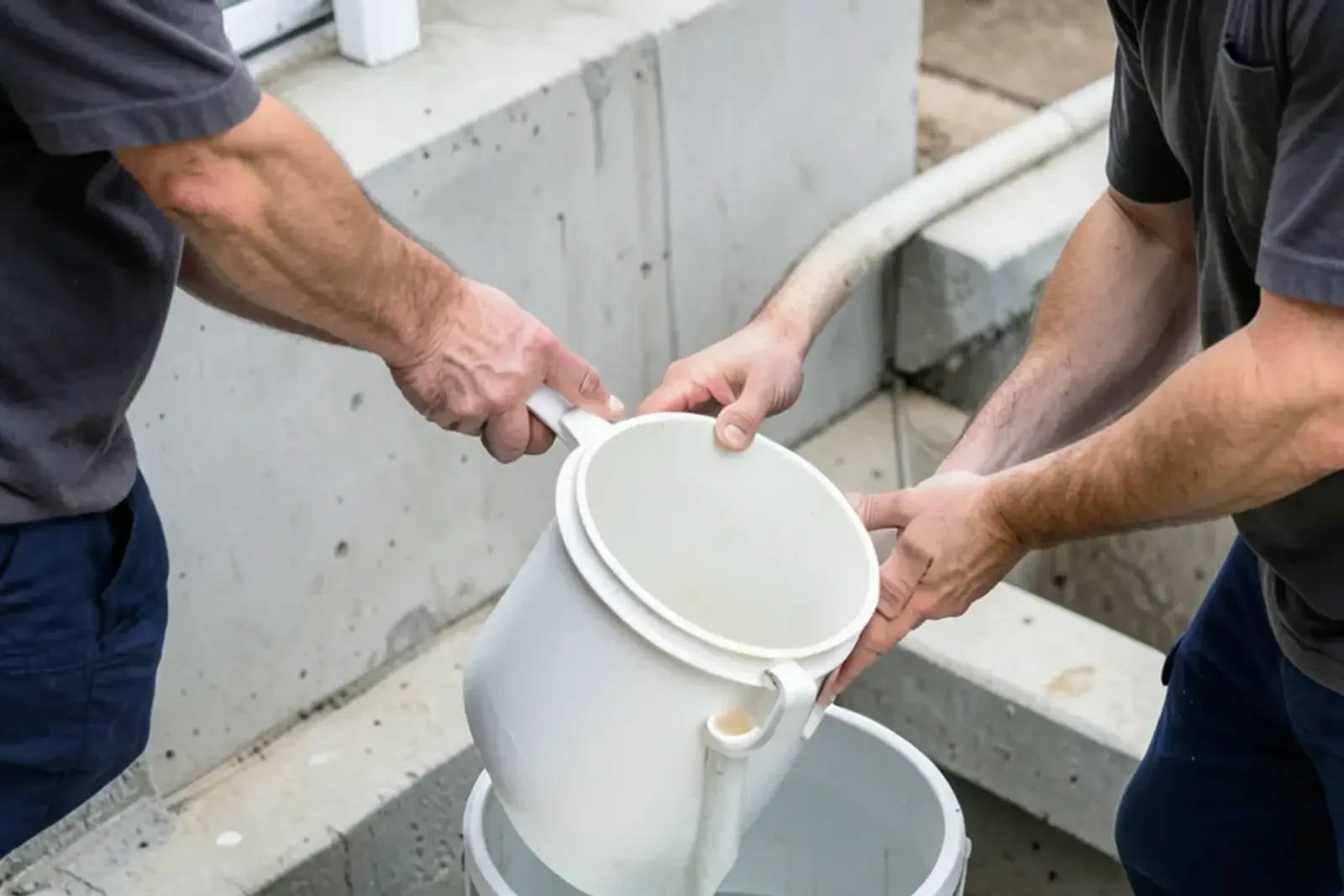
Test it before the thaw by pouring a bucket of water into the pit slowly. The float should rise and the pump should empty the pit and stop. If it doesn't, check the plug and the outlet first.
When to replace a sump pump instead of repairing it
A lot of sump pump repair is about the parts around the pump. A float caught on the pit wall, a check valve stuck or leaking back, a tripped outlet, a clogged intake or a pulled-apart discharge joint can be fixed without a new pump.
Replacement makes more sense when the motor has failed or runs hot and loud, the housing is cracked, or the pump can't keep up in heavy rain. So does a pedestal pump in a pit that suits a submersible, or a pump that needs one repair after another.
Where can a sump pump discharge in Fraser?
Fraser's ordinance is specific. Sump discharge can't be emptied onto the ground surface. It runs in 4-inch pipe to the storm sewer or front ditch, buried deeper than the maximum freeze level and pitched at 1/4 inch per foot. A hose across the lawn doesn't meet that, and neither does a line into a floor drain or laundry tub, which feed the sanitary sewer. The reverse matters too: washer and softener hoses don't belong in the pit.
Roof downspouts follow the same logic. City code bars them from the sanitary sewer, directly or through a basement drain or footing line, and old connections must be cut and plugged. In storms that extra water helps push sewage up floor drains.
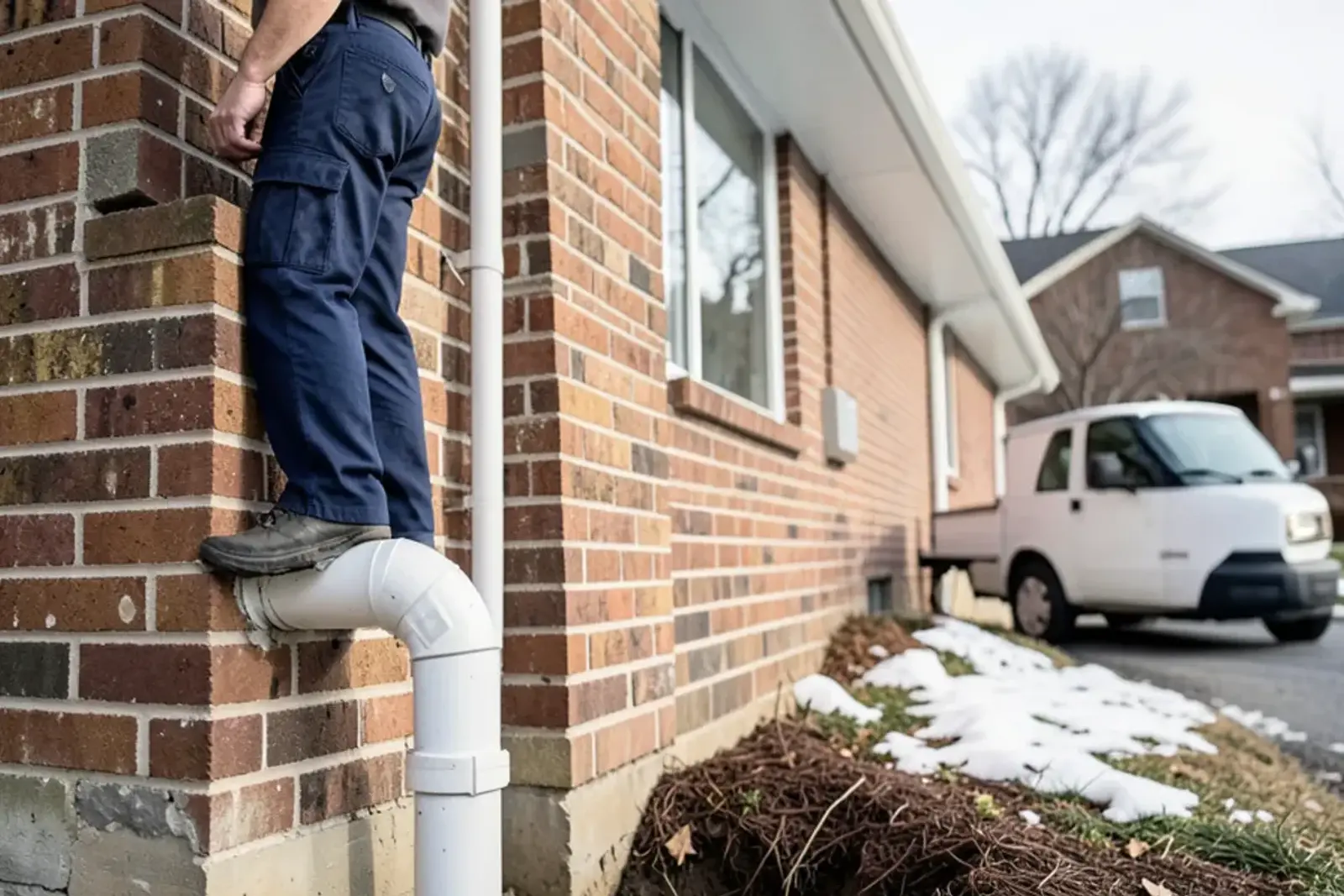
If you're not sure where your discharge goes, we can trace it. Heavy rain backups through the floor drain are a sanitary-side problem, and a sewer camera inspection tells you whether the lateral is part of it.
Permits, inspections and who can pull them
Michigan requires a permit for plumbing beyond clearing a stoppage or repairing a valve's working parts, and LARA says only a licensed plumbing contractor or a homeowner on their own house can pull one. Check any plumber on LARA's license search. Fraser's Building Department at 33000 Garfield Rd takes applications online only, and plumbing inspections run Tuesday and Thursday mornings, booked by the permit holder, under the 2015 Michigan Residential Code.
Can a battery backup sump pump carry you through an outage?
It's built for that, since flooding storms often knock out power too. A battery backup sump pump is a second pump in the pit, run by a deep-cycle battery and charger, that starts if the main pump fails or water rises past it. Run time depends on battery size, the pump's draw and how fast water comes in, so there's no one honest number. Batteries get replaced on the maker's schedule.
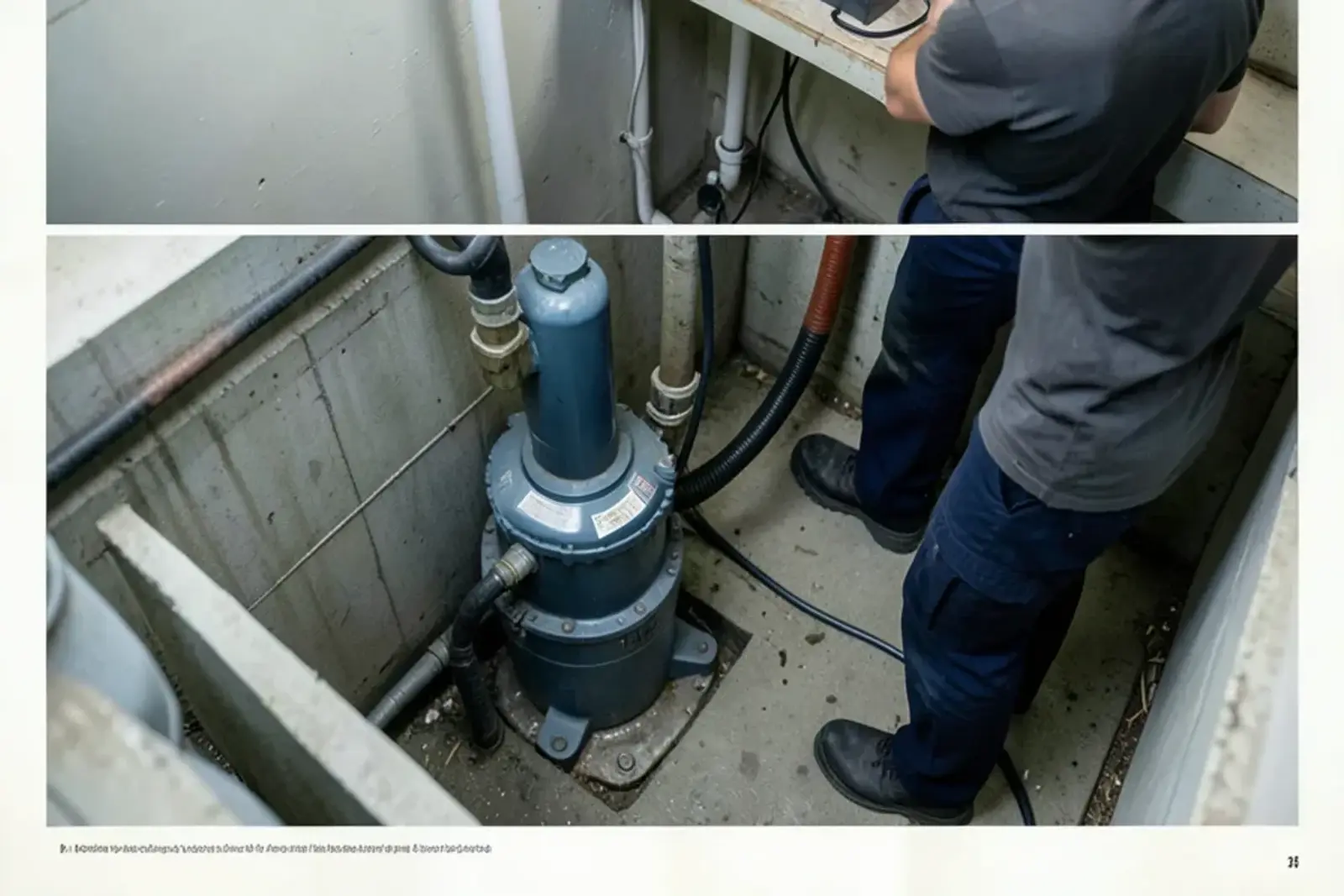
Water-powered backups run on city water pressure with no electricity. Because they connect to your drinking water, they need backflow protection, and Fraser's cross connection program may ask about one, so check with the Building Department first. Our post on a backwater valve or sump pump explains which problem each one solves.
Sump pump installation in Fraser, from pit to inspection
Looking at the pit and the water coming in
We check the basin size and condition, where the footing tile enters, and how fast the pit fills in wet weather.
Choosing the pump and switch
Pump capacity has to match the inflow and the height the water is lifted. Switch type matters too, since a tethered float needs more room to swing than a vertical one. Bigger isn't automatically better: an oversized pump short-cycles in a small pit.
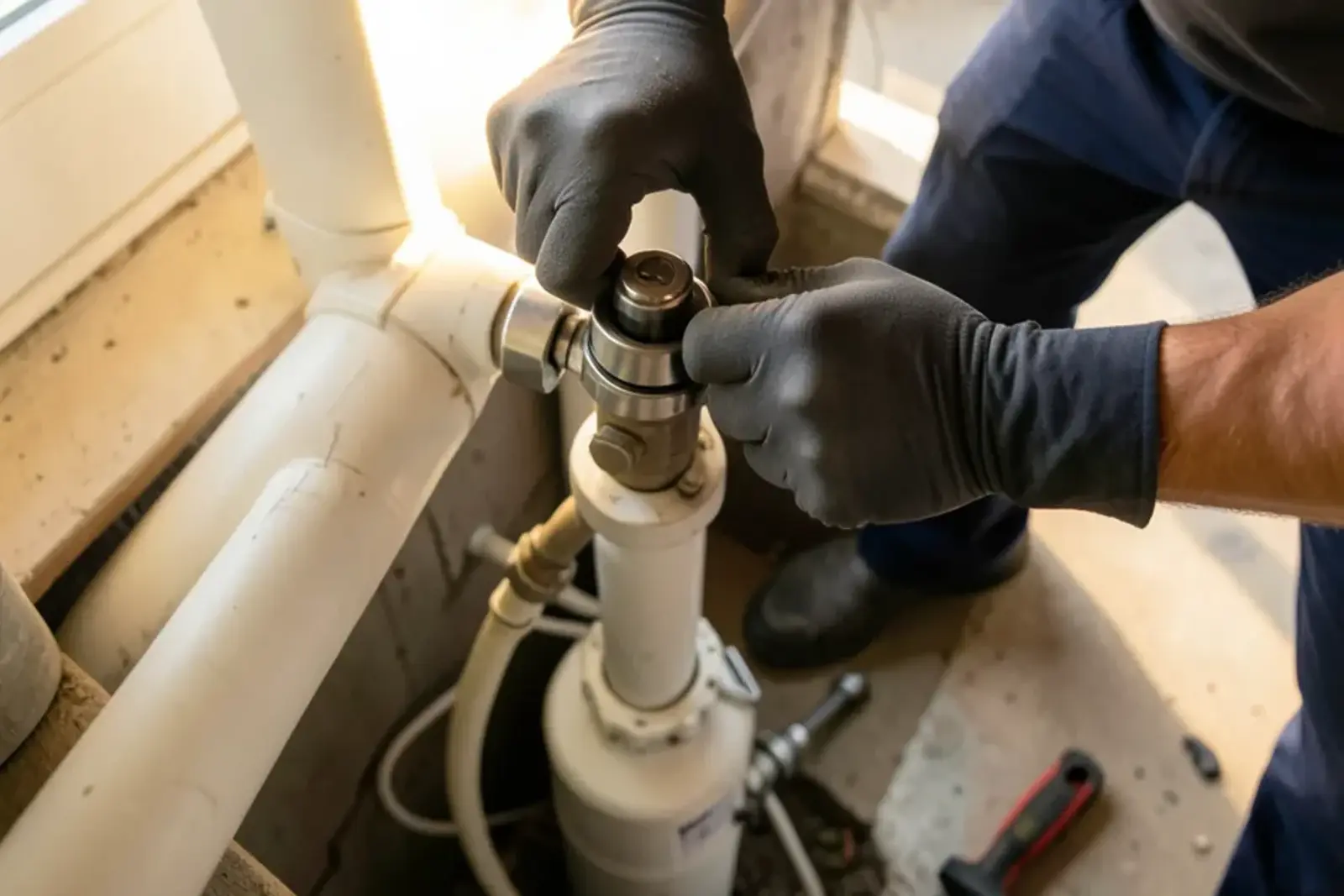
Check valve, discharge and freeze protection
A check valve stops the column of water from falling back into the pit each cycle. The discharge leaves the house and connects to buried pipe running to the storm sewer or ditch below frost.
Power and permits
The pump should have a nearby outlet of its own, not an extension cord. The plumbing and electrical permits are filed before it goes in.
Testing with water
We fill the pit, watch a full cycle and check every joint for leaks.
What sets the cost
Price depends on a handful of things, and a written estimate should show each as its own line:
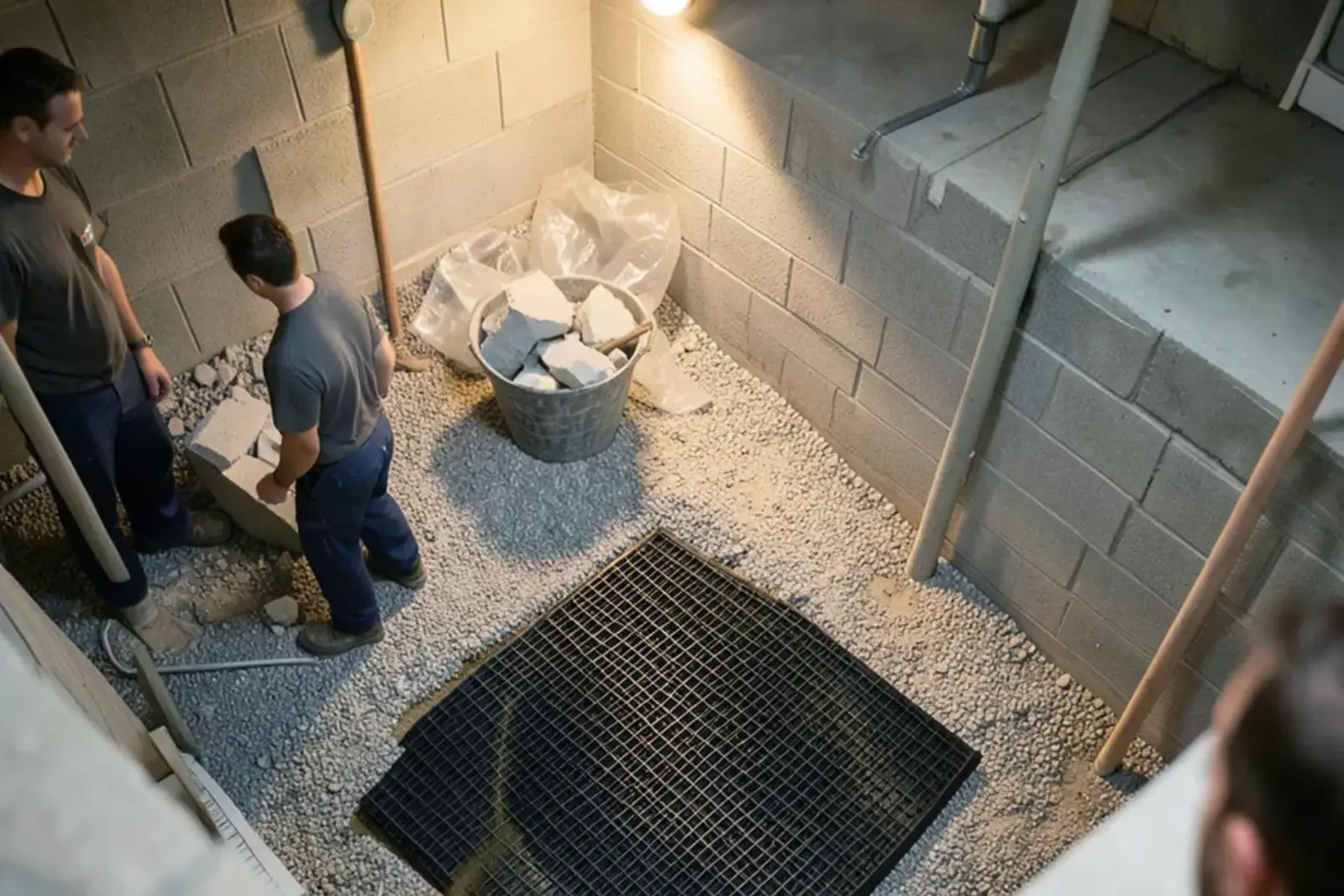
- Reusing the pit, or cutting the floor, setting a liner and hauling out concrete
- Pump type and capacity, the switch and a new check valve
- The buried run to the storm sewer or ditch, dug below frost at the 1/4-inch-per-foot slope city code sets
- Moving a discharge that now ends in a floor drain or laundry tub
- Paneling or carpet over the pit or pipe route
- A battery backup and alarm, or a water-powered backup and its backflow device, plus any new outlet
- Permits, which Fraser's FY 2026–27 schedule lists at $30 for the sump pump leads inspection, $15 for the electrical sump permit and a $30 plumbing application fee
Evenings and weekends usually cost more across the trade, so replace a limping pump on a dry weekday.
Frozen sump pump discharge lines and other winter trouble
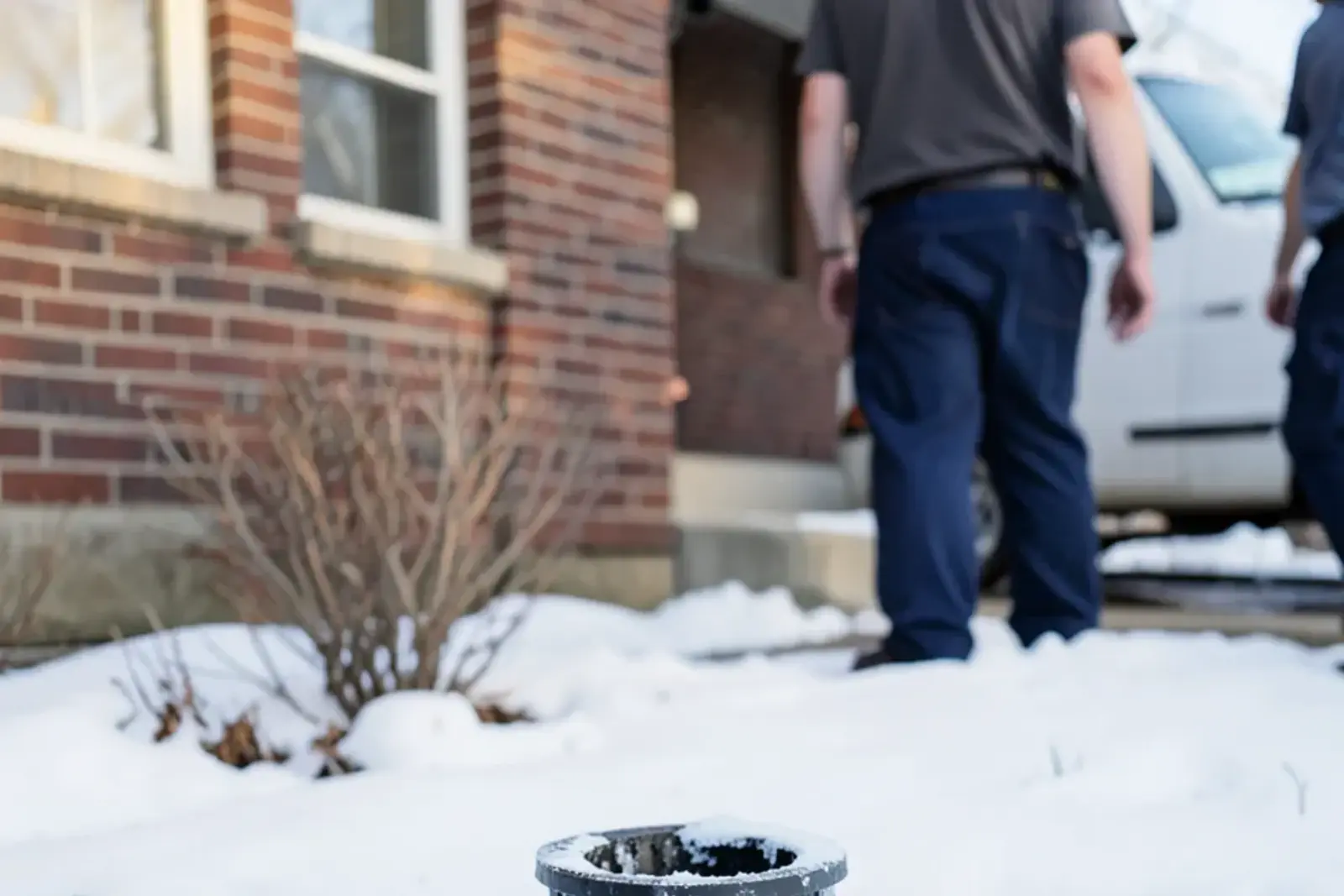
January lows in the Detroit area average about 19°F (NWS 1991–2020 normals). A discharge line that runs shallow or ends at the surface can freeze solid. The pump pushes against ice, runs without emptying the pit, and burns out or lets the pit overflow. That's one reason Fraser's ordinance wants the line below frost depth.
A frozen line shows as a pump that runs while the pit doesn't drop, or ice at the outlet. Don't pour boiling water into PVC fittings. Call us and we'll talk through protecting the basement meanwhile. The lasting fix is usually a shallow or badly pitched run.
For a seasonal routine, see the sump pump checklist for before the spring thaw. If the basement is flooding now, our emergency plumbing page covers the first steps, and floor drain clogs go to drain cleaning. We install sump pumps in St. Clair Shores, Harrison Township, Chesterfield Township and Clinton Township as well.
Sump pump questions for Fraser basements
Does my Fraser basement need a sump pump?
Many do. Fraser code keeps footing drains and weep tile out of the sanitary sewer, and where gravity can't carry that water to a storm sewer or ditch, the ordinance calls for a sump well and pump. If your house already has a pit, the pump is doing a job the city requires, so test it before spring.
Do I need a permit for sump pump installation in Fraser?
Plan on it for a new installation or new piping. Fraser's fee schedule lists a sump pump leads inspection and a separate electrical sump permit, applied for online, with the inspection booked by the permit holder. A pump swap on existing piping may be handled differently, so ask the Building Department about your job.
Is sump pump replacement in Fraser a straight swap?
Sometimes. If the pit, check valve and discharge are sound and the old pump kept up, a like-for-like swap is simple. It's also the moment to confirm the discharge goes where city code wants it and to decide on a battery backup. A pump that fell behind in storms needs a larger replacement.
What's the difference between a sump pump, a backwater valve and a sewage ejector?
A sump pump moves groundwater from the footing drains out to the storm sewer. A backwater valve sits on the sanitary line and closes when sewage flows backward, and the residential code requires one where fixtures sit below the next upstream manhole cover. A sewage ejector lifts waste from a basement bathroom up to the building drain.
More help alongside sump pump installation and repair
Emergency plumbing
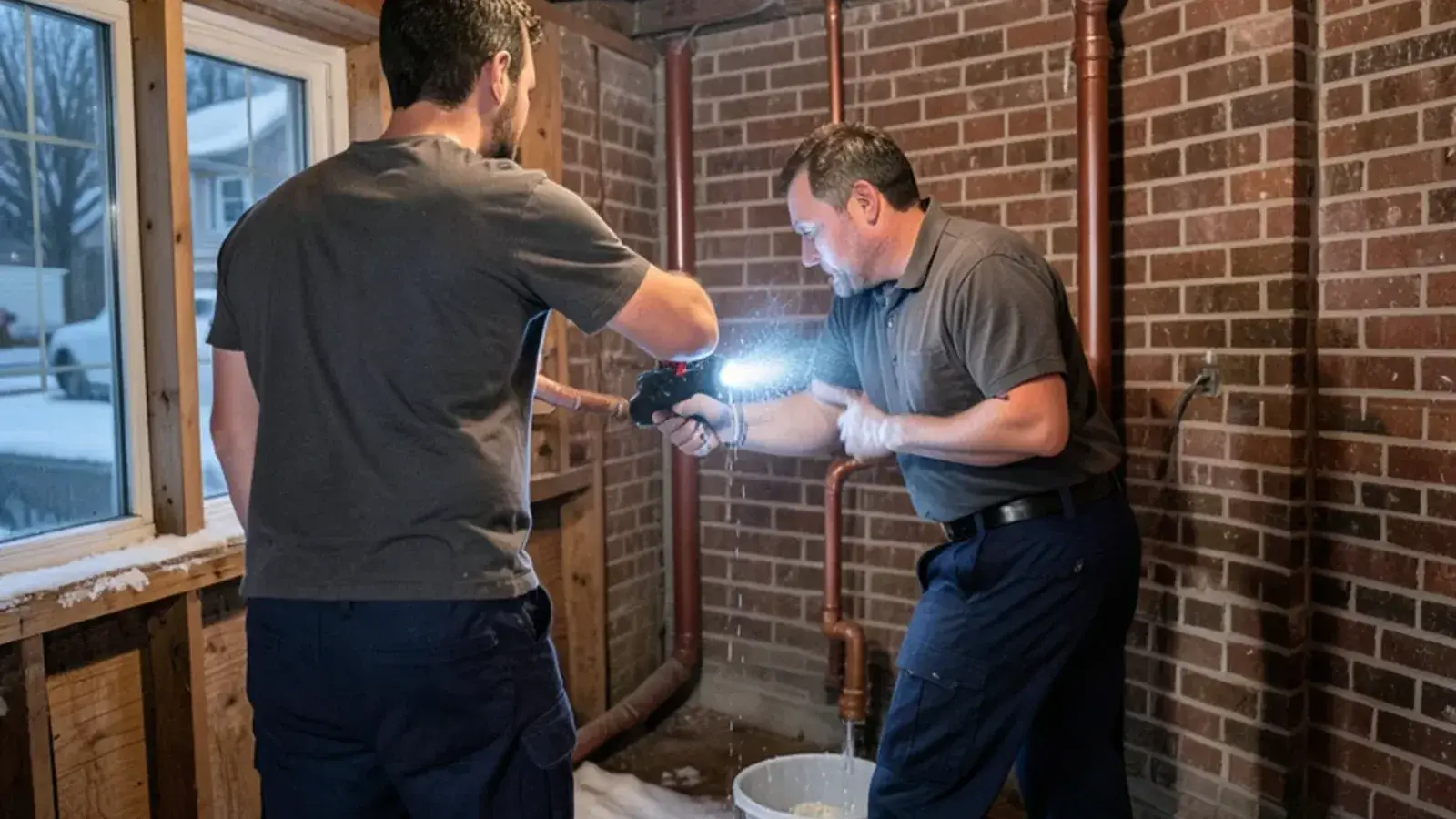
Help finding your shutoff on the phone, then a repair that stops the water at its source
Sewer inspection and line repair
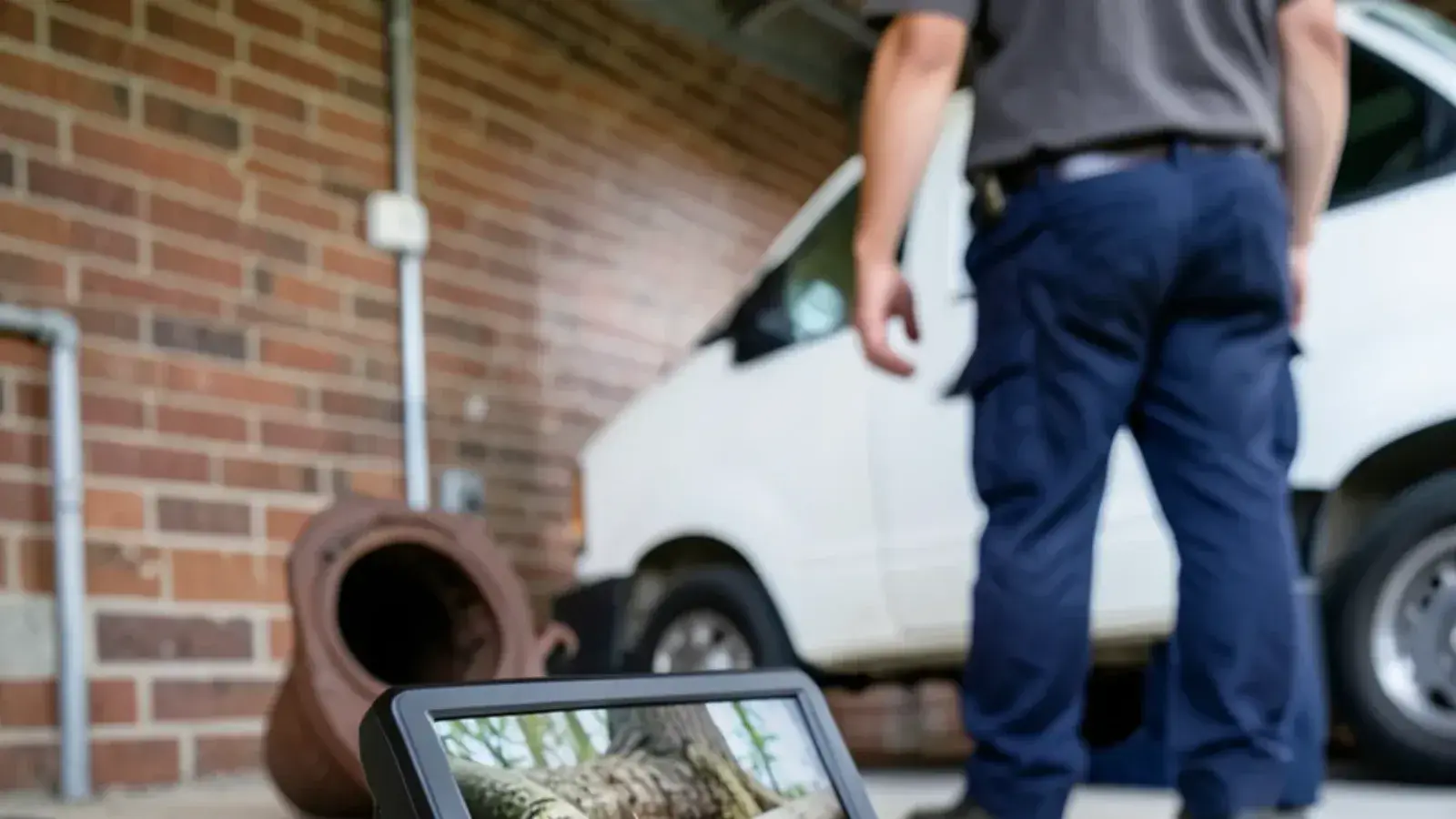
Live camera footage of your lateral, with defects located and marked from the surface
Drain cleaning and clog removal
Finds whether it's one fixture or the main line before choosing the tool
- A sump pump checklist for before the spring thaw
- Backwater valve or sump pump and which problem each one solves
Where we handle sump pump installation and repair around Fraser