
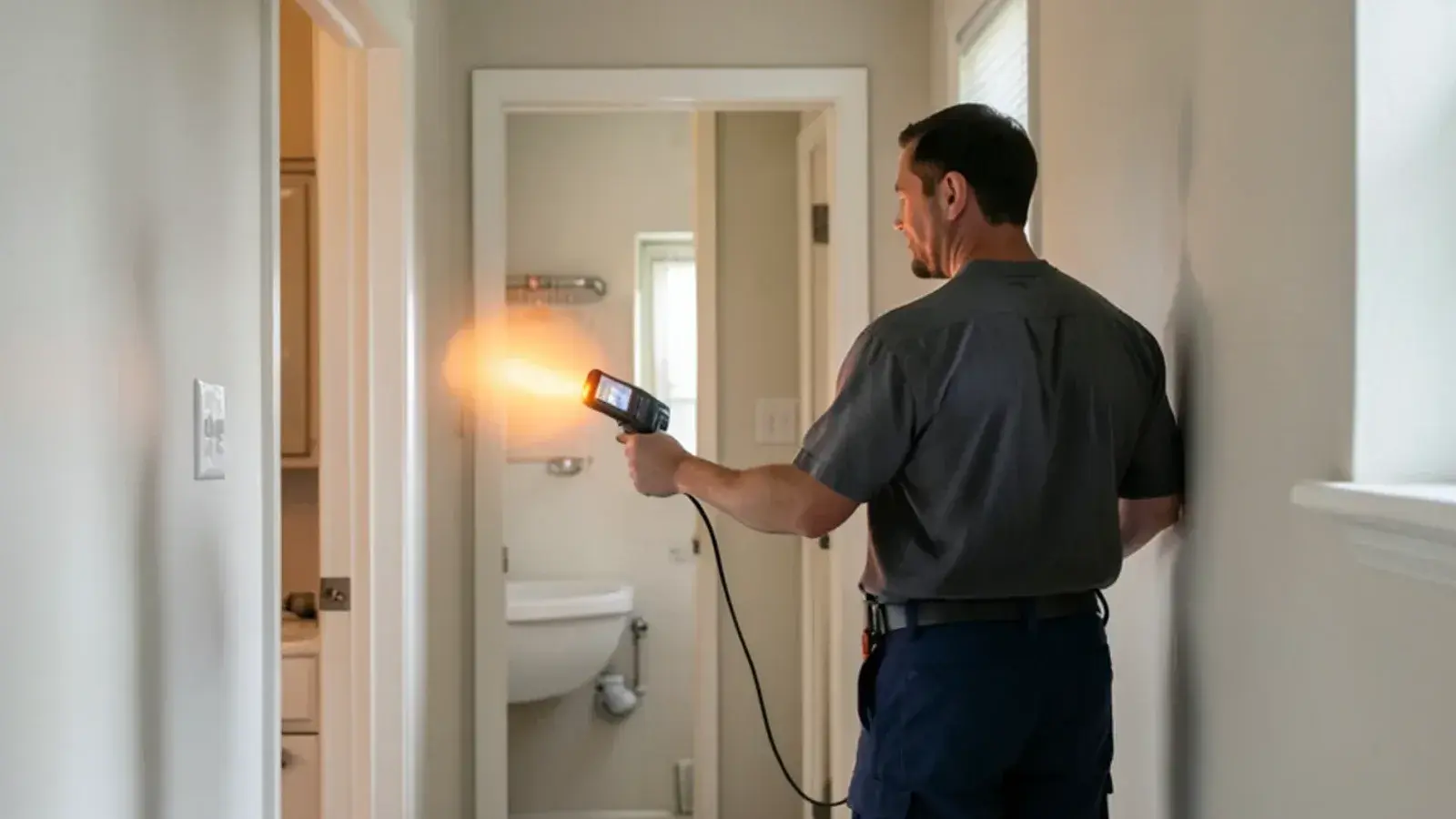
Leak detection in Fraser usually begins with a water bill or a stain rather than a puddle. EPA's WaterSense program estimates that household leaks waste more than 9,300 gallons a year in an average home, and most of that water goes quietly into a toilet bowl, a slab or the inside of a wall. The goal is to find the leak with as few openings as possible, then repair the pipe or fixture that's actually failing.
What we look for and fix:
- Supply leaks in walls, ceilings and basement runs
- Fixture leaks at toilets, faucets, hoses and appliance lines
- Slab leaks under concrete floors and additions
- Service line leaks between the curb stop and the meter
- Drain leaks that only show when a fixture runs
Signs of a hidden water leak in a Fraser house
- The meter's small low-flow indicator turns when nothing in the house is using water.
- A basement closet or finished wall smells musty.
- Paint bubbles, baseboard swells, or a ceiling stain grows after showers.
- A floor feels warm in one patch, which can point to a hot line leaking under a slab.
- Floor tile near a tub, toilet or dishwasher has come loose.
- Water pressure has dropped everywhere at once.
- The basement wall is damp where the water service comes in.
Why pipes start leaking in Fraser houses
About 63% of Fraser's homes went up between 1950 and 1979, and their plumbing shows its age in predictable places. Galvanized steel from the 1950s rusts from the inside and weeps at threaded joints. Copper from the 1960s and 1970s can develop pinholes. Supply pipes in outside walls and crawlspaces take the hit when January nights drop to around 19 degrees, and a crack from one freeze may only start dripping in spring. Add the parts that wear out anywhere: washer and softener hoses, toilet supply lines and water heater connectors.
Is a high water bill a leak or just the season?
Summer bills in Fraser climb for a reason. From May 15 to October 1, Fraser's odd-even schedule lets sprinklers run three days a week, and that alone can explain a big jump. A winter jump is different. EPA's rule of thumb is that a family of four using more than 12,000 gallons a month in January or February probably has a serious leak.
Two checks are worth doing before you call anyone:
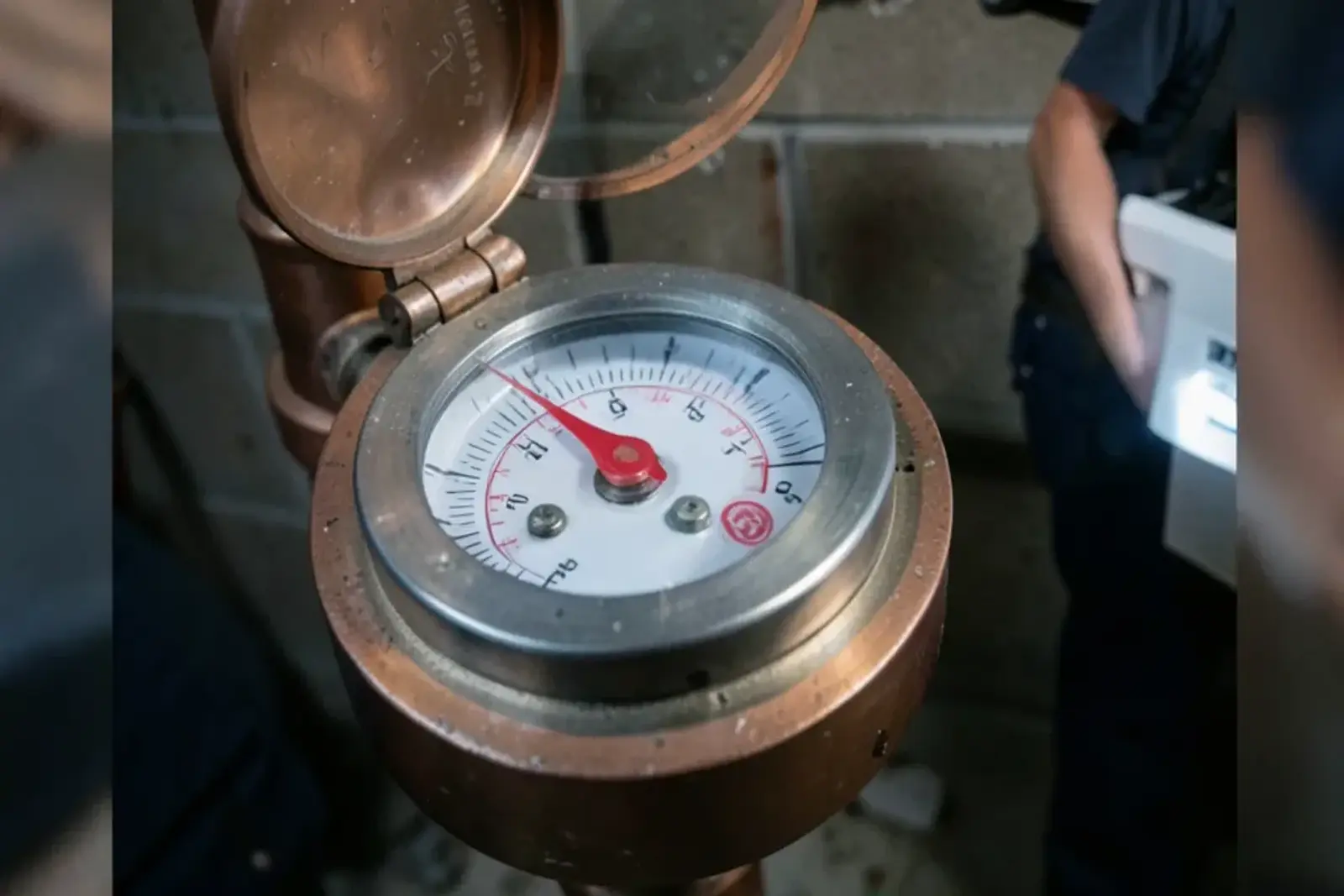
- The meter test. Pick a two-hour stretch when no one will use water, note the meter reading, and read it again at the end. If it moved, something past the meter is leaking.
- The toilet dye test. Put a few drops of food coloring in each tank and wait 10 minutes without flushing. Color in the bowl means the flapper leaks. EPA suggests replacing flappers at least every five years, and our post on why a toilet keeps running goes through the other usual causes.
If the meter still moves after the toilets pass, the leak is in the piping. If you suspect the meter itself, Fraser's fee schedule lists a 100 dollar test for standard residential meters, which remain city property. Our post on finding a hidden water leak before it does damage has more home checks.
How leak detection works before anything gets opened
Isolate the fixtures
With someone watching the meter, we close the stop valves at toilets, the ice maker, the furnace humidifier, the water softener and any boiler fill, one at a time. If the dial stops when a valve closes, that fixture is the leak and no wall needs opening.
Split the piping into sections
If the dial keeps moving, branch valves get closed or lines get capped so sections of the system can be held under pressure on a gauge. A section that loses pressure holds the leak.
Listen and read the surfaces
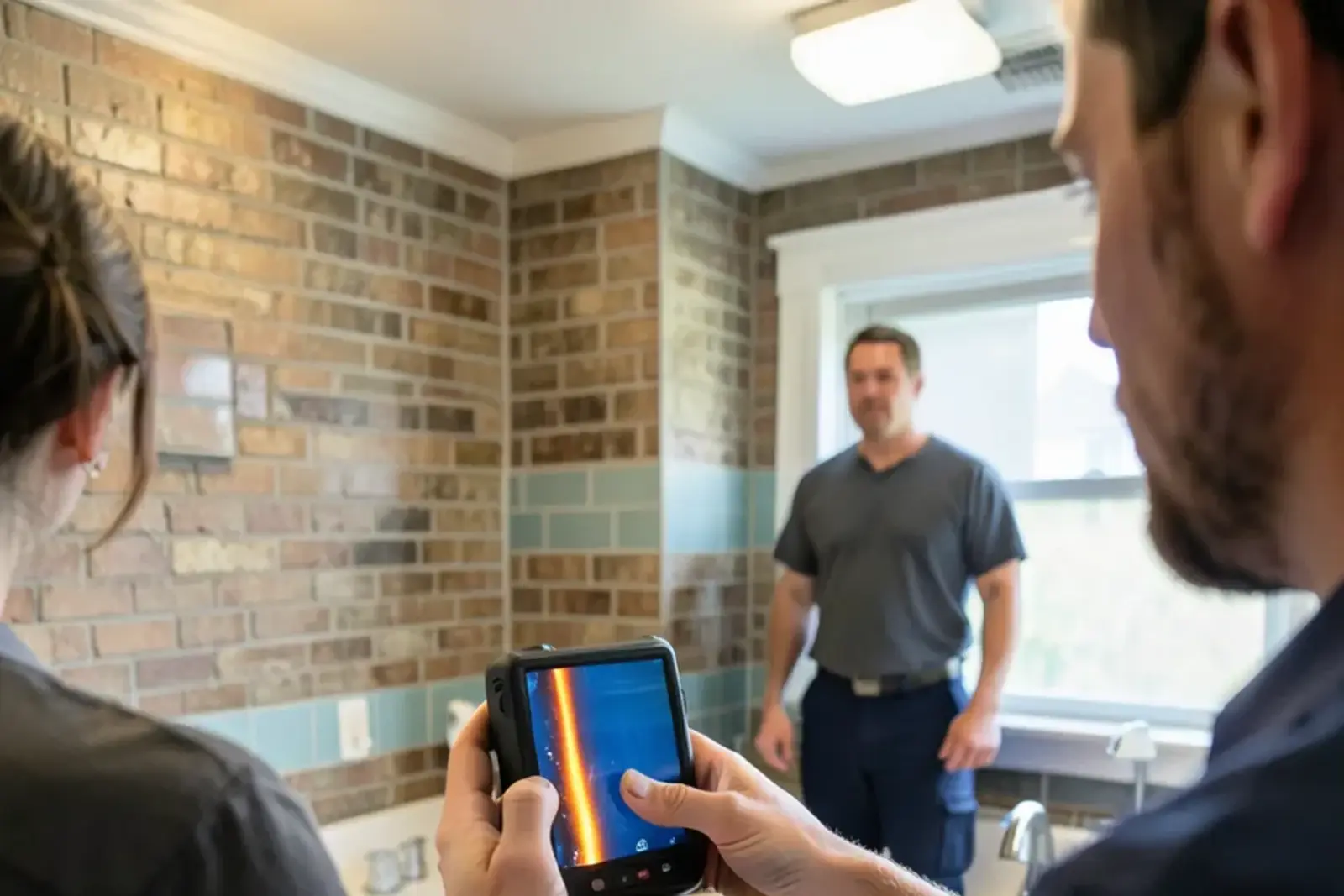
Along the suspect section we listen to the pipe for the hiss of escaping water, scan walls and floors with a thermal camera, and check drywall with a moisture meter. Each tool narrows the search, and none of them replaces the others.
Open one planned hole
When the readings agree, an inspection opening goes in at the wettest point, sized for the repair.
Repair, then watch the meter again
After the repair, the section goes back under pressure and the dial is watched with everything off. A dial that stays still is the proof the leak is gone.
Leak in the ceiling under a bathroom?
A stain below a bathroom has several possible sources, and each needs a different fix. A supply leak drips whether anyone uses the room or not. A drain joint, a failing toilet wax ring or a worn tub overflow gasket only leaks when that fixture runs. Water getting past old grout or a cracked shower pan shows after showers but not after a bath. In a humid Michigan summer, cold-water pipes in a ceiling can sweat enough to stain the drywall with no leak at all. We run each fixture by itself, with the others off, and watch the ceiling. A stain near an outside wall that appears after rain or snowmelt may be the roof, and that's a roofer's job.
Water leak repair options once the leak is found
Fixture leaks are the quick ones: a flapper, a supply hose, a faucet cartridge. Michigan doesn't require a permit to repair the working parts of a faucet or valve. Replacing a section of pipe does need one, and in Fraser that goes through the city's online permit system with an inspection on a Tuesday or Thursday morning. Only a licensed plumbing contractor or a homeowner working on their own house can pull it, and any contractor can be checked on LARA's license lookup.
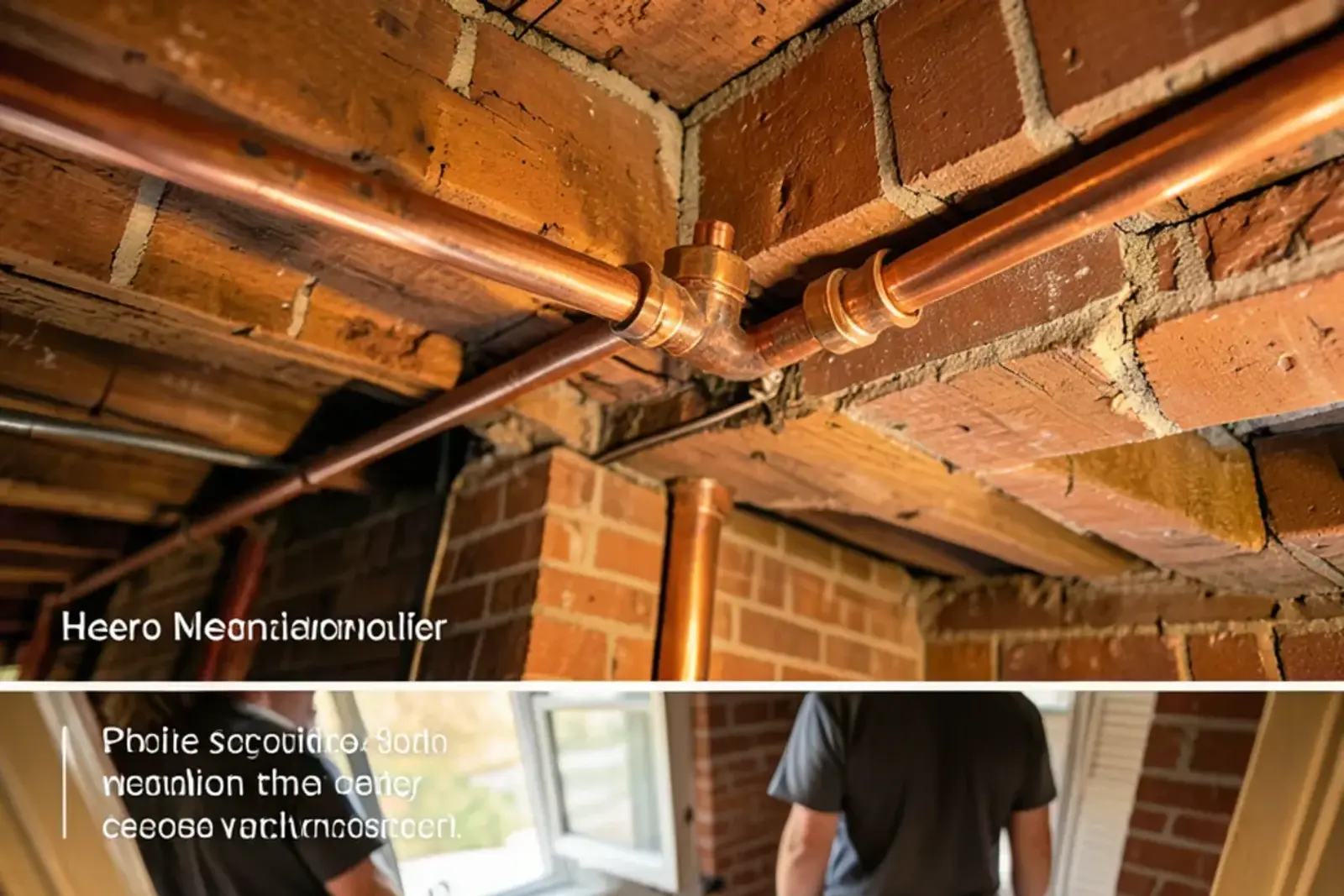
A slab leak, in a house or addition built on concrete, has two paths: break the floor and repair the pipe in place, keeping the layout, or abandon the line and reroute it through walls or ceilings.
If the leak is on the buried line between the curb stop and the meter, our main water line repair and replacement page explains what happens next. When the same galvanized system keeps sprouting pinholes, whole home repiping is often a better use of money than chasing the next one. And if the pipe split in a freeze, burst pipe repair covers how the cold run gets moved or insulated. We also track down leaks in Sterling Heights, Warren and Center Line.
What makes one leak repair cost more than another
The search and the repair can each be small or large. What decides it:
- How long the search takes. A fixture caught at the meter is quick, and a leak with no visible water takes more testing.
- Access to the pipe, whether that's open basement joists, finished drywall, tile, cabinets or concrete.
- Pipe type and condition at the repair point. Brittle galvanized may need a longer replacement to reach sound pipe.
- For a slab leak, breaking and patching concrete compared with rerouting overhead.
- A permit for anything beyond a working-parts repair.
- Finish work like drywall, tile or flooring, usually done by another trade.
Leaks that come back are usually telling you something about the pipe as a whole. Two pinholes in the same copper run within a year or two, or a third threaded joint weeping on galvanized, is the point where it's worth asking whether the next repair should be a bigger one.
Why call us to find a leak in Fraser
We're on Janet Ave, just south of 14 Mile, and most leak calls here trace back to the same few spots in 1950s through 1970s houses. When you call (207) 419-2600, we start with what your meter does, because a dial moving with every tap closed tells us whether to look at fixtures or piping before anyone arrives. The search runs from the least invasive check to the most, and drywall gets cut once, where the readings agree. If the pipe around the leak is the real problem, you hear the repair-or-repipe question with the evidence in front of you.
Leak detection questions from Fraser households
Is there a leak detection company near me in Fraser?
Yes. Phone (207) 419-2600 and describe what you've noticed: a bill, a stain, a sound or a reading at the meter. Running the two-hour meter test and the toilet dye test beforehand saves time, because it tells us whether we're looking for a fixture or a pipe before anyone arrives.
Will you have to cut open drywall to find the leak?
Often not. Many leaks turn out to be a toilet, softener or humidifier line that shows itself when valves are closed one at a time with the meter watched. Inside a wall or ceiling, pressure testing, listening, a thermal camera and a moisture meter narrow it down before one opening is cut.
How much water can a small leak waste?
More than most people expect. EPA's WaterSense figures put a faucet dripping once a second at more than 3,000 gallons a year, and a showerhead dripping 10 times a minute at more than 500 gallons a year. Across a whole house, EPA estimates that leaks waste more than 9,300 gallons a year in an average home.
Can a slab leak be fixed without breaking up the floor?
Sometimes. The leaking line under the slab can be capped and left in place, with a new line run through the walls or ceiling. That avoids jackhammering and suits buried pipe that is old throughout. A single bad spot on otherwise sound pipe is often simpler to repair through the floor.
More help alongside leak detection and repair
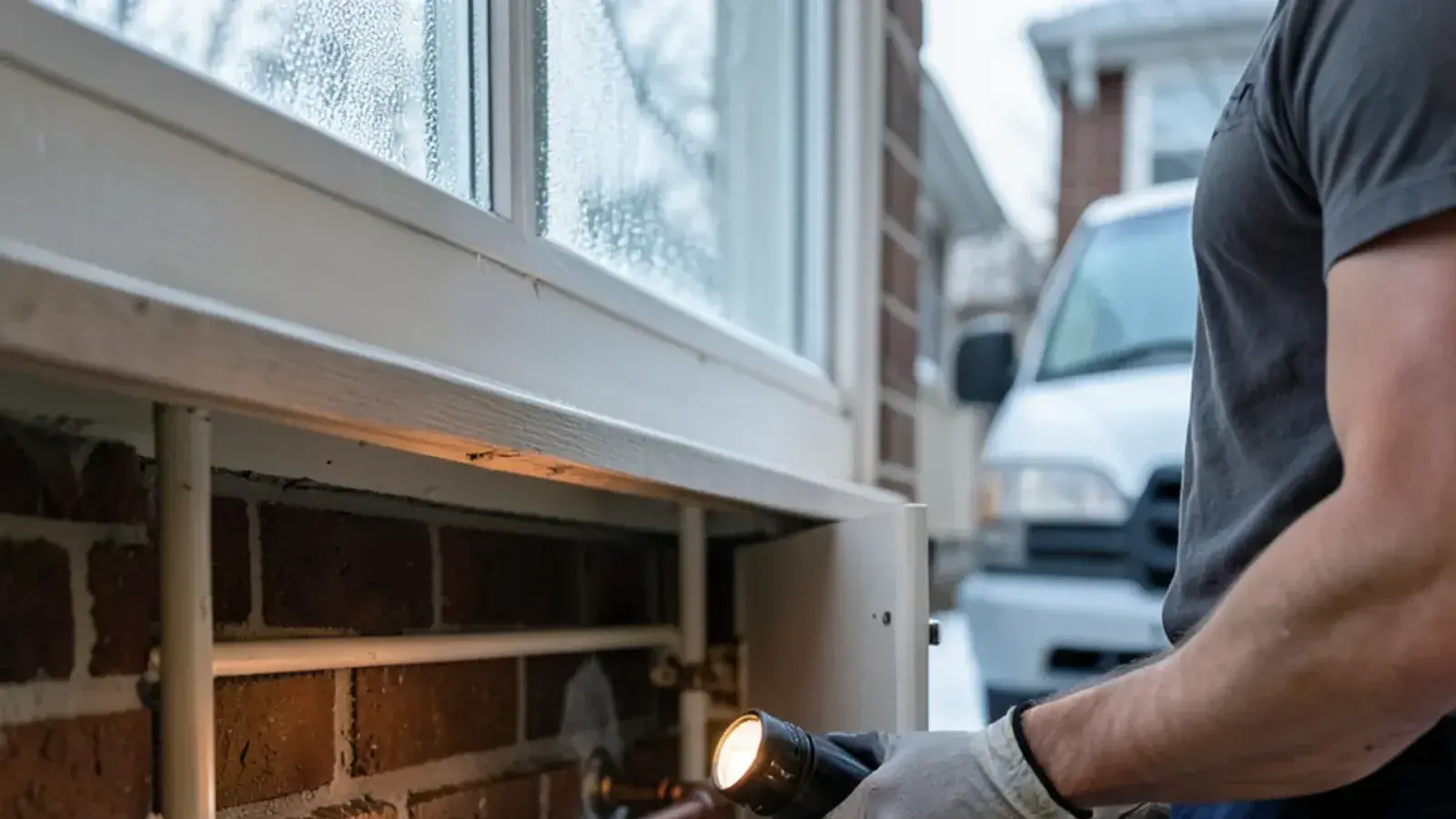
Burst and frozen pipe repair
Splits found and fixed, and the cold-wall run moved or insulated so it doesn't freeze again
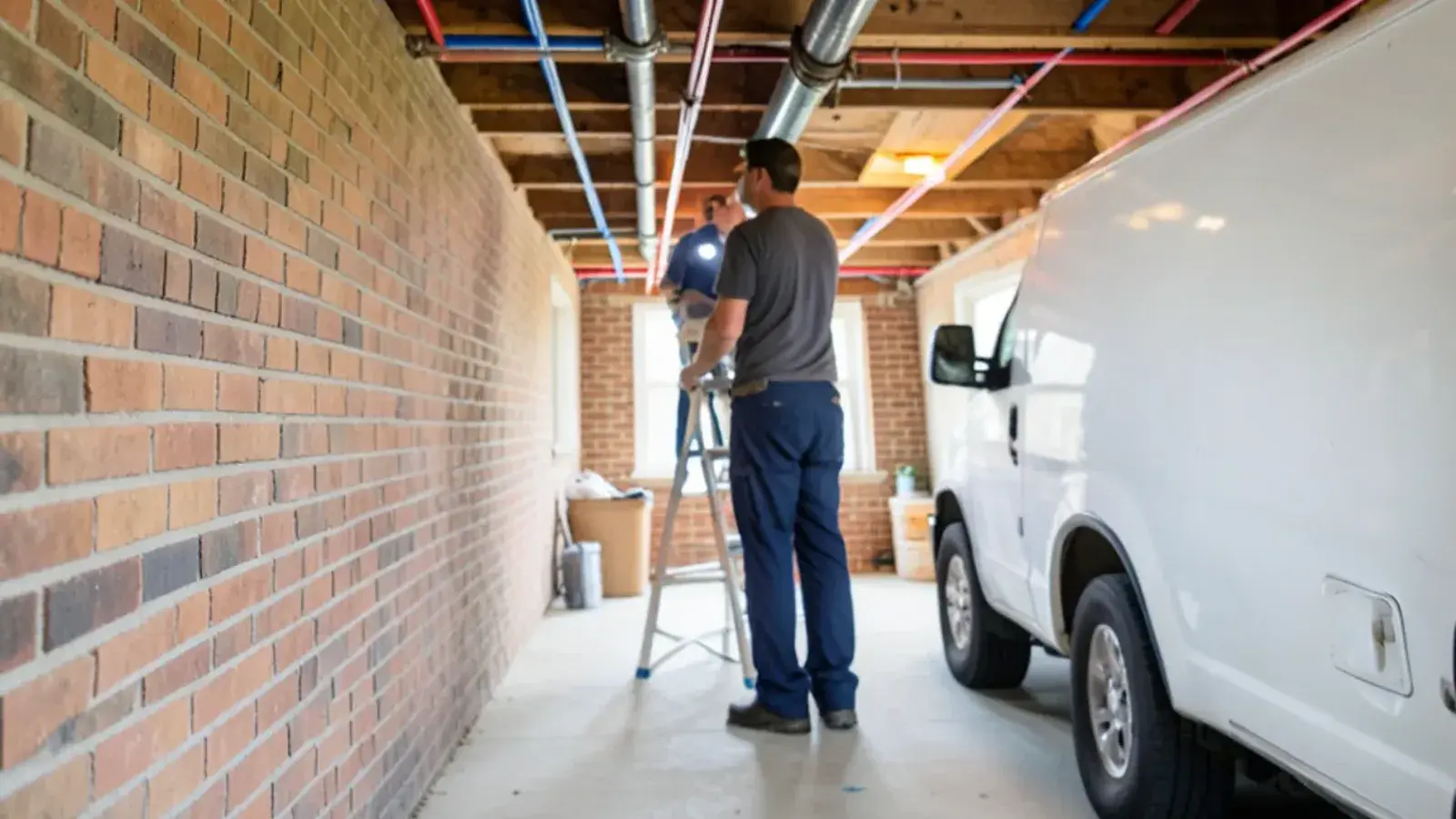
Whole home repiping
Every supply line replaced meter to faucet, with walls opened only where the new pipe runs
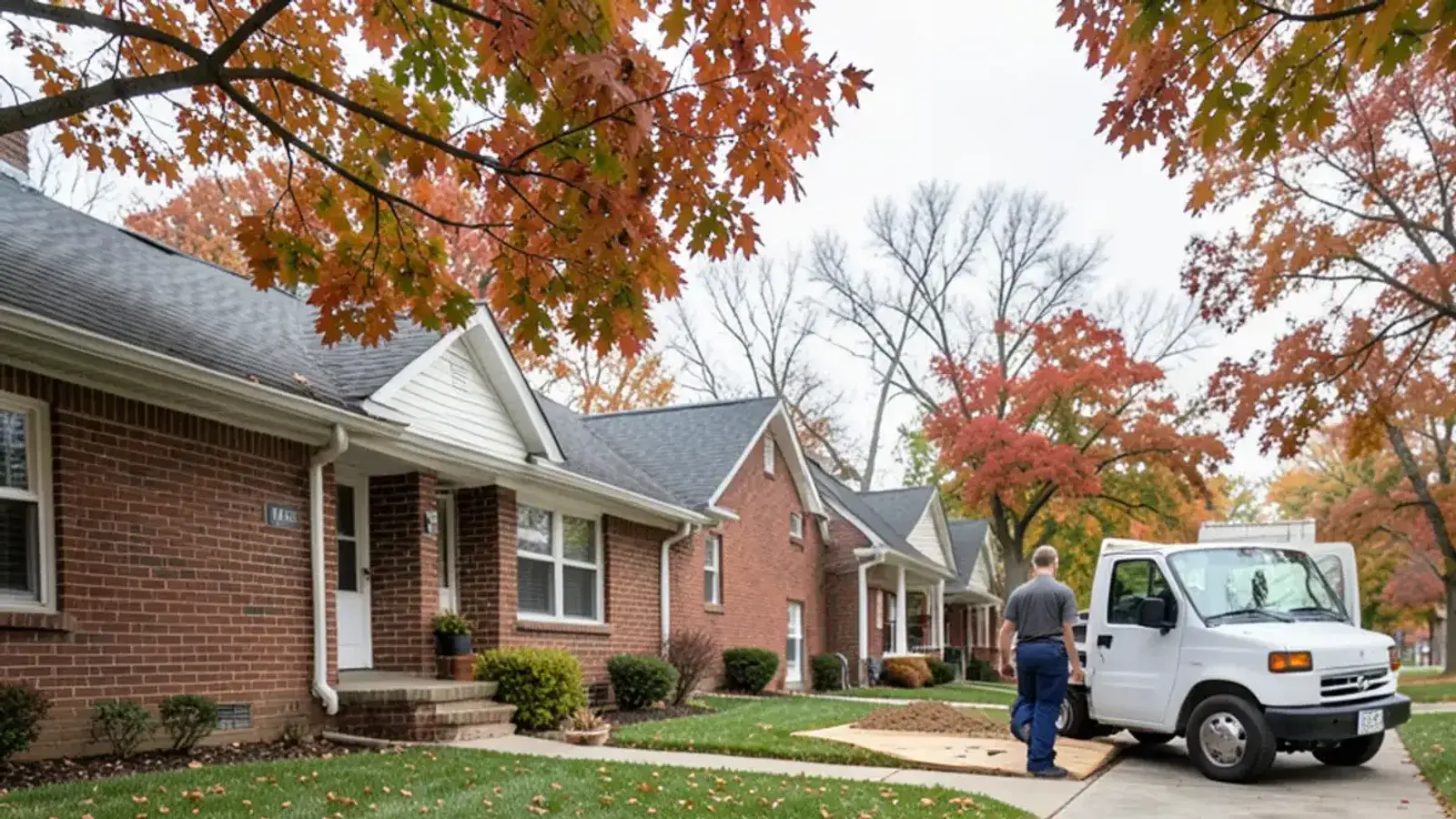
Main water line repair and replacement
Buried service pipe repaired or replaced below frost depth, curb stop and main valve checked
- How to find a hidden water leak before it does damage
- Why your toilet keeps running and what it's costing you
Where we handle leak detection and repair around Fraser