
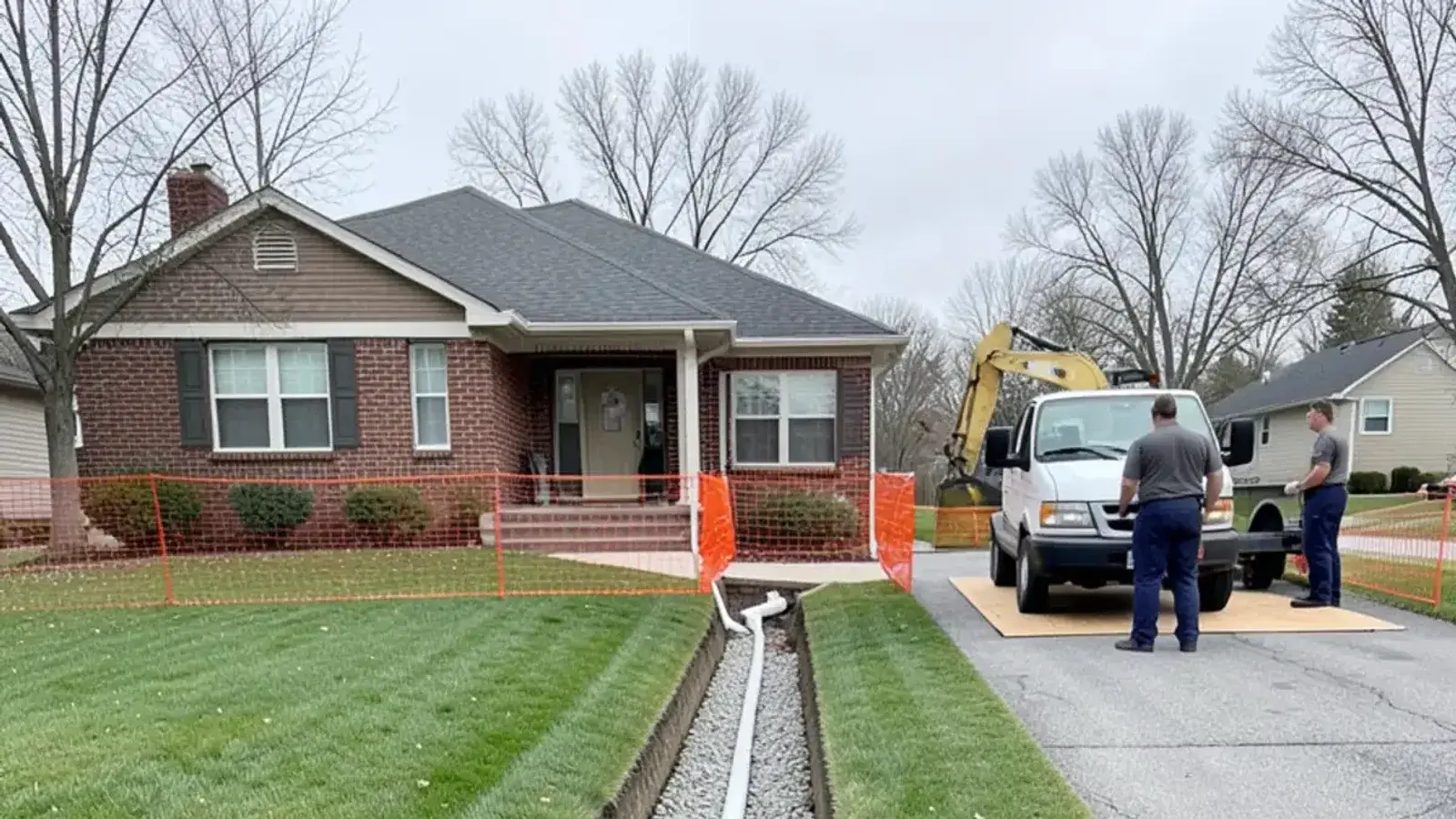
Replacement usually comes up after a sewer camera inspection finds more than one bad spot, or one defect too big for a patch to hold. In Fraser the job runs from your house to the city main, often under the sidewalk and sometimes under the street, because the homeowner owns the full lateral. That shapes the method, the permits and the cost.
A full lateral replacement covers:
- New pipe from the foundation wall to the city main, under the sidewalk and street where needed
- A transition fitting where new pipe meets cast iron at the house
- Cleanouts where the code wants them
- The connection at the main and the underground inspection
- Restoring the trench or pits
Three ways to replace a Fraser sewer lateral
Open trench
A trench follows the line, the old pipe comes out and new pipe goes in at a proper slope. It handles every failure, including bellies, collapses, the wrong pitch and a line that needs rerouting. The trade-off is restoration along the whole trench, whether that's lawn, landscaping, a driveway or a sidewalk panel.
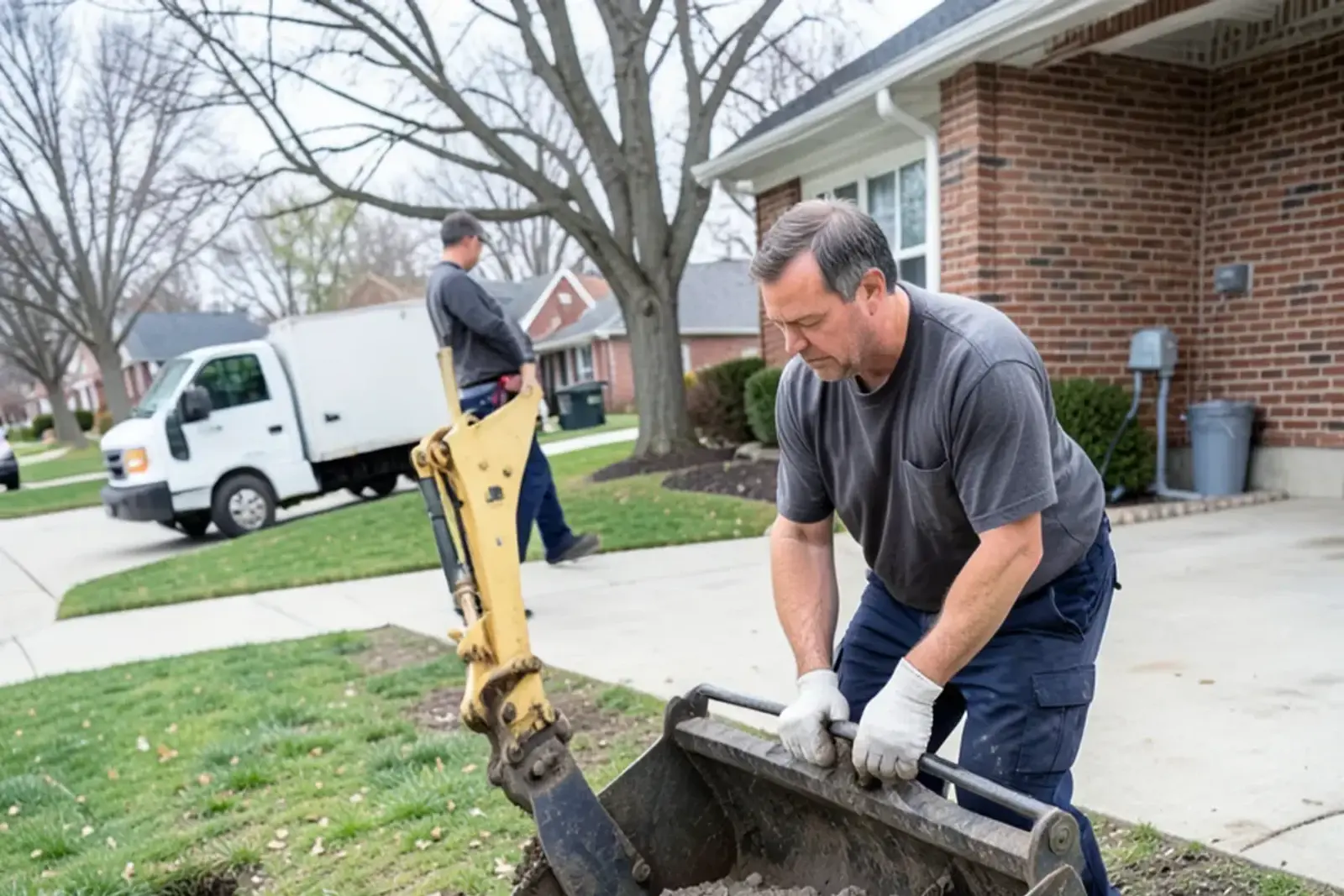
Pipe bursting
Pipe bursting needs a pit where the line starts and another where it ends. A bursting head on a cable is pulled through the old pipe, cracking it outward into the soil, while new polyethylene pipe follows behind it. The yard between stays mostly untouched.
Cured-in-place lining
A resin-soaked liner goes into the cleaned old pipe and hardens in place. The result is a new pipe inside the old one. It may need only the cleanout and one pit. The inside diameter shrinks slightly, and the host pipe has to hold its shape well enough to act as a form.
When does trenchless sewer replacement fail?
The common deal-breakers for trenchless work:
- A belly. A liner copies the old pipe's shape, sag included, and bursting follows the old path too. Waste keeps settling in the low spot. Only digging resets the grade.
- A collapsed or crushed section. A liner can't get past it and a bursting head may not either, so that spot gets dug anyway.
- Badly offset joints or missing pipe, where a liner wrinkles or has nothing to bond to.
- Tight bends and fittings near the foundation, which are hard to burst through.
- Other utilities close to the sewer. Bursting pushes outward, and a gas or water line sitting near the old pipe can be damaged.
- A pipe packed with roots, which needs hydro jetting before any liner goes in.
The footage settles which of these apply. More on the comparison is in trenchless or open-trench sewer replacement.
Clay sewer pipe replacement and what goes in its place
Signs a lateral is past cleaning
The basement floor drain usually backs up first. When that keeps happening after cleanings, roots return after every jetting, or a toilet gurgles while the washer drains, the pipe itself is the problem. Outside, a soft or sunken strip of lawn along the line, or a sewage smell near the cleanout, can mean the pipe has opened up.
Crock, cast iron and the replacement pipe
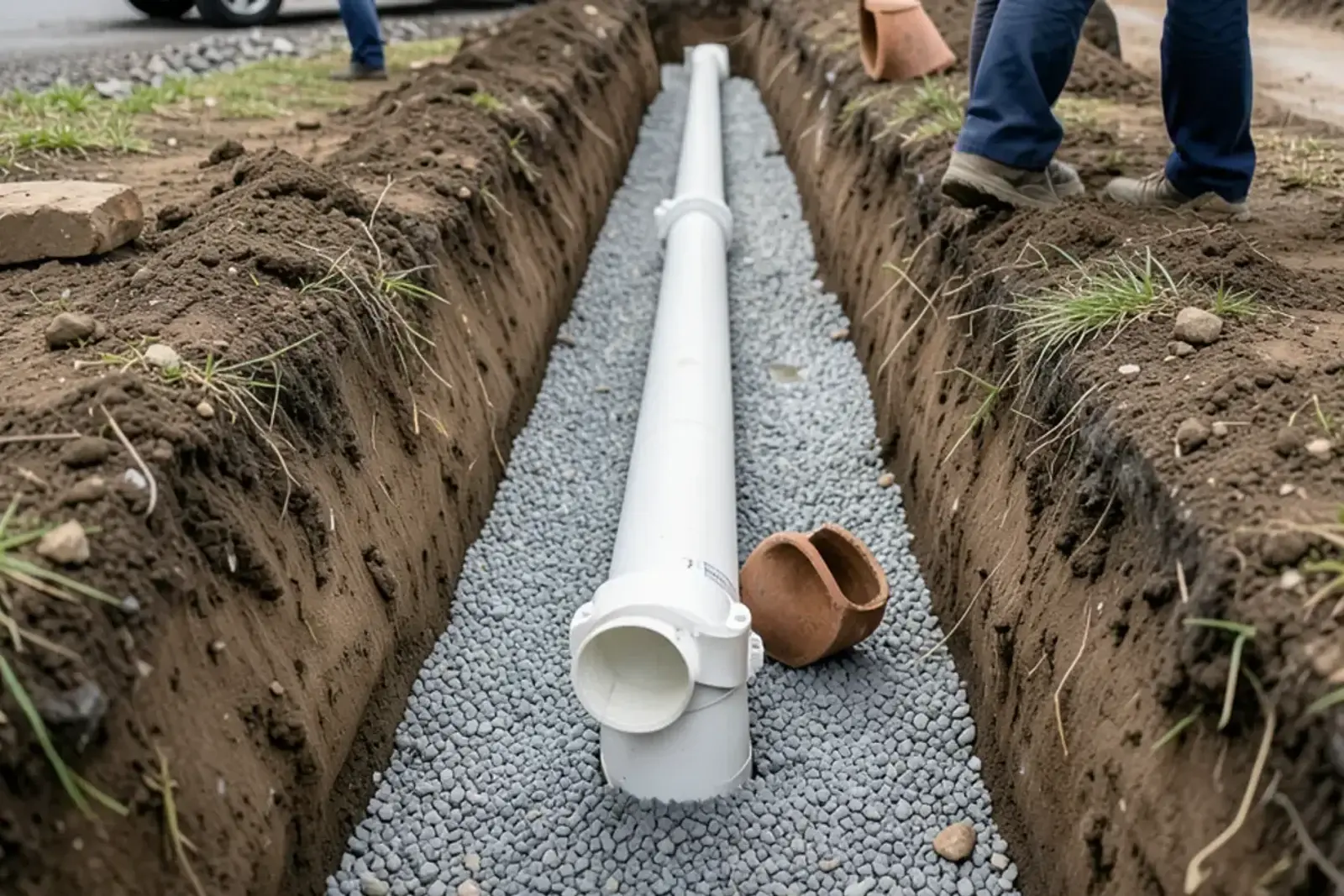
Older Fraser laterals are often clay crock outside the foundation, sometimes joined to cast iron near the house. The city's own fee schedule calls that transition "crock to iron." Crock tends to fail at its joints, where roots get in. Cast iron scales up inside and can rot through along the bottom of the pipe. Open trench work usually goes back in PVC, while bursting pulls in polyethylene.
For drain pipe 3 inches and up, the Michigan Residential Code sets a minimum pitch of 1/8 inch per foot, and keeping that grade steady to the main keeps solids moving. Cleanouts come next: the code wants one near where the building drain meets the building sewer, at bends sharper than 45 degrees and at least every 100 feet on smaller sewers. Fraser's lateral handout also recommends adding one if your house has none.
If the cast iron under the basement slab is failing too, that's a separate stretch of cast iron sewer replacement that can mean cutting concrete. The camera shows where the bad pipe ends.
Fraser permits, escrows and MISS DIG before digging
Fraser's ordinance says no one may uncover, connect to or alter a building sewer without a building sewer permit, and it puts every cost of the building sewer on the owner. The city also asks for a $500 cash or surety bond before it issues a building sewer permit, and a contractor doing the connection needs a state license plus a city license for sewer excavation. Owners doing their own sewer connection are exempt from that licensing step.
These items come from the city's current fee schedule (FY 2026–27, last amended in September 2026):
| City of Fraser item | Fee or deposit |
|---|---|
| New sewer or main drain | $30 |
| Crock to iron, cleanout or exterior sewer line repair | $50 |
| Plumbing permit application | $30 |
| Escrow, digging in the right-of-way or elsewhere off the lot | $2,500 |
| Escrow, digging in the roadway | $10,000 |
An escrow is a deposit the city holds until the right-of-way or road is put back. Applications are online only, and the permit holder books the inspection.
MISS DIG 811 needs at least three business days' notice before excavation. Its locators don't mark private lines, such as a gas line to a detached garage, so those need a private locator. Digging has to begin within 14 days of the legal start date.
How a sewer replacement job unfolds
Camera, locate and choose a method
We run the line, mark defects and depth, and match the method to the footage.
Permits and utility marks
The permit goes in, MISS DIG gets its notice, and private lines near the route are located.
Dig or open access pits
Open trench follows the line, trenchless work starts with a pit at each end, and pavement is saw-cut only where it has to be.
New pipe, connection and inspection
New pipe goes in at grade with cleanouts where the code wants them, then the connections are made and the work is inspected under the permit. Fraser's fee schedule lists an underground plumbing inspection for buried work.
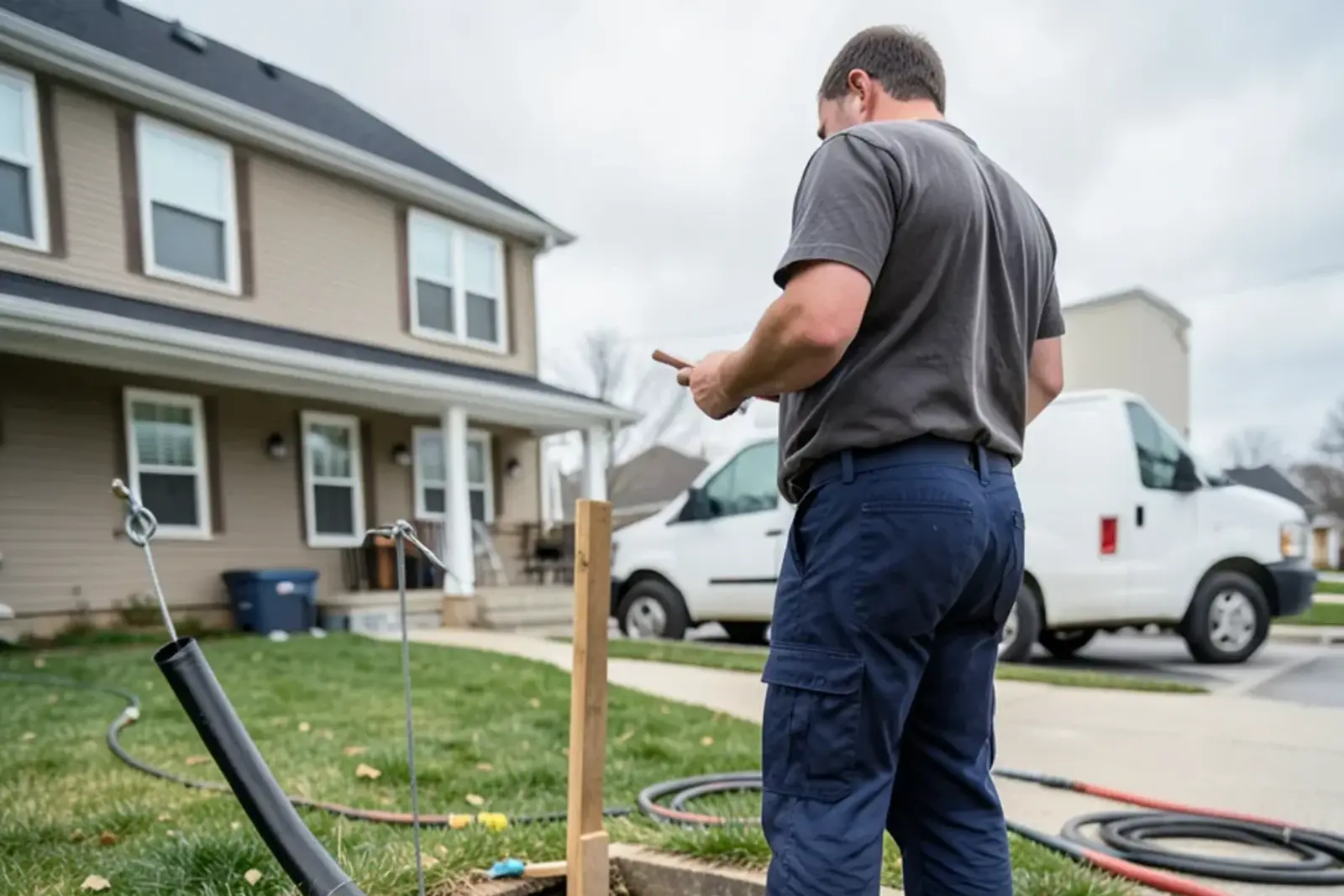
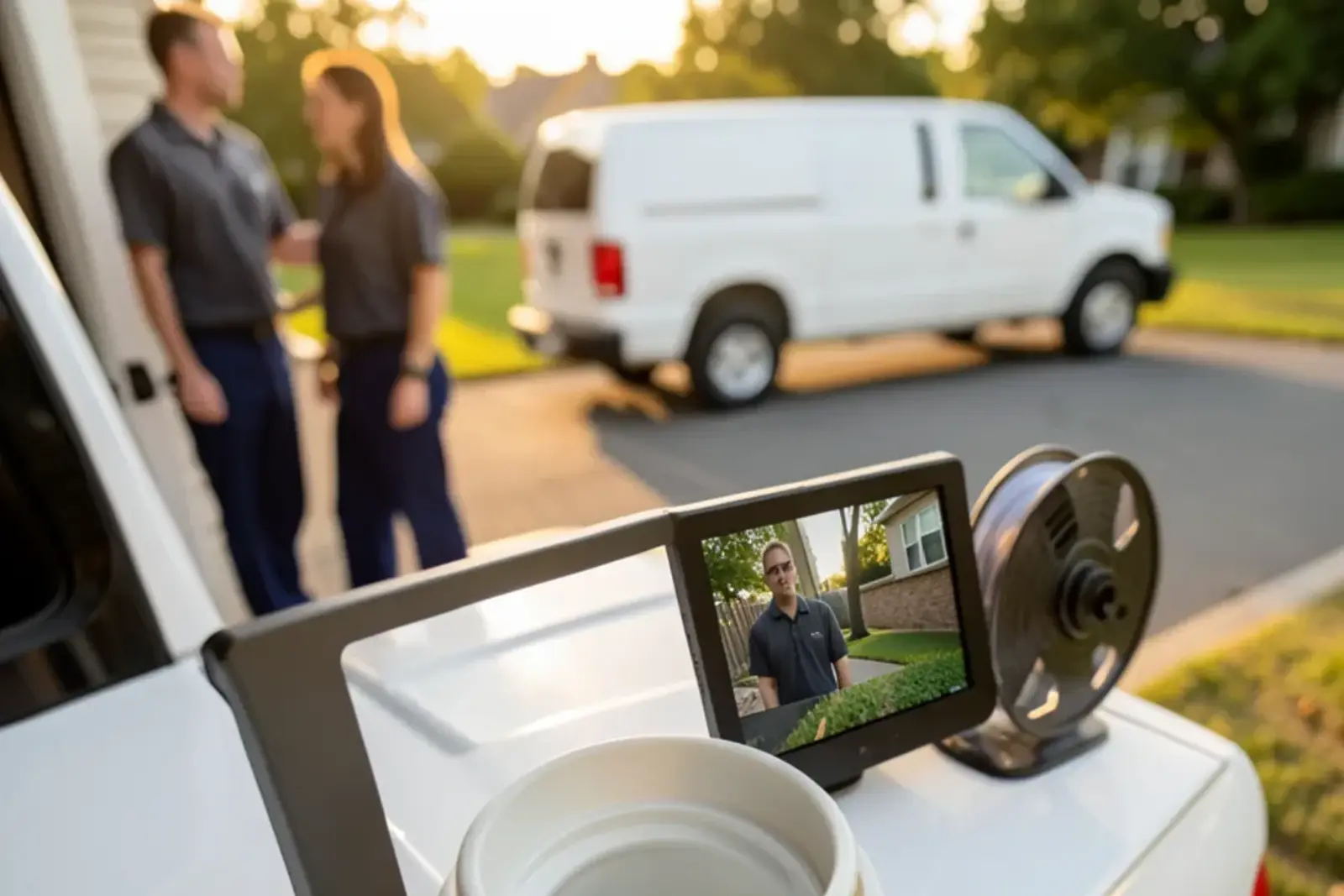
Backfill, restoration and a final camera run
Backfill is compacted, and a last camera run records the finished line.
What to ask for in writing
Pipe and liner makers publish their own warranties, so ask which product is going in and keep its paperwork. Get in writing the workmanship terms, the restoration included (topsoil and seed, concrete, asphalt), who restores the right-of-way to release the escrow, and whether the final footage is yours.
What drives the cost of replacing a sewer line?
No two laterals match. What moves the number:
- Length and depth of the line
- What sits on top: lawn, driveway, sidewalk or the street itself
- Method, which the footage decides
- Failing cast iron under the basement floor
- How many pits and cleanouts the job needs
- Restoration of lawn, concrete or asphalt
- City permits, bond and right-of-way or roadway escrow
- Wet spring soil or frozen winter ground
In Fraser the line often ends under the street, so the main's depth, a pavement cut and the roadway escrow can weigh as much as the pipe.
If the water service runs near the same path and needs work, main water line repair and replacement can sometimes share the dig. We replace laterals in Clinton Township, St. Clair Shores and Roseville as well, and if roots started the trouble, tree roots in your sewer line explains why they come back.
Why call us before a Fraser sewer replacement
We're on Janet Ave, just south of 14 Mile, and the laterals around us are mostly 1950s through 1970s crock and cast iron. When you call (207) 419-2600, the first question is whether the line has been on camera, because the footage decides the method and the price. You see each defect and its distance from the cleanout, hear which method fits and why, and learn up front about Fraser's permit, bond and escrow lines and who handles restoration.
Questions about replacing a Fraser sewer lateral
Should I repair or replace my sewer line?
Let the camera decide. One cracked joint in otherwise sound pipe suits a spot repair. Several bad joints, a long sag, a collapse, or cast iron rotting through along the bottom usually means the next failure is close behind, and replacement costs less than a string of separate digs. Ask to see the footage and the distance to each defect.
Can a sewer line be replaced without digging up the yard?
Often. Pipe bursting and cured-in-place lining need two small pits instead of a long trench. Neither one fixes a belly, gets past a collapsed section or handles some tight bends, and those spots still need excavation. A camera inspection tells you whether your lateral is a trenchless candidate before anyone promises a no-dig job.
Does the City of Fraser pay for the sewer under the sidewalk or street?
No. Fraser's lateral handout puts the entire building sewer on the property owner, including the part in the public right-of-way beyond the property line, at the owner's expense. Right-of-way or roadway digging also needs a city escrow, held until the area is restored.
How long does sewer line replacement take in Fraser?
The digging and pipe work is often a short part of the job. Permits have to be issued, MISS DIG needs at least three business days' notice before excavation, and Fraser plumbing inspections run only on Tuesday and Thursday mornings. Frozen ground, a wet spring, pavement cuts and restoration add time once the method is set.
More help alongside sewer line replacement
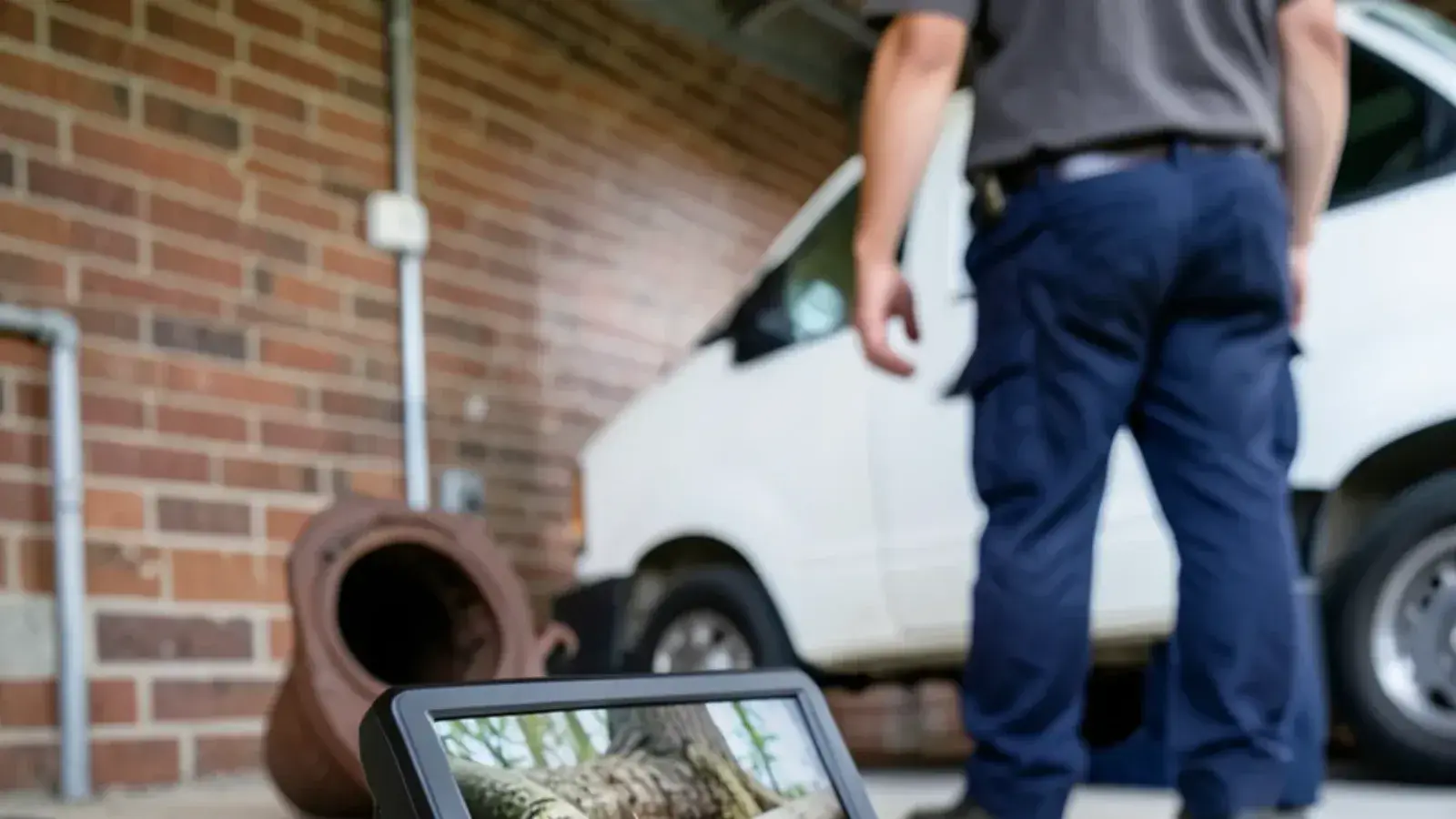
Sewer inspection and line repair
Live camera footage of your lateral, with defects located and marked from the surface
Hydro jetting
Scours grease, scale and roots off the pipe wall, with camera footage before and after
Main water line repair and replacement
Buried service pipe repaired or replaced below frost depth, curb stop and main valve checked
Where we handle sewer line replacement around Fraser