
By Plumber in Fraser, MI, Fraser, MI · Published · Last updated
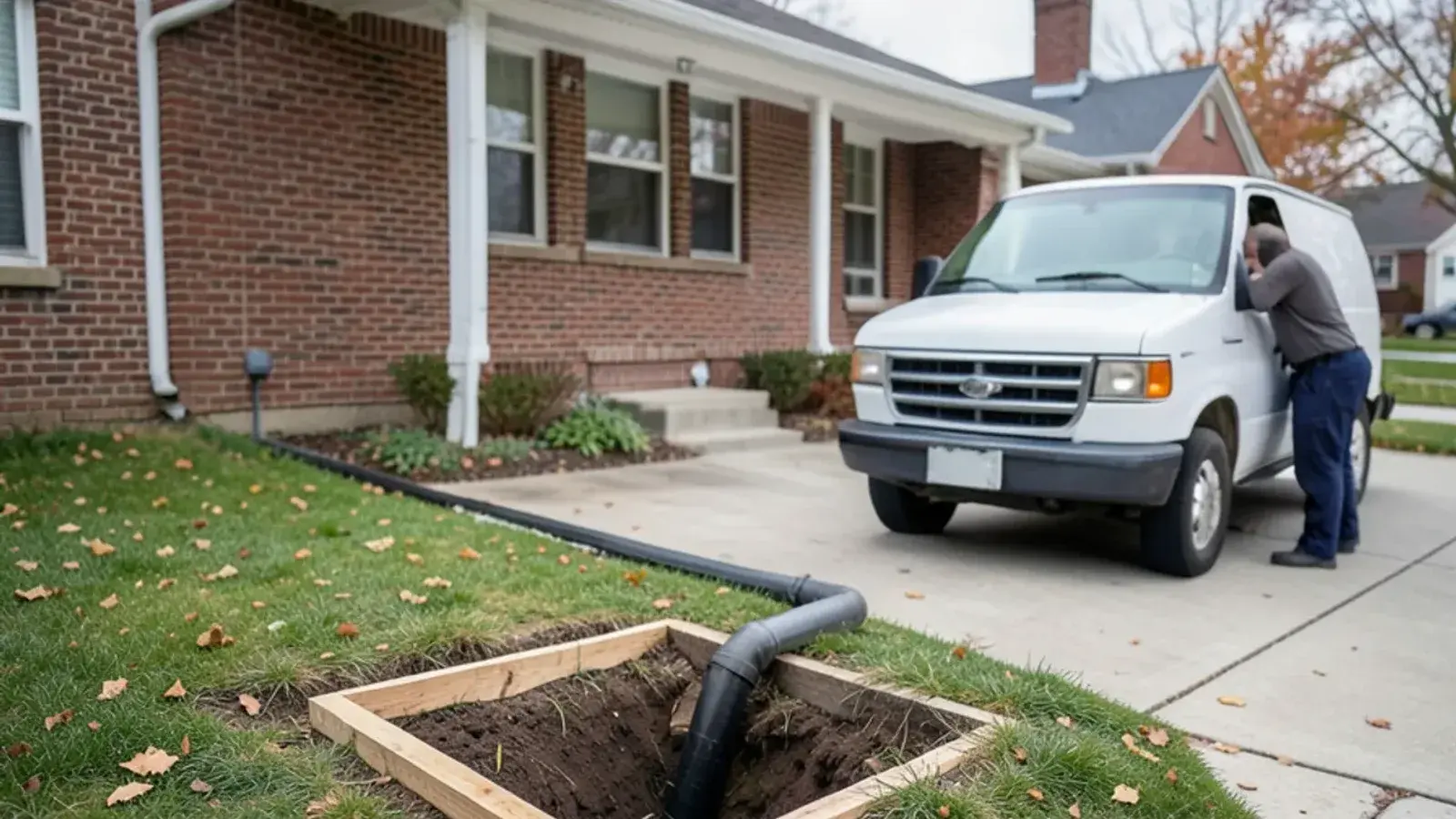
There are three main ways to replace a failing house sewer. Two of them, pipe bursting and cured-in-place lining, are called trenchless because they work through small access pits instead of a trench along the whole line. The third is the traditional open trench. Each one handles a different kind of damage, and the camera footage of your line usually decides it.
The three methods, in plain terms
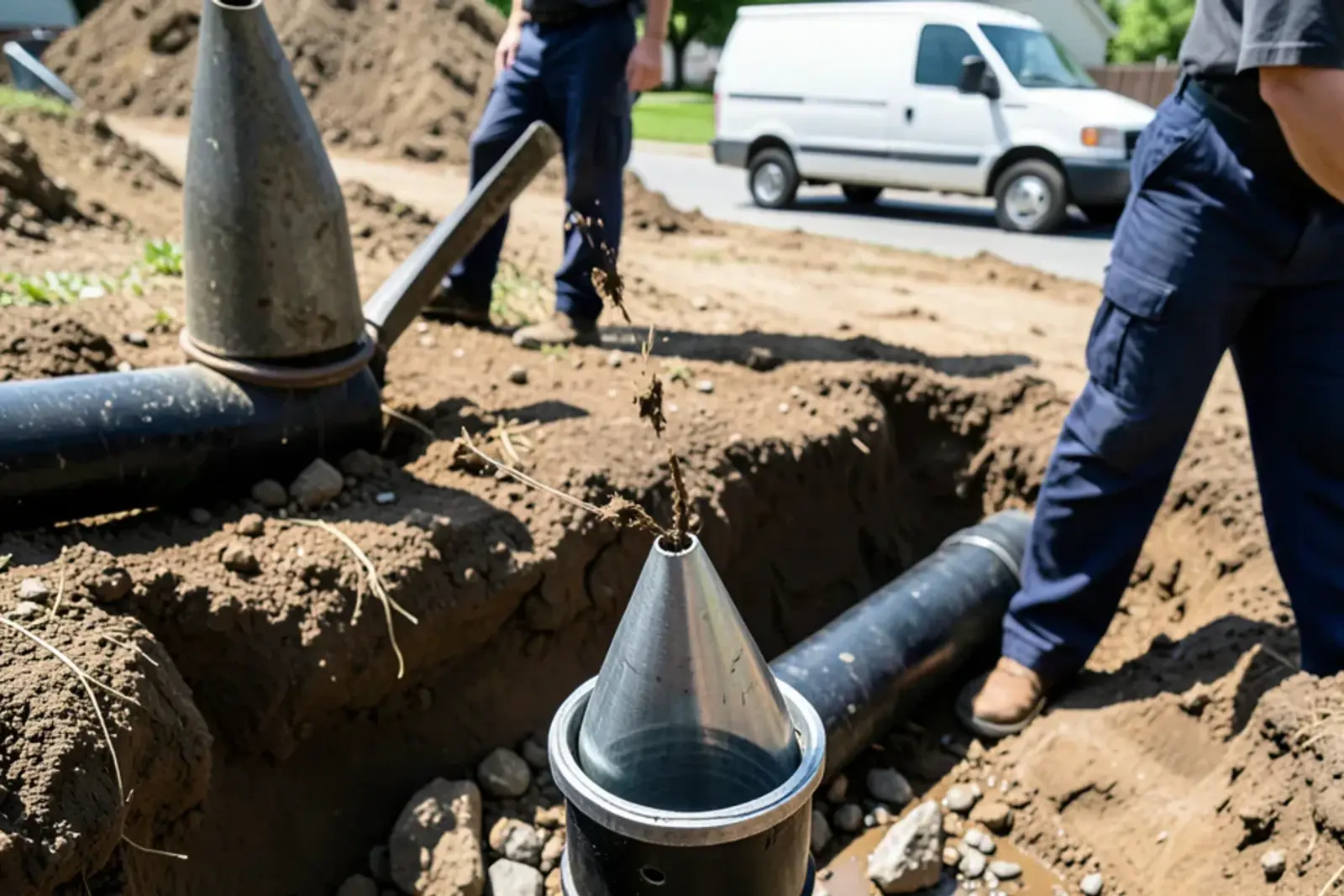
Pipe bursting starts with two pits, one at each end of the run. A cone-shaped bursting head is pulled through the old pipe by a cable or rods. It cracks the old pipe outward into the soil, and a new pipe, usually fused high-density polyethylene, follows right behind it. You end up with a brand-new pipe in the old path.
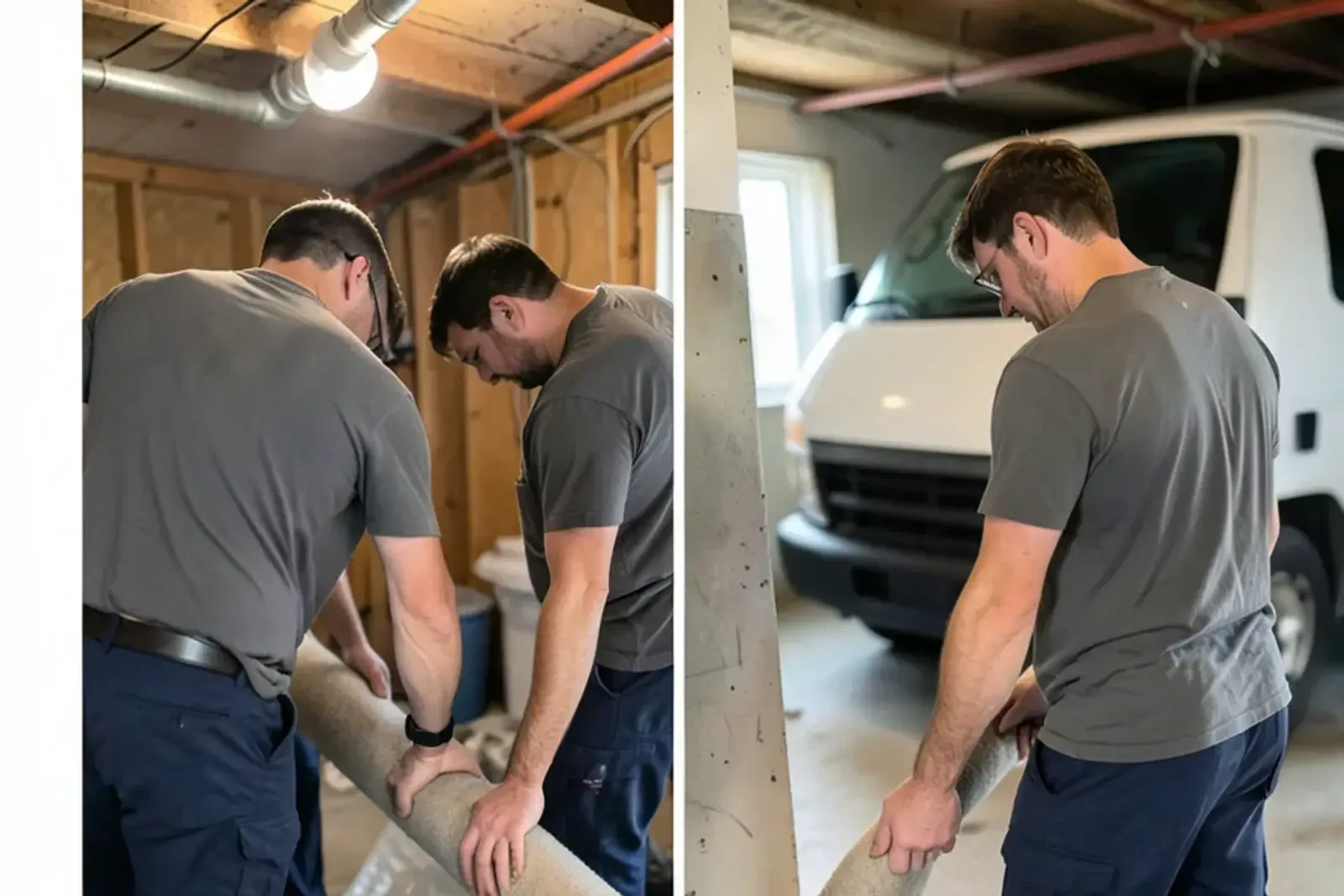
Cured-in-place pipe, or CIPP lining, builds a new pipe inside the old one. A felt or fiberglass tube is saturated with resin, fed into the cleaned line and pressed against the old wall. Hot water, steam or UV light cures it hard. The old pipe stays in the ground and acts as a form. Lining often needs only a cleanout, or one small pit.
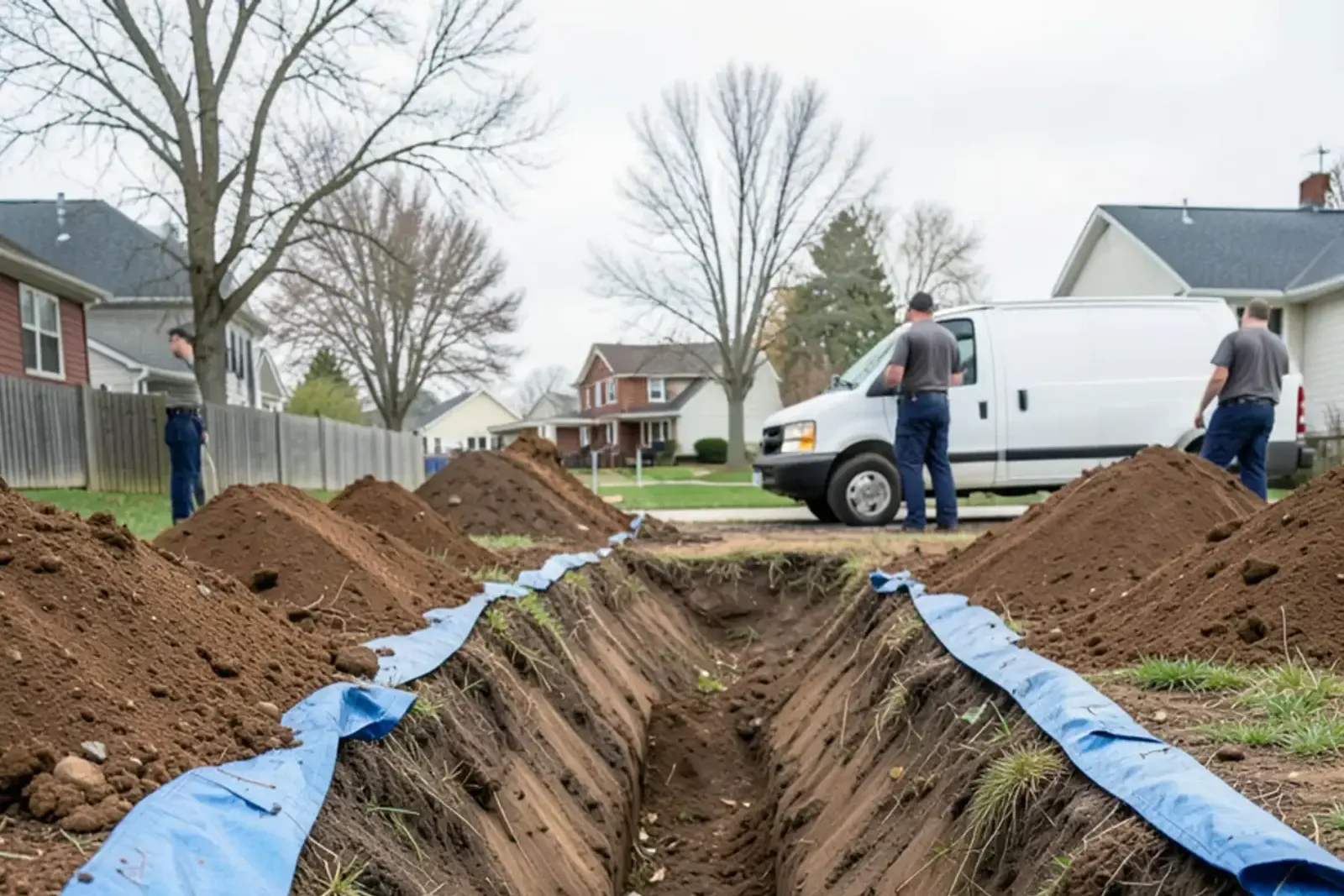
Open trench is the method most older laterals were installed with. The whole run is dug up, the old pipe comes out and new pipe is laid on a bed at the correct slope. It's the most disruptive option. It's also the one that can fix almost anything.
How the three compare
| Question | Pipe bursting | CIPP lining | Open trench |
|---|---|---|---|
| Digging needed | Entry and exit pits | Often a cleanout or one pit | Full length of the run |
| What's left in the ground | Brand-new pipe | Old pipe with a new resin wall inside | Brand-new pipe |
| Pipe size afterward | Same or larger | Slightly smaller | Same or larger |
| Fixes a belly (sag) | Sometimes, not reliably | No, the liner follows the sag | Yes |
| Handles a collapse | Sometimes, if the head can pass | No, the pipe must be open | Yes |
| Handles offset joints | Usually | Small offsets only | Yes |
| Yard and driveway restoration | Pits only | Minimal | Largest |
When trenchless won't work on your line
Trenchless methods depend on the old pipe being usable in some way. These are the conditions that push a job back to a shovel, or at least to a spot dig.
Bellies
A belly is a section that has settled and holds standing water. A liner follows the shape of the host pipe, so the sag stays. Bursting tends to follow the old path too. If the belly is deep enough to collect waste, the low section has to be dug out and re-laid at the right slope.
Collapses
If part of the pipe has caved in, the camera can't get through, and neither can a liner. A bursting head can sometimes push through a partial collapse, but a full one usually means digging at that spot first.
Offset joints
When two sections have shifted out of line, a liner can bridge a small step. A large offset can stop the liner from going in, or leave a fold or ridge that catches waste. Bursting usually handles offsets better, because the head breaks the old pipe and the new one runs straight.
Other details matter too: sharp bends, changes in pipe size along the run, and how close other buried lines are to the sewer. Bursting pushes soil outward, so a gas or water line running right alongside is a concern.
Before anyone digs, call MISS DIG and pull permits
Call MISS DIG 811
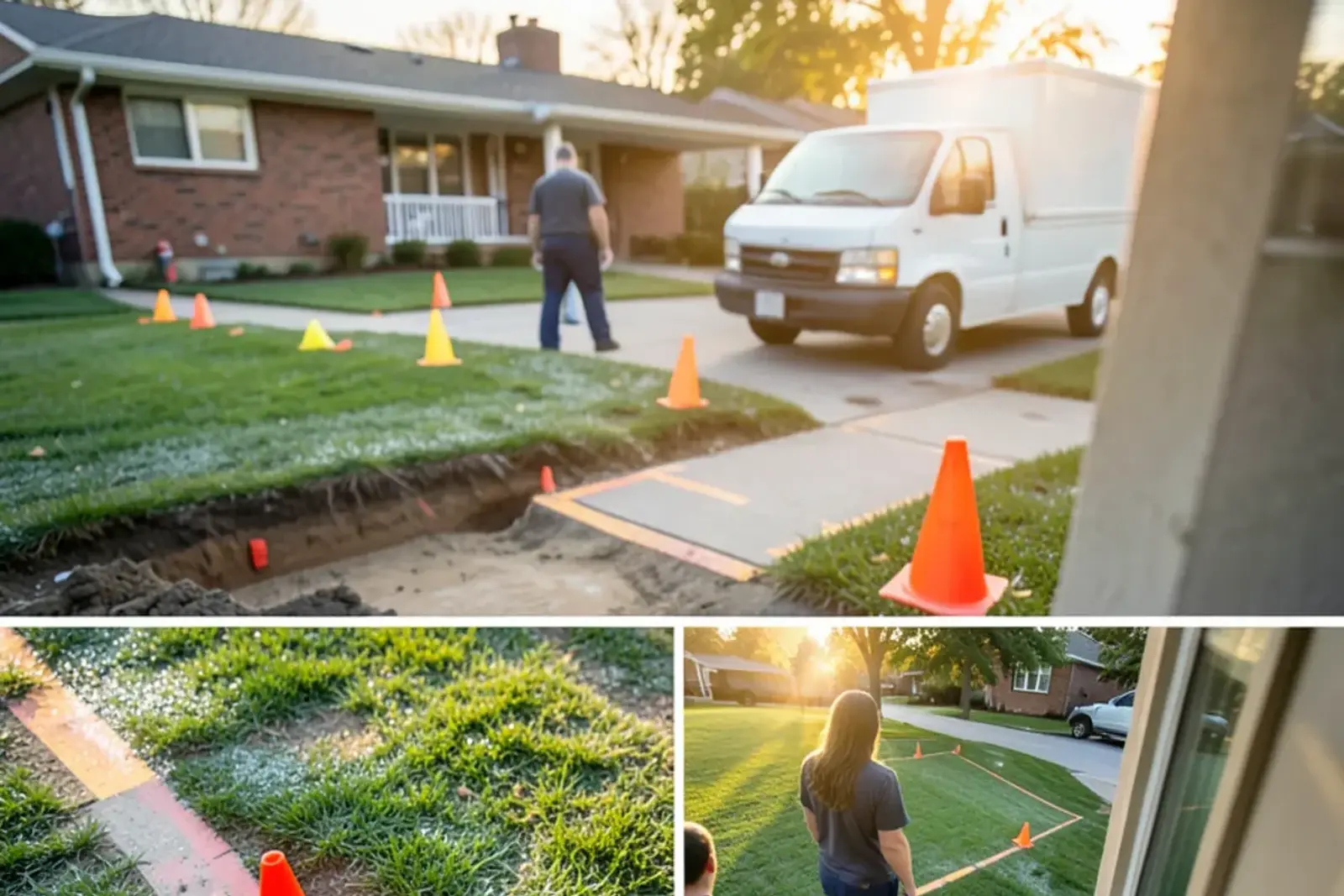
Under Michigan law, whoever does the digging has to notify MISS DIG 811 no later than three business days ahead of the work. If you hire the work out, MISS DIG says that responsibility belongs to the contractor. Public utilities get marked with paint and flags, and anything within 4 feet of either side of the marks has to be exposed by hand. Private lines a utility didn't install don't get marked. Your sewer lateral is one of those, so the camera locator is how it gets found.
Get the city permit
Sewer replacement needs a permit from the building department of the city the house is in. Fees and escrows vary. Fraser's 2026–2027 fee schedule, for example, lists a $50 plumbing item for crock-to-iron, cleanout or exterior sewer line repair, plus a $2,500 escrow for any digging outside or in the right-of-way and a $10,000 escrow for roadway digging (City of Fraser fee schedule). Homes in Roseville and other neighboring cities go through their own building departments, so check that city's requirements. Ask whoever does the work for the permit number before the job starts.
Plan for the inspection
The inspector usually wants to see the new pipe and its connections before the pit or trench is backfilled. Build that into the schedule.
Restoration and what drives the cost
Restoration is often what separates the methods in practice. A trench across a lawn means regrading and seed or sod. A trench through a driveway, sidewalk or street means concrete or asphalt work, and street work brings its own permits. Trenchless methods shrink that work to one or two pits, and that's why they often win when the line runs under hardscape or mature trees.
We don't post prices, but the cost factors are predictable. Depth and length of the line come first. Then the method the damage allows, what sits on top of the pipe (lawn, concrete or pavement), and whether the work reaches the right-of-way. Cleanouts, permits and escrows add to the total. Our sewer line replacement page explains how the camera inspection feeds into choosing a method.
What we see when laterals around Fraser reach replacement
Most laterals here aren't one material end to end. In houses from the 1950s through the 1970s, it's common to find cast iron leaving the foundation, clay tile, the "crock" in Fraser's own fee schedule, running under the yard, and sometimes a short plastic section where an earlier repair was made. Every change of material is a joint the method has to deal with. A liner has to bond across it, and a bursting head has to break through it.
The stretch near the street is the next issue. Fraser makes the owner responsible for the lateral all the way to the main, including the part in the right-of-way, and the city's sewer ordinance requires anyone excavating for a sewer connection to hold a city sewer license and post a $500 bond, unless the owner is doing the work on their own house. That's one reason a method that avoids a pit in the street can change the whole job.
There are trade-offs nobody should gloss over. Lining leaves the old pipe in place, so any sag or ground movement it already has stays with the house. Bursting gives you new pipe, but it pushes soil outward and needs room from gas and water lines running alongside. An open trench is the most disruptive, and it's also the only method that lets someone see and reset the grade along the whole run.
A lining job also needs a clean pipe to bond to. Heavy grease or roots usually mean hydro jetting first, then a fresh camera pass before the liner goes in.
Get these in writing before you sign
- The method, and which stretch of the camera footage it's meant to fix
- Where each access pit goes, and whether any digging reaches the sidewalk or street
- What restoration is included: seed or sod, concrete, asphalt
- Who pulls the permit and posts any escrow or bond
- Whether a new cleanout is part of the job
- A camera video of the finished line
- The pipe or liner manufacturer's warranty, and any workmanship warranty, on paper
Which method should you ask for?
Let the footage pick it. If the pipe is round and continuous but cracked or full of root entry points, ask about lining. If it's broken in places but the path is clear and there's no deep sag, ask about bursting. If it holds water in a belly, has collapsed or has a joint shifted far out of line, expect an open trench at that spot, with the rest lined or burst if it's sound.
If you don't have recent video, start with a sewer camera inspection. Roseville's water report urges residents to get a second opinion before having a sewer excavated, and that's sound advice for any large sewer quote. Owners of older homes in Clinton Township should also check whether the township's clay sewer lead program has reopened before they commit.
Questions about trenchless sewer replacement
Does pipe lining make my sewer line smaller?
A little. A cured-in-place liner adds a new wall inside the old pipe, so the inside diameter shrinks slightly. On a typical house lateral that rarely affects flow, and the smooth resin surface can make up for it. Pipe bursting is different. It replaces the old pipe with a new one of the same size, and sometimes larger, because the old pipe is broken outward into the soil.
Can part of a sewer line be lined and part dug up?
Yes, and that's common. If the camera shows one collapsed section or a single bad sag and the rest of the pipe is sound, the bad spot can be dug out and replaced, and the remaining run lined or left alone. Mixing methods often keeps digging to one small area while still fixing the whole line.
Who is responsible for the part of the sewer under the street?
That depends on your city's ordinance. In many communities the homeowner owns and maintains the lateral all the way to the connection at the public main, including the stretch under the sidewalk or road. Call your city's public works or building department before planning work, because the answer affects which permits you need and who pays for street restoration.
Should a new cleanout go in when the sewer is replaced?
Yes, if the house doesn't already have a usable one. The 2015 Michigan Residential Code calls for a cleanout at or within 10 feet of where the building drain meets the building sewer, and Fraser's lateral handout recommends adding one where none exists. With the line already open, adding it costs far less than it would later, and every future camera run or cleaning starts there.
Fraser plumbing services for this problem
Sewer line replacement
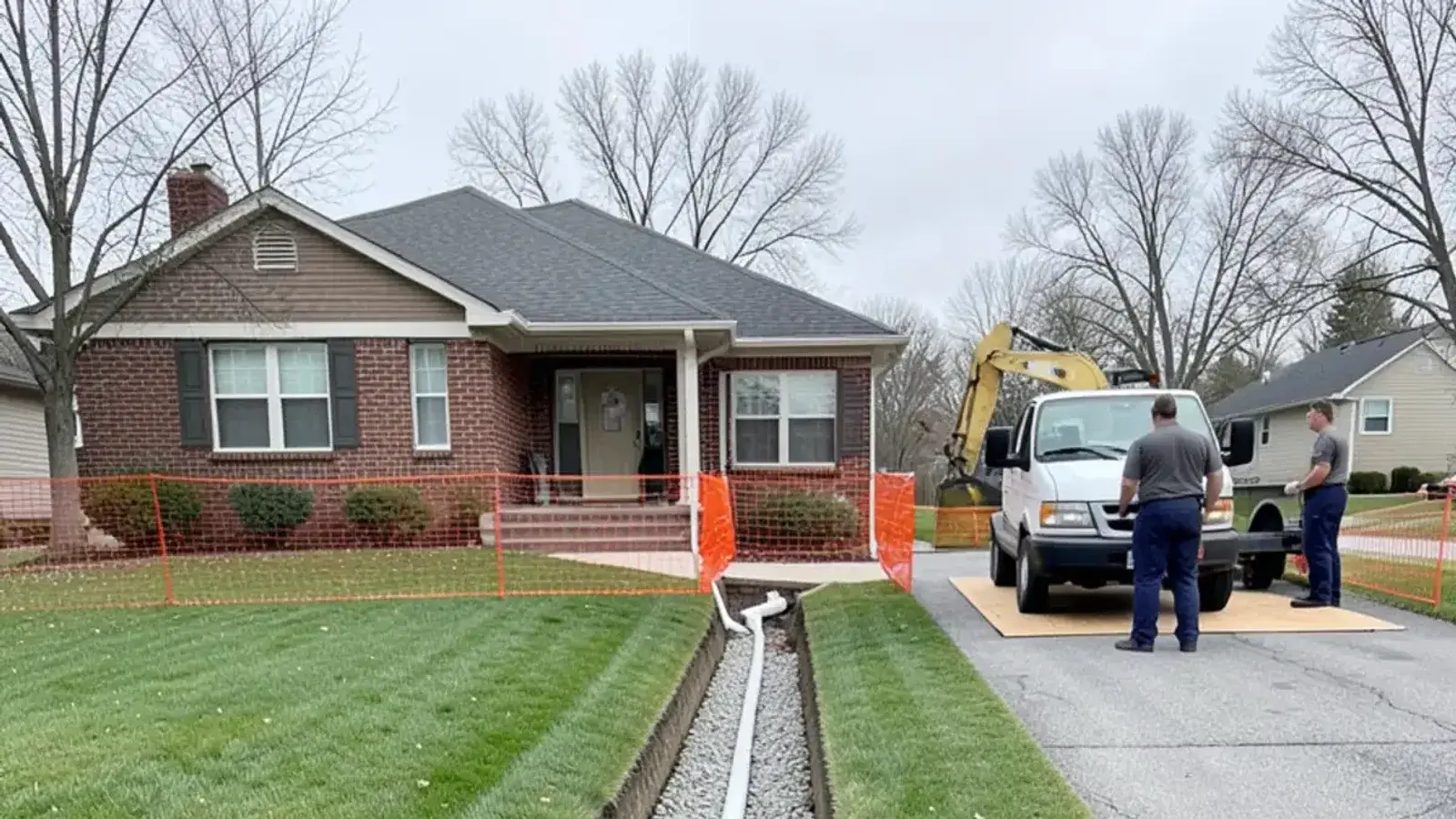
Open trench, pipe bursting or lining, chosen from the camera footage instead of a sales pitch
Sewer inspection and line repair
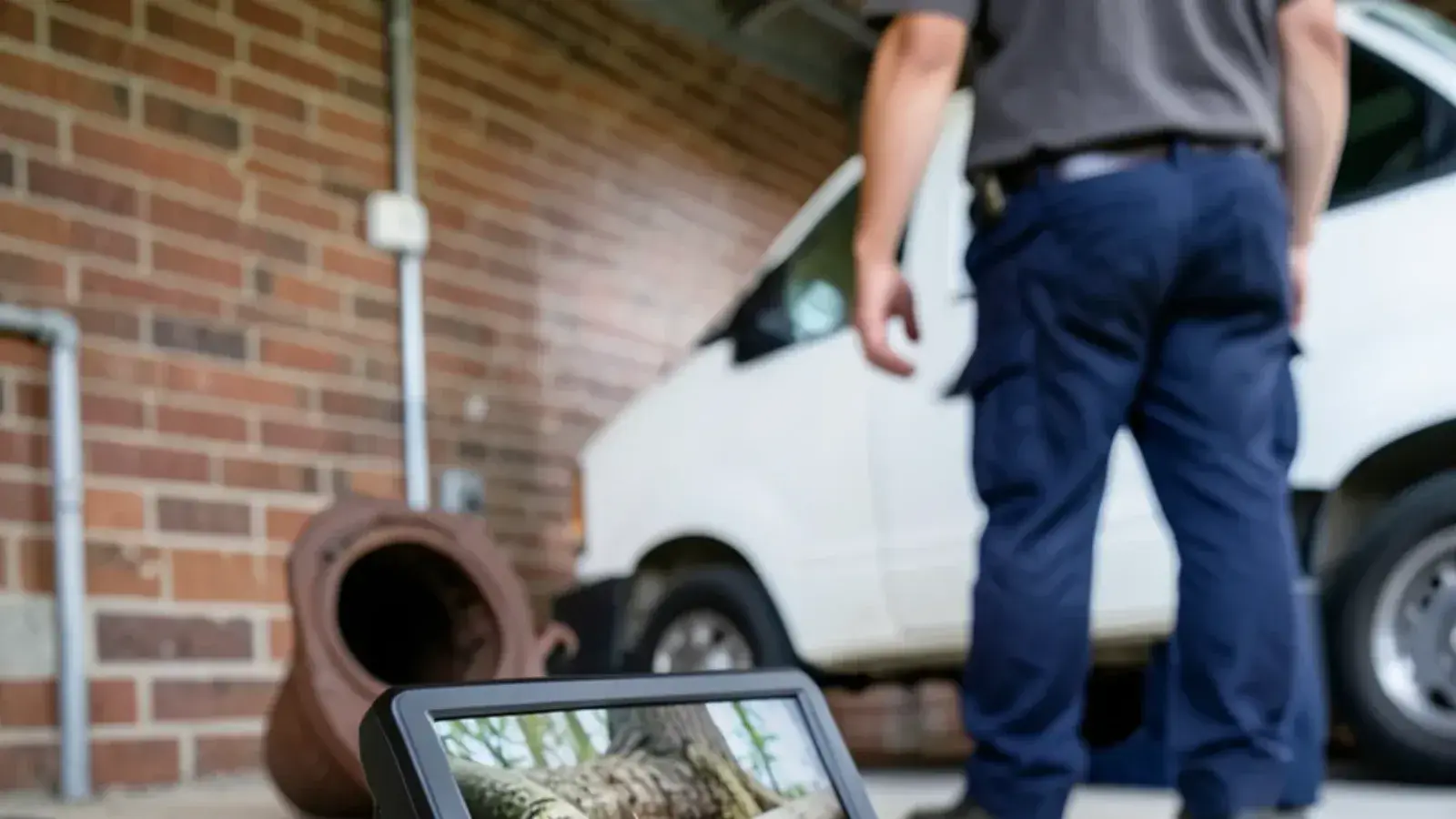
Live camera footage of your lateral, with defects located and marked from the surface
Hydro jetting
Scours grease, scale and roots off the pipe wall, with camera footage before and after