
By Plumber in Fraser, MI, Fraser, MI · Published · Last updated
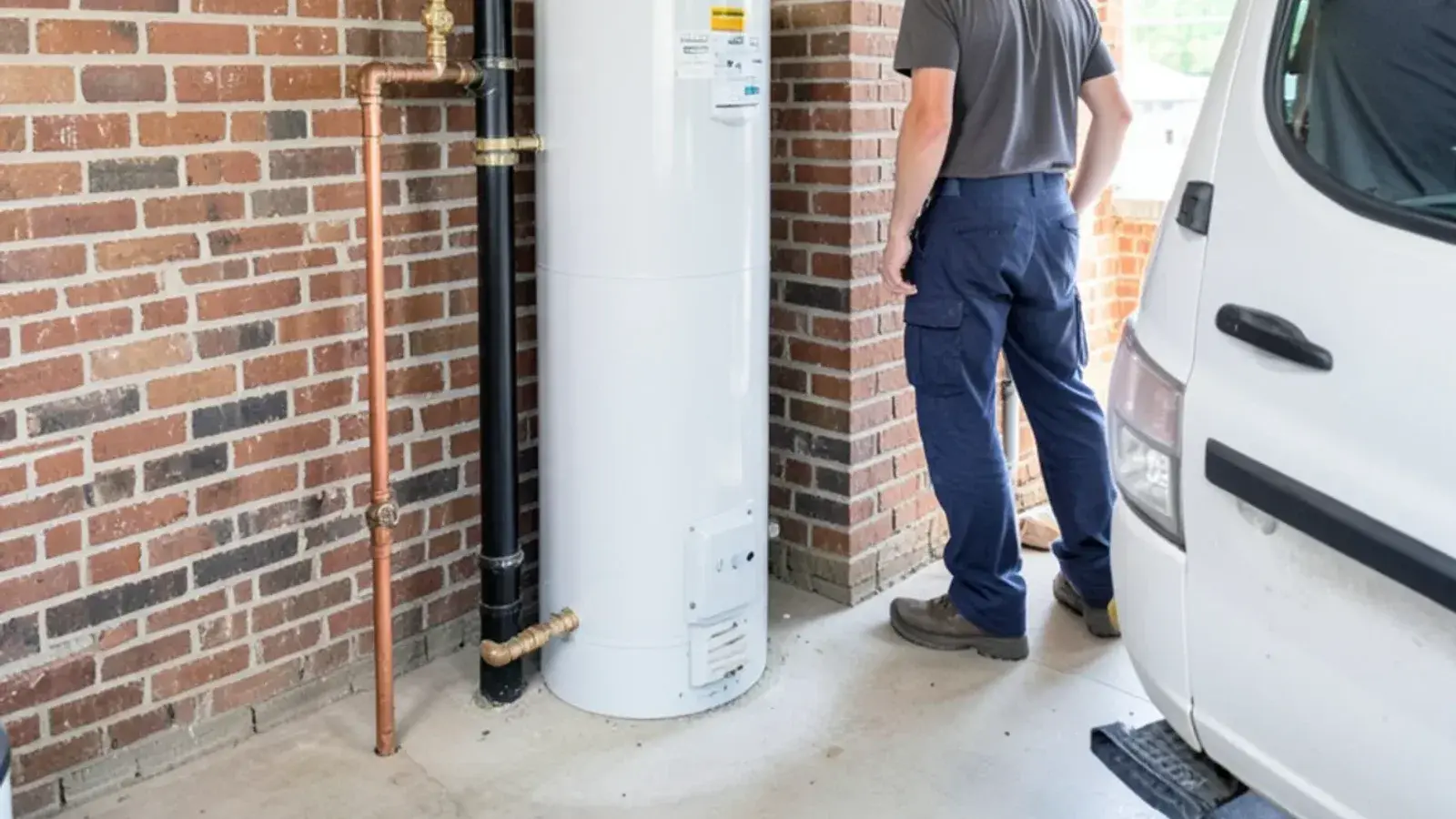
The short answer is yes in both of the cities this guide looks at. Fraser's building department says that in addition to a building permit, permits are required for plumbing, electrical and mechanical work, and its plumbing and mechanical applications both have a water heater line. Warren's list of required permits names hot water tanks among the jobs that may need separate electrical, plumbing and mechanical permits. A replacement counts, even when the new tank goes in the same spot.
Why a simple swap still gets a permit
A water heater is a pressurized tank of hot water, and a gas model is a fuel-burning appliance that sends exhaust up a vent. When the relief valve, the venting or the gas connection is wrong, the failure can be a scald, a flooded basement or carbon monoxide in the house. The permit gets an inspector's eyes on those parts before the job is considered done. In Fraser, residential work is held to the Michigan Residential Code, which the city's code information page lists as the 2015 edition.
LARA's plumbing permit page names only two kinds of work that skip the permit: repairs to the working parts of a faucet or valve, and clearing a stoppage, as long as no piping or fixture is altered. A tank swap disconnects the water lines, plus the gas and vent on a gas unit, so it fits neither.
Who is allowed to pull the permit
Michigan licenses plumbers and plumbing contractors under the Skilled Trades Regulation Act, through the Bureau of Construction Codes at LARA. Both cities' applications give two routes.
The first is a licensed plumbing contractor. Both forms ask for the contractor's license number and a master plumber's license number.
The second is the homeowner. Fraser's homeowner affidavit has you certify the work "shall be installed by myself in my own home" that you live in or are about to occupy. Warren's version requires the property be your residence with no part of it used or planned as a rental.
Both applications also cite Section 23a of the State Construction Code Act, 1972 PA 230, which bars conspiring to get around the state's licensing requirements on residential work. In plain terms, the homeowner route is for homeowners doing their own work, not for an unlicensed installer working under your signature.
If you're hiring the job out, ask any plumber who's pulling the permit for the permit number, and verify their license yourself through LARA's license lookup.
What the Fraser and Warren fee schedules list
Government fees are public, so here's what each city's current paperwork shows. These are line items, not a total. Each city adds up the final fee when you apply.
| Line item | Fraser | Warren |
|---|---|---|
| Water heater on the plumbing application | $40 | $80 |
| Water heater on the mechanical application | $40, gas or electric | $80 |
| Application fee | $30, non-refundable | Not listed |
| Final inspection | $40 | Not listed separately |
| Minimum total to process | $25 minimum permit fee | $80 minimum |
Sources are the City of Fraser fee schedule for 2026–2027, amended September 11, 2026, Fraser's plumbing and mechanical permit applications, and the plumbing and mechanical applications posted by the Warren Building Division. Fraser's electrical schedule also has a $15 water heater item. If you've seen a $10 figure quoted for Fraser, that's the plumbing schedule's per-fixture rate for things like sinks and toilets. The water heater line is $40.
Both cities list a water heater on the plumbing side and the mechanical side, so ask the building department if your job needs one permit or two. A gas unit, where the venting and gas connection are mechanical work, is the case to ask about. Electric units may bring an electrical permit if the circuit changes.
What the inspector checks
The relief valve and its discharge pipe
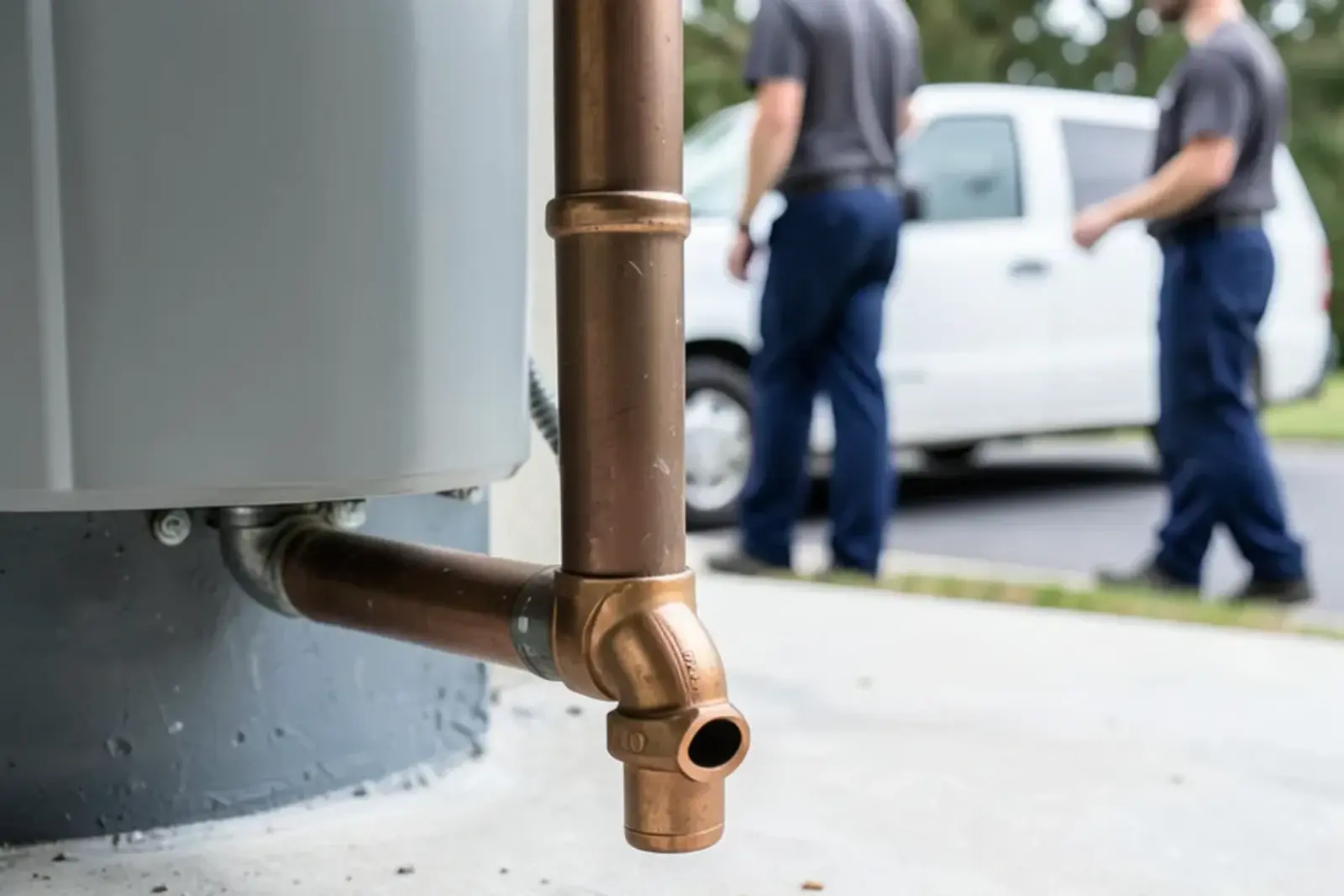
The temperature and pressure relief valve has to drain safely. Michigan's own amendment to the residential code (R 408.30530) sets the rule: one rigid pipe per valve, rated for at least 210°F, the same size as the valve outlet, draining by gravity and ending no more than 4 inches from the floor with an unthreaded end. It can't have a valve in it or tie straight into the drain piping. It may end over the floor, the water heater pan or a floor drain.
The gas connection
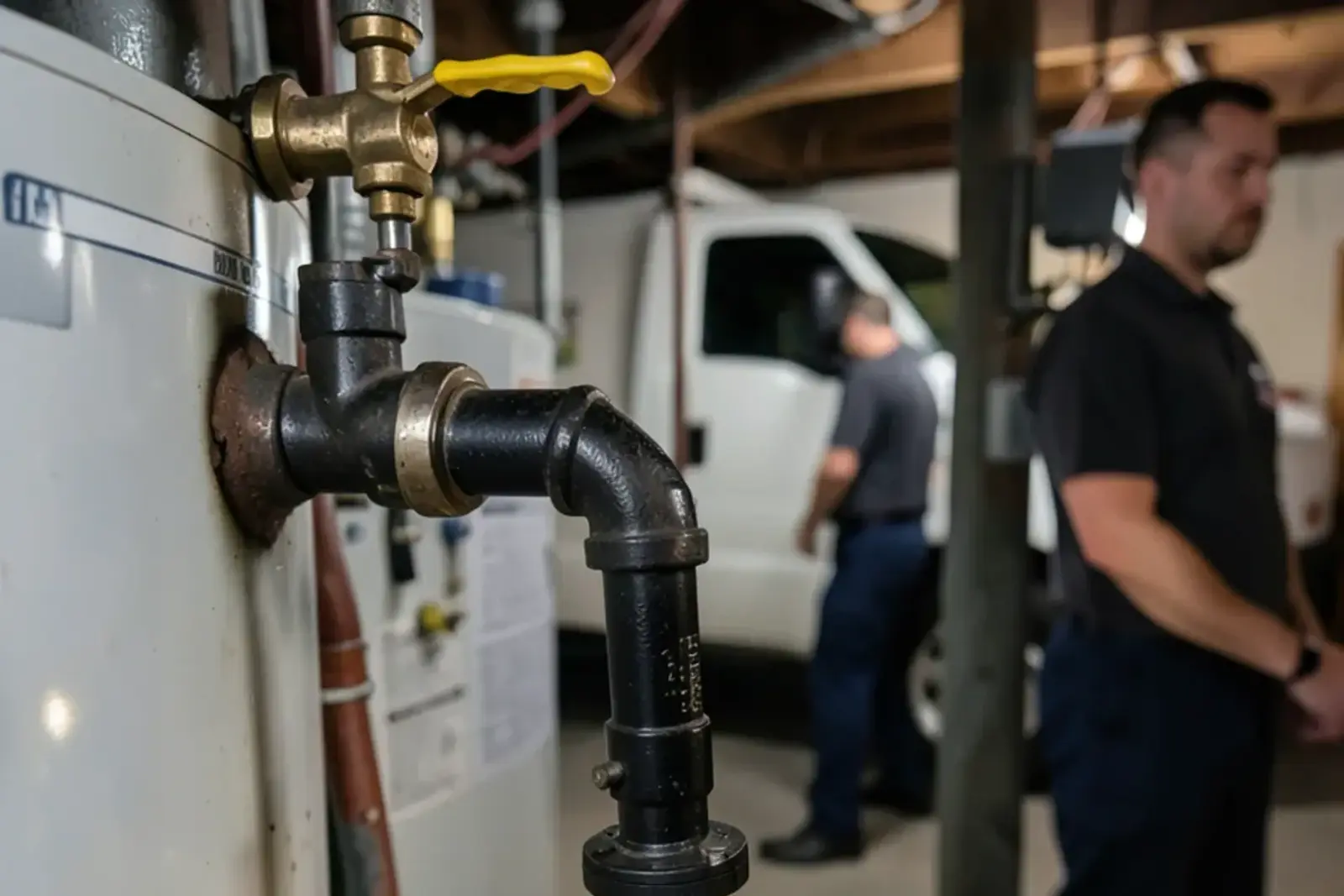
Inspectors look for an accessible shutoff valve near the unit, a sediment trap at the inlet and a connector that's approved for the job. New gas piping usually means a pressure test.
Venting on gas units
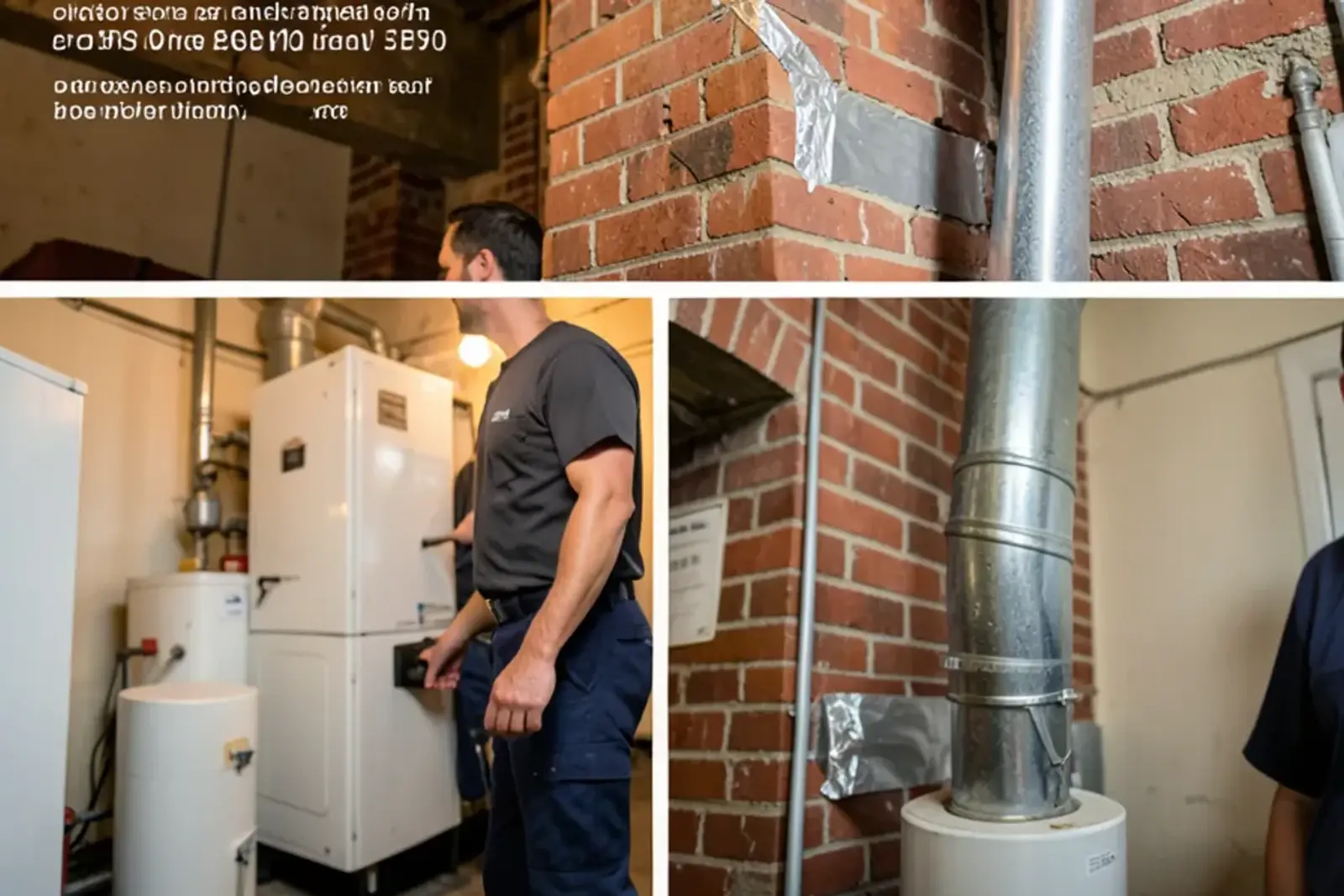
For a standard atmospheric heater, the vent connector should rise toward the chimney or vent, with secure joints and proper clearance from anything combustible. If the furnace that used to share the chimney has been replaced with a sidewall-vented model, the inspector may ask whether the chimney still works for the water heater alone.
Thermal expansion
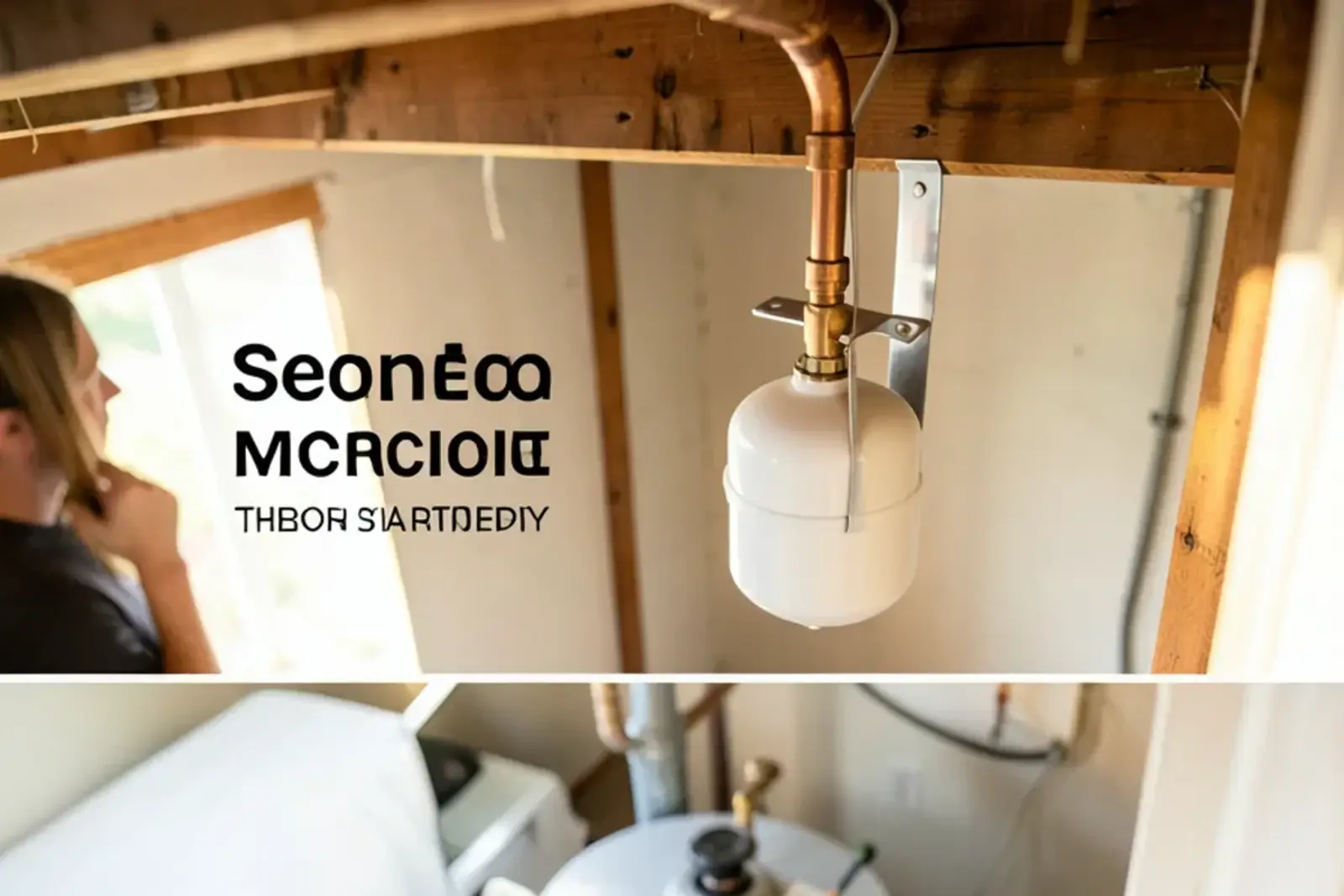
When a check valve, backflow preventer or pressure-reducing valve closes off the water system, heated water has nowhere to expand. The code calls for a device to control that pressure, and on most homes that's an expansion tank on the cold line.
A pan where a leak would do damage
The residential code calls for a drain pan under a tank heater set where leaking water would cause damage, which in practice means a finished basement or a closet off a living space. The pan is at least 1-1/2 inches deep, and a plastic pan isn't allowed under a gas-fired unit. One detail homeowners like: if the old heater never had a pan drain, a replacement doesn't have to add one.
What we see when an old tank comes out of a Fraser basement
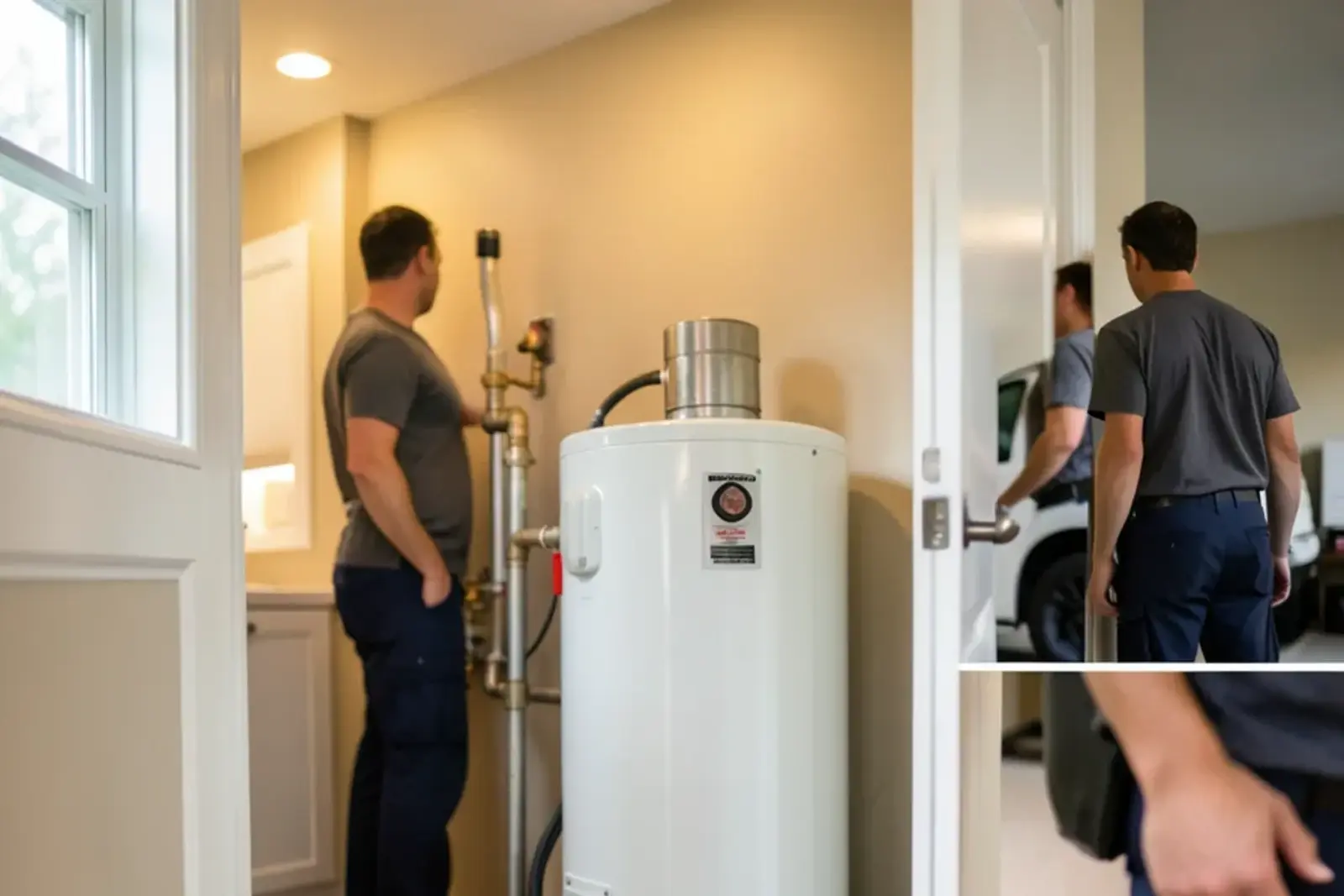
Most Fraser houses went up between 1950 and 1979, and a lot of their water heaters sit where the original builder put them, beside the furnace and sharing its chimney. That explains most replacement-day surprises.
The common one is the orphaned chimney. When an older furnace was swapped for a high-efficiency model that vents out the side wall, the water heater was left alone in a flue sized for two appliances. A small heater in a big, cold masonry chimney can draft poorly. The fix is a liner or a power-vent or direct-vent heater that skips the chimney. Those units need a new vent path through the rim joist, power-vent models need an outlet, and both cost more than a standard tank. Decide before the permit is pulled, since it changes the mechanical application.
The second is a relief valve discharge pipe that was never right: cut off a foot above the floor, threaded, run in vinyl tubing or missing. It gets corrected during the install to meet the 4-inch rule.
The third is size. Federal efficiency standards that took effect April 16, 2015 effectively require condensing gas technology above 55 gallons and heat pump technology for electric tanks above 55 gallons. Moving from a 50-gallon tank to a 75 brings a different vent, a condensate drain and sometimes a bigger gas line. The same goes for a tankless water heater installation, where gas supply and venting usually change. When new gas pipe goes in, Fraser bills it on the mechanical schedule with its own pressure test, and our gas line repair and installation page explains that test.
How the permit fits into install day in Fraser and Warren
In Fraser, applications go through the city's online system, and mailed applications aren't accepted. The building page says inspections must be scheduled by the applicant and asks you to allow 24 to 48 hours for payment to clear before scheduling. Plumbing and mechanical inspections are listed for Tuesday and Thursday mornings, 9 AM to noon. The building department's contact details are on the City of Fraser website.
In Warren, the Building Division is at One City Square, Suite 305, and takes permit applications and inspection requests online. Its contact details are on the Warren Building Division page.
Either way, leave the new heater's connections exposed until the inspection passes. Our water heater installation page covers sizing, gas versus electric and what to ask about the manufacturer's warranty.
Checklist before the old tank comes out
- The permit number, and whose name is on the application
- Which permits apply: plumbing, mechanical, electrical, or a combination
- The new model's fuel, size and vent type, so the application matches what gets installed
- Whether a check valve or pressure-reducing valve means an expansion tank is needed
- Who schedules the Tuesday or Thursday morning inspection in Fraser, and who lets the inspector in
Pull the permit yourself or have the installer pull it?
The homeowner route fits if you live in the house, the swap is like for like and you'll answer for the work at inspection. The city fee is the same, and anything that fails is yours to fix.
Hire it out when the job is gas, when the chimney question above applies, or when the size or type is changing. Ask the installer three things before work starts: who pulls the permit, what the permit number is and who books the inspection. If you're not sure the tank needs replacing at all, read the signs your water heater is failing first.
Questions about water heater permit Michigan
What happens if a water heater was replaced without a permit?
The city can still require one after the fact. Fraser's 2026 to 2027 fee schedule lists a $75 residential charge for starting work without a permit, and Warren's permit list warns that doing work without permits may result in fines up to $1,000. An unpermitted install can also come up when you sell the house. The simplest fix is to apply, have it inspected and correct anything the inspector flags.
Does a tankless water heater need the same permit?
Plan on it, and possibly more. A tankless install often changes the gas piping, the venting and sometimes the electrical supply, and each of those is reviewed separately. Fraser's fee schedule, for example, has its own gas piping item that requires a pressure test. Call the building department in your city with the model and venting plan before work starts, and ask which permits it expects.
How do I check that a plumber's license is real?
Michigan's licensing agency, LARA, has a free online search of license holders and businesses. Ask for the contractor's license number and the name on the license, then look it up yourself. The permit application asks for the same number, so a contractor pulling the permit should have it ready. If the person doing the work asks you to sign as the homeowner instead, treat that as a warning sign.
Can a homeowner replace their own water heater in Michigan?
Yes, if it's the house you live in or are about to move into and you do the work yourself. LARA allows a homeowner to pull a plumbing permit for their own plumbing, and gas work on an owner-occupied single-family home can be done without a mechanical license. You still need the permit, you schedule the inspection yourself, and in Warren the house can't be a rental.
Does an electric water heater need a permit too?
Yes. Michigan's permit rule covers the water connections whether the tank burns gas or not. Fraser's mechanical fee schedule lists its $40 water heater item for gas and electric units alike, and the electrical schedule has a separate $15 water heater line if the circuit work needs it. The building department can tell you which of those applies to a straight electric swap.
Fraser plumbing services for this problem
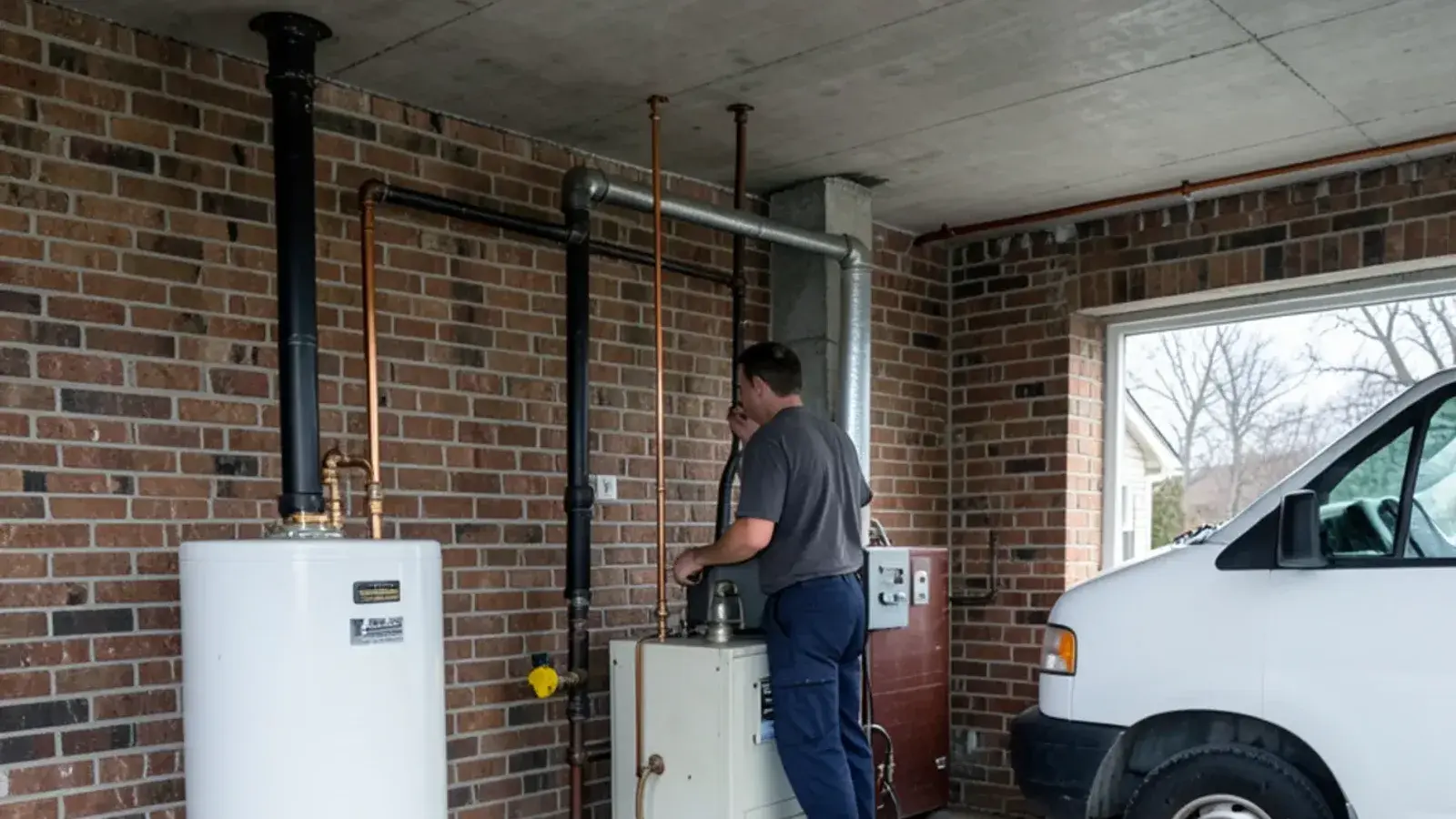
Water heater installation
New tank sized to your busiest hour, permitted with the city and set up for inspection
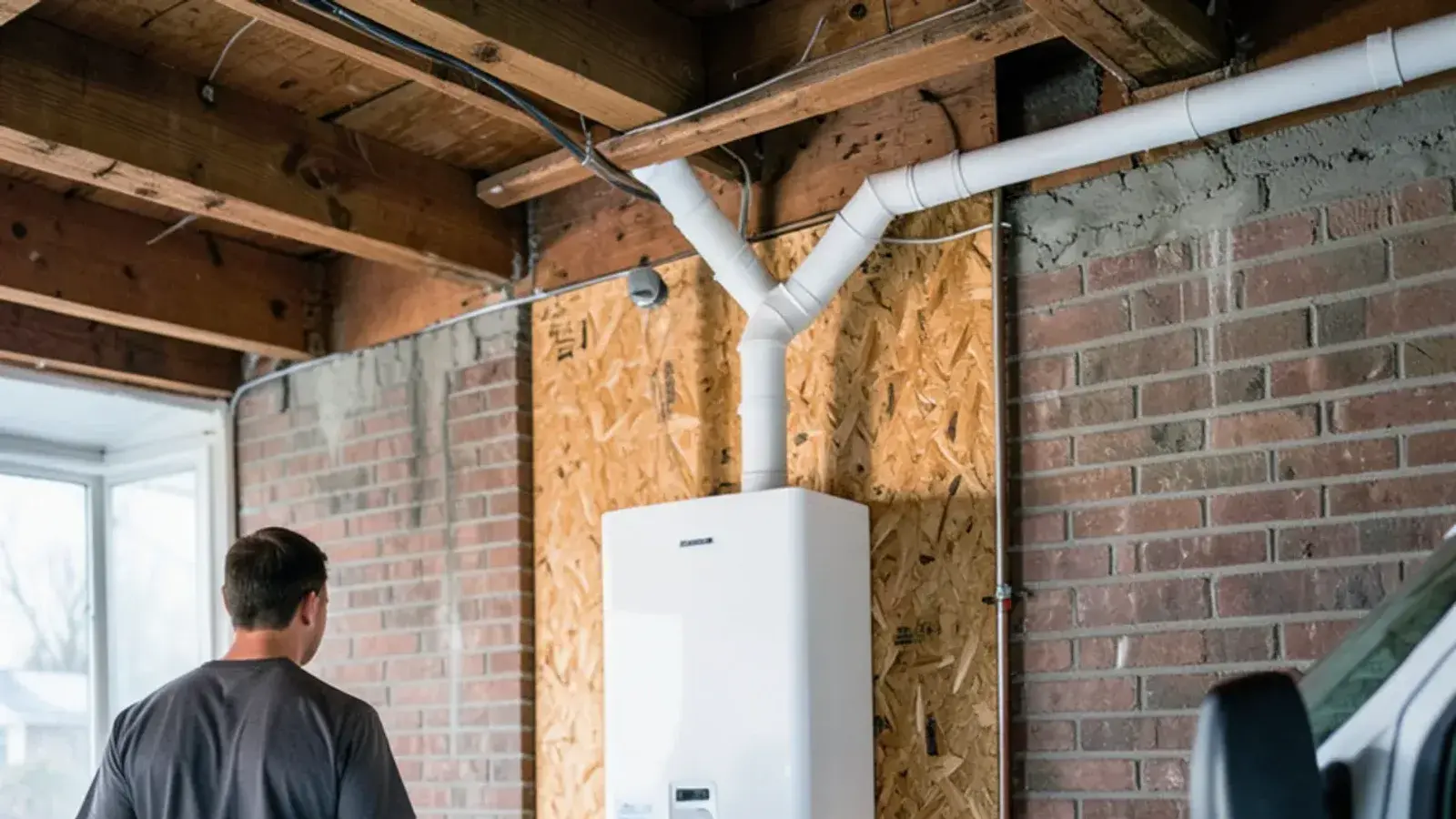
Tankless water heater installation
Gas line, vent and condensate planned up front so a tankless unit keeps up in winter
Gas line repair and installation
New gas runs and leak repairs, permitted as mechanical work and pressure tested before use