
By Plumber in Fraser, MI, Fraser, MI · Published · Last updated
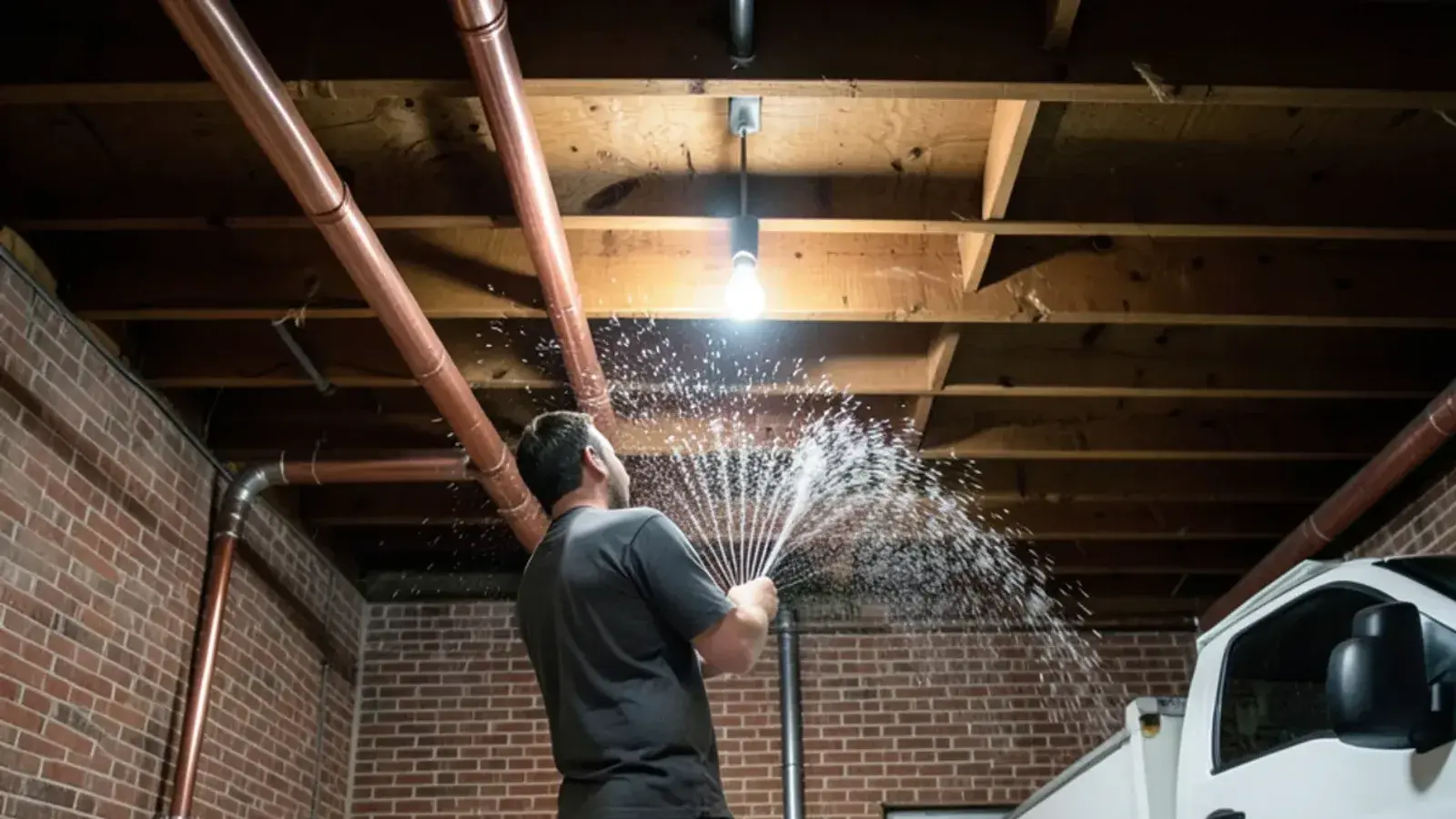
The first thing to do when a pipe bursts is close the main water valve. Towels and phone calls can wait. Every minute that valve stays open, the city's water pressure keeps pushing water through the break.
Minutes one to three: close the main valve
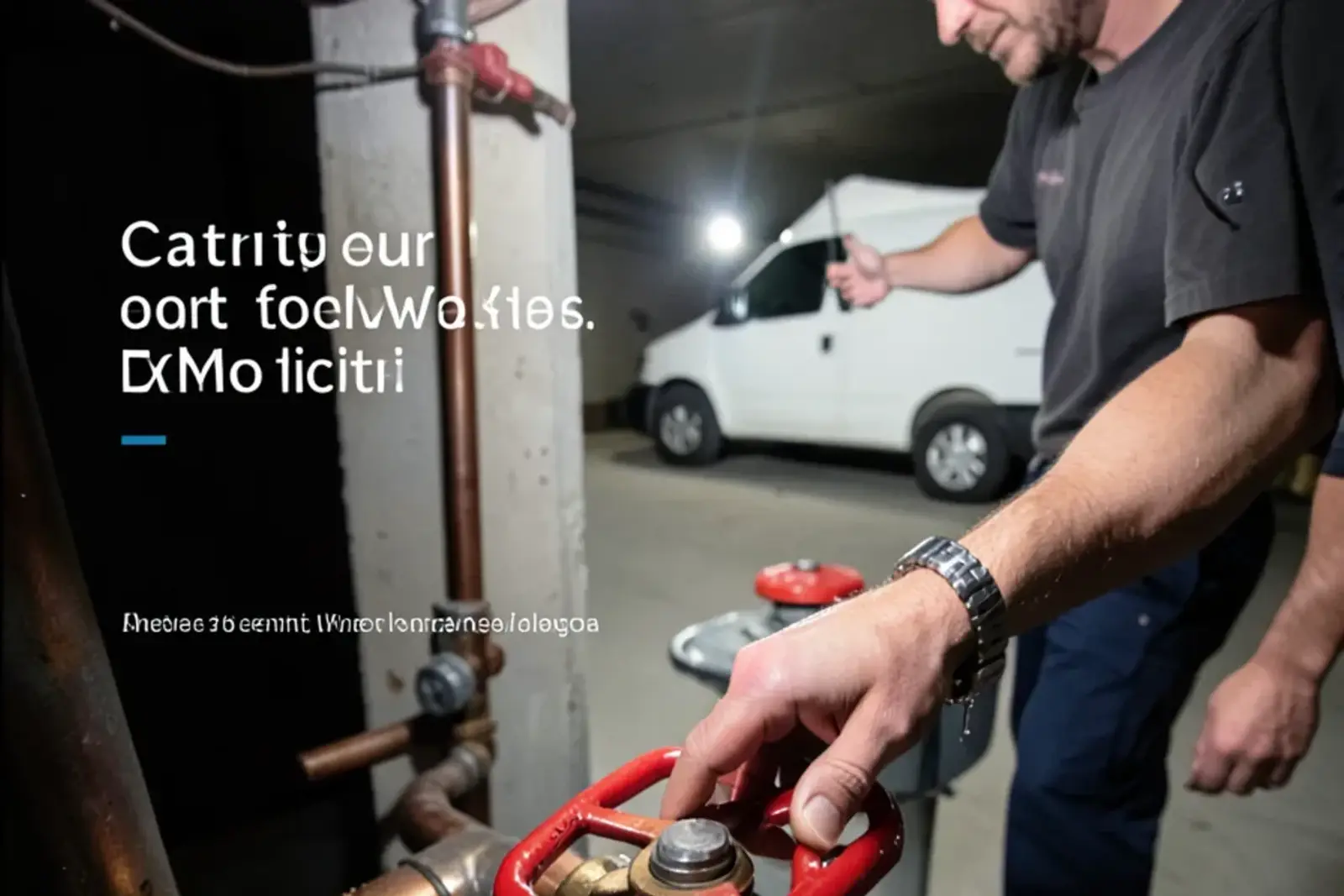
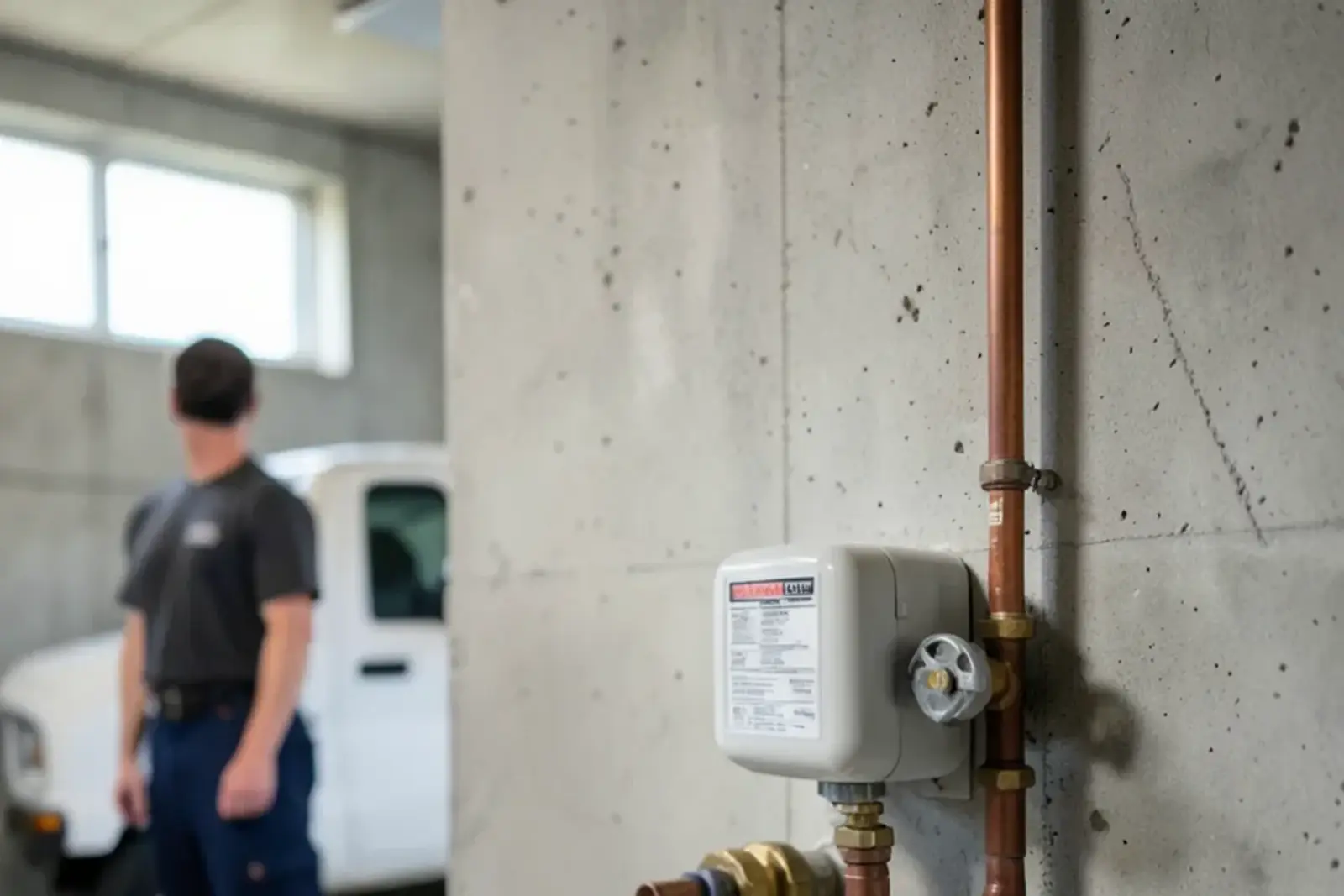
Go to the basement. In most houses around Fraser, Roseville and Warren, the water service comes up through the floor or the front foundation wall, runs into the meter, and has a shutoff valve on one or both sides of it. Turn it clockwise until it stops.
Know which kind of valve you have
A round handle is a gate valve. It takes several full turns and can be stiff. A lever handle is a ball valve, and a quarter turn closes it: lever across the pipe means off. If the valve drips around the stem once it's closed, that's normal on an old gate valve and can wait.
When a smaller valve is enough
If the break is on one fixture and you can see it, the shutoff right at that fixture may do the job faster. Use this as a quick guide.
| Where the water is coming from | Valve to close first | Notes |
|---|---|---|
| Supply line under a sink | The two stop valves under that sink | Turn clockwise; braided lines are the usual failure |
| Toilet supply or tank | The stop valve behind the toilet | Flush once to empty the tank |
| Ceiling, wall or anywhere you can't reach | The main valve by the meter | Don't guess; close the main |
| Top of the water heater | The cold inlet valve above the heater, then the main | Then deal with the gas or power (next section) |
| Outside faucet line inside the wall | The main, or the interior valve for that faucet if there is one | Common after a hard freeze in a garage or rim joist |
Minutes three to five: deal with power and gas
Water and electricity are the real danger in a flooding basement. If water has reached outlets, a power strip, the furnace, or the electrical panel, stay out of the water. Don't wade across a wet floor to reach the panel. Call your electric utility instead.
If the panel is dry and you can reach it from dry ground, shut off the breakers for the flooded area.
Set the water heater to pilot or off
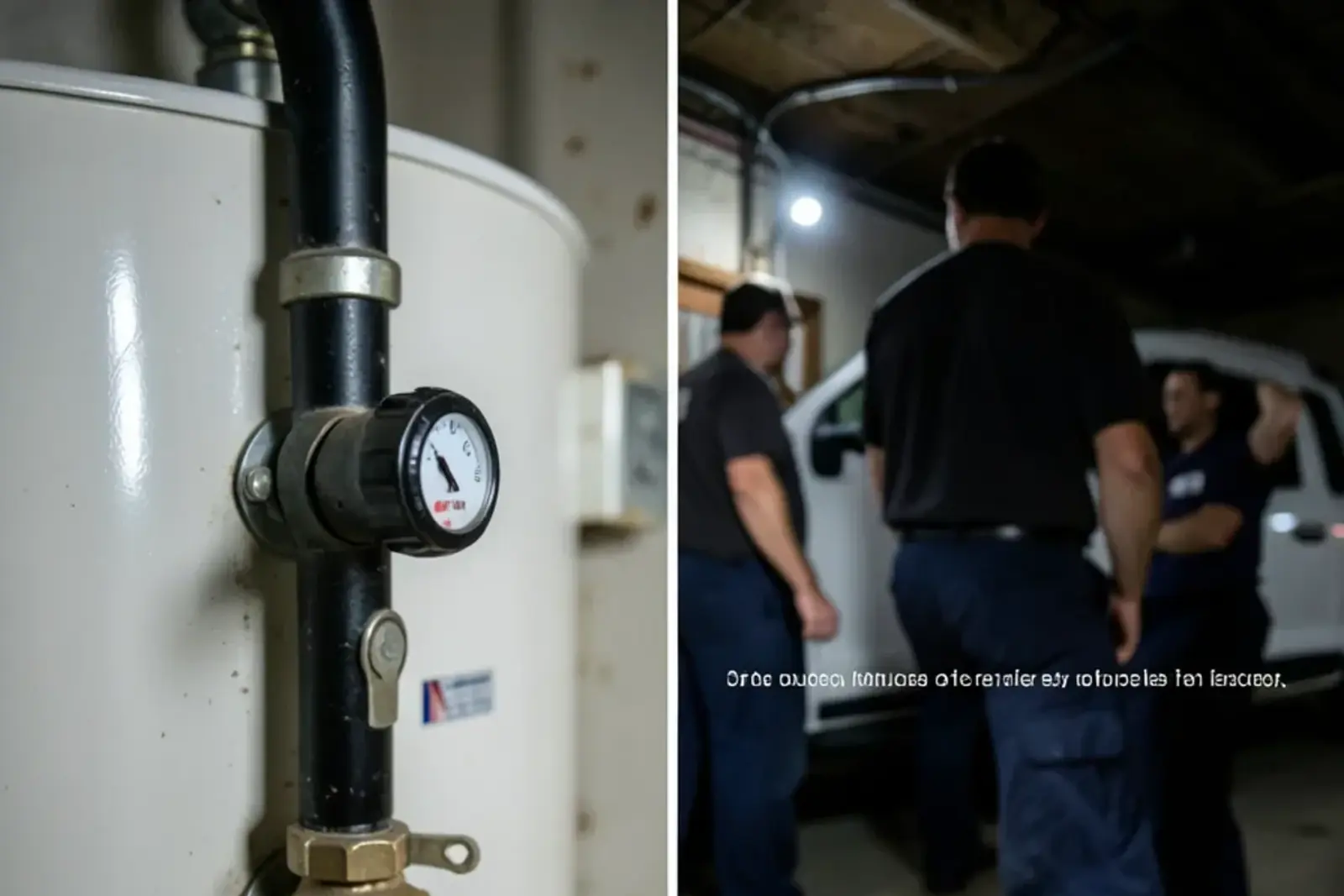
With the main closed, the water heater isn't getting refilled. If you then open faucets to drain the house, the tank can lose water while the burner or elements keep firing. On a gas heater, turn the control knob to pilot. On an electric heater, switch off its breaker. If you smell gas at any point, leave the house and call the gas company from outside.
Minutes five to ten: drain the lines and start a record
Closing the main stops new water. The pipes are still full, though, and that water will keep finding the break.
Open the lowest faucet first
Open the laundry tub or the lowest faucet in the house, then a faucet on the top floor. Air comes in from the top and water leaves at the bottom, through the drain, not the break. Flush toilets once each.
Move what you can
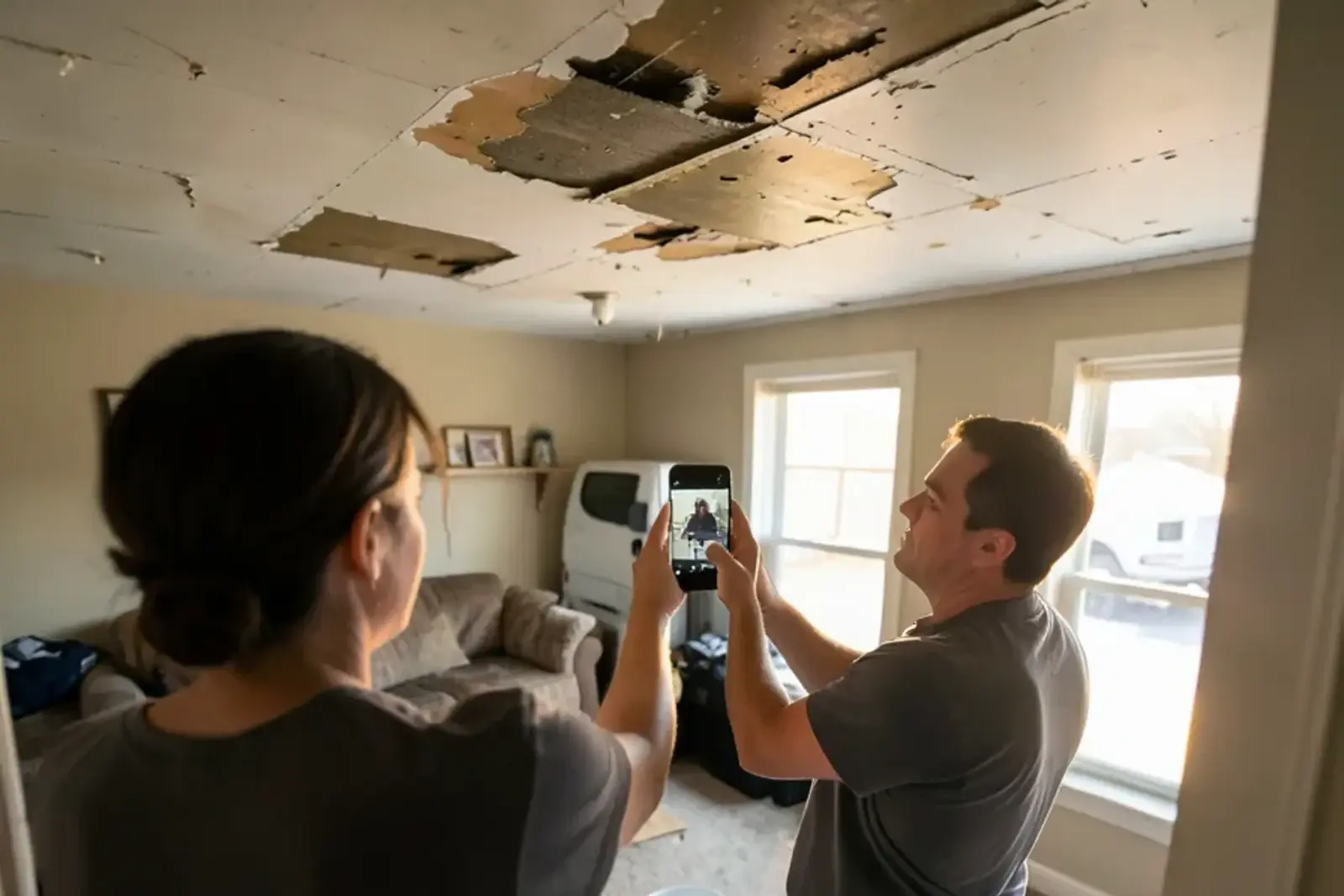
Get boxes and electronics off the wet floor. Pull furniture away from the wet ceiling area. Put a bucket under the drip and poke a small hole in a bulging ceiling so it drains in one spot. A sagging ceiling full of water can come down all at once.
Photograph everything before you clean
The Insurance Institute for Business & Home Safety tells homeowners to list losses, take photos or video, contact their insurance agent as soon as they can, and keep every receipt for repair and cleanup. Do it now, while the water is still on the floor.
Things to leave alone until the pipe is looked at
Don't turn the main back on to see if it stopped. A split pipe doesn't seal itself. Don't wrap a burst pipe in tape and reopen the main; tape won't hold at house pressure.
If the pipe burst because it froze, check the rest of that run. Ice often splits a pipe in one place and leaves a second section still frozen and close to failing. A hair dryer is fine for thawing what's left. An open flame is never fine near framing.
Wet drywall and insulation hold water longer than you'd think. The same IBHS guidance points homeowners to a water-removal restoration service before mold becomes a problem, and that's sound advice for any ceiling or finished basement that soaked through.
What we see in Fraser houses when a pipe lets go
Most of what goes wrong in the first ten minutes isn't the pipe. It's the valve. About 63% of Fraser's homes went up between 1950 and 1979, and in a lot of those ranches and split-levels the main is still an original gate valve nobody has turned in years. Some close tight. Plenty close most of the way and keep passing a trickle through a worn gate, enough to keep a ceiling dripping all night.
If yours won't shut off completely, the repair visit is a good time to ask about replacing it with a quarter-turn ball valve. That swap needs the water shut at the curb first, which is the water department's valve.
The meter is the city's
Fraser's code says water meters stay city property and that the city makes meter repairs, billed to the customer (Sec. 31-60 and 31-61). If water is coming from the meter body or its couplings, close the valve on the street side, leave the meter alone and tell the city. Every dwelling unit in Fraser has to have its own meter (Sec. 31-26), so in a condo or townhouse your shutoff is usually beside your own meter, often in a utility closet instead of a basement.
Not every burst is a frozen pipe
Sudden floods also come from parts that fail in any month: a rubber washing machine hose, a braided toilet or faucet supply, a tank that rusts through. Those stop at a fixture valve or the heater's cold inlet, which is why the table above starts with the smaller valves.
Water shows up away from the break
Water runs along joists and the back of drywall before it drips, so a stain mid-ceiling can come from a supply line by the bathroom wall. Before anyone cuts three holes, ask for the break to be traced. Leak detection and repair pressure-tests sections so one planned opening finds it.
Ten minutes of prep before the next one
- Hang a tag on the main so anyone in the house can find it in the dark.
- Close and reopen it twice a year so it doesn't seize. If the stem drips afterward, snugging the packing nut a little usually stops it.
- Label the water heater's breaker, or learn where the gas control knob is.
- Keep a flashlight and a small adjustable wrench next to the valve, and show house-sitters where it is.
What happens once the water is off
With the main closed and the house drained, you have time. The repair itself depends on what failed and where.
A single split in an exposed basement copper line is usually a short section cut out and replaced. A break inside a finished wall or ceiling means opening the drywall to reach it. Old galvanized pipe that has rusted through in one spot often has thin sections nearby, and patching one leak can just move the next one down the line. Pipes that froze tell you something about that wall or rim joist, and fixing the cold spot matters as much as fixing the pipe.
Our burst pipe repair in Fraser page goes through those repair options and what drives the cost of each. If the water is still running, read the emergency plumbing guide for Fraser homeowners or call us and we'll talk you through the shutoff while you're standing at the valve. We also work with homeowners across the city line, so if you're looking for plumbers who work in Roseville or need burst pipe help in Warren, the same number reaches us.
When the repair is done, open the main slowly, a quarter turn at a time. Leave the top-floor faucet open until it runs steady with no sputtering air. Then check the repair and the area around it for drips before you call it finished. If the water froze, read how to keep pipes from freezing in a Michigan winter before the next cold snap.
Call right now, or schedule the repair?
Once the main is closed and holding, the clock changes. If the valve is holding, the heat is on and you can go a few hours without water, the repair can usually be booked as a regular visit instead of an emergency call, which tends to cost less across the trade.
Call right away if the main won't close, water reached the panel, the furnace or outlets, the break is on a line you can't isolate, or it's below freezing and the heat is off, putting other pipes at risk. Either way, when you call, tell us what you shut off, what the pipe looks like (copper, gray galvanized, plastic) and where the water first showed up.
Questions about what to do when a pipe bursts
Should I call my insurance company or a plumber first after a pipe bursts?
Stop the water first, then call a plumber to get the break repaired, then call your insurer. Insurers generally expect you to take reasonable steps to limit damage, and a closed main valve plus a repair estimate is the start of that. Take photos and video before you move anything so the adjuster sees what you saw.
Can I still use water in the house after I shut off the main?
Only what is already in the toilet tanks and the water heater. Each toilet will flush once from its tank. Don't run the dishwasher or washer, and don't open the water heater drain unless a plumber tells you to. The rest of the house stays dry until the break is repaired and the main is opened slowly.
What if my main shutoff valve won't turn?
Old gate valves seize, and forcing one can snap the stem and make the leak worse. Try steady pressure by hand, then a small wrench on the handle, not a cheater bar. If it still won't move, the curb stop near the street can shut the water off, but that valve normally belongs to the water department. Call your city's water department, and call us so we can talk you through what to do in the meantime.
Will homeowners insurance pay for a burst pipe?
Often, but it depends on the policy and on why the pipe failed. The National Association of Insurance Commissioners says homeowners policies cover sudden and accidental discharge from plumbing, but a claim can be denied if the insurer decides you didn't take reasonable steps against freezing, like keeping the heat on or shutting the water off in a vacant house. Call your agent early.
How fast does water from a burst pipe need to be dried out?
Within a day or two. The EPA's mold guidance is to dry water-damaged areas and items within 24 to 48 hours. Wet drywall, carpet pad and insulation stay wet long after the floor looks dry, so a soaked ceiling or finished basement usually needs a restoration company's fans and dehumidifiers.
Fraser plumbing services for this problem
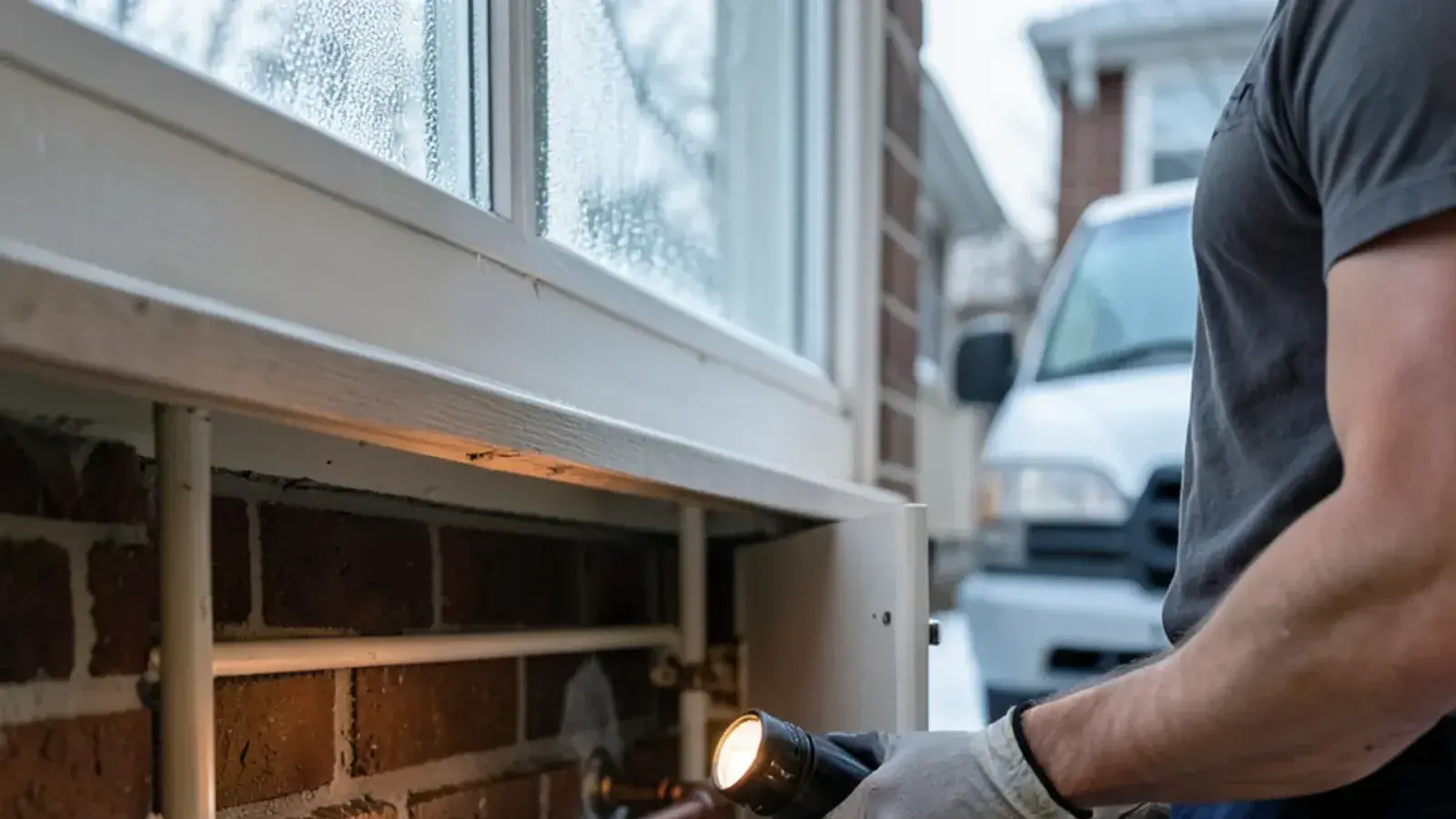
Burst and frozen pipe repair
Splits found and fixed, and the cold-wall run moved or insulated so it doesn't freeze again
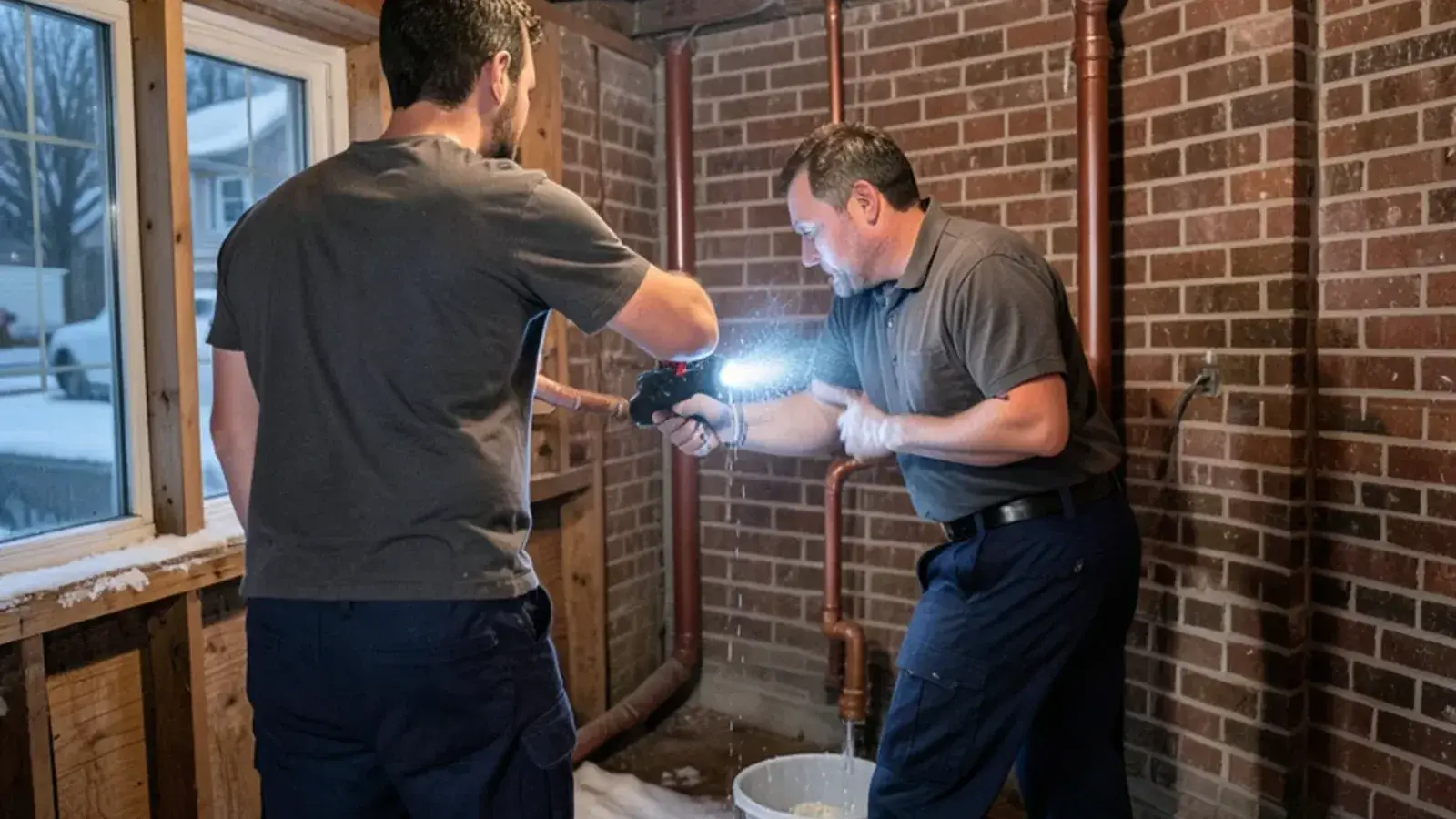
Emergency plumbing
Help finding your shutoff on the phone, then a repair that stops the water at its source
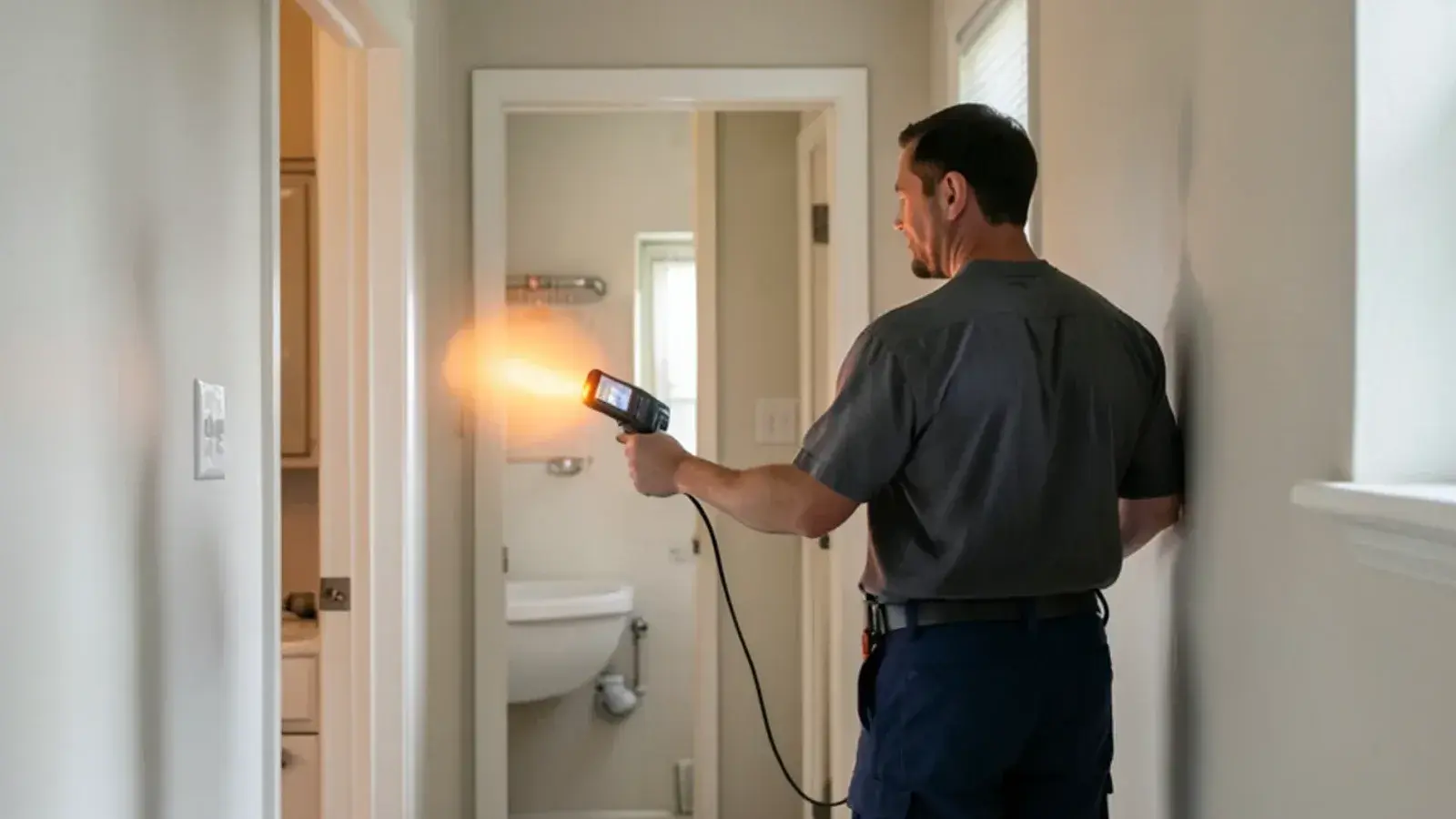
Leak detection and repair
Leaks traced at the meter and with moisture readings before any wall or ceiling gets opened