
By Plumber in Fraser, MI, Fraser, MI · Published · Last updated
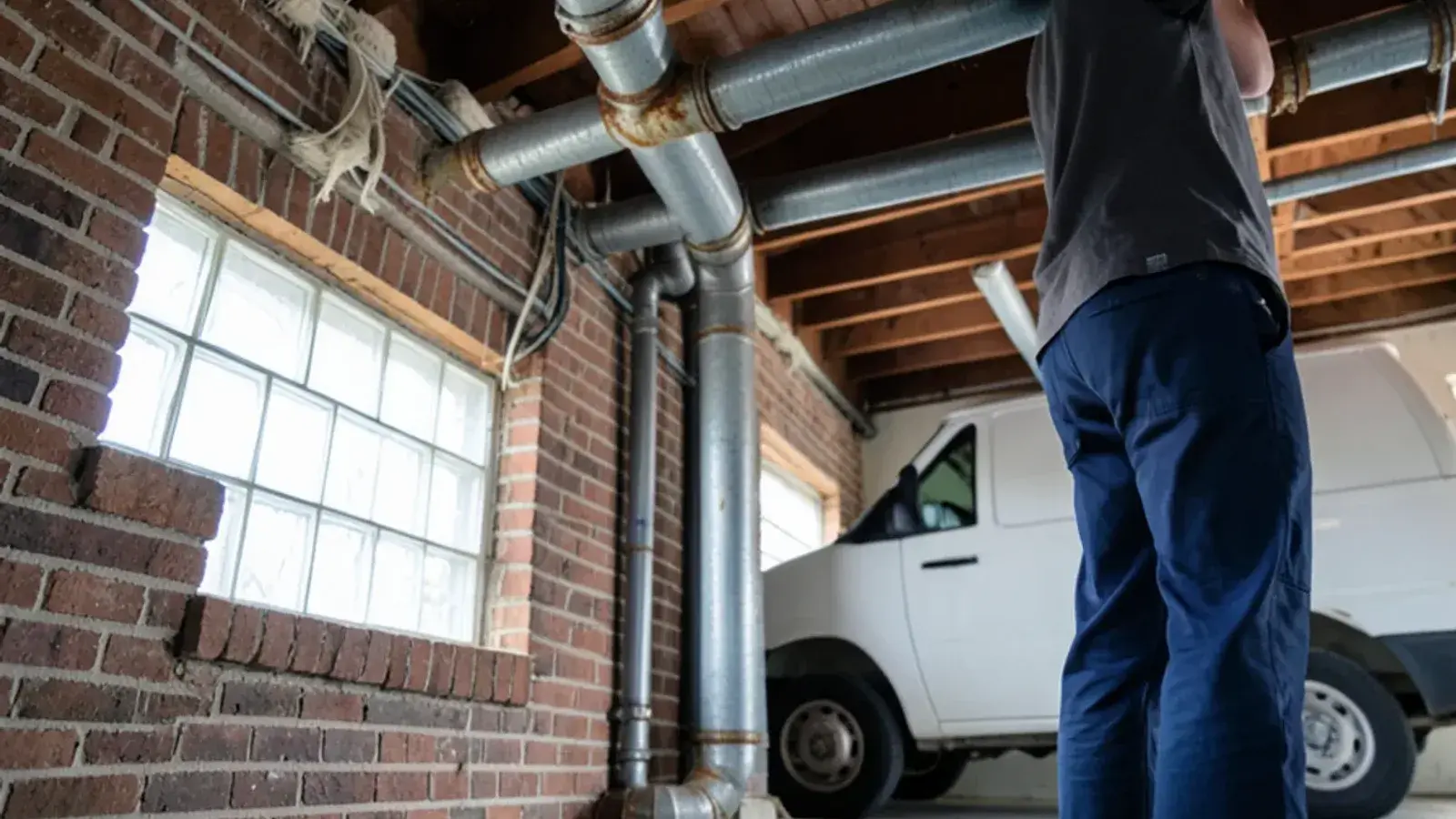
Galvanized pipes replacement comes up constantly in 1950s houses across south Macomb County, Fraser included. Galvanized steel was a standard material for water lines in homes of that era. Decades later, many of those pipes are still in place and rusting from the inside. The pipe isn't the same as lead, and it isn't always an emergency. But it doesn't get better with age, and Michigan's lead rules now pay close attention to it on the service line side.
Why so many Eastpointe and Roseville houses still have galvanized pipe
The housing data explains it. The U.S. Census Bureau's 2020–2024 American Community Survey (table B25034) shows how concentrated the 1950s building boom was in the inner-ring suburbs.
| City | Median year built | Homes built 1950–1959 | Homes built before 1970 |
|---|---|---|---|
| Eastpointe | 1954 | 45.6% | 87.6% |
| Roseville | 1961 | 33.1% | 69.5% |
| Fraser | 1972 | 19.4% | 44.2% |
Nearly half of Eastpointe's homes went up in a single decade. Many have had partial updates since, so a 1954 house can have copper in the kitchen, galvanized in the walls and a mix of both under the basement stairs. Knowing which pipe is where is the first job.
How to tell galvanized pipe from copper, lead and PEX
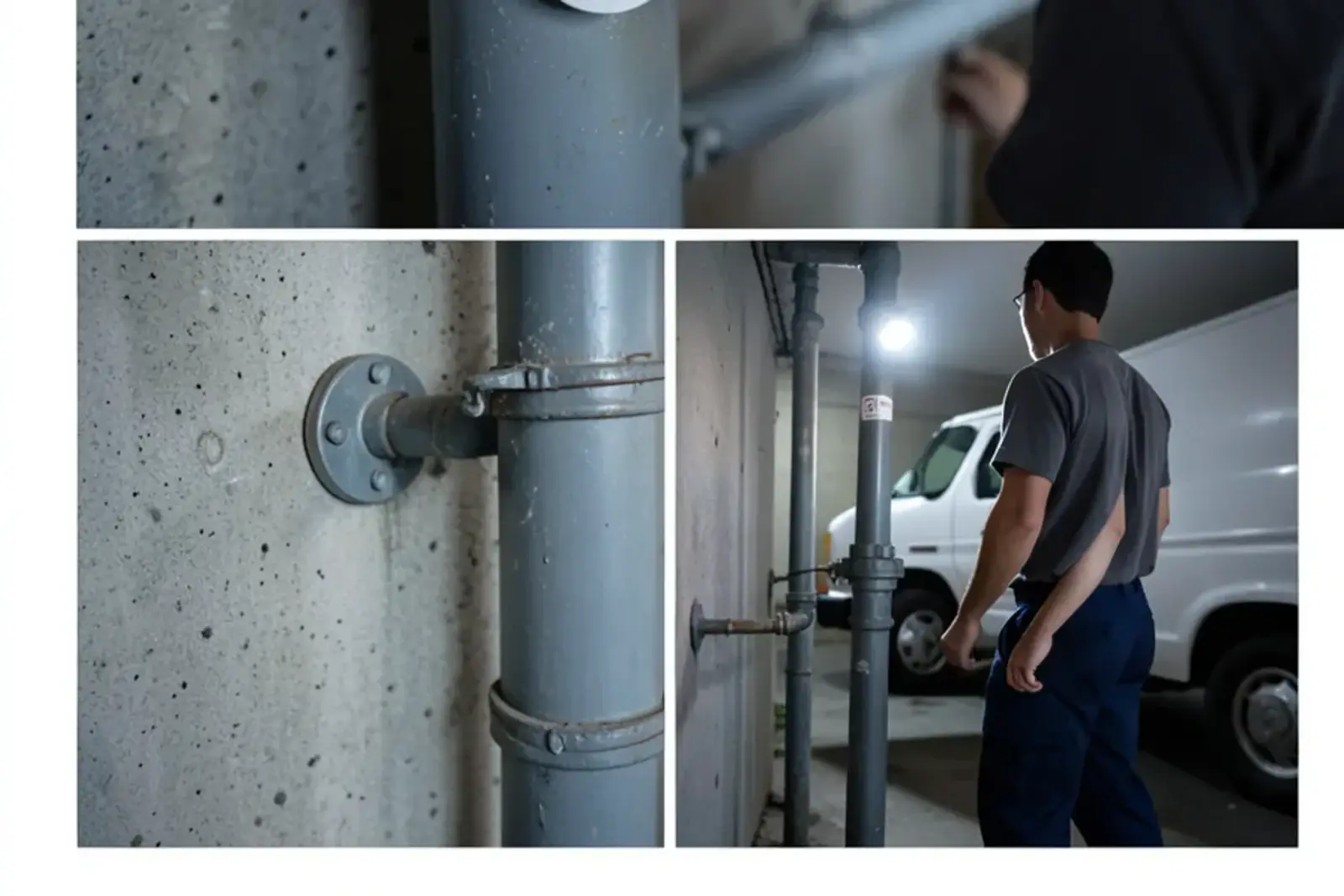
You can do this in the basement with two household items.
Step 1: start at the water meter
Find where the service pipe comes through the basement wall or floor and look at the few feet before the meter. That's your service line. Then follow the pipe leaving the meter, which is your interior plumbing.
Step 2: try a magnet
A magnet sticks firmly to galvanized steel. It won't stick to copper, lead or plastic.
Step 3: scratch gently with a coin
If the magnet doesn't stick, scratch lightly. Copper shows a penny color. Lead is soft and scratches to a bright, shiny silver. Galvanized stays dull gray and has threaded joints with fittings screwed together. PEX is plastic, usually red, blue or white.
Step 4: check the joints
Threaded fittings every few feet usually mean galvanized. Soldered joints mean copper. Crimp rings or expansion fittings mean PEX.
Your service line and Michigan's Lead and Copper Rule
The pipe from the street to your meter is a separate question from the pipes inside, and it's where the law focuses.
Federal rules at 40 CFR 141.2 define a galvanized service line as iron or steel dipped in zinc to prevent corrosion. A galvanized line that is or ever was downstream of a lead service line, or sits downstream of one of unknown material, is labeled "galvanized requiring replacement." Michigan's own Lead and Copper Rule, as revised in 2018, requires water systems with lead service lines to replace all of them, at an average of 5 percent a year over no more than 20 years. According to EGLE's summary of that revision, the full line is replaced at the water supply's expense regardless of ownership, and partial replacements are banned except in emergencies.
Fraser's water quality report covering 2025 counts 0 known lead service lines, 3 galvanized and 174 of unknown material out of 5,360. The city's report adds that anyone with a lead or galvanized-requiring-replacement line may need to run the water at least 5 minutes before drinking. Roseville's report covering 2025 tells a different story: 60 lead, 43 galvanized and 15,853 service lines of unknown material. Eastpointe publishes its own report, so look up your city's inventory or ask the water department what it shows for your address.
Why does galvanized get grouped with lead at all? The EPA's lead-in-drinking-water guide explains that lead particles can attach to the inside surface of galvanized pipe and, over time, enter the water. The same guide notes that solder made or installed before 1986 contained high lead levels, which matters in a 1950s house where copper repairs were sweated in decades ago. If the service line itself needs work, that's a main water line repair or replacement job, separate from the interior pipes.
Signs the pipes inside the walls are done
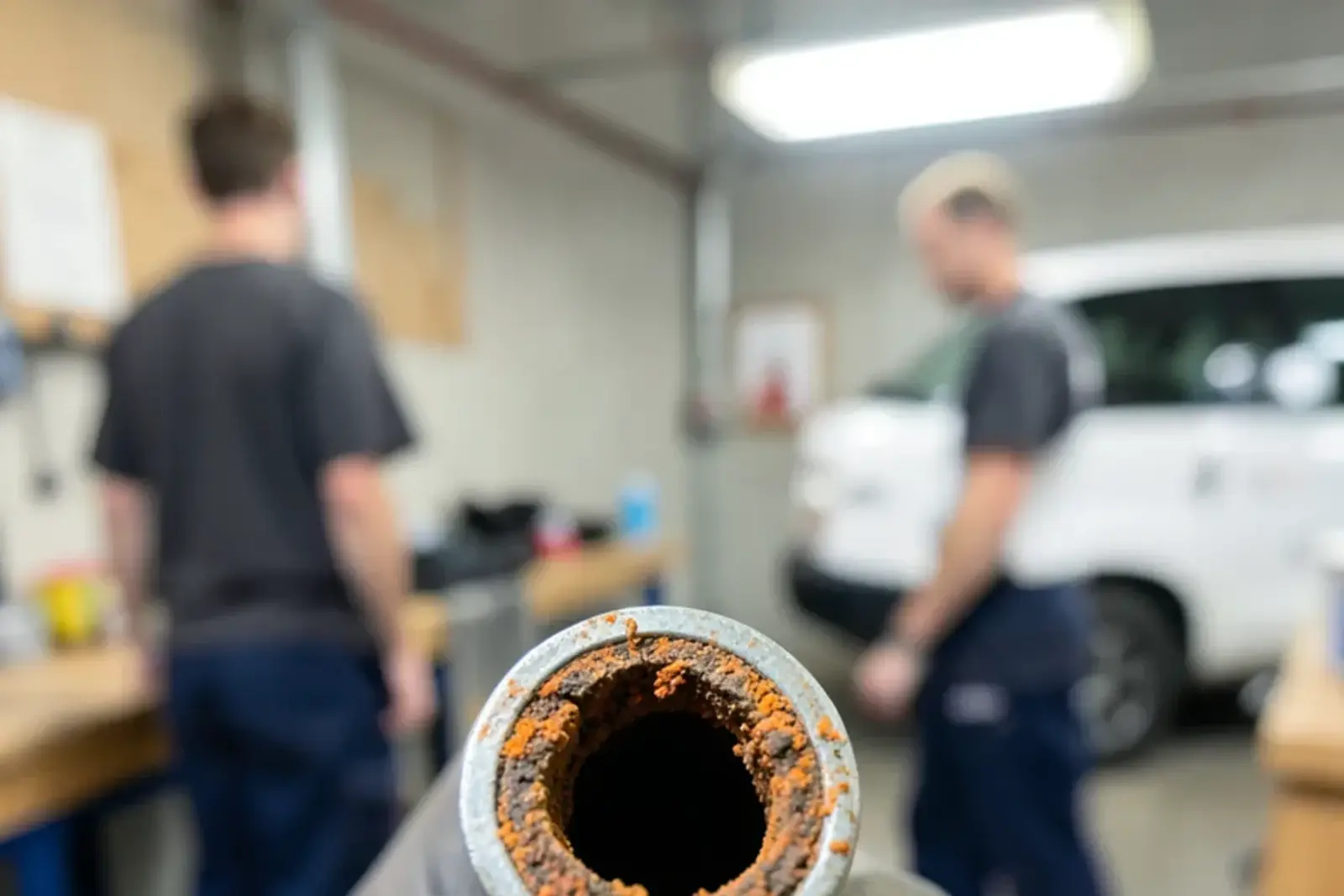
Galvanized pipe corrodes from the inside. Rust and scale build up and narrow the opening until the second-floor shower barely runs while someone uses the kitchen sink. Watch for:
- Weak flow that's worse upstairs or when two fixtures run at once
- Brown or orange water on the first draw in the morning
- Pinhole leaks or damp spots at threaded joints
- Low flow at one fixture that a new aerator doesn't fix
- Corrosion at spots where galvanized meets copper
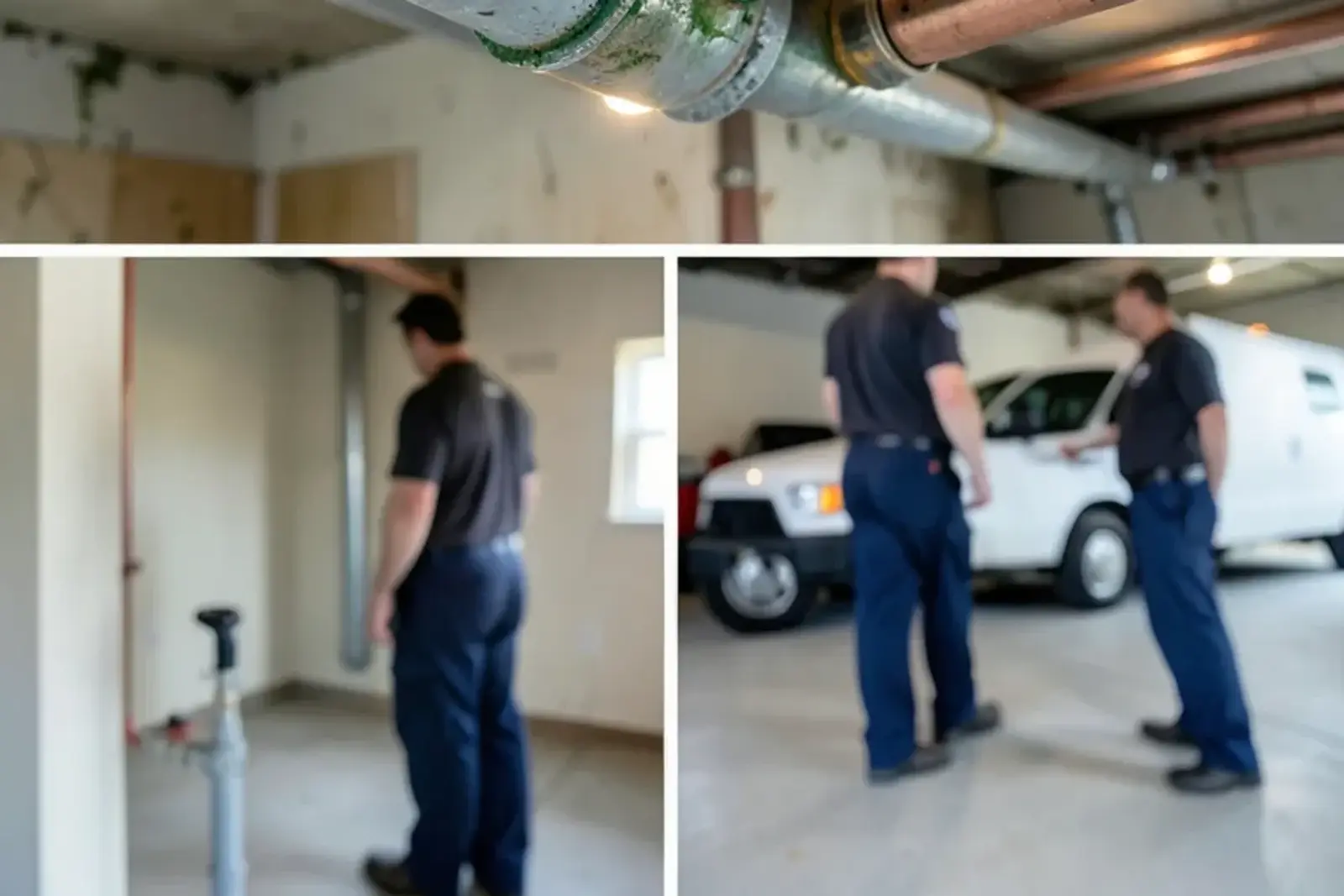
That last one matters. When copper is joined straight to steel without a proper dielectric fitting, the joint tends to corrode faster than either pipe alone, so old repairs are often where new leaks start.
Partial fix or whole-house repipe
| What you see | What it suggests | Usual approach |
|---|---|---|
| One leaking joint, good pressure elsewhere | Local failure | Replace that section and plan ahead |
| Poor pressure in several rooms | Buildup throughout the system | Whole-house repipe |
| Rusty water from hot and cold taps | Interior pipe corrosion | Repipe; check the water heater too |
| Galvanized service line before the meter | Possible replacement category under lead rules | Ask the water utility first |
| Finished walls with repeated small leaks | Pipes failing faster than repairs | Repipe while opening walls once |
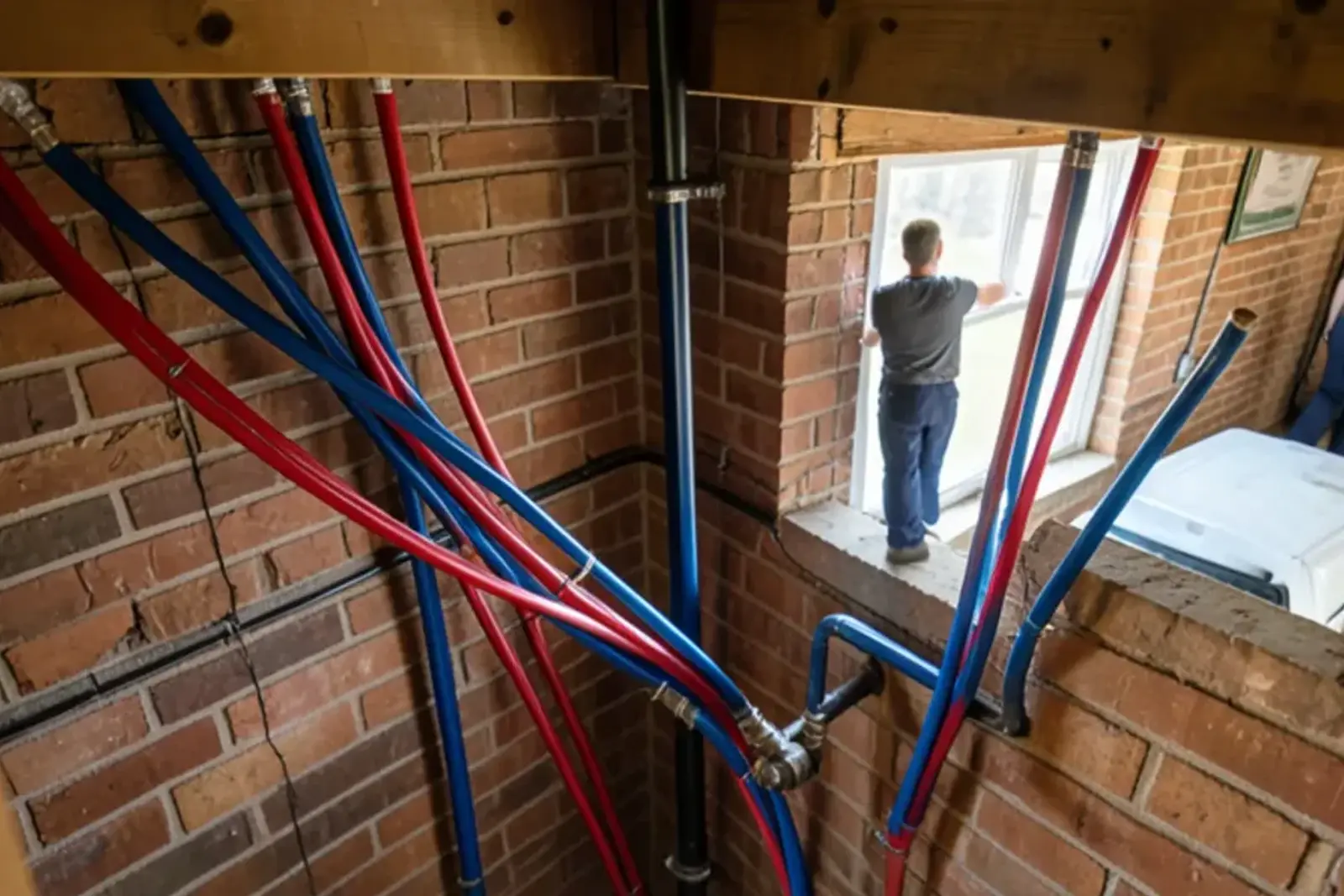
A whole-home repiping project replaces the trunk lines and branches together, usually with PEX or copper, and ties into the water heater and every fixture. In Fraser, the city's fee schedule bases the water distribution permit on pipe size at the meter, and when water piping is the only work, the minimum permit is set by that size. Before you sign, ask whoever you hire to walk you through the pipe route, which walls and ceilings get opened, and who handles the drywall patching afterward. Ask too whether the quote includes new shutoff valves at each fixture, since the old ones on a galvanized system are often seized. A repipe is also a good time to look at the water heater connections and the main shutoff, because both get disturbed during the work anyway.
How a whole-house repipe usually runs
- Map the system: where the service enters, where the trunk runs and which branches are already copper or PEX.
- Pull the City of Fraser permit (or your own city's) before any pipe is cut.
- Run the new trunk and branches while the old lines stay live, so the water is off for as short a stretch as possible.
- Switch fixtures over one at a time and install new shutoff valves as you go.
- Pressure-test the new piping and have the rough or final inspection done.
- Patch the openings, flush the lines and cap or remove the abandoned galvanized.
What we see in south Macomb galvanized houses
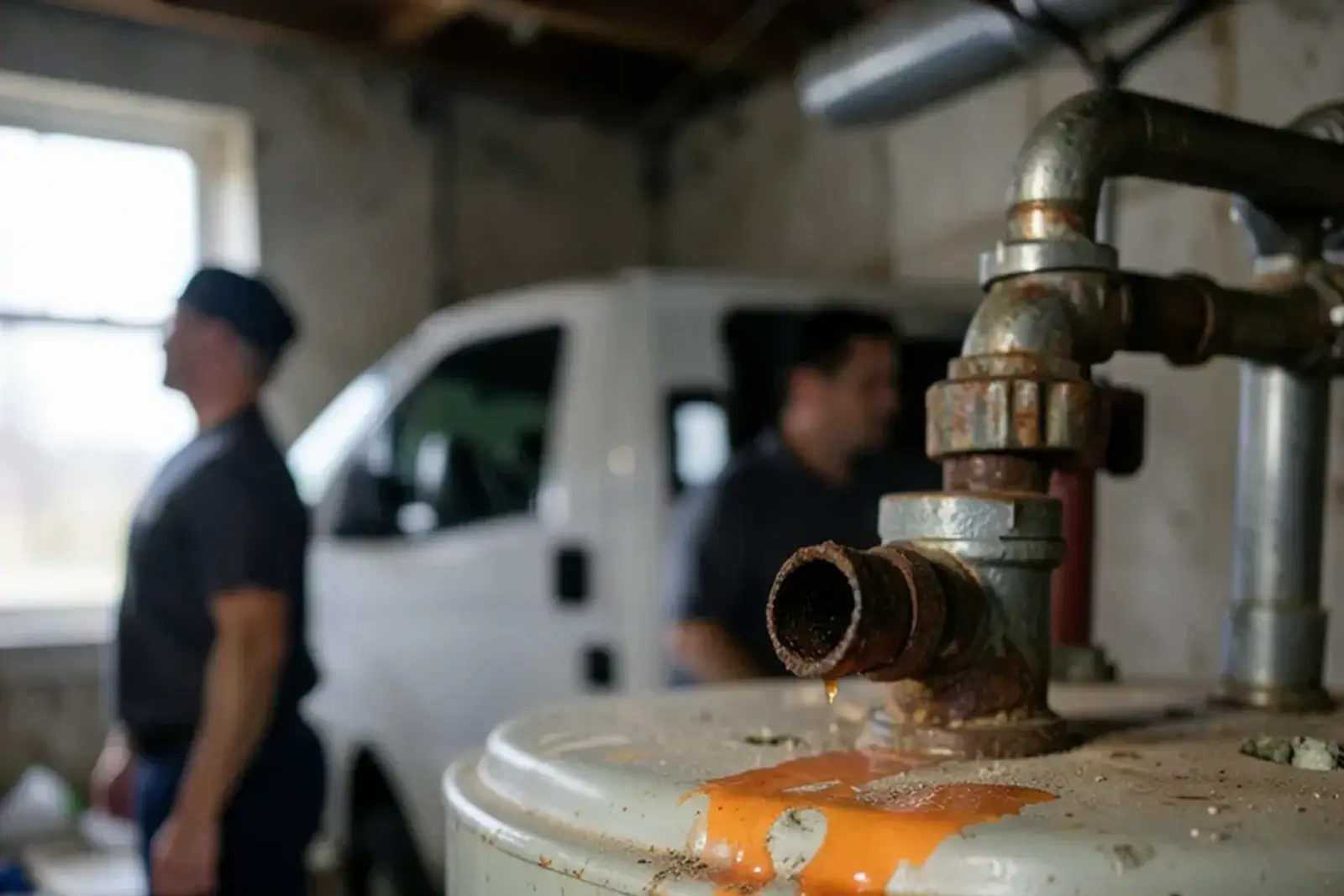
The usual pattern isn't an all-galvanized house. It's a galvanized trunk leaving the meter with copper added wherever someone remodeled a kitchen or bath, so pressure is fine in the new bathroom and weak everywhere else. The hot side tends to go first. The short nipples on top of the water heater and the first few feet of hot line often show rust and seepage before the cold side does.
People also adapt to slow decline without noticing. If the upstairs shower drops every time the washer fills, that's the trunk narrowing, and swapping showerheads won't touch it.
The honest trade-off is cost and disruption against timing. Replacing only the hot side, or only the worst branch, spends less now and keeps walls closed. It also leaves the oldest steel in place and adds another joint between old and new pipe. A full repipe costs more up front and opens walls once. If finished ceilings sit under the worst runs, that one-time opening usually wins. A pinhole that's hard to locate behind plaster may need leak detection and repair before anyone decides.
Should you repipe now or keep repairing?
Go by how many of the warning signs you have, not the age of the house:
- With one leak, good pressure and clear water, repair it and keep watching.
- With two or more of weak flow, rusty first draws and repeat leaks, price a whole-house repipe now, before the next leak picks the location for you.
- With a galvanized or unknown service line before the meter, call your water utility first, since lead rules may change who pays.
- With a leak above a finished ceiling, shut the water off and get it looked at today.
Ask for the pipe route, the wall openings, the permit and the valve count in writing so two quotes compare line by line.
Questions about galvanized pipes replacement
Is galvanized pipe dangerous to drink from?
Galvanized steel isn't lead pipe. Federal drinking water rules treat a galvanized service line as a concern when it is or ever was downstream of a lead service line, or sits downstream of a line of unknown material. If you have galvanized pipe and an older service line, ask your water utility what its inventory shows for your address, and consider having your water tested.
Can I replace only the worst sections of galvanized pipe?
You can, and it sometimes buys time when one branch is leaking. The catch is that the rest of the system is the same age and in similar shape. Each new copper or PEX splice adds a joint between old and new pipe, and the remaining galvanized still restricts flow. A partial job makes sense when you plan to repipe within a few years anyway.
Does a repipe need a permit?
In Fraser, yes. The building department says permits are required for plumbing work, and the city's fee schedule sets the water distribution fee by pipe size at the meter, starting with three-quarter-inch pipe, plus a non-refundable application fee. Homes in Roseville or Eastpointe fall under their own city's building rules, so check with that office before work starts. The plumber normally pulls the permit.
Is PEX or copper better for replacing galvanized pipe?
Neither wins every house. PEX comes in long flexible runs, so it can often be fished through walls with fewer openings and fewer joints. Copper is rigid, takes more access and costs more in material, but some owners prefer it for exposed basement runs. Under the 2015 Michigan Residential Code, either has to be listed for water distribution, and hot water pipe must be rated for 100 psi at 180 degrees.
Fraser plumbing services for this problem
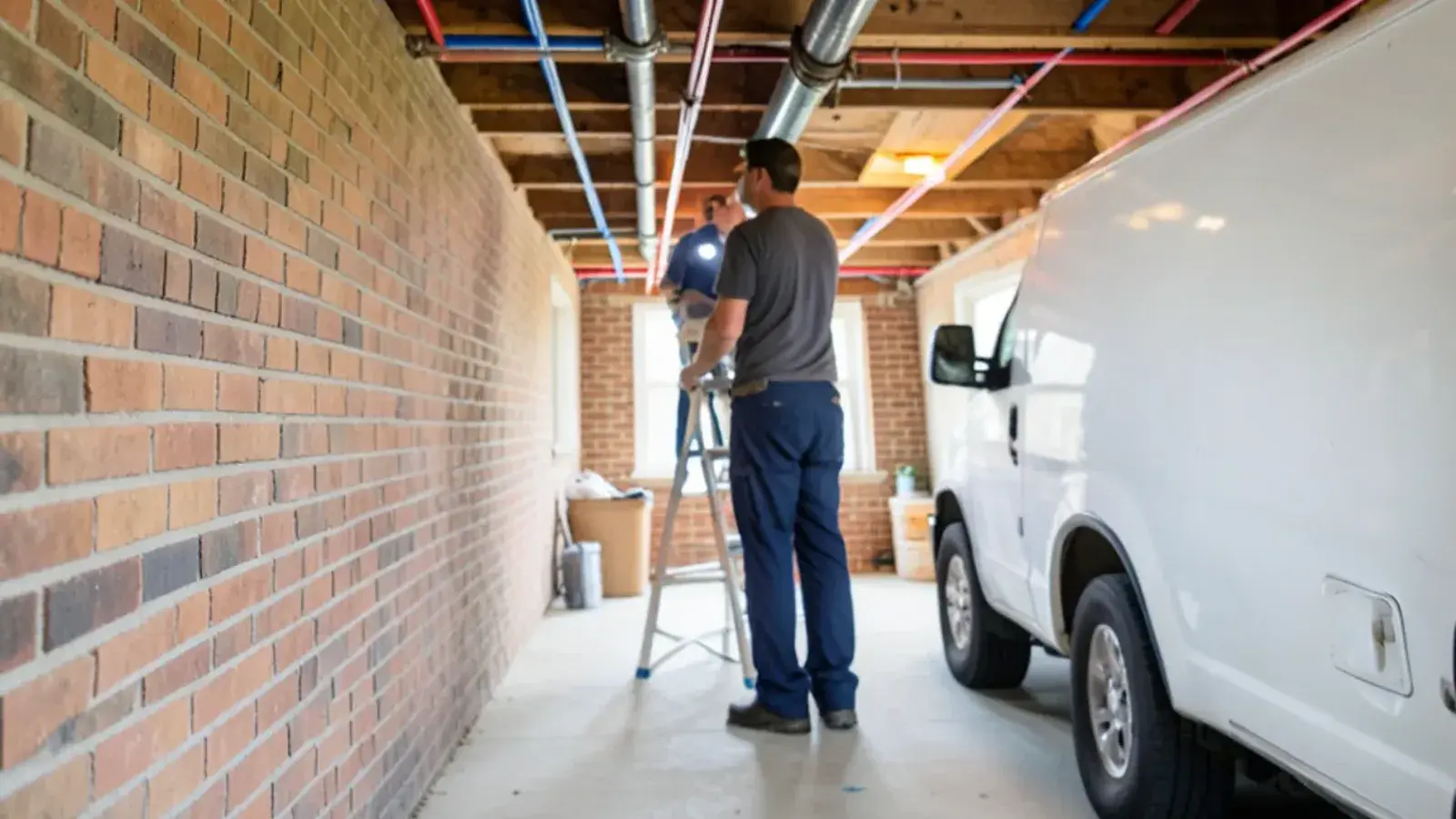
Whole home repiping
Every supply line replaced meter to faucet, with walls opened only where the new pipe runs
Main water line repair and replacement
Buried service pipe repaired or replaced below frost depth, curb stop and main valve checked
Leak detection and repair
Leaks traced at the meter and with moisture readings before any wall or ceiling gets opened