
By Plumber in Fraser, MI, Fraser, MI · Published · Last updated
Most hidden leaks give themselves away before they ruin anything. The water bill creeps up, a meter keeps turning or a stain shows up on a ceiling. The trick is to narrow it down in order: confirm there's a leak, figure out whether it's inside or outside the house, then find the fixture or pipe.
The scale is bigger than most people expect. The EPA's WaterSense Fix a Leak Week page says the average household's leaks can account for more than 9,300 gallons of water wasted every year. It also says nine percent of homes have leaks that waste 50 gallons or more per day.
Start with the water meter test
This is the test the EPA recommends, and it costs nothing.
Turn everything off
Shut every faucet and make sure the dishwasher, washing machine, ice maker and lawn sprinkler aren't running. Don't flush.
Write down the reading
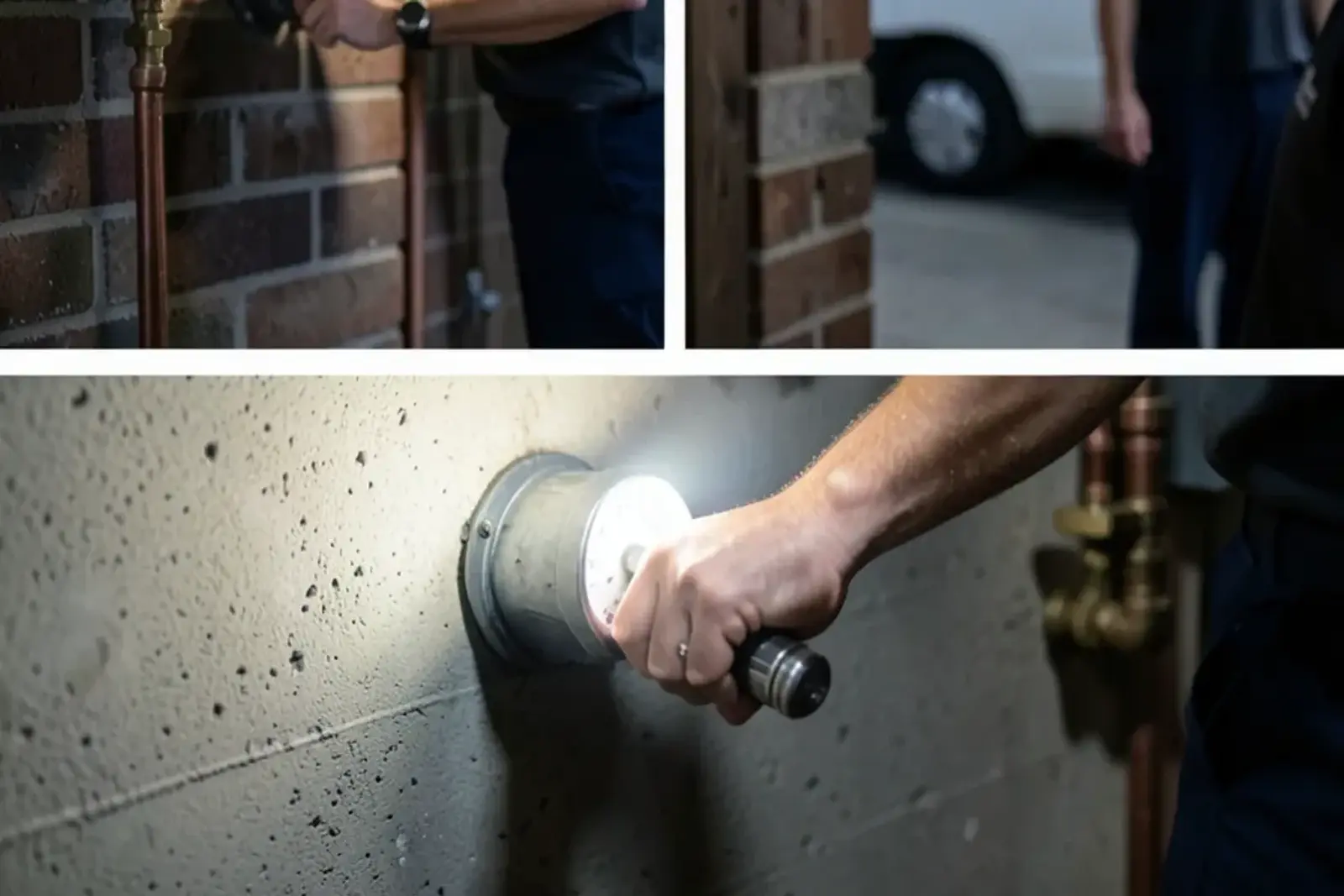
Find the meter, usually where the water line comes into the basement or a utility room. Note the full reading. Many meters also have a small low-flow indicator, a triangle or star that spins with even a trickle.
Wait two hours and read it again
The EPA's version is to check the meter before and after a two-hour period when no water is being used. If the reading changed, you likely have a leak.
Split inside from outside
If the meter moved, close the main shutoff valve on the house side of the meter and repeat a shorter test. If the meter still moves, the leak is between the meter and that valve. If it stops, the leak is somewhere in the house plumbing.
One catch. When the meter sits inside the basement, a leak in the service line outside, between the street and the meter, won't register at all. Watch for a soggy strip of lawn along the line's path or water seeping through the basement wall where the pipe comes in.
Check your bill against the EPA benchmark
The EPA also gives a quick bill check. If a family of four uses more than 12,000 gallons in a month, there could be serious leaks. Winter bills are the cleanest comparison in Michigan, since there's no lawn watering or pool filling to blur the number. If your bill is in cubic feet, ask your water department how to convert it.
Where hidden leaks usually turn up
Once the meter says yes, work through the house. This table pairs common signs with where they usually lead.
| What you notice | Likely source | Quick check |
|---|---|---|
| Toilet refills on its own or hisses | Worn flapper or fill valve | Food coloring dye test |
| Meter moves, no visible water anywhere | Toilet, service line or slab | Dye test each toilet, then check outside |
| Stain on a ceiling below a bathroom | Tub drain, shower valve or toilet seal | Run one fixture at a time and watch the stain |
| Swollen baseboard or soft floor by a sink | Supply line, shutoff or drain trap | Look and feel under the cabinet with a flashlight |
| Water at the base of the water heater | Tank, fittings or relief valve | Check the relief valve discharge pipe for drips |
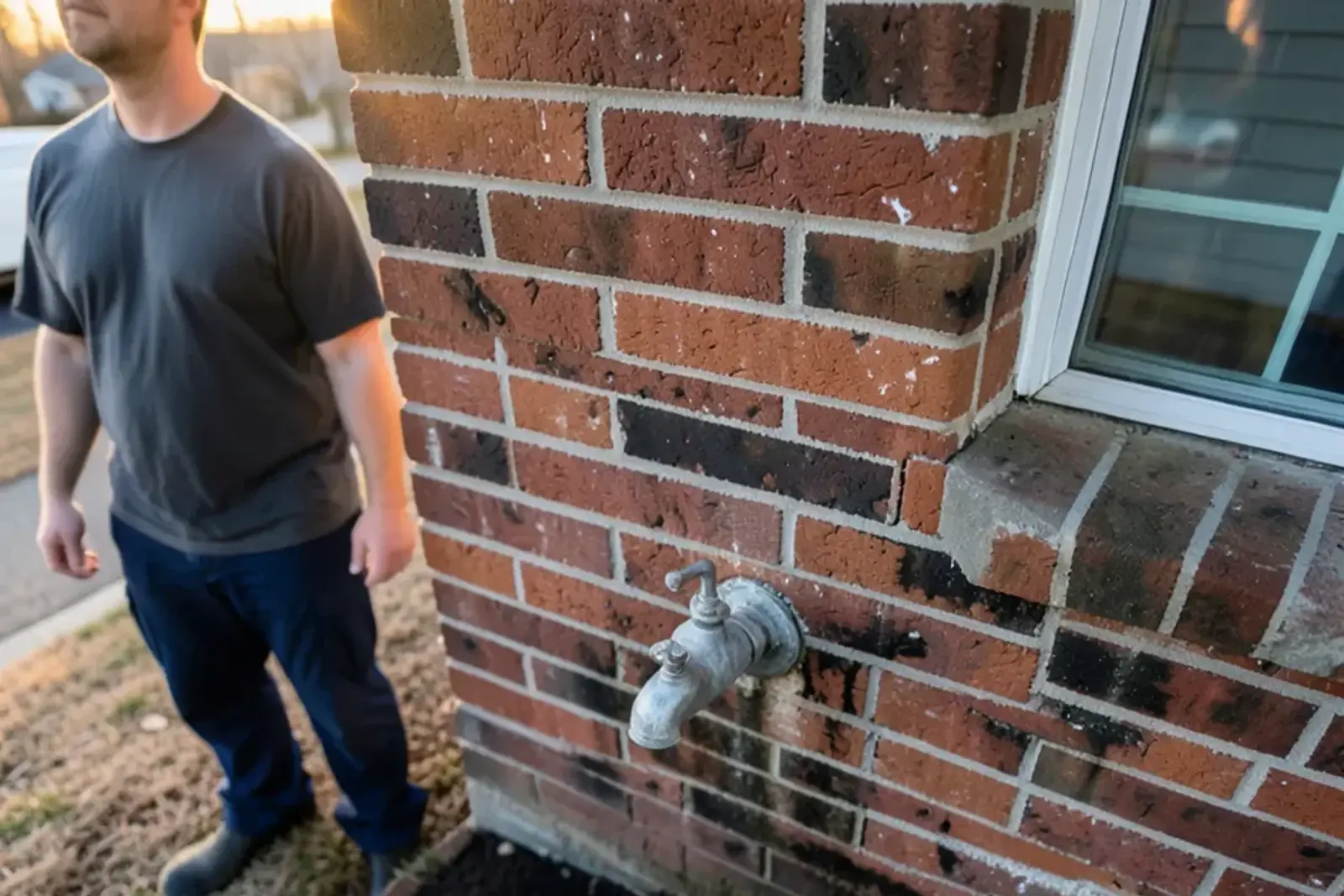
| Damp brick under an outside faucet | Split frost-free hose bib | Run it and look inside the wall from the basement |
| Musty smell with no visible water | Slow leak inside a wall | Moisture meter on nearby walls |
Test every toilet
Put a few drops of food coloring in the tank and don't flush. EPA's guidance is that color showing in the bowl means the toilet is leaking. Give it about 10 minutes. Flush when you're done so the dye doesn't stain.
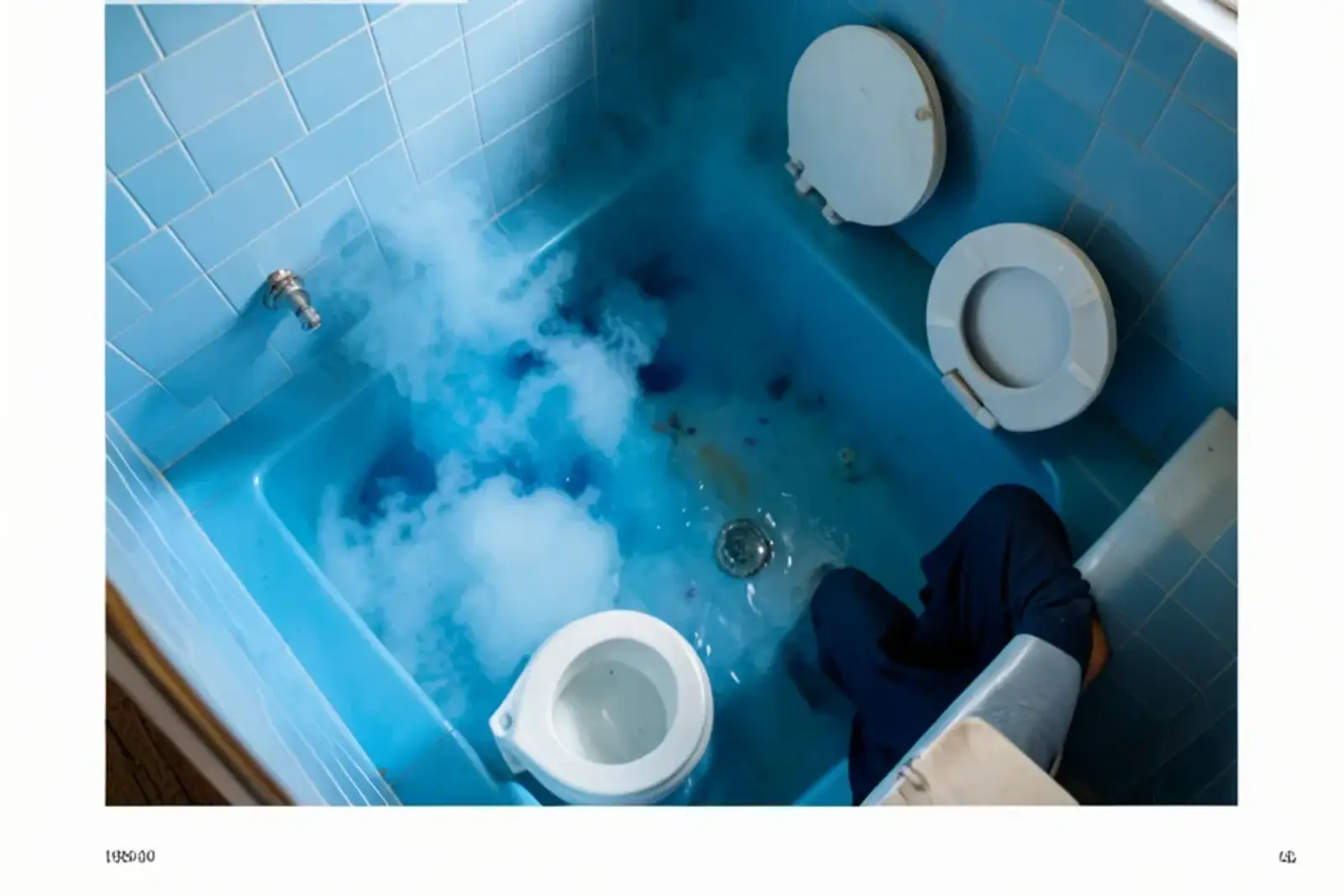
Toilets matter more than they look. EPA notes that an old or worn flapper can silently leak thousands of gallons a year. The same page says a faucet dripping once per second can waste more than 3,000 gallons a year.
Look under and behind things
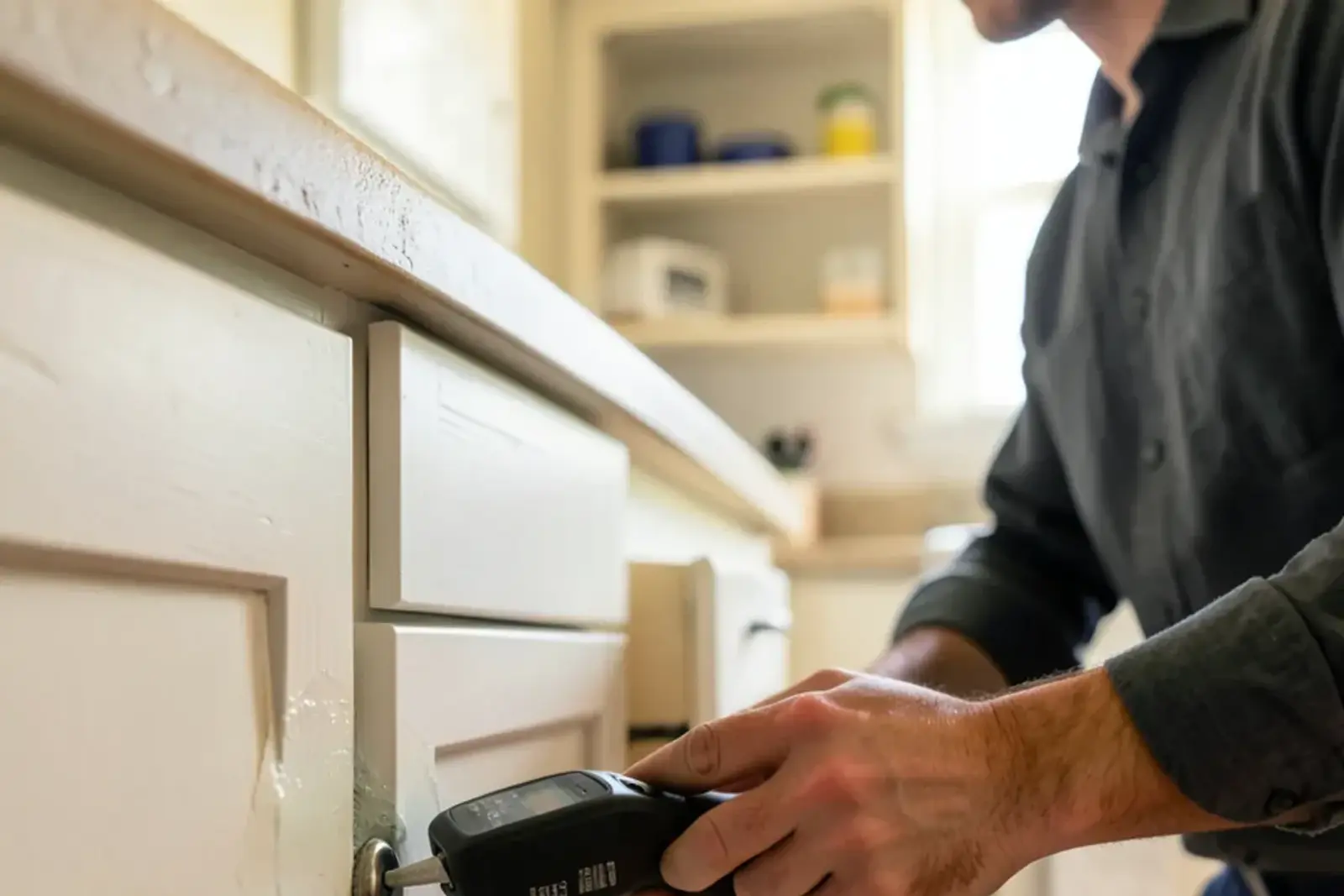
Check under every sink, behind the washer, around the water heater and the sump area. Feel the floor next to the dishwasher. Press on baseboards. A cheap moisture meter helps trace a damp spot toward its source.
Walk the outside in spring
Frost-free outdoor faucets have their valve inside the wall. If one froze with a hose still attached over the winter, it can split inside the house and only leak when you turn it on. The first spring use is the time to check.
When the leak is in a wall, slab or yard
Some leaks can't be found without tools. Professional leak detection uses acoustic listening equipment to hear water escaping a pressurized pipe, thermal imaging to spot cool or warm patterns behind drywall, and pressure tests that isolate one section of piping at a time. The goal is a small, targeted opening instead of tearing out a whole wall. Our leak detection and repair page explains how that process works and what repair options follow. We do this work for homes in Sterling Heights and across the area around Fraser.
What to do once you've found it
Close the nearest fixture shutoff, or the main if there isn't one. Move valuables and turn off power to anything electrical that's wet. Then dry the area fast. EPA's mold guidance says to dry water-damaged areas and items within 24 to 48 hours to prevent mold growth. Take photos before cleanup in case you file an insurance claim.
Where leaks hide in houses around Fraser
The water meter is the first tool, and in Fraser it belongs to the city. The city code requires a separate meter for each dwelling unit and keeps meters as city property, with repairs made by the city and charged to the customer. If you've ruled out every leak and still think the reading is wrong, the city's fee schedule lists a meter test for standard 5/8-inch and 1-inch meters at $100. Run the two-hour test first, since it's free.
About 63 percent of Fraser's homes were built between 1950 and 1979, mostly ranches, split-levels and condos, and in houses of that age a few places leak more than others. Galvanized pipe tends to weep at threaded joints first, often where an old repair joined it to copper. Our guide to galvanized pipes in older homes covers what that pattern means. Frost-free hose bibs are the other repeat offender, because January nights here average about 19 degrees and a hose left attached over winter traps water in the valve.
Condos add a twist. A stain on your ceiling may come from the unit above, and your meter won't show it at all.
Then the honest limits of the tools. A cheap moisture meter can read high near metal studs or on dense surfaces, so use it to compare spots, not as proof. Thermal imaging shows temperature differences, not water itself, and a cold-water leak in a cold exterior wall can be hard to pick out. That's why pros usually combine methods before cutting drywall, and why a small exploratory opening is sometimes the cheapest way to settle it.
What to tell the plumber when you call
- Whether the meter moved, and whether it still moved with the house shutoff closed
- Where the stain, damp spot or sound is, and how long you've noticed it
- Whether it gets worse when a specific fixture runs, which points to a drain or valve rather than a supply pipe
- Photos of the stain, the meter and anything you've already opened up
- What the pipe looks like where the water line enters the house
Fix it, call a plumber or call the water department?
A toilet that fails the dye test is usually a flapper or fill valve, and many owners replace those themselves. If it keeps running after that, a toilet repair visit sorts out the flush valve or tank. A dripping supply line under a sink can be a home fix too, if the shutoff below it still closes.
Call a plumber when the meter keeps moving with the house shutoff closed, when water shows up in a ceiling or wall, or when you can't find the source after the checks above. If the clues point to the line between the street and the meter, such as a soggy strip of lawn or water seeping in where the pipe enters, call the water department first to learn which part is yours. In Warren, for example, the owner is responsible for the water service from the curb stop into the house. Work on that stretch is a main water line repair job, not an interior one.
Questions about how to find a water leak
Can I have a leak if I don't see any water?
Yes. Toilets are the classic example, because a worn flapper lets water slip into the bowl and down the drain without a puddle anywhere. Leaks in the service line outside, under a slab or inside a wall can also run for a long time before they show. The water meter test catches these. If the meter moves with everything turned off, water is going somewhere.
Who fixes a leak between the street and my water meter?
It depends on your city and where the leak sits. Some cities maintain the curb stop and the piping on the street side of it, and others hold the owner responsible for more of the line. Because the rules differ, call your water department first if you suspect the service line. They can tell you which side of the line is yours.
How fast does a hidden leak cause mold?
EPA guidance says water-damaged areas and items should be dried within 24 to 48 hours to prevent mold growth. A slow hidden leak keeps a wall or ceiling wet for weeks, so mold can already be present by the time a stain shows. Once the leak is fixed, open up and dry the wet area, and replace drywall or insulation that stayed soaked.
Can a water heater cause a high water bill without a puddle?
Yes. A relief valve that discharges into a floor drain or a pan with a drain can send water away all day without leaving a mark. Look at the end of the discharge pipe, and touch it to see if it's warm. Frequent dripping often comes from thermal expansion pressure on a closed system, which an expansion tank usually solves. A tank weeping into the floor drain can hide the same way.
Fraser plumbing services for this problem
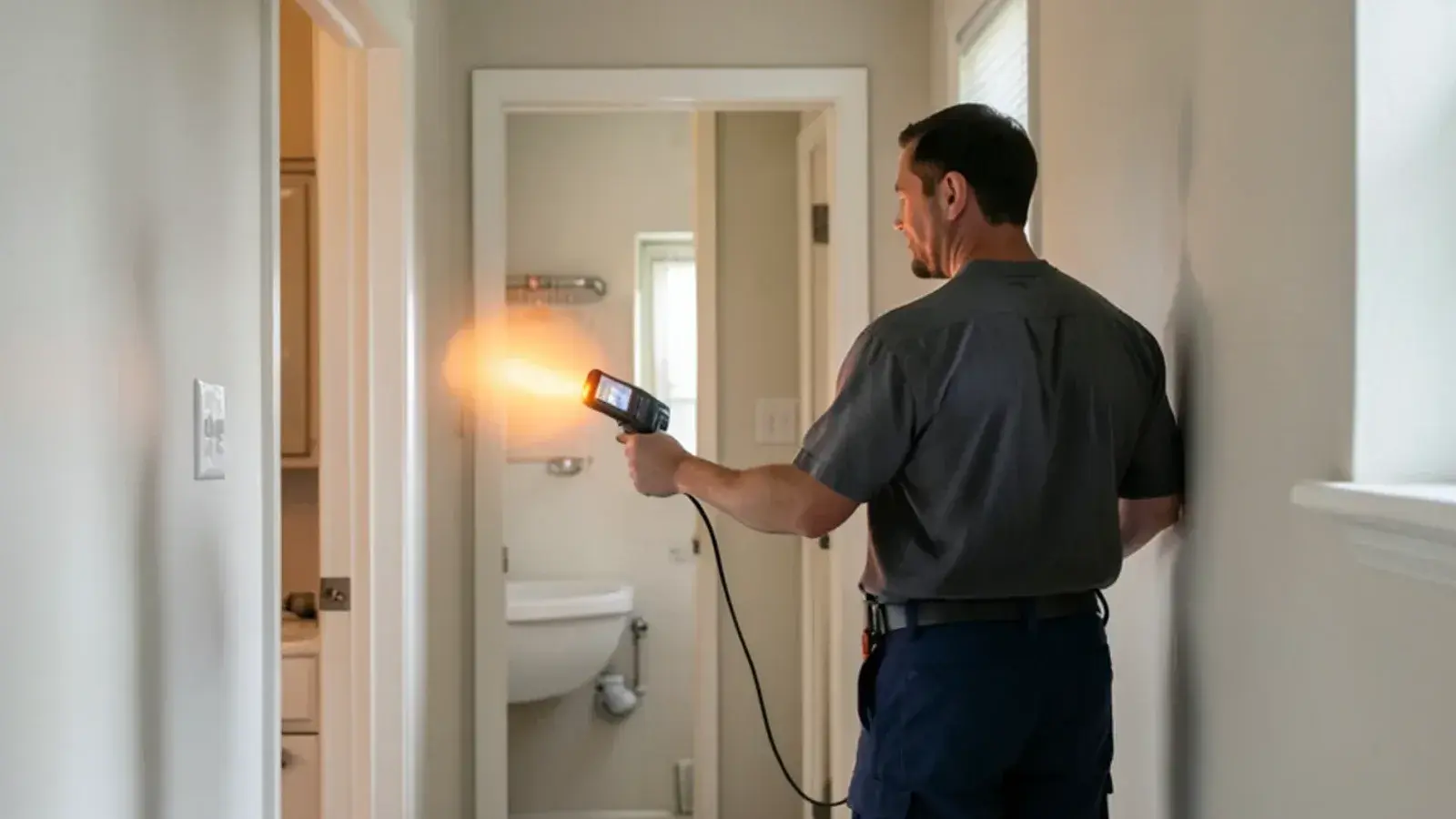
Leak detection and repair
Leaks traced at the meter and with moisture readings before any wall or ceiling gets opened
Main water line repair and replacement
Buried service pipe repaired or replaced below frost depth, curb stop and main valve checked
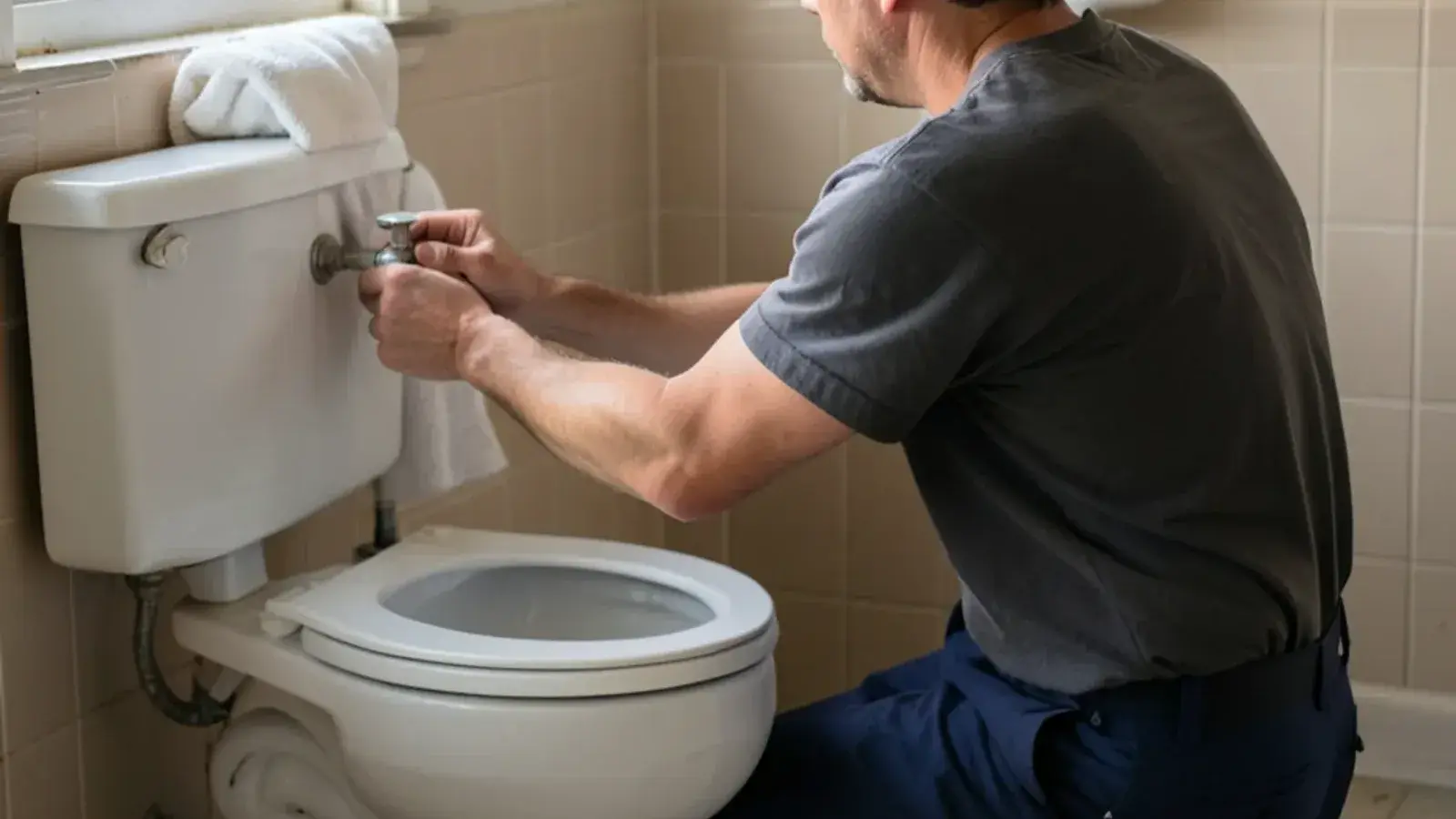
Toilet repair and installation
Stops running tanks, rocking bowls and base leaks, or sets a new toilet on a sound flange