
By Plumber in Fraser, MI, Fraser, MI · Published · Last updated
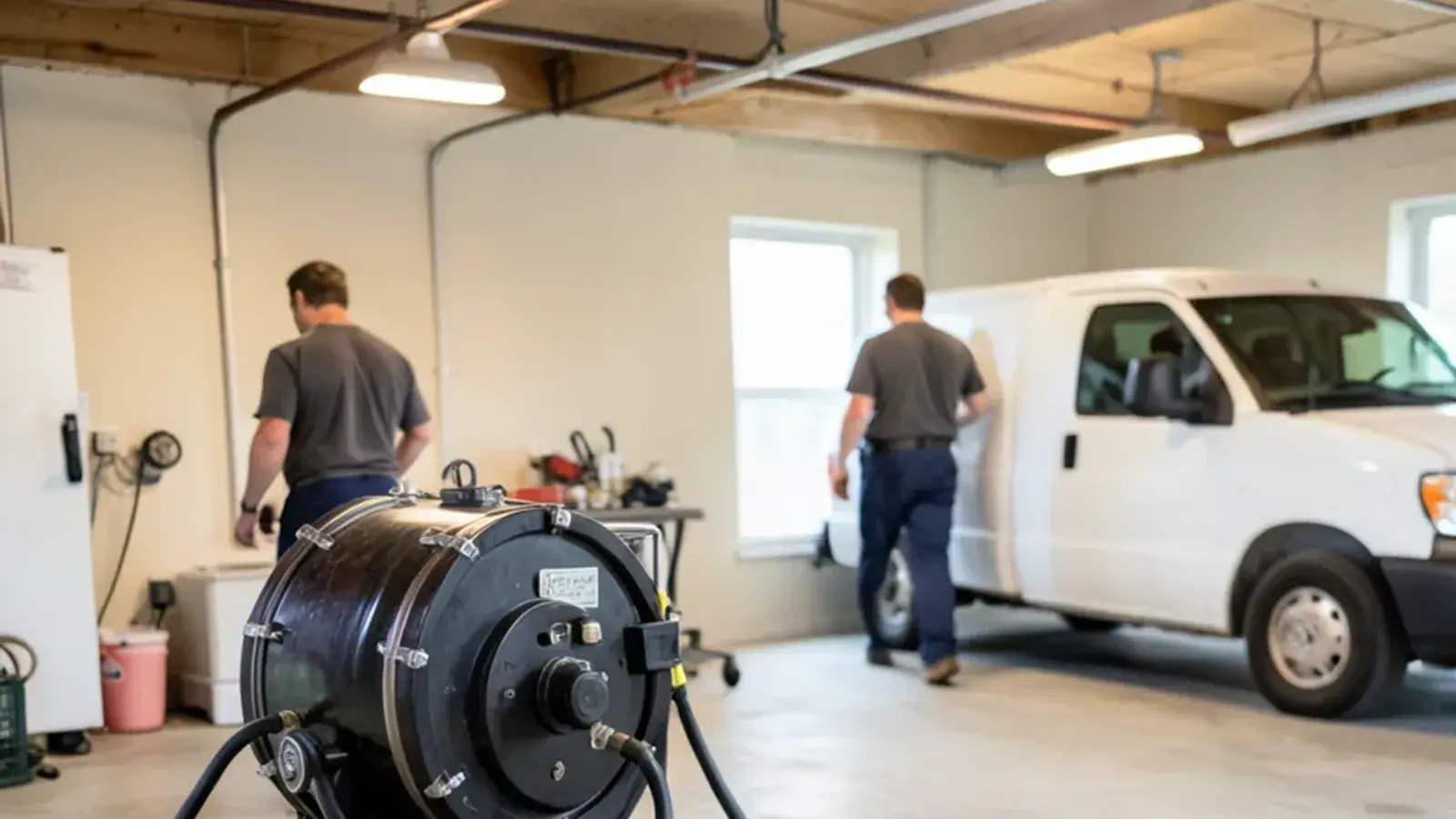
Both tools clear drains, and they work in completely different ways. A snake, also called a cable machine or auger, spins a steel cable with a cutting head on the end. It bores through a blockage and opens a path for water. A hydro jetter feeds a hose down the line and sprays water at very high pressure through a nozzle. The rear-facing jets pull the hose forward and scrub the full circle of the pipe wall as it goes. One opens the clog. The other cleans the pipe.
What each tool leaves behind in the pipe
That difference shows up after the work is done. A snake usually leaves a pipe with a hole through the middle of the buildup. Water drains again, but the grease, scale or roots still line the walls, and they start catching debris right away. A jetter leaves the pipe much closer to its full inside diameter. The loose material gets flushed downstream instead of sitting there for the next clog to grow on.
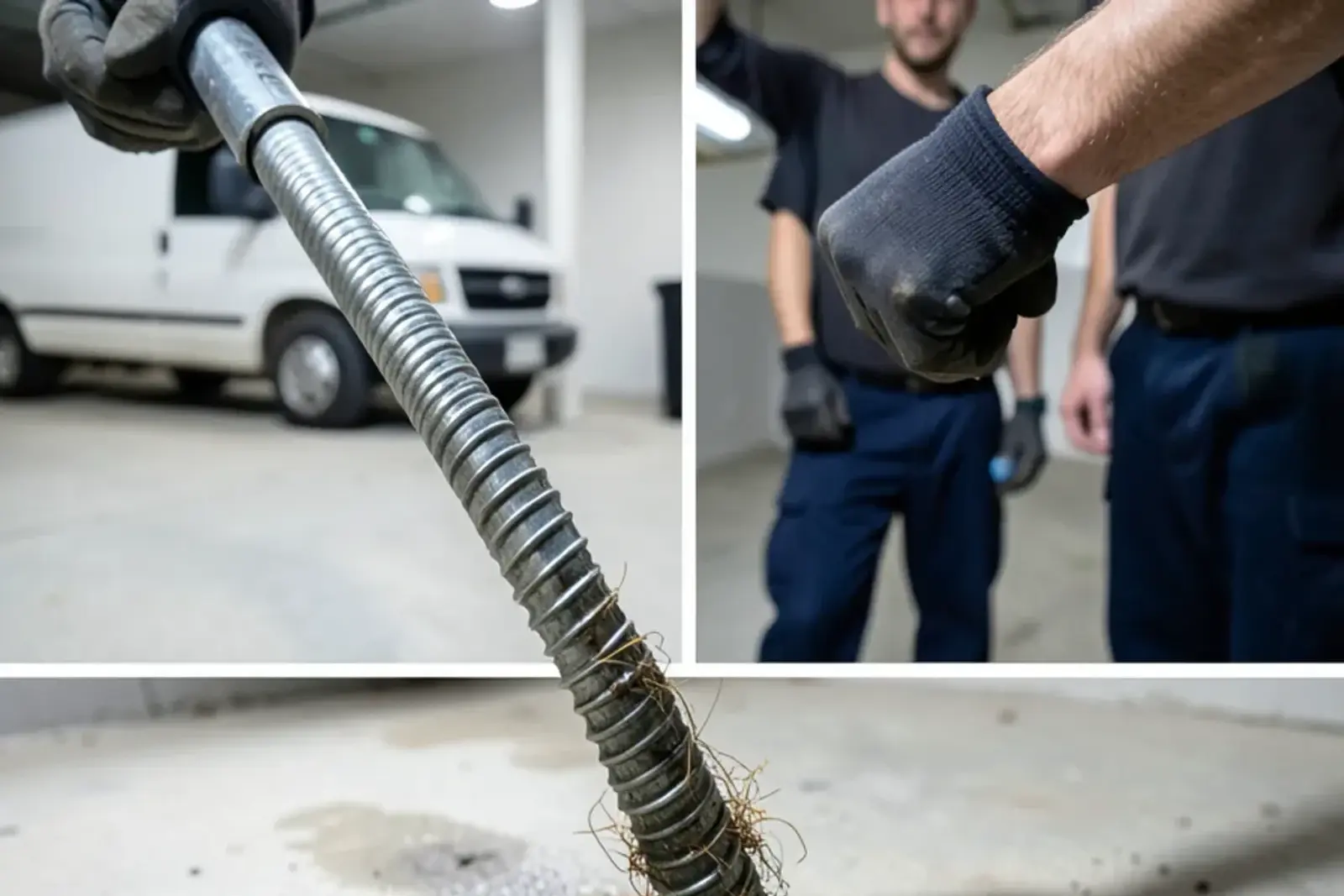
A snake still has real advantages. It's fast, it fits small fixture drains well, and it's the better pick for a hard object such as a toy or a wad of wipes. It can also pull part of a blockage back out so you can see what caused it.
Which clogs call for which tool
Here is how the two compare on the clogs that show up most often in house drains.
| Clog or condition | Snake | Hydro jetting | Notes |
|---|---|---|---|
| Hair in a tub or bathroom sink | Good fit | Rarely needed | Small cable or hand auger is usually enough |
| Kitchen line with grease buildup | Short-term relief | Good fit | Grease coats the whole wall, so a hole closes fast |
| Wipes or a solid object | Good fit | Can push it further | Snaking may retrieve it |
| Tree roots in the main line | Cuts a path | Good fit with a root nozzle | Roots return through open joints either way |
| Sand, silt or scale in the main | Limited | Good fit | Jetting flushes fine material out |
| Pipe that's cracked or collapsing | Use with care | Not recommended | Camera first, then repair |
| Clog that keeps coming back | Treats the symptom | Often the better fix | Film the line to find the cause |
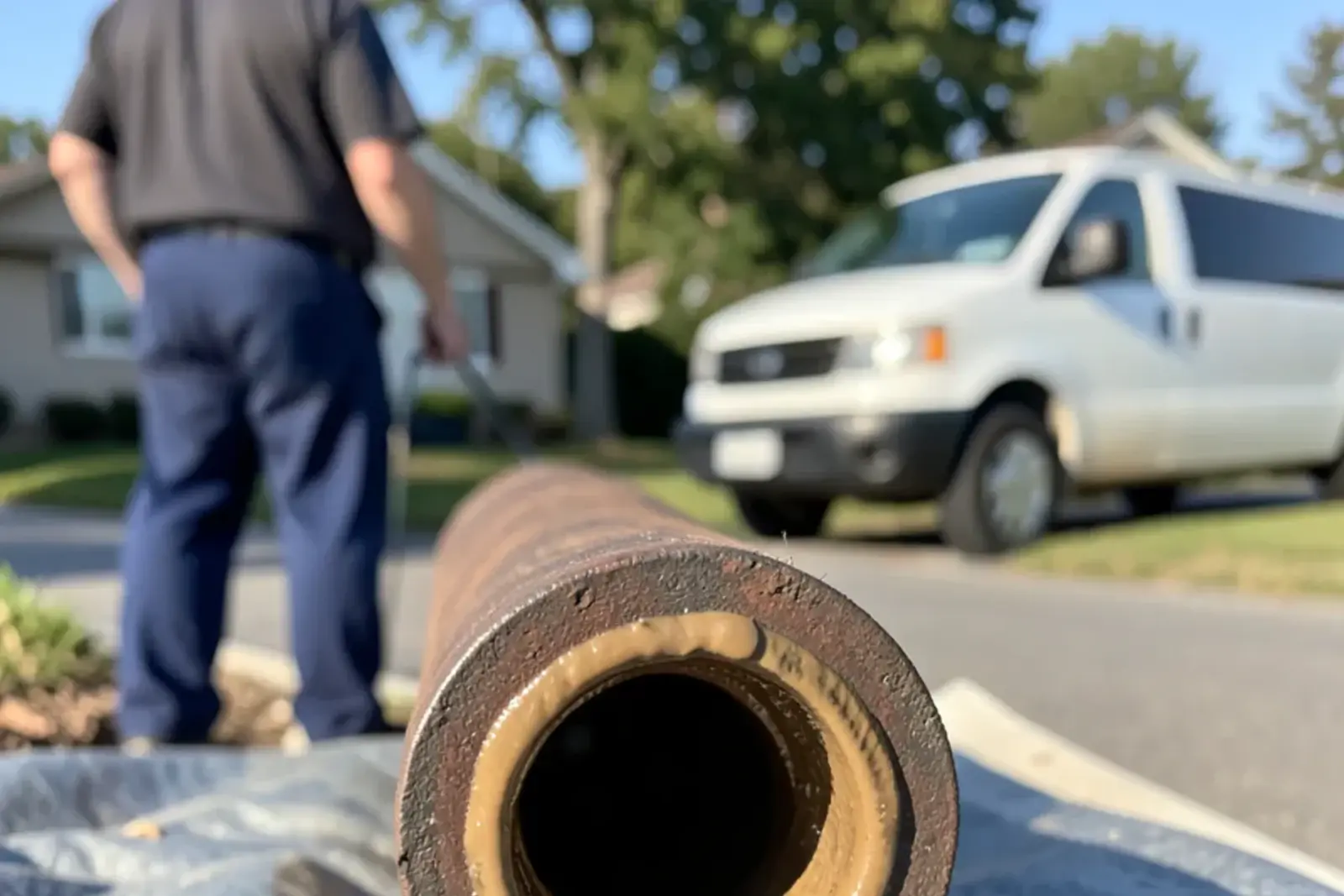
Grease is the clearest case. It goes down warm, cools on the pipe wall and builds up in layers. A cable cuts a channel through it, and that channel narrows again within weeks. Jetting peels the layers off. If you're dealing with a kitchen line that keeps slowing down, our drain cleaning and clog removal page covers how we decide between the two at the visit.
When jetting is the wrong call
High-pressure water is only as safe as the pipe it goes into. These are the cases where a camera should come first and jetting may be off the table:
- Orangeburg pipe, a tar-paper material used for some sewer laterals decades ago, which can blister and collapse
- Cast iron that has rusted through in spots, so the pipe wall is thin or missing
- A section that has collapsed or separated, where water would wash soil into the line
- A sag, or belly, where the real problem is grade, which no cleaning changes
In those cases, cleaning buys time at best. The camera footage tells you whether the next step is careful snaking, a spot repair or a bigger sewer project.
How a jetting visit runs, step by step
Getting to the line
Jetting goes in through a cleanout, either on the main stack in the basement or outside in the yard. If there isn't one, a toilet may need to come off, or a cleanout may need to be added.
Looking first
On older or troubled lines, a camera pass shows what the clog is and whether the pipe can take the pressure.
Choosing the nozzle
Different nozzles do different jobs. Some are made to bore through a blockage, some spin to scour the walls, and some cut roots.
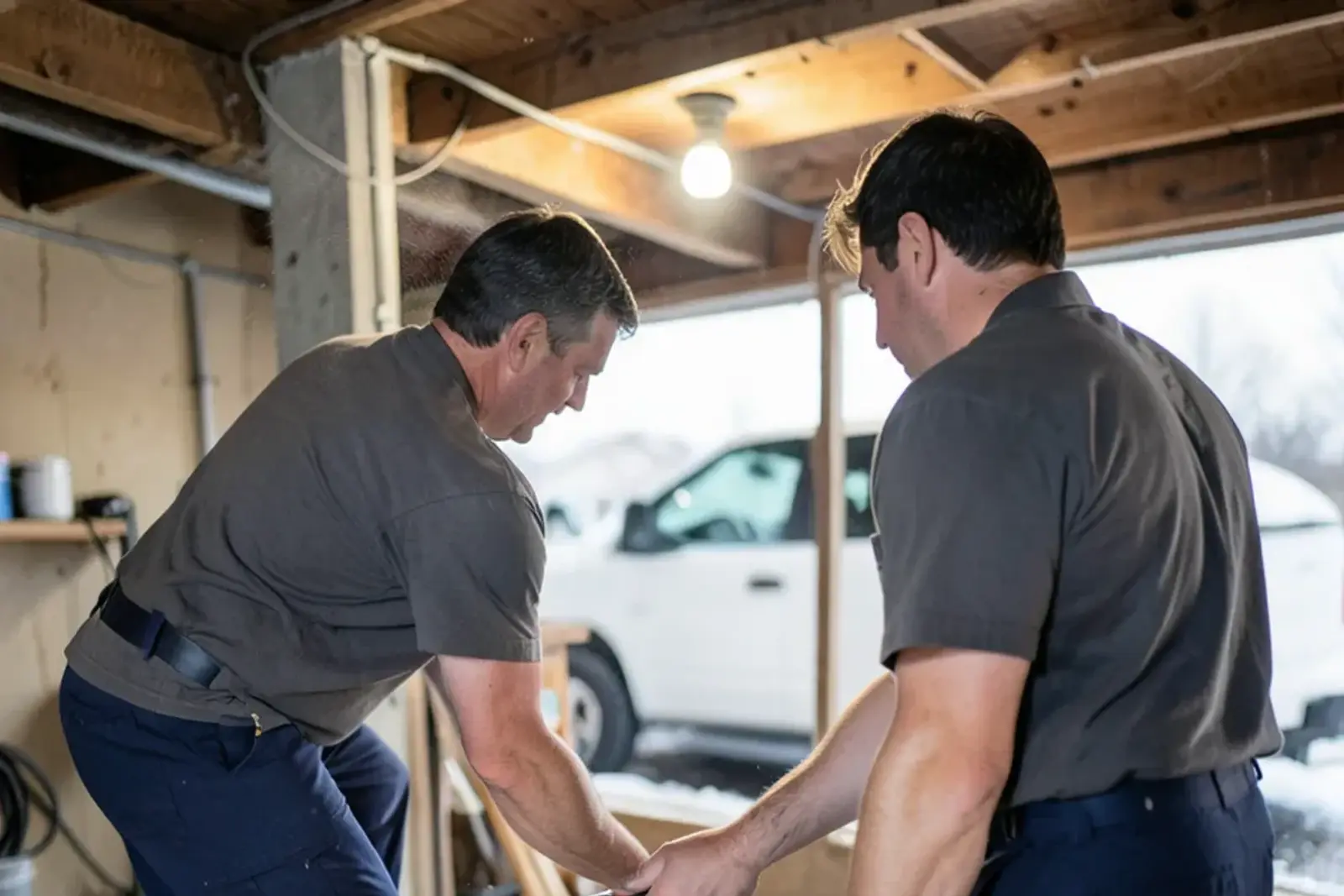
Working the line in passes
The hose goes in and comes back in controlled passes, so the material is broken up and flushed out instead of packed into one spot.
Checking the result
A second camera pass shows a clean wall or reveals damage the clog was hiding.
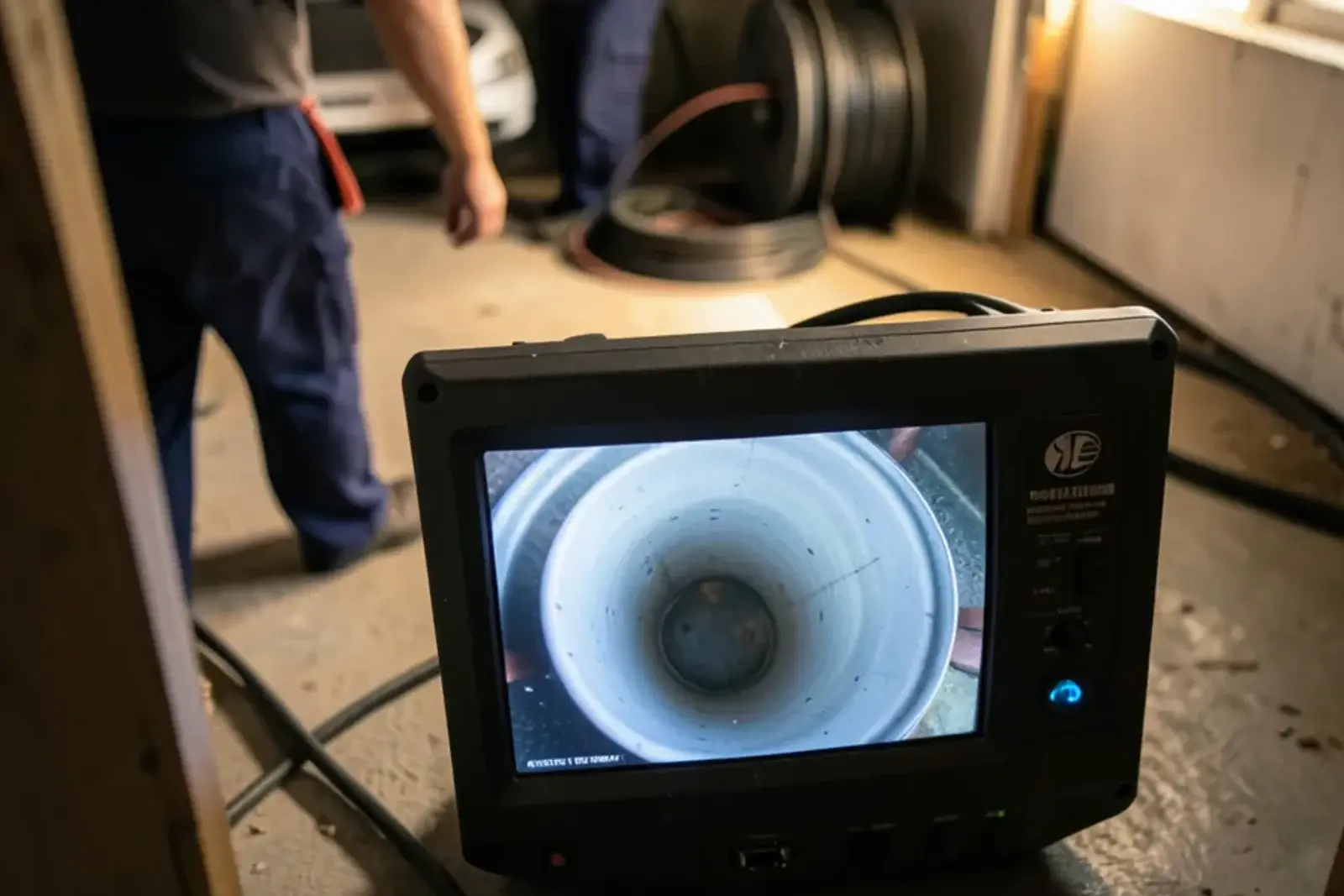
Our hydro jetting service page explains more about the equipment and the kinds of lines it suits. We clear lines for homes in Clinton Township and the other cities around our Fraser base.
What drives the cost of either option
We don't quote numbers online, but the factors are easy to explain. Access matters most. A clean, reachable cleanout is quicker than pulling a toilet or working from a roof vent. The length of the run and where the clog sits along it come next. Heavy grease, roots or scale take more passes than a single soft blockage. A camera inspection adds time and gives you footage, and that footage often saves money by ruling out the wrong repair. If the line keeps clogging, compare what repeated snaking costs over a few years with a single thorough cleaning or a repair.
What we see in drain lines around Fraser
Fraser's private sewer lateral handout names the three things that block a building sewer: grease, tree roots and sand. None of the three is a classic snake job, because each coats or fills a length of pipe instead of plugging one spot. The handout also warns against running the garbage disposal with hot water or detergent to wash grease down, because grease that leaves the kitchen warm hardens farther down the line. That's why a stubborn kitchen clog is often well down the line, past the reach of a small sink auger.
Fraser's own Public Works crews use vactoring and jetting on the city's sanitary and storm sewers. On a house lateral, the same method makes sense where the pipe can take it. In 1950s through 1970s houses, the main is often clay tile or cast iron, and cast iron that has scaled heavily inside can have thin spots you only find on camera.
The honest trade-off is cost against how long the fix lasts. A snake visit is usually the smaller bill. If the line is coated, though, it buys weeks, and three of those can cost more than one thorough jetting. Jetting has its own limit: it can't fix a sag or a broken joint, and it can't do anything about rainwater that shouldn't be in the sewer at all. Warren's homeowner sewer guidance tells owners to clean and televise the lateral routinely, and that pairing, cleaning plus a look, is the right habit anywhere.
Before the drain cleaner arrives
- Stop running water in the house, including the washer and dishwasher.
- Find the cleanout, or the spot where the main stack meets the floor, and clear a path to it.
- Note which fixtures backed up, in what order, and whether it was raining.
- Skip chemical drain openers. They don't clear a main line, and whoever opens the pipe next has to work around them.
- Move stored boxes away from the floor drain in case the line releases suddenly.
Snake it, jet it or film it first?
Pick by what the drain has been doing, not by which tool sounds stronger.
A first clog in one fixture, especially hair or a known object, calls for a snake. A kitchen or main line that slows down again within weeks of being snaked is ready for jetting with a camera check. Anything with a history of root growth, a backup during storms, an older clay or cast iron main or a sag someone has mentioned before should start with a sewer line camera inspection, since the footage decides whether cleaning is even the right job. Our post on why a basement floor drain backs up in heavy rain covers the storm-only pattern. In Warren, where the city leaves the lateral to the owner, keep the footage with your house records.
Questions about hydro jetting vs snaking
Is hydro jetting safe for old cast iron or clay pipes?
It can be, if the pipe is sound. Jetting is hard on pipe that's already cracked, badly scaled through or partly collapsed, and on fragile materials like Orangeburg fiber pipe. That's why a camera look before jetting matters on older lines. If the footage shows the pipe holding its shape, a jetter with the right nozzle and pressure clears it well. If not, the conversation shifts to repair.
Can I rent a jetter or a snake myself?
Small hand augers and drum machines are sold and rented for homeowner use, and they handle many sink and tub clogs. Main-line machines and high-pressure jetters take practice. A cable can kink or get stuck, and a jetter can cut skin at close range. If the clog is in the main line or keeps coming back, it's usually worth having it cleared and filmed instead.
Why does my drain clog again a few weeks after it was snaked?
Usually because the snake made a hole through the clog and left the rest of it stuck to the pipe wall. Grease, scale and root growth catch new debris quickly. A repeat clog can also point to a pipe problem, like a sag that holds water or a joint that has shifted. A camera inspection tells you which it is, and whether jetting or a repair is the better next step.
Will jetting fix a floor drain that only backs up in heavy rain?
Usually not. A drain that's fine all week and backs up only during a downpour points to rainwater getting into the sanitary system or a sewer running full, not a clog. Look for downspouts or a footing drain tied into the sanitary line, which Fraser's code prohibits. A camera inspection on a dry day shows whether there's a clog to clean at all.
Fraser plumbing services for this problem
Hydro jetting
Scours grease, scale and roots off the pipe wall, with camera footage before and after
Drain cleaning and clog removal
Finds whether it's one fixture or the main line before choosing the tool
Sewer inspection and line repair
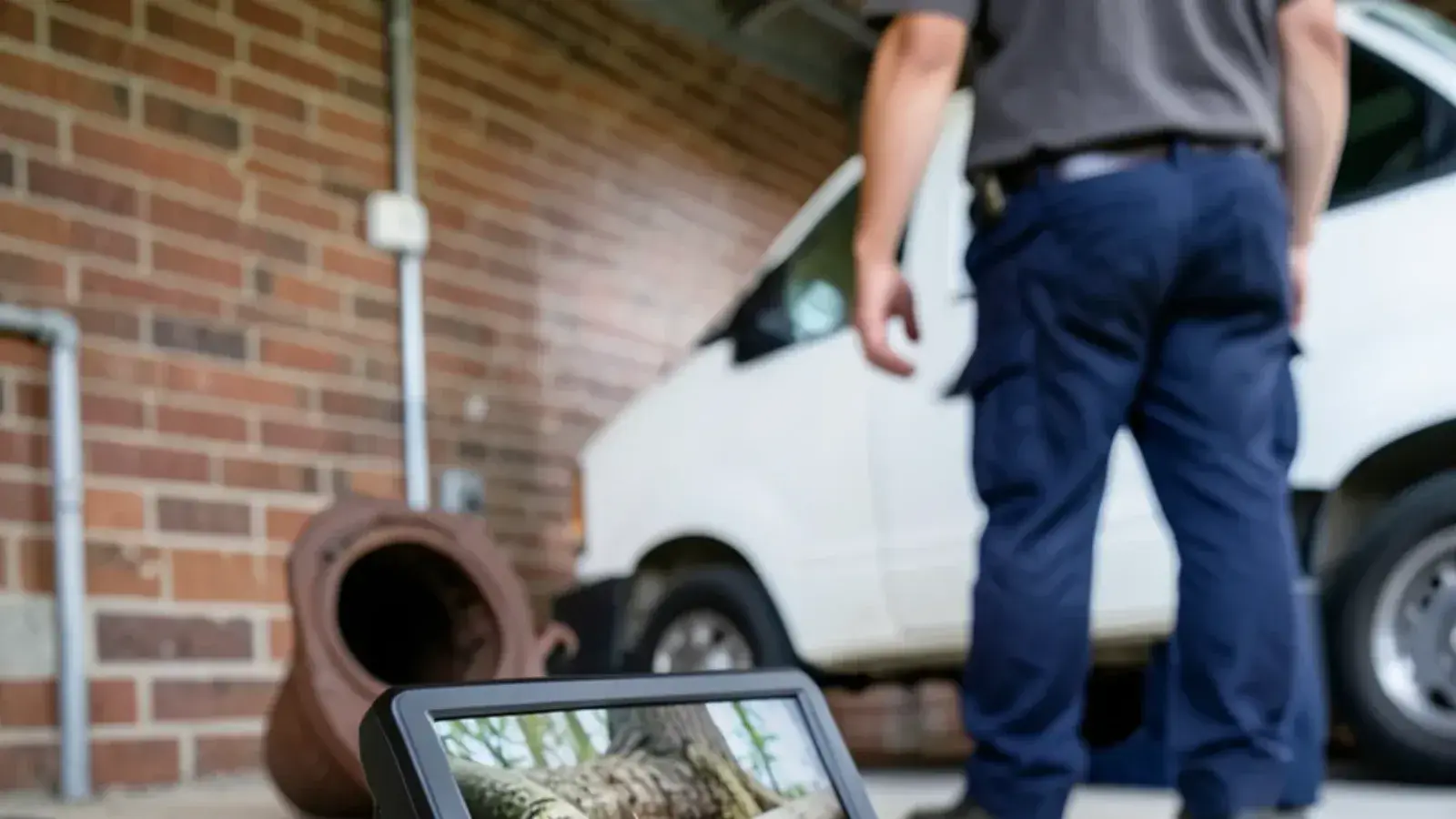
Live camera footage of your lateral, with defects located and marked from the surface