By Plumber in Fraser, MI, Fraser, MI · Published · Last updated
Good sump pump maintenance is mostly a late-winter job. The pump has sat through months of little work, the outlet may be buried in snow, and the next six weeks can bring snowmelt, thawing ground, and rain all at once. Run through this list now, while a dry pit gives you time to fix what you find.
Why late winter is the hard test
Detroit Metro Airport's 1991–2020 climate normals, published through the National Weather Service and NOAA, show about 14 inches of snow in January and 12.5 in February, dropping to around 6 in March. Normal average temperatures climb from 37.2 degrees in March to 48.9 in April, and April's normal precipitation, 3.26 inches, is the highest of the year to that point. All that stored snow melts while the ground is still partly frozen and the spring rains are starting.
The worst case is rain on a full snowpack. In February 2018, the National Weather Service in Detroit described two to three inches of rain falling across southeast Michigan as unusually warm, moist air melted the snow, and the combined runoff caused widespread stream and river flooding. The North Branch of the Clinton River was one of the rivers it tracked. Sump pits fill fast in conditions like that, and a pump with a stuck float or a frozen outlet fails at the worst possible time.
The checklist, in the pit
Start with the power
Make sure the pump is plugged into its own outlet, not an extension cord. If the outlet is a GFCI, press test and reset. A tripped GFCI is a common reason a pump that worked last fall sits silent.
Clear the pit
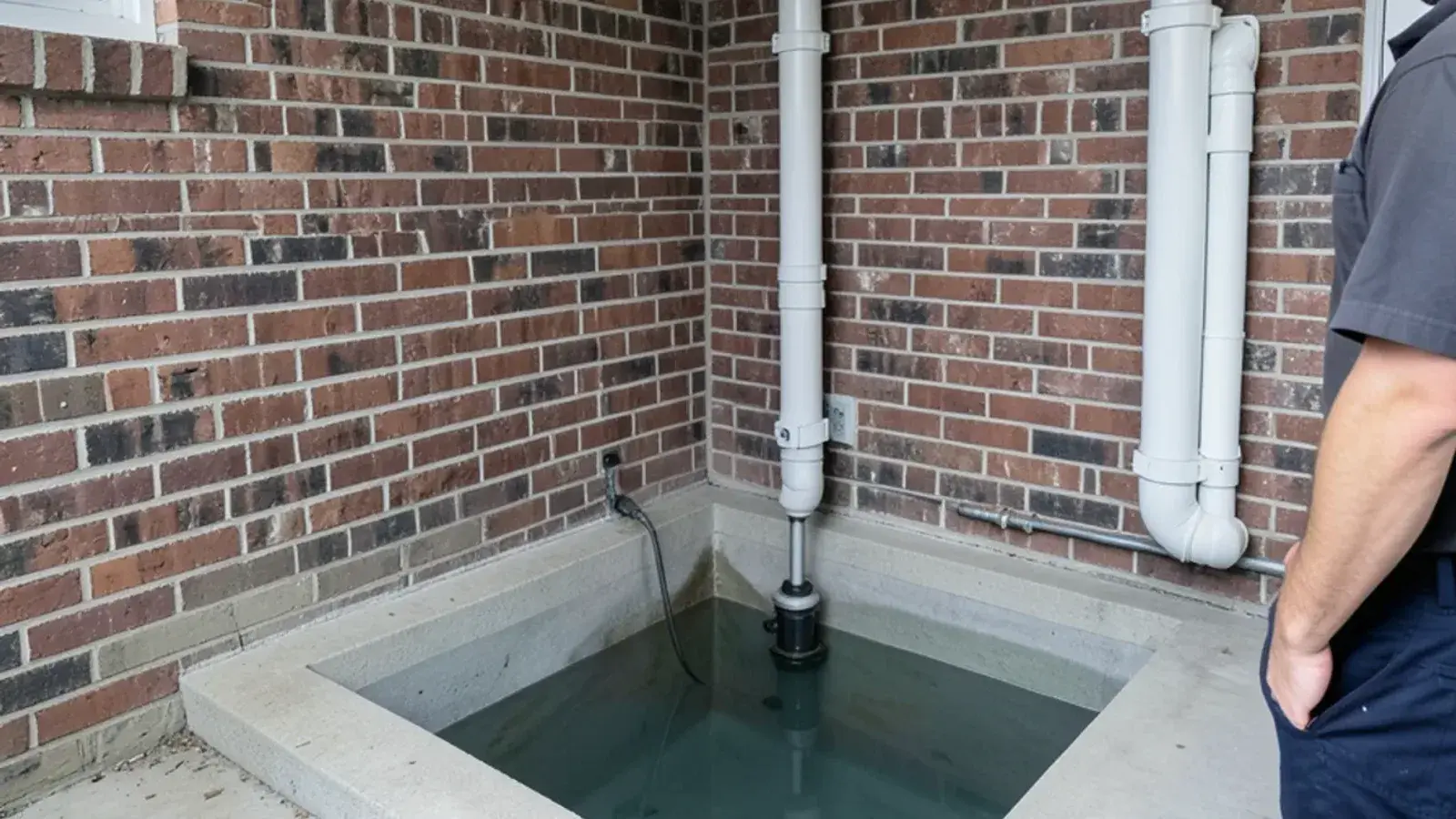
Lift the lid and look. Pull out gravel, silt, and anything that fell in. Debris can jam the float or clog the intake screen. The Michigan Plumbing Code calls for a sump pit at least 18 inches across and 24 inches deep with a solid floor, so if yours is a small bucket in the floor, the pump may cycle too often to last.
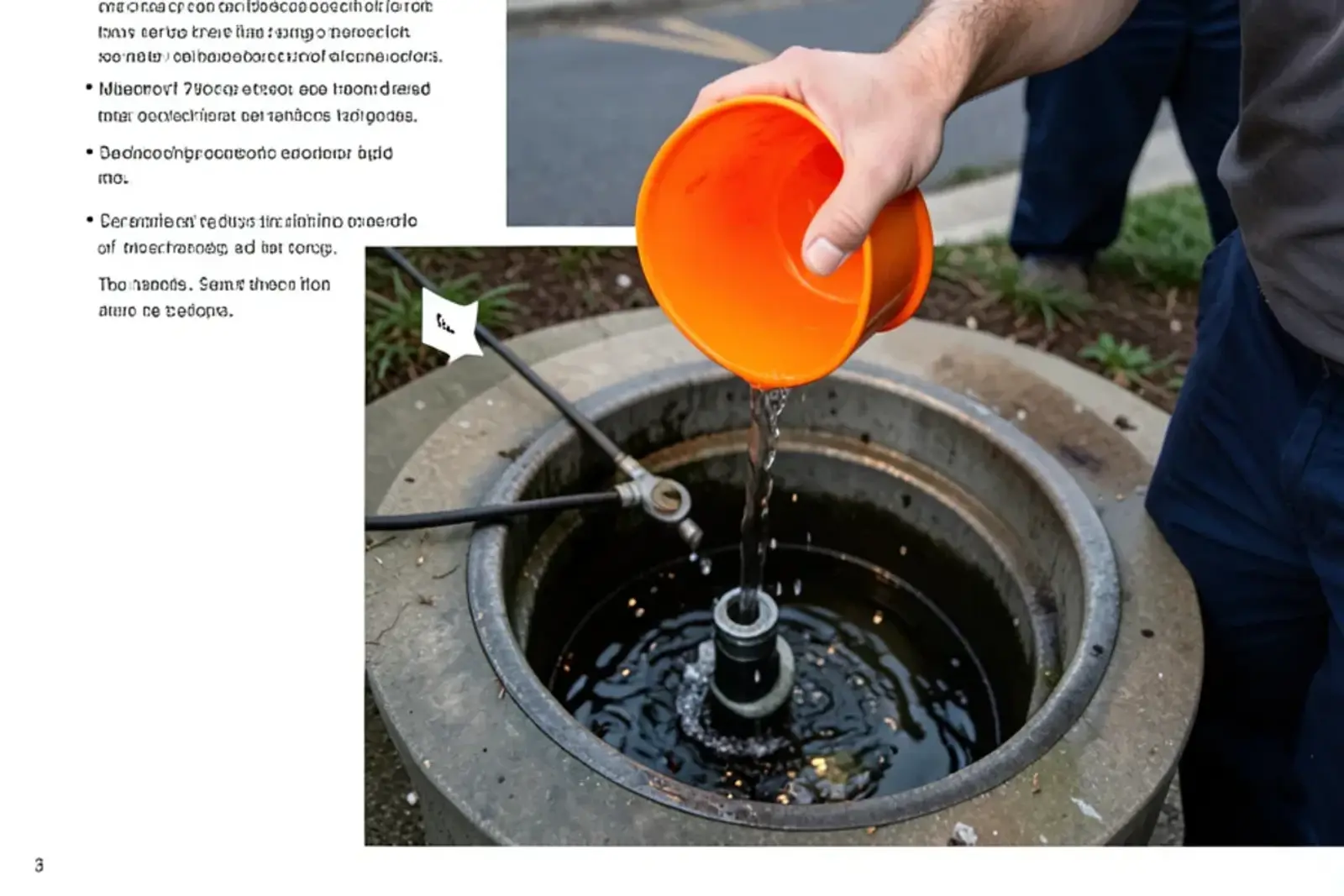
Run it with a bucket of water
Pour water in slowly. The float should rise freely and start the pump. The pump should empty the pit and shut off cleanly. Listen for grinding, rattling, or a hum with no water moving.
Watch the check valve close
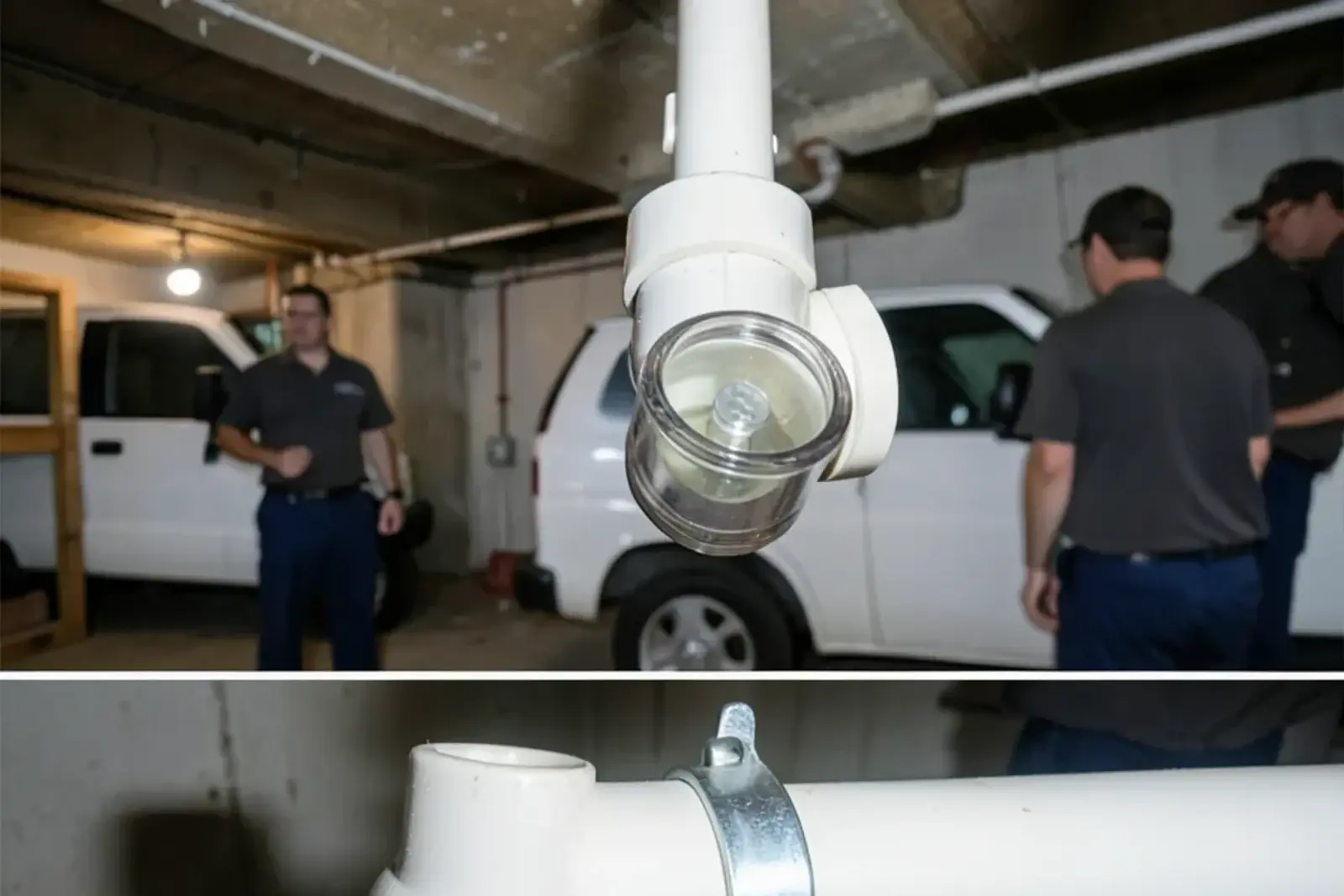
The code requires a check valve on the discharge piping of a sump in a one- or two-family home. When the pump stops, that valve should close with a soft thunk and hold the water in the pipe. If you see water draining back into the pit, or the pump restarts right after it stops, the valve may be stuck open.
Outside, follow the discharge line
Walk out to where the pipe leaves the house. This step is the one most people skip.
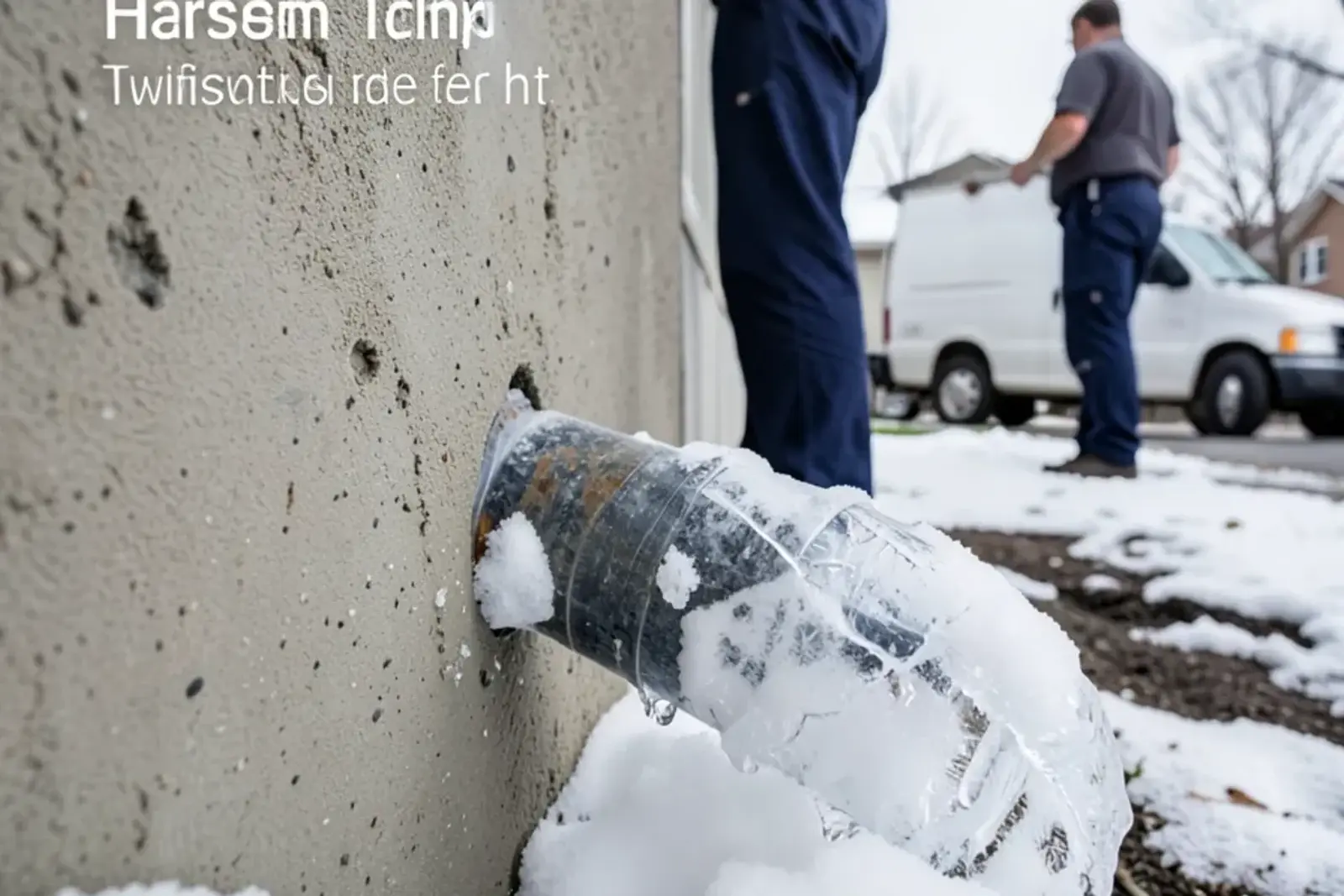
A discharge line that ends in a snowbank, a low spot, or a long flat run of corrugated hose can freeze solid. When it does, the pump runs against a blocked pipe and can burn out. Clear snow and ice from the outlet. Make sure the line slopes away from the house so it drains between cycles. Some homes add a freeze-relief fitting near the foundation that lets water spill out if the line downstream freezes.
Check where the water ends up, too. The Insurance Institute for Business & Home Safety suggests directing downspout water at least 3 to 4 feet from the foundation, and sump water deserves at least the same. Water dumped against the foundation soaks back down to the footing drains and returns to the pit, and the pump ends up running in circles.
Backup power and alarms
Storms that fill the pit also knock out power. A battery backup pump sits in the pit beside the main pump and runs when the power goes out or the main pump fails. Check the battery date and terminals, and run the backup's test button. A high-water alarm is the simplest add-on of all. It sounds when the water rises above where the main pump should have started.
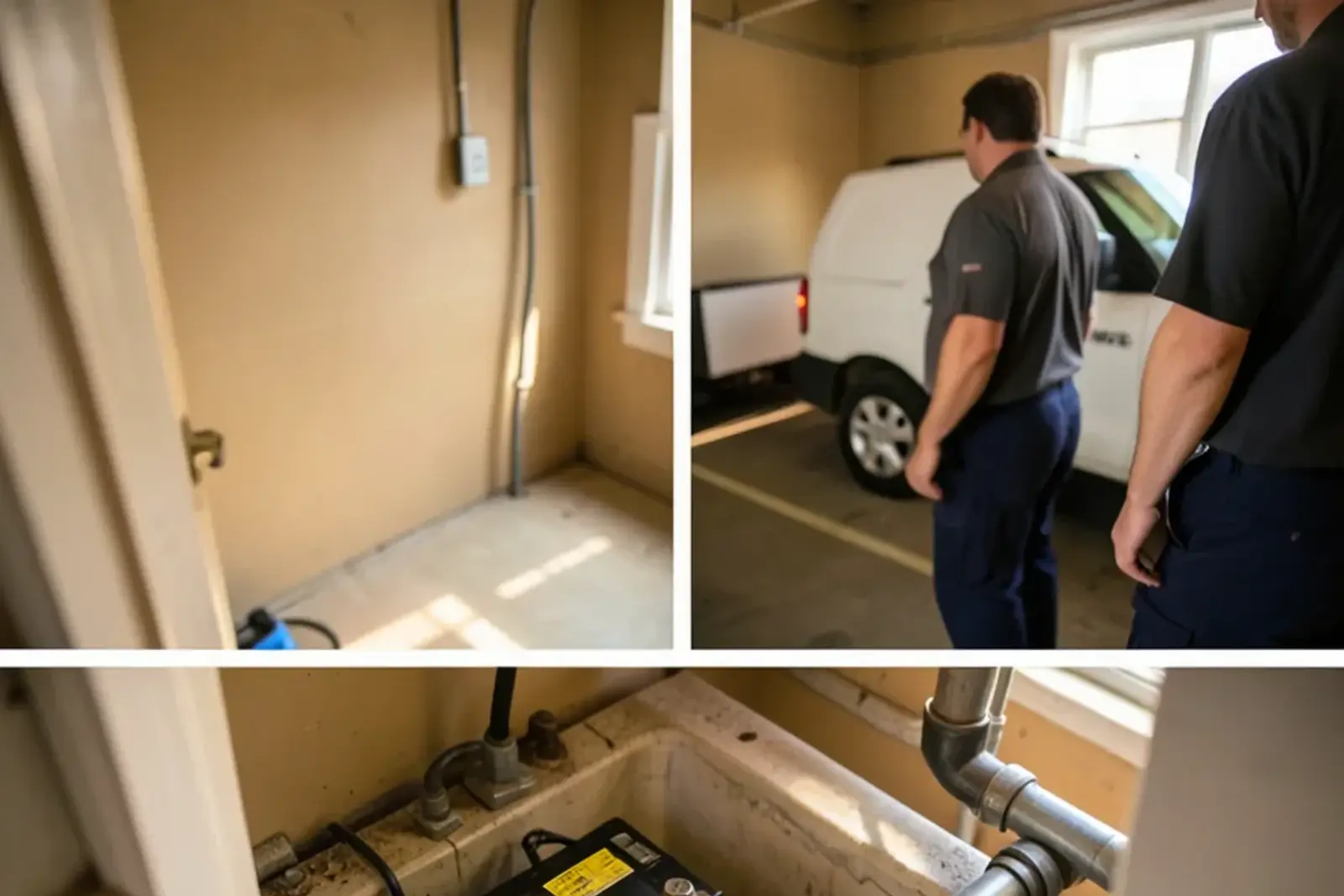
What we see in Fraser sump pits
The discharge rule changes the outside check
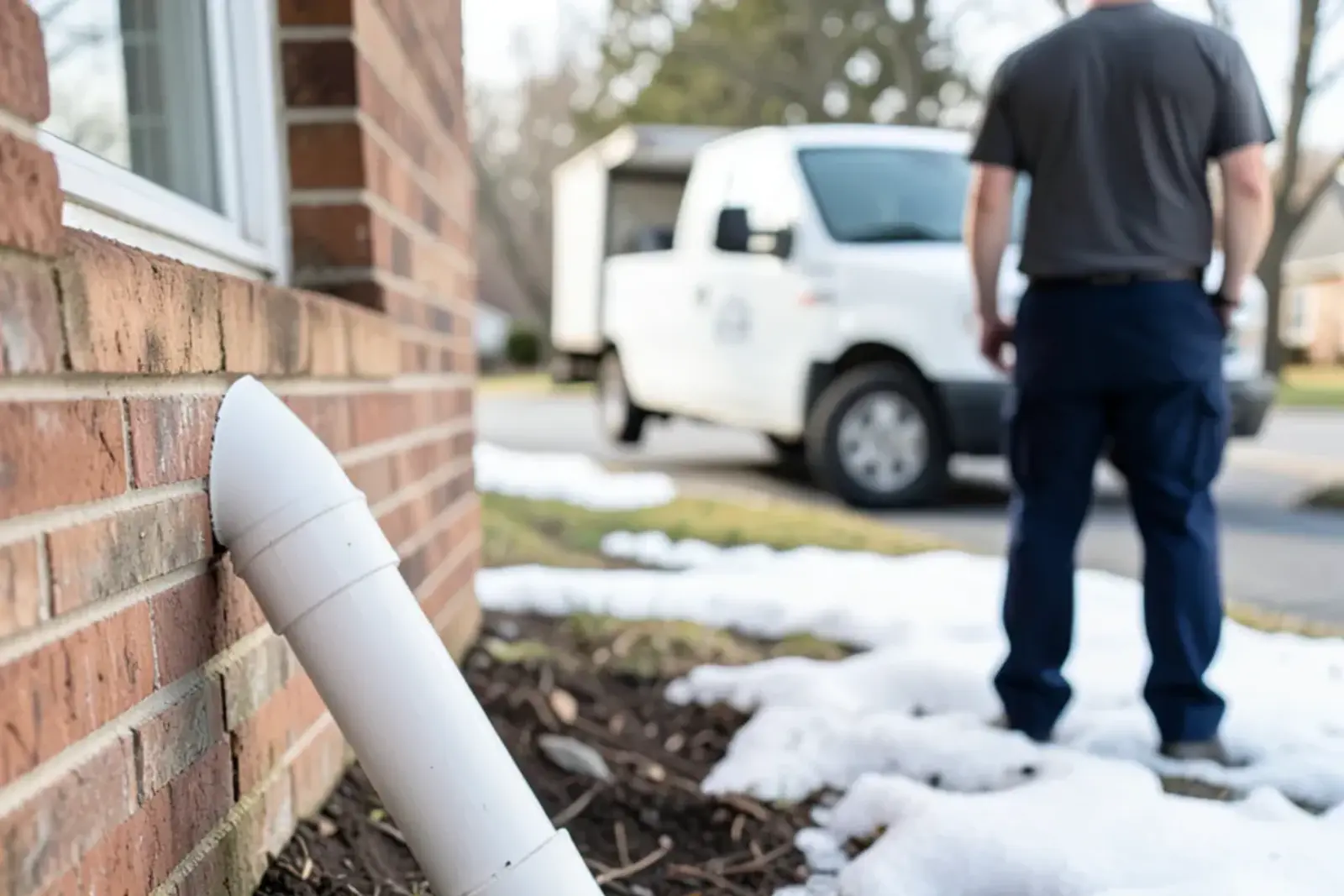
Fraser is stricter than many towns about where sump water goes. The city code (Sec. 31-111) says the pump can't empty onto the ground or into the sanitary sewer. It has to run through 4-inch pipe, sloped a quarter inch per foot and buried below the freeze line, to the storm sewer or the ditch out front. A line built that way seldom freezes. So in Fraser, the outside part of this checklist is mostly the short stretch where the pipe leaves the wall and turns into the ground, plus leaves or ice at the ditch end. A corrugated hose across the lawn is the older setup, and it doesn't meet the rule.
Small things that stop a good pump
Three problems turn up again and again. A tethered float swings into the pit wall or the power cord and hangs there. A pump sits on silt and loose stone at the bottom of an older pit and pulls grit into the intake. A check valve goes in with its flow arrow pointing back toward the pit, so the pump can't move water at all. Many installers also drill a small relief hole in the discharge pipe below the check valve so trapped air can't lock the pump. If yours has one, a little spray back into the pit while it runs is normal.
Backup choices, with their limits
A battery backup covers outages for as long as the battery holds, and batteries age whether they're used or not. A water-powered backup needs no battery, but it ties into the drinking water supply, so it needs backflow protection. Our backflow testing and prevention page explains what that involves. A high-water alarm costs the least and fixes nothing, but it warns you while there's still time to act.
Signs the pump needs more than a test
| What you notice | What it usually means | Next step |
|---|---|---|
| Hums but doesn't move water | Jammed impeller or failed motor | Unplug, clear debris; replace if no change |
| Runs constantly, pit stays full | Undersized pump, clogged intake or a blocked discharge | Check the outlet and screen, then the pump size |
| Short-cycles every few seconds | Float set too tight or check valve leaking back | Adjust the float, replace the check valve |
| Doesn't start when water rises | Stuck float, tripped GFCI or dead motor | Free the float, reset power, test again |
| Rusty water, loud bearings, frequent trips | Worn pump near the end of its life | Plan a replacement before spring rains |
If your house sits on a low lot, say a canal lot covered by our plumbers in Harrison Township page or a street near Anchor Bay covered on our Chesterfield Township plumbing page, your pump may run in dry weeks too. In that case, do this checklist in the fall as well as before the thaw.
If something on the list fails, our sump pump installation and repair page explains how pumps are sized, what goes into a replacement, and how backup systems are added. If your floor drain also backs up in storms, that's a separate problem, and why your basement floor drain backs up when it pours covers it.
Repair it, replace it or add a backup?
If the checklist turns up one bad part, like a stuck float, a leaking check valve or an iced-over outlet, fix that part and run the bucket test again. If the pump hums, trips the GFCI or struggles to empty the pit after you've cleared the intake, replacing it now beats a failure in the middle of an April storm. And if the pit runs often in wet weeks or your street loses power in storms, a backup is the first upgrade worth paying for. Decide in March, while the pit is still quiet.
Questions about sump pump maintenance
How often should a sump pump run in early spring?
It depends on your lot and how wet the ground is. During a thaw or after a soaking rain, a pump may cycle every few minutes and still be healthy. What matters is that it empties the pit fully and shuts off. A pump that runs nonstop with the pit staying full, or cycles every few seconds, needs a closer look.
Can I pipe my sump pump into the floor drain or laundry tub?
You shouldn't. Michigan's plumbing code keeps storm water out of sewers meant only for sewage, and a floor drain or laundry tub connects to the sanitary sewer. Groundwater pumped there adds to the load on the same sewer that backs up into basements in heavy rain. Run the discharge outside, away from the foundation, or to an approved storm connection if your city allows one.
Do I need a permit to replace a sump pump in Fraser?
Usually, yes. Michigan's permit rules exempt only repairs to the working parts of a valve or faucet and clearing stoppages, so a new pit or discharge line needs a permit, and Fraser's fee schedule lists sump pump leads at $30 and an electrical sump permit at $15. For a straight pump swap, ask the City of Fraser Building Department. Applications are online and inspections run Tuesday and Thursday mornings.
Is a water-powered backup sump pump worth it?
It can be, if you accept the trade. It runs on city water pressure, so it keeps going through a long outage with no battery to wear out. It also uses a lot of drinking water while it runs, and because it connects to the water supply it needs backflow protection, which Fraser's cross-connection program may ask about. Check with the building department before installing one.
Should I unplug my sump pump in winter?
No. Groundwater can still rise during a midwinter thaw or a rain on frozen ground, and the pit can fill fast. Leave the pump plugged in all year. If the outside discharge freezes in winter, fix the discharge line instead of shutting the pump off.