
By Plumber in Fraser, MI, Fraser, MI · Published · Last updated
A sewer scope inspection before buying a house puts a camera inside the pipe that carries everything from the home to the city main. It's usually the oldest pipe on the property, it's buried, and in Fraser and Warren the city's own guidance makes the property owner responsible for it. A standard home inspection won't tell you what shape it's in. The camera will.
What a standard home inspection leaves out
Home inspectors follow a standard of practice, and the buried sewer line usually falls outside it. The American Society of Home Inspectors' Standard of Practice excludes underground items and the condition of systems and components that aren't readily accessible. A pipe buried under the front lawn is both.
So the inspector runs the faucets, flushes the toilets and watches the floor drain. Water leaving the house looks fine. That only proves the line isn't fully blocked today. Roots, cracked joints and sagging sections can drain normally for months before a backup.
The age of the housing matters here. According to the Census Bureau's latest five-year survey, half the homes in Warren were built in 1965 or earlier, and half of those in Sterling Heights by 1977. A sewer line installed in the 1960s or 1970s has been in the ground for roughly half a century, under maturing trees and settling soil.
Who pays when the lateral fails
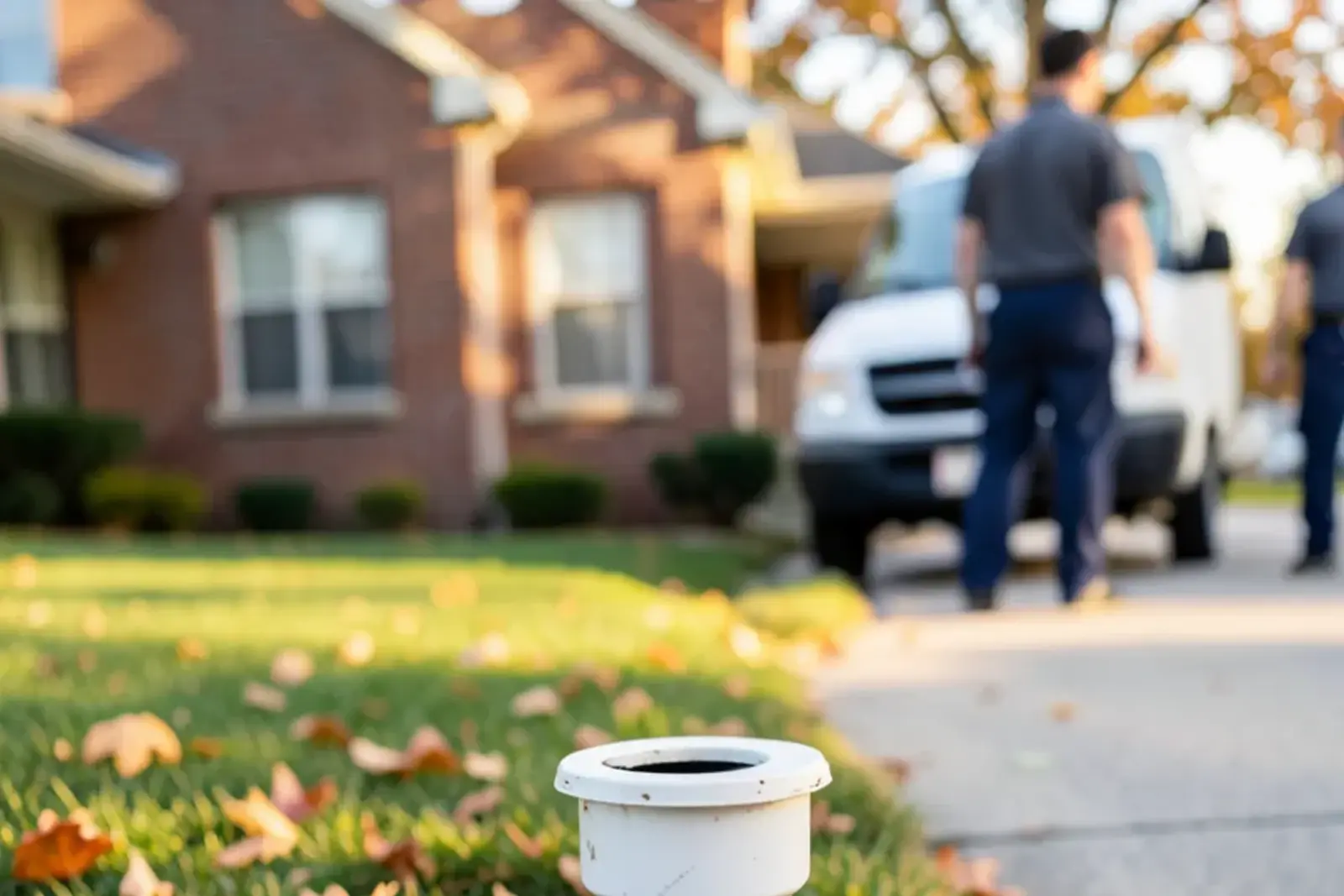
Buyers often assume the city owns the pipe once it leaves the house. In Warren and Fraser, it doesn't, and Sterling Heights buyers should ask the city's Water & Sewer Division how it divides responsibility. Warren's property owner sewer responsibility sheet says property owners maintain the sanitary service line from the building to the main sewer, which usually sits in the street right-of-way or sometimes in a rear-yard easement. The city maintains only the main. Warren also requires permits and inspection to replace a sewer service line on private property or in the right-of-way.
Fraser takes the same position. Its private sewer lateral guide makes the owner responsible for the full length of the building sewer, including the part beyond the property line, and recommends inspecting the lateral every 5 to 10 years.
Warren's sheet adds one more point buyers should hear: most homeowner policies don't cover sewer backups unless you add that coverage. Ask your insurance agent about it before closing.
Booking the scope inside your inspection window
The inspection contingency in a purchase agreement is usually short, so plan the scope alongside the general inspection.
Step 1: put it in the offer
Ask your agent to list a sewer camera inspection by name in the inspection contingency, so there's no debate later about access.
Step 2: find the cleanout
Ask the seller or listing agent where the cleanout is. It may be a capped pipe in the front yard, a plug on the main stack in the basement or a fitting near the floor drain. If none exists, the camera may have to go in through a roof vent or a pulled toilet.
Step 3: be there for it
Watch the screen if you can. Seeing a root mass or a broken joint live is clearer than reading about it.
Step 4: get the video and the locate marks
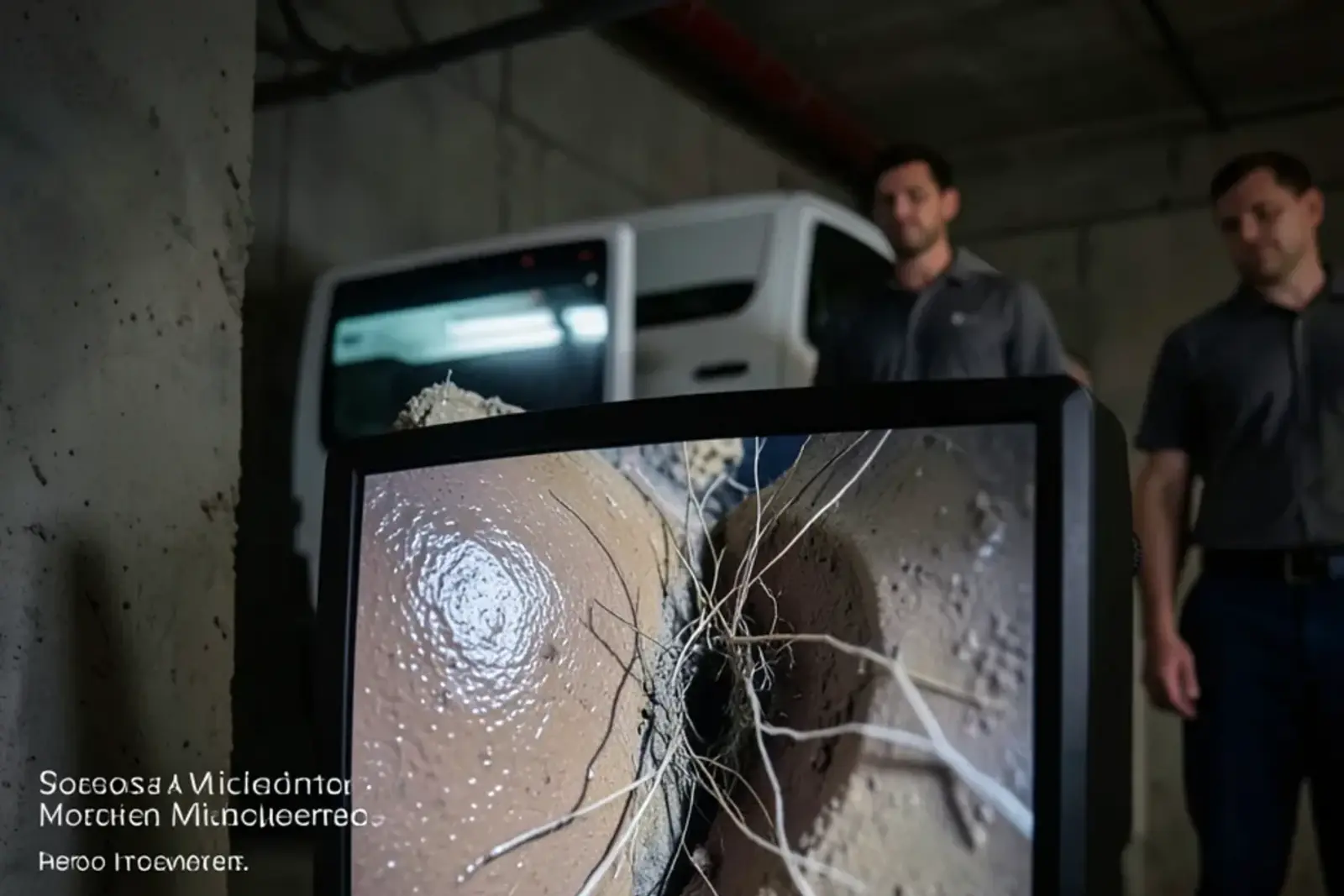
Ask for the recorded footage, a written summary of what was found and at what distance from the cleanout, and surface marks with depth for any defect. That record is what a second opinion, a repair quote or a negotiation will rely on.
What the footage commonly shows
| Finding | What it usually means | How buyers typically respond |
|---|---|---|
| Fine roots at a few joints | Roots entering through joint gaps | Ask for cleaning and a follow-up plan, or a credit |
| Heavy root mass blocking flow | Joint failure under a tree | Request repair or replacement quote before closing |
| Standing water in one stretch | A sag or belly in the line | Get a repair assessment; bellies collect debris |
| Offset or separated joint | Pipe sections have shifted | Spot repair may work if the rest is sound |
| Cracks or broken pipe | Structural failure | Request repair, replacement or price adjustment |
| Grease or scale buildup | Restricted flow, not structural | Cleaning, then rescope if needed |
| Clean, round pipe end to end | Line in good shape | Keep the video for your records |
Defects near the city main often need extra excavation in the street or easement, which is worth knowing before you ask for a repair estimate. In Fraser, the city's FY 2026-27 fee schedule shows why: an exterior sewer line repair permit is $50, but digging in the right-of-way carries a $2,500 escrow and digging in the roadway $10,000. The city's sewer ordinance also requires anyone excavating for a sewer connection to hold a city license and post a $500 bond, unless the owner does the work on their own house. Our posts on tree roots in a sewer line and trenchless versus traditional sewer replacement explain the repair options in more detail.
Using the results in your negotiation
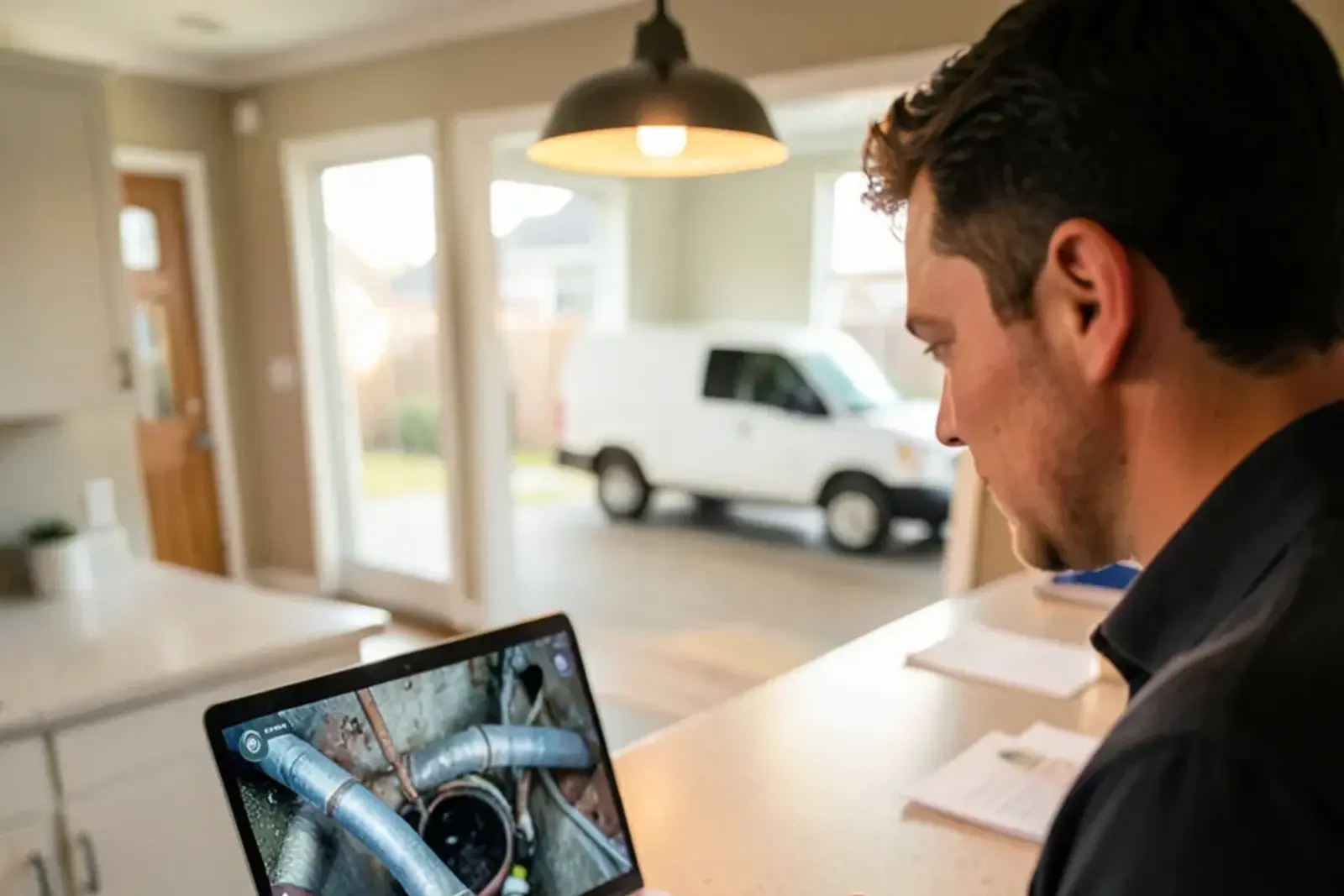
A clean scope is good news you can file away. A problem scope gives you options: ask the seller to repair the line before closing, negotiate a price credit, or walk away within the contingency. Whatever you choose, base it on written repair quotes tied to the footage rather than guesses.
If a seller offers to fix the line, ask for the permit and a rescope after the work so you can see the result.
What separates a useful scope from a quick look
Not every camera run gives you something you can negotiate with. A few things decide whether the footage holds up when the seller's side pushes back.
The camera should travel the whole lateral, from the cleanout to the connection at the city main. A run that stops at the property line skips the stretch Fraser and Warren owners pay for. Where a tight bend or a root mass stops the head, the report should say so and give the distance.
Debris is the next problem. A line full of grease or toilet paper hides the pipe wall, and a clean-looking video of a dirty pipe proves little. If the operator recommends cleaning first, it usually means they want a clear look at the pipe wall. It still needs the seller's permission.
Material matters too. In houses from the 1950s through the early 1970s, expect clay tile, which Fraser's own ordinance and fee schedule call "crock", or cast iron, often with a newer plastic section where someone already made a repair. Clinton Township's sewer lead assistance program targets homes built in 1974 or earlier with vitrified clay leads, which tells you how common clay is in this part of Macomb County. A transition from one material to another is a common place for an offset joint.
Then the honest limit. A camera shows the inside of the pipe on the day it runs. It can't promise how long a cracked clay joint will last, and anyone who puts a precise lifespan on it is guessing. Roseville's water report goes further and urges residents to get a second opinion before having a sewer excavated, which is fair advice for a buyer facing a large repair quote too.
Questions to ask before the camera goes in
- Will the camera run all the way to the main, and what happens if it can't?
- Will I get the full video file, not only still images?
- Will defects be located on the surface with a depth reading?
- What material is the line, and where does it change?
- Is cleaning likely to be needed, and who approves it?
- Will the written summary list each defect by distance from the cleanout?
Scope it, renegotiate or walk away?
If the house was built before about 1980, has mature trees between it and the street, or shows a floor drain that gurgles when the washer drains, book the scope before your contingency runs out. A clean video lets you close knowing what you own.
If the footage shows a single defect, get one written repair quote tied to the distance on the video and ask for a credit or a repair with a permit and rescope. Several breaks, a long belly or a collapsed section usually point to sewer line replacement, and that number belongs in the negotiation before closing, not after. Heavy grease or scale with sound pipe is a hydro jetting question, not a replacement.
To schedule a camera look before you buy, see our sewer line inspection and repair page or call and tell us where the house is.
Questions about sewer scope inspection before buying
Does a seller have to allow a sewer scope?
That depends on your purchase agreement. You'd normally request the scope under the inspection contingency, at the same time as the general home inspection. Ask your agent to name it in the offer, and confirm the seller will make a cleanout accessible. If the seller refuses, treat that as information too, because you'd be taking on the line without ever seeing inside it.
What happens if the house has no cleanout?
The camera can sometimes enter through a roof vent or by pulling a toilet, but those routes are harder and don't always reach the full length of the line. A missing cleanout is worth noting in itself. Fraser's sewer lateral guidance recommends installing a cleanout if one isn't present, so a future owner can clean and inspect the line without guesswork.
Is a sewer scope worth it on a newer house?
It's still worth considering. Age is only one risk. A newer line can be damaged by settling soil, construction traffic, a sag left at installation or roots from landscaping planted after the house was built. The scope is cheaper to skip on a newer home only if you're comfortable owning whatever is buried in the yard without knowing what it looks like.
Should the sewer line be cleaned before the camera goes in?
Only if the camera can't see. A line coated in grease or partly blocked can hide cracks and offsets, so the operator may stop and recommend cleaning first. Cleaning is work on the seller's property, so get written permission before anyone runs a cable or a jetter. A rescope after cleaning gives you the clearer picture, and both videos are worth keeping.
Fraser plumbing services for this problem
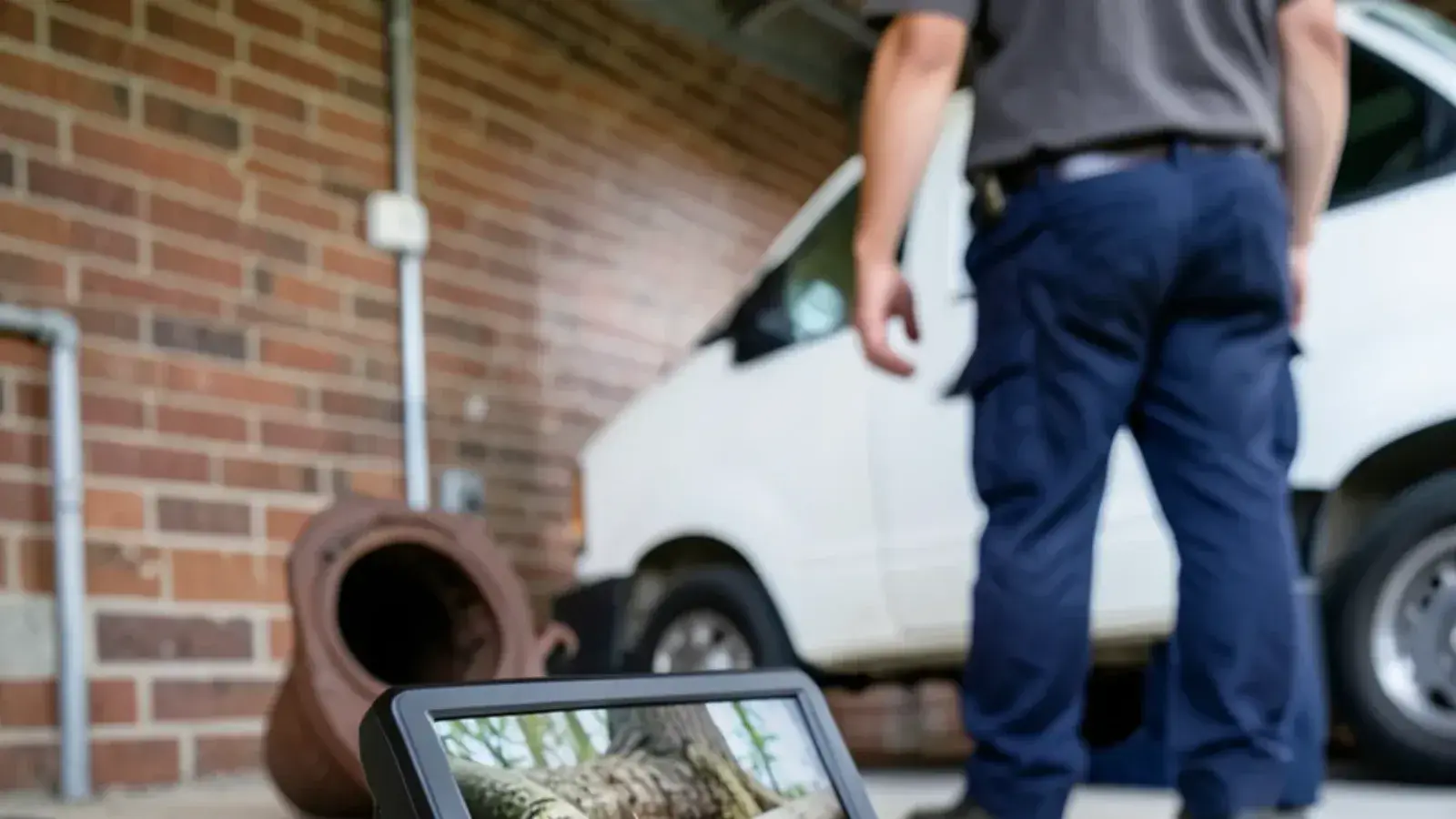
Sewer inspection and line repair
Live camera footage of your lateral, with defects located and marked from the surface
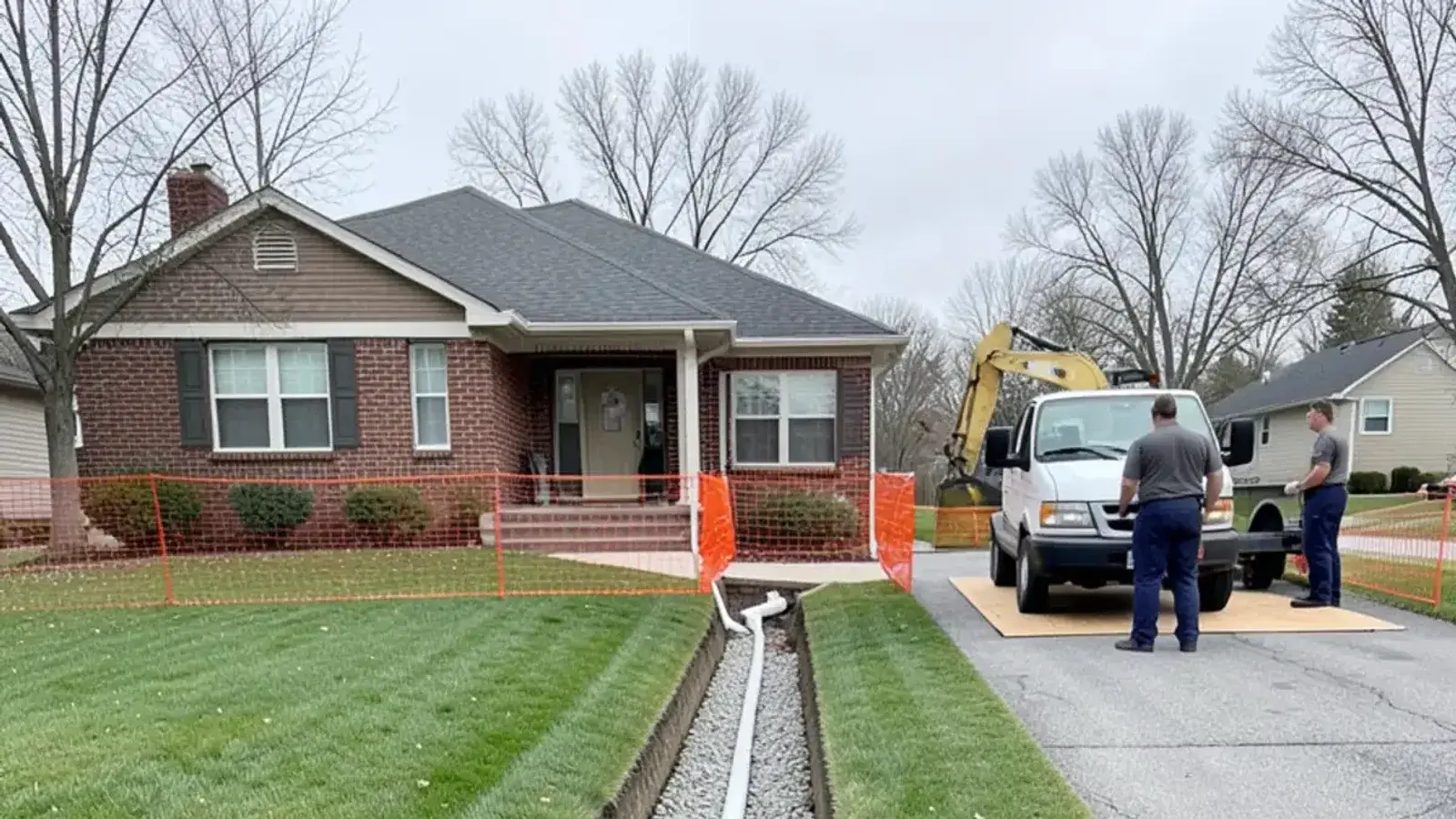
Sewer line replacement
Open trench, pipe bursting or lining, chosen from the camera footage instead of a sales pitch
Hydro jetting
Scours grease, scale and roots off the pipe wall, with camera footage before and after